Reynand Wu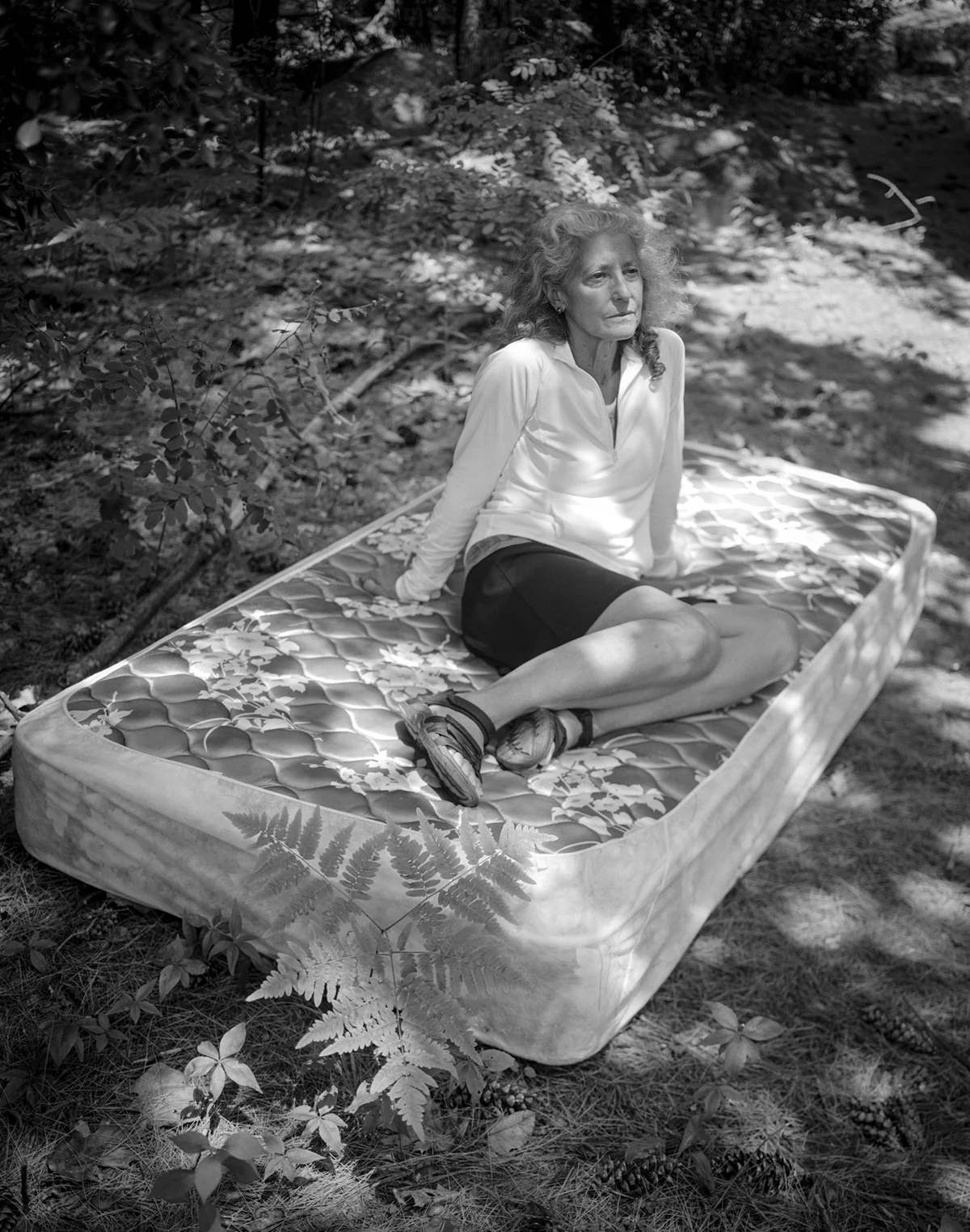
In the quiet, high-contrast landscape of black-and-white photography, lens-based artist Rachel Jump is charting a map of the invisible. Her latest body of work, Everyone is Icarus, is more than a mere collection of photographs; it is an intimate, visceral investigation into the fragility of the human condition, sparked by the discovery of a hereditary disorder within her own family. Through a process she describes as "performance-based photography," Jump constructs a visual language that interrogates the heavy intersection of genetics, memory, and the resilience required to endure a predetermined biological path.
The Genesis of a Narrative: Facing the Hereditary Reality
The project began not in a studio, but in a clinical setting. When Jump’s father received the results of a genetic test confirming a hereditary disorder—one that significantly heightens the family’s susceptibility to a range of chronic illnesses—the trajectory of their lives shifted. For many, such a diagnosis is a private burden, a clinical fact to be managed in sterile environments. For Jump, however, the news became a catalyst for creative inquiry.
Born in Chicago and a 2014 BFA graduate of the Rhode Island School of Design, Jump has long utilized her camera as a tool for examining interpersonal relationships. Currently pursuing her MFA at the University of New Mexico College of Fine Arts, she has refined a practice that eschews the objective distance of traditional documentary photography. Instead, she positions herself as a participant in her own work. Everyone is Icarus represents a pivotal evolution in this practice, moving from the internal exploration of self to a collaborative family narrative centered on the weight of newfound medical clarity.
Chronology: From Diagnosis to Artistic Manifestation
To understand the weight of Everyone is Icarus, one must look at the timeline of its development:
- Pre-2014: Jump establishes her artistic foundation at the Rhode Island School of Design, focusing on how black-and-white film can serve as a conduit for memory and metaphor.
- The Diagnosis Period: Following her father’s genetic testing, the family unit is confronted with the reality of a hereditary condition. This phase is characterized by the initial psychological impact of the disorder, a period of navigation where the family begins to process the implications of shared genetic vulnerability.
- The Development Phase: Jump begins the process of translating these abstract fears into physical images. She utilizes the camera as a performance space, working with her family members to stage scenes that reflect their internal states of anxiety, support, and defiance.
- The MFA Tenure: Her transition to the University of New Mexico provides the academic and environmental space to deepen the project, expanding the scope of the work from individual snapshots to a cohesive narrative structure.
- The Exhibition Cycle: Everyone is Icarus begins to reach a wider audience, positioning itself as a contemporary dialogue on how families navigate the "path carved out for them" by their DNA.
Supporting Data: The Intersection of Art and Genetics
While Everyone is Icarus is an artistic endeavor, it sits at the intersection of a growing field of study: the sociology of genetic knowledge. Medical sociologists often point to the "geneticization" of identity—the process by which individuals begin to view their fundamental self-worth, future, and personality through the lens of their DNA.
Jump’s work provides a visual counterpoint to the clinical data. While genetic testing offers probabilities and percentages, Jump’s photography offers lived experience. Statistics on hereditary disorders often lack the human element—the "weight" of the news that the artist speaks of. By documenting her family’s efforts to provide comfort and support, Jump provides a qualitative look at how families function under the stress of chronic health risks. The project explores the psychological phenomenon of "anticipatory grief"—the mourning of a future that may or may not come to pass—and the resilience that arises in the face of such ambiguity.
Artistic Methodology: The Camera as Performance
In the world of contemporary art, Jump’s approach is distinct. She does not merely observe; she constructs. Her black-and-white aesthetic is a deliberate choice, stripping away the distraction of color to focus on form, texture, and the raw emotional geometry of her subjects.
"My photographs reveal not only the physical and psychological traits we inherit but also how we decide to reconcile with those truths," Jump notes. By using the camera as a performance tool, she forces the viewer to engage with the staged nature of the family dynamic. The images are metaphors, grounded in the reality of the genetic test but elevated into a broader commentary on agency.
In one sense, the title Everyone is Icarus serves as a profound allegory. Icarus, in Greek mythology, is defined by his ambition and his eventual fall due to the limitations of his human construction. In Jump’s work, the "wings" are the family’s genetic history—a structure that is both their inheritance and their potential limitation. The project asks: how do we fly when we know the wax might melt?
Official Reflections: The Artist’s Perspective
The core of the project lies in the collaboration between the artist and her kin. In her own words, the project is a testament to the negotiation of power within a family.
"Through this collaboration, we guide each other through the weight of newfound clarity," Jump explains. "Supporting one another as we confront how our lineage and shared experiences shape our sense of identity. What aspects of ourselves do we choose to inherit, and what parts lie beyond our control?"
This interrogation of "control" is central to the project’s resonance. Jump acknowledges that while the genetic material is fixed, the response to that material is fluid. The work is a study in defiance—a refusal to let the diagnosis define the entirety of the familial bond. She explores the balance between the acceptance of the cards they have been dealt and the agency to play those cards with intention and love.
Implications: A New Language for Heredity
The implications of Everyone is Icarus extend far beyond the art world. As genetic testing becomes more affordable and accessible, more families are finding themselves in the position of the Jump family: holding a piece of paper that outlines their biological vulnerabilities.
Redefining Resilience
Jump’s work challenges the conventional narrative of the "patient" or the "at-risk individual." Instead of portraying her family as victims of their biology, she portrays them as active agents in their own lives. This shifts the discourse from one of pathology to one of endurance.
The Role of Memory in Science
The project argues that memory is as important as biology. By linking physical traits to shared family experiences, Jump suggests that our identity is not solely the product of the genome, but a tapestry woven from the stories we tell, the trauma we navigate together, and the support systems we construct.
Future Artistic Directions
As Jump continues her MFA studies, the evolution of this project serves as a model for how artists can engage with complex medical and sociological issues. Everyone is Icarus suggests that photography can be a vital component of the healing process—a way to "reconcile with truths" that are otherwise difficult to speak aloud.
Conclusion: The Defiance of the Image
Rachel Jump’s work stands as a poignant reminder that while we may be bound by the biological blueprints inherited from our ancestors, we are not defined by them. Everyone is Icarus does not provide a cure for the hereditary disorder that haunts the family; instead, it provides a frame through which to view it.
By grounding the abstract fears of genetic predisposition in the concrete, high-contrast reality of the photographic image, Jump has created a mirror for anyone who has ever felt the weight of their own history. The project is an invitation to examine what we inherit, and more importantly, what we choose to keep. As the artist continues to navigate her own path, her work remains a powerful testament to the resilience of the human spirit, capturing the precise moment when a family looks at their shared fragility and chooses, with deliberate agency, to continue the climb.


 Nana
Nana
 Siti Muinah