

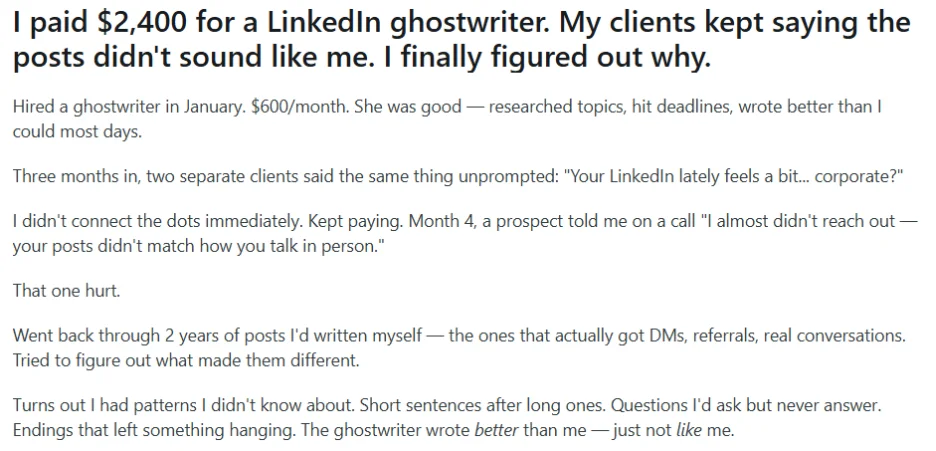
It is a familiar scene for any high-growth digital agency. A client calls on a Tuesday afternoon. The tone is measured, but the underlying sentiment is unmistakable: unease. They mention that a prospect almost declined a meeting because their LinkedIn presence felt disconnected from their actual personality. "It’s a bit corporate," the client laments. "It doesn’t sound like me."
For agencies specializing in LinkedIn ghostwriting, this is the "four-client wall." It is the precise moment when the delicate balance between professional polish and authentic voice begins to fracture. While outsourcing content is intended to amplify an executive’s authority, the reality often leads to a phenomenon known as "plausible impersonation"—content that is structurally sound and grammatically perfect, yet hollow in its lack of individual texture.
The Chronology of Content Drift
The lifecycle of an executive ghostwriting engagement follows a predictable, often treacherous, trajectory.
Phase 1: The Honeymoon (Month 1)
The engagement begins with enthusiasm. Onboarding calls are exhaustive, producing detailed voice guides filled with tone, target topics, and curated sample posts. Initial content is sharp, and client edits are minimal. Both parties feel the strategy is a success.
Phase 2: The Subtle Divergence (Month 2)
By the second month, the "shine" begins to wear off. The executive starts requesting more frequent edits. They find themselves correcting the nuance of an argument or softening a bold statement that feels slightly "off-brand." These edits are often treated as one-off corrections, filed away in the writer’s memory rather than integrated into the strategy.
Phase 3: The Revision Trap (Months 3–4)
By the fourth month, the friction peaks. What should be a streamlined production process becomes a slog. A team of writers might spend 20 to 40 minutes per post just on revisions. With five clients, this can translate to 4–5 hours of non-billable labor every week. The voice guide, once a source of truth, becomes a historical artifact—a snapshot of a person who no longer exists in the current iteration of the agency’s content.

Supporting Data: The Cost of Disconnected Systems
The "voice crisis" is not merely a qualitative frustration; it is a quantifiable operational failure. According to the 2026 State of LinkedIn Ghostwriting report from Windmill Growth, which analyzed over 10,000 posts across 185 clients, the lack of a structured voice system is the primary driver of client churn. Agencies that fail to evolve their voice capture methods see churn rates two to three times higher than those that implement iterative, voice-trained workflows.
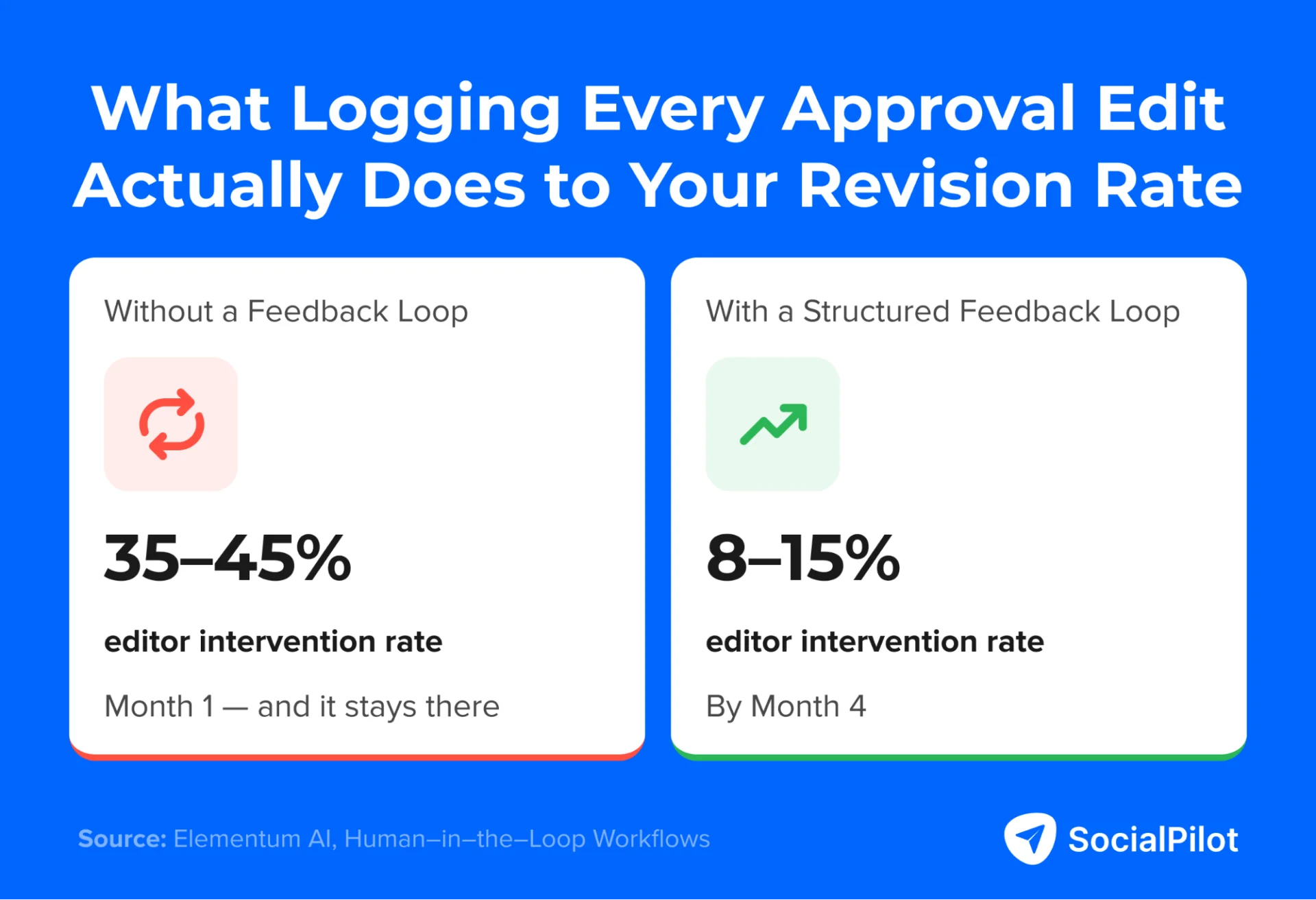
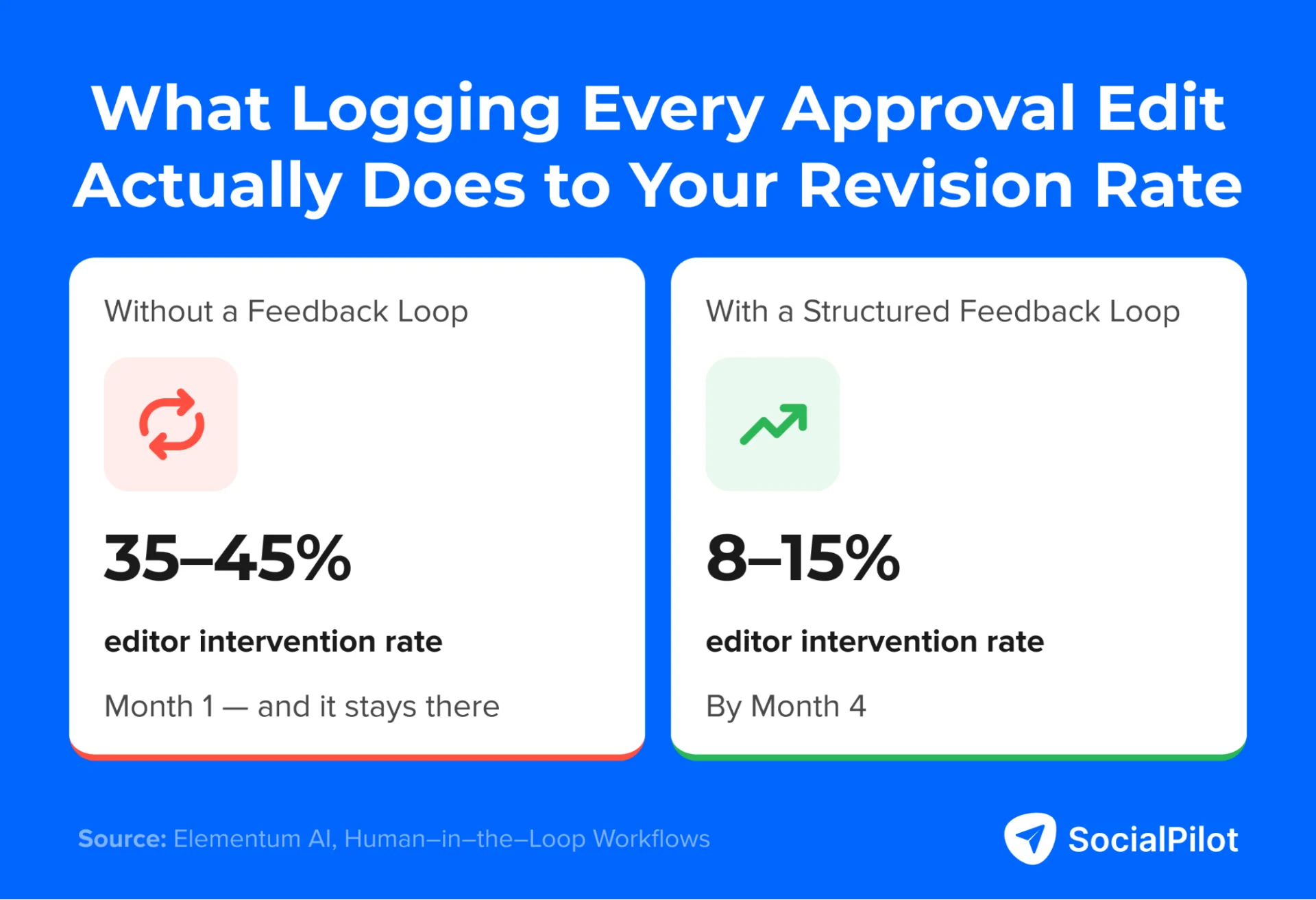
Furthermore, research from Elementum AI into human-in-the-loop workflows confirms that teams relying on static, one-time onboarding data face heavy intervention rates. In the first month, editors step in to modify roughly 35% to 45% of AI-assisted drafts. However, for teams that treat every approval and edit as a data point—folding feedback back into the core voice context—that intervention rate drops to between 8% and 15% by the fourth month.
The implication is clear: the problem is not the writer’s lack of talent or the AI’s lack of sophistication; it is a fundamental breakdown in knowledge management.
Official Perspectives: Shifting the Paradigm
Industry leaders like Highly Persuasive have long argued that agencies are misdiagnosing the problem. By viewing voice as a "writing issue," agencies rely on human editors to fix the same mistakes repeatedly. By reframing voice as a "knowledge management issue," the solution shifts from manual editing to system architecture.
The consensus among successful agencies is that "plausible impersonation" occurs because agencies attempt to capture voice as a static event rather than a continuous, evolving process. To break the four-client wall, agencies must move away from static Notion documents and toward "living" voice profiles.
A Three-Step Framework for Voice Mastery
Agencies that successfully scale past the four-client wall have adopted a three-part system designed to capture the "Voice DNA" of an executive.
1. The Structured 30-Minute Voice Interview
Onboarding must go beyond basic demographic or topic-based questions. To capture true voice, the interview must probe four dimensions:
- Argument Structure: Does the client lead with data or with a narrative hook?
- Vocabulary/Lexicon: Which specific phrases are "non-negotiable" for the executive? Which industry buzzwords do they despise?
- Data Relationship: Do they rely on their own direct experience or third-party research?
- Public Off-Limits: What positions or topics are they fundamentally unwilling to touch?
2. Treating Approvals as Data Points
Every edit made by an executive is an opportunity for system optimization. When an executive changes a sentence, they are correcting a deviation from their internal logic. Agencies should log these edits as specific feedback entries. After 10 to 15 posts, a pattern emerges. These patterns are then codified as "Voice Rules," ensuring that the draft for post #16 is inherently more accurate than the draft for post #1.
3. Encoding Voice into an "AI Skill"
The final evolution is moving from a document to an "AI Skill." By using tools that allow for context-aware prompting (such as CLAUDE.md specs), agencies can create a "Voice DNA" file. This file contains the executive’s lexicon, their preferred argument structures, and their historical edit patterns. When a new writer joins a project, they do not rely on subjective interpretation; they load the context file, allowing the AI to generate a first draft that is already 80-90% aligned with the executive’s actual voice.
Implications for Agency Infrastructure
The most sophisticated ghostwriting systems fail if the approval infrastructure is fragmented. If feedback is scattered across email threads, Slack messages, and Google Docs, the "loop" cannot close.
Platforms like SocialPilot have responded to this by creating centralized client approval workflows. By removing the need for logins and keeping all comments pinned to specific content pieces, agencies can eliminate the "middleman" friction that often causes misinterpretations. This centralized hub ensures that every piece of client feedback is visible to the entire team, making it infinitely easier to update the "Voice DNA" profile in real-time.
Scaling from Four Clients to Ten
What happens when an agency moves from four clients to ten? When voice is managed through a system rather than individual memory, the agency gains the ability to decouple growth from burnout.
The transition requires a mindset shift: the agency owner must stop viewing the ghostwriting process as a series of creative tasks and start viewing it as a content-intelligence operation. When voice knowledge lives in the system—constantly updated by the approval queue and accessible via AI context files—the need for intensive manual intervention vanishes.
This shift allows agencies to maintain the high-touch, authentic feel of a boutique firm while enjoying the operational efficiency of a high-volume publisher. By solving the voice management problem, agencies are not just saving hours on revisions—they are building a scalable asset that delivers consistent, authoritative, and authentic content for their clients, month after month.
Ultimately, the goal is to reach a point where the executive no longer feels like they are being "impersonated." Instead, they feel like the content is an extension of their own thought process, allowing them to focus on what they do best: building their business.












No comments yet. Be the first to join the conversation!