

In the modern digital landscape, marketing teams have become tethered to a handful of "reliable" ecosystems. Google Ads, LinkedIn campaigns, and Meta retargeting have become the default operating system for growth. They provide clear, quantifiable metrics—click-through rates, cost-per-acquisition, and conversion attribution—that offer comfort to stakeholders and managers alike. But beneath this veneer of measurable ROI lies a critical question: Are we optimizing for impact, or are we simply optimizing for ease of measurement?
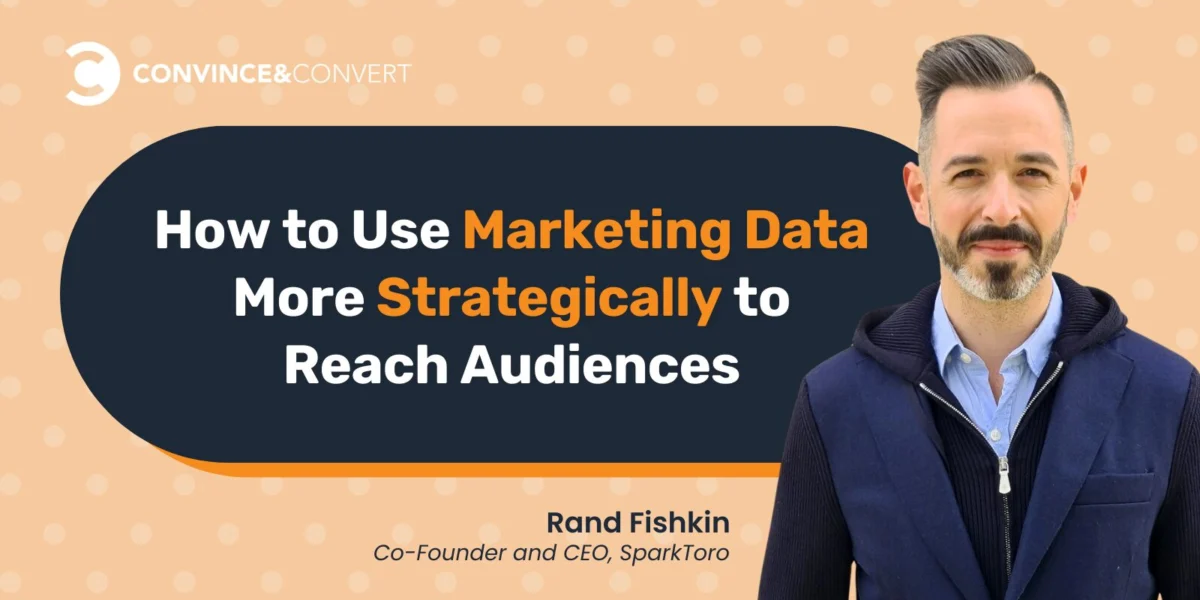
According to Rand Fishkin, co-founder of SparkToro and a veteran of the digital marketing industry, the industry is suffering from a "measurement bias." By obsessing over platforms that provide easy attribution, marketers are inadvertently ignoring the complex, multi-touch journeys that actually define how customers discover, research, and eventually trust a brand.
The Illusion of Attribution: Why Your Data Might Be Lying to You
The prevailing logic in digital marketing is that if a channel doesn’t provide a direct, click-to-conversion path, it isn’t worth the investment. This has led to the massive concentration of advertising spend on search engines and social giants—platforms that claim full credit for the final "click" that drives a sale.
However, Fishkin argues that this attribution model is fundamentally flawed. In a recent episode of the Data-Driven Decisions podcast, hosted by Zontee Hou, Fishkin highlighted the reality of the "middleman" phenomenon.
"A ton of what happens in Google is actually a response to something else," Fishkin explains. "People who performed a search query in Google, very rarely was that a spontaneous first-touch thing. It was like, ‘Oh, I heard about this software,’ so I went to Google and searched for it. And of course, the attribution looks like Google drove all the value. No, Google was just the middleman."
This reality implies that when marketers focus exclusively on these "safe bets," they are likely capturing demand that was created elsewhere—at conferences, on niche podcasts, or through industry influencers—without ever acknowledging or investing in those top-of-funnel touchpoints. By ignoring the broader customer journey, brands fail to scale because they are only harvesting existing demand rather than cultivating it.
The SparkToro Philosophy: Meeting the Audience Where They Live
The core of Fishkin’s work with SparkToro is to shift the marketer’s focus from "Where can I buy ads?" to "Where does my audience actually spend their time?"
The platform functions as a tool for audience intelligence, providing marketers with a granular view of their target demographic’s online habits: the websites they visit, the podcasts they listen to, the influencers they follow, and the specific topics they discuss. The strategy is simple yet profound: by identifying these niche communities and high-relevance channels, brands can "break through the noise" and build authentic trust.
Real-World Applications and Success Stories
The efficacy of this redirected approach is evident in several successful case studies shared by Fishkin:
- The Podcaster’s Revenue Play: A podcaster seeking to increase sponsorship revenue did not simply pay for ads to grow their listener count. Instead, they used SparkToro to identify influential figures with massive followings on X (formerly Twitter) and YouTube whose audiences perfectly aligned with their sponsors’ target demographics. By inviting these influencers as guests, the podcaster tapped into pre-existing, highly relevant audiences. The result? A surge in listenership that made the podcast significantly more attractive to high-paying sponsors.
- The Event Organizer’s Strategy: Similarly, a technology event organizer used audience data to curate a speaker lineup that naturally drew in the specific sponsors they wanted to attract. By ensuring the speakers’ own audiences overlapped with the sponsor’s target customer profile, the organizer created a symbiotic relationship that delivered value to all three parties.
In both instances, the investment was not in traditional paid media, but in strategic alignment. These marketers focused on the "customer journey" long before the customer reached the point of purchase.
The Rise of "Zero-Click" Marketing
One of the most radical shifts proposed by Fishkin and his team—particularly his colleague and VP of Marketing, Amanda Natividad—is the concept of "Zero-Click Marketing."
In an era where social media algorithms and search engines are increasingly incentivized to keep users on their platforms, the traditional "click-through" strategy is facing diminishing returns. Zero-click marketing posits that brands should deliver value directly on the platform where the user resides, without the immediate, desperate demand for a click.
A prime example cited is the data storytelling company, Chartr. Rather than using Reddit to spam links to their website, the team began posting high-quality, standalone data visualizations in the subreddit r/dataisbeautiful. They included no overt branding or aggressive call-to-actions. They simply contributed value to a community of like-minded individuals.
The outcome was a masterclass in brand building. By consistently engaging with the community, Chartr built credibility and recognition. When the audience eventually reached a point where they needed data-driven insights, the brand was already top-of-mind. This approach is not only more effective at building long-term loyalty than intrusive paid ads, but it is also substantially cheaper.
Data-Informed, Not Data-Dictated
Despite his critique of traditional ad platforms, Fishkin is quick to clarify that he is not "anti-paid advertising." If a company is finding genuine, incremental ROI on Google or LinkedIn, he encourages them to continue. However, he warns against the "top 10% trap."
"If you think to yourself, the top 10% of spend that I do at those places is probably bringing me no incremental customers—which is almost always the case—maybe redirect that to some more creative, thoughtful, and audience data-driven forms of marketing," says Fishkin.
This requires a fundamental change in how marketing teams manage data. Fishkin suggests that marketers must be "responsible in their recognition of what problems data can solve and what it can’t."
The Limitations of Quantitative Data
While tools like SparkToro are excellent for identifying behavior and habits, they cannot capture the nuance of human sentiment. Fishkin advocates for a hybrid approach:
- Quantitative Data: Use tools to identify where your audience hangs out, what they search for, and which influencers they trust.
- Qualitative Data: Use customer interviews and surveys to understand why they do what they do.
Data can tell you that a user clicked on a specific link, but it cannot tell you their frustration with your product, or why they chose a competitor’s solution despite your better pricing. If marketers rely solely on quantitative, platform-provided data, they create "blind spots" in their strategy.
Implications for the Future of Marketing
The implications of this shift are significant for organizations, particularly those in the B2B space. As Zontee Hou explores in her book, Data-Driven Personalization, the future of marketing is not about tracking users across the web with invasive cookies; it is about using data to foster deeper, more meaningful connections.
1. From Transactional to Relational
Marketing departments that pivot toward audience intelligence are moving away from a transactional model—where every dollar spent must be immediately "attributed"—to a relational model, where brand presence in relevant communities is the primary goal.
2. Cross-Functional Collaboration
As shown in the broader series featuring leaders from organizations like IBM and Salesforce, data-driven marketing is no longer siloed. It informs product development, sales strategy, and company culture. When a marketing team knows exactly who their audience is and where they live, they can provide the product team with insights that lead to better, more customer-centric features.
3. The New Standard of ROI
The definition of ROI is evolving. Moving forward, the most successful firms will be those that can measure "brand resonance" alongside "click-through rate." They will recognize that a mention on an industry-leading podcast or a successful discussion thread in a niche community carries weight that a generic search ad simply cannot replicate.
Conclusion: A Call for Strategic Intent
The message from the Data-Driven Decisions series is clear: the era of blind, platform-first marketing is coming to a close. While Google, Meta, and LinkedIn will remain staples of the marketing mix, they should be the end of the strategy, not the beginning.
Marketers must be willing to step outside their comfort zones to identify the hidden ecosystems where their audience truly lives. By investing in zero-click content, prioritizing audience intelligence, and balancing quantitative data with human-centered qualitative research, companies can move beyond the surface-level metrics that satisfy stakeholders and toward the kind of deep brand equity that drives long-term, sustainable growth.
As Fishkin notes, data is a tool—not a strategy. The goal is not to have the most data, but to use the right data to make the most human-centric decisions possible. In a crowded digital marketplace, the companies that win will not be the ones with the biggest advertising budgets, but the ones that most accurately understand where their customers are, what they value, and how to show up for them in ways that truly matter.











No comments yet. Be the first to join the conversation!