Jia Lissa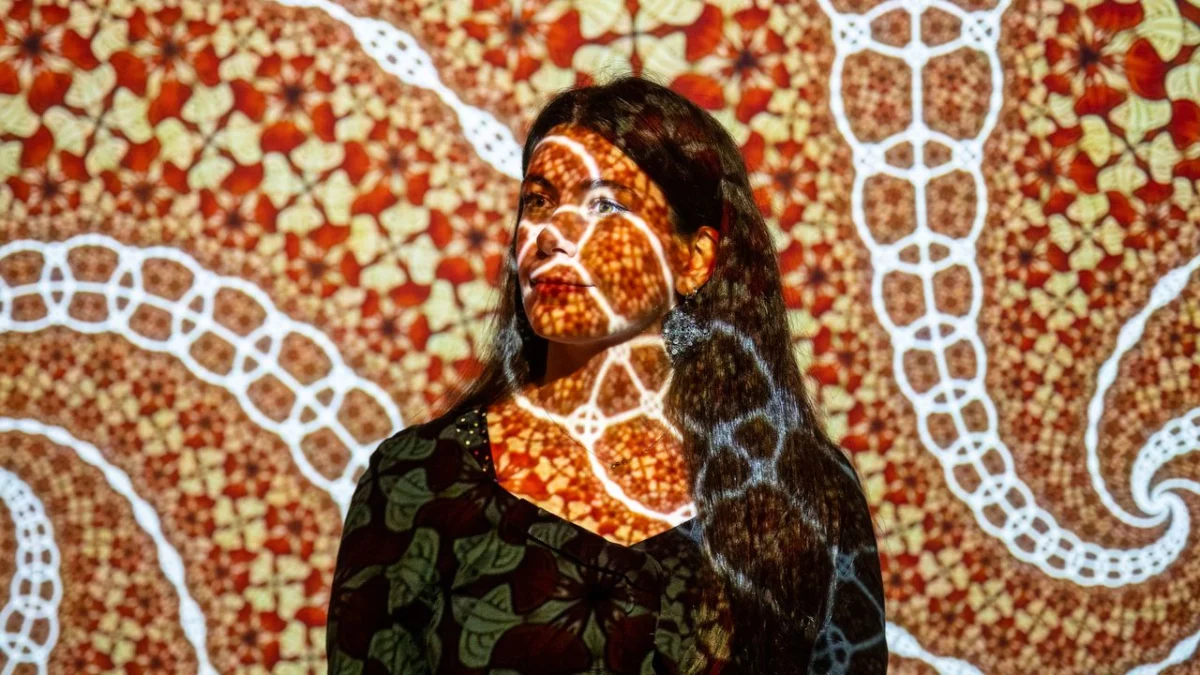
There is a unique, disorienting vertigo that takes hold when one stands before an original M.C. Escher print. Your brain, conditioned by a lifetime of navigating a three-dimensional, Euclidean world, insists that it understands the geometry before it. Then, silence follows—a quiet, cerebral panic as the logic of the image refuses to resolve. Staircases loop into eternal ascents, hands emerge from flat paper to draw their own creators into existence, and birds seamlessly dissolve into fish, only to reform as birds once more.
This is not mere optical trickery. It is something far more profound: a suspension of the laws of reality, executed with such surgical precision that it feels less like art and more like a glimpse into a parallel dimension. Currently, London’s Somerset House is playing host to the most comprehensive exhibition of the artist’s work ever staged in the United Kingdom. It serves as a timely, essential reminder that in an age of frictionless, AI-generated imagery, the most potent visual thinking is that which refuses to optimize for ease, choosing instead to follow its own inscrutable, obsessive logic.
The Life of an Intuitive Visionary: A Chronology
Maurits Cornelis Escher, born in 1898 in the Netherlands, was never formally trained as a mathematician or a scientist. He famously described his own mathematical prowess as "largely visual and intuitive." Yet, his career was a singular, uninterrupted trajectory toward the infinite.
- 1923–1935: The Italian Period: Escher’s early years in Rome were defined by a rigorous exploration of perspective. While he was not yet the "Escher of paradoxes," his early landscapes and architectural studies displayed a preoccupation with vertiginous viewpoints and compressed spaces. He was learning the rules of classical representation so that he might eventually break them.
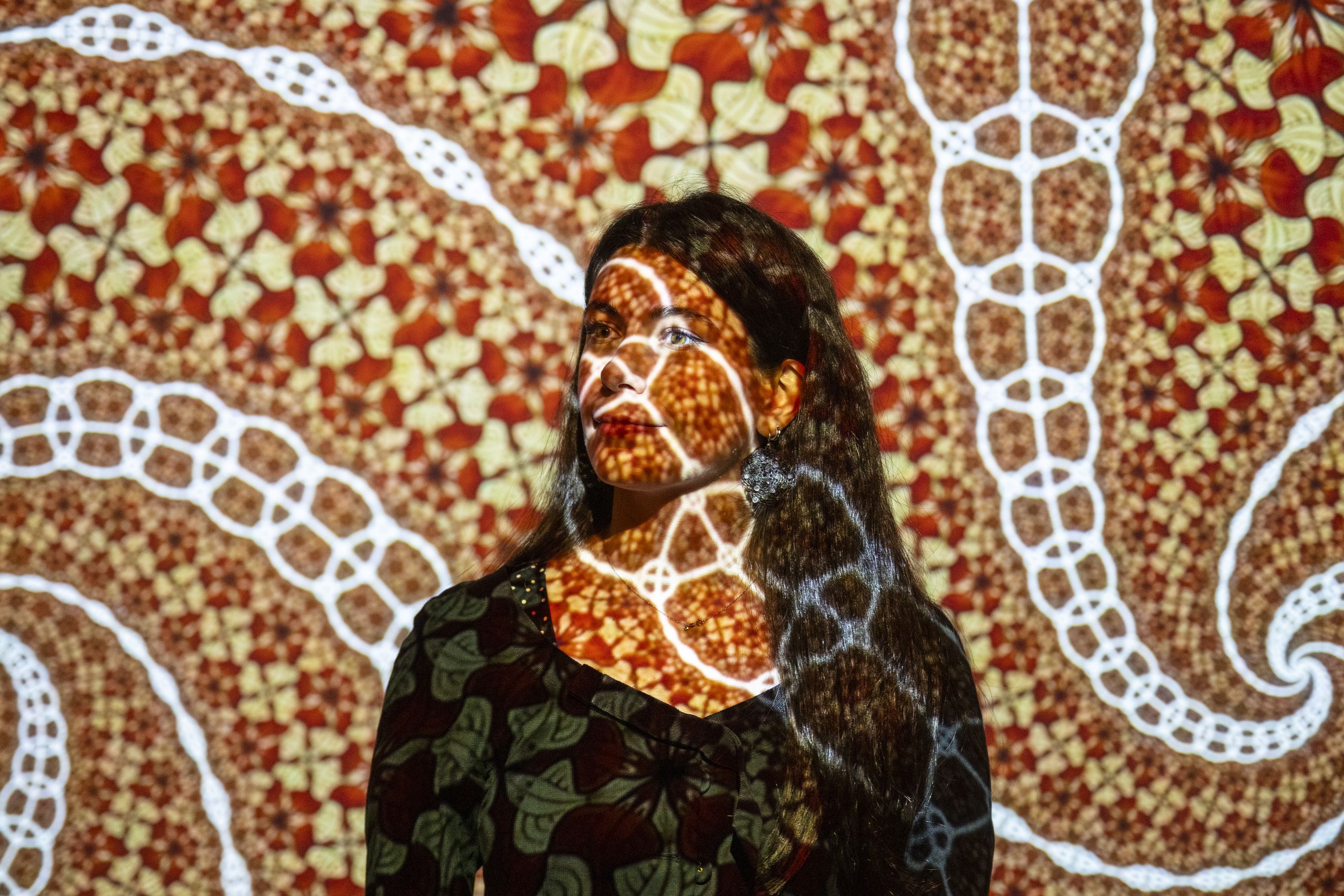
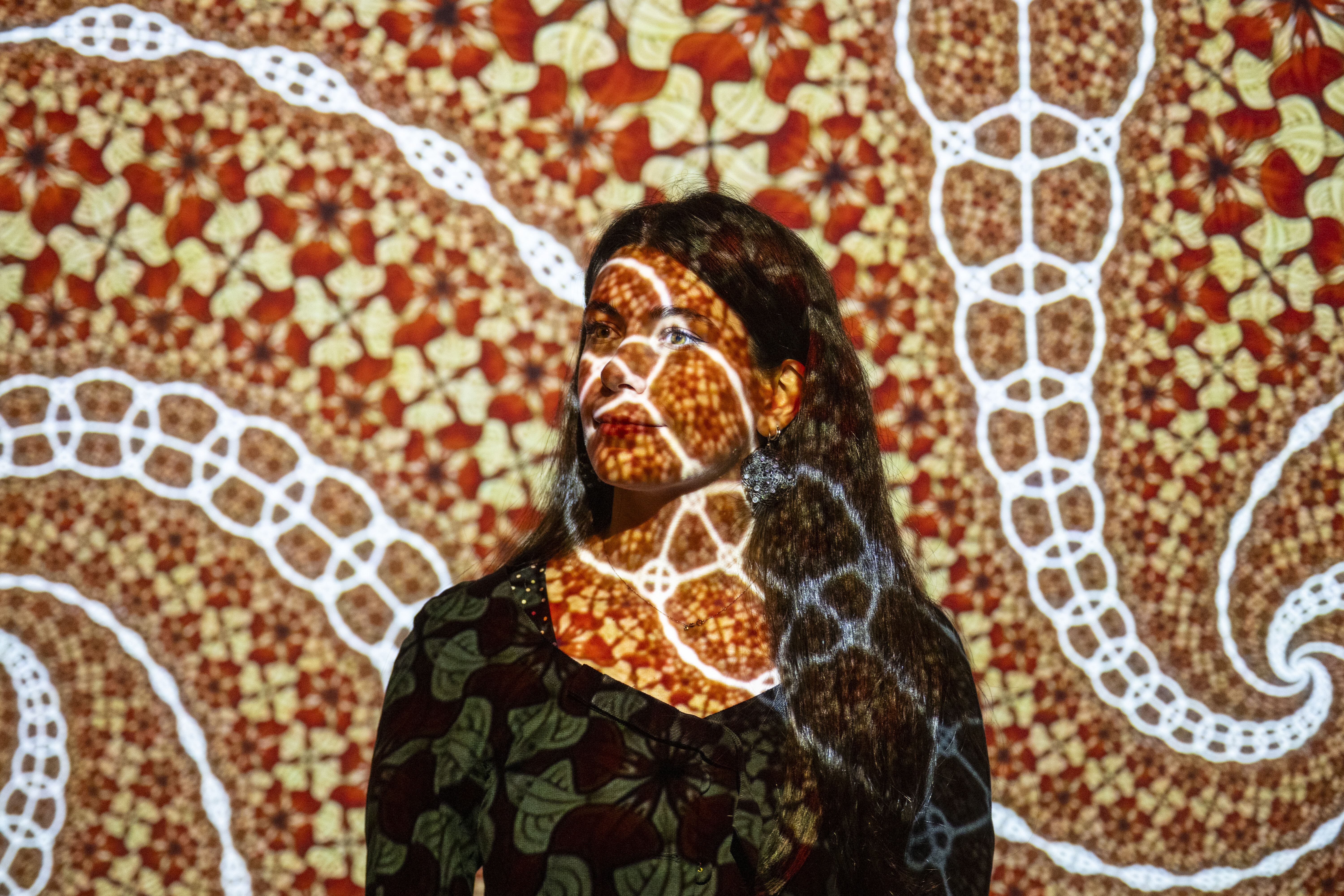
- 1936: The Alhambra Epiphany: A pivotal journey to the Alhambra in Granada, Spain, served as the catalyst for his obsession with tessellations. The Moorish tile work he encountered triggered a lifelong fascination with the interlocking of repeating forms. He would go on to catalog these possibilities in 137 watercolors, obsessively testing how shapes could occupy a two-dimensional plane without leaving a single gap.
- 1950s: The Era of Paradox: By mid-century, Escher had moved beyond simple pattern-making. He began a dialogue with the mathematical community, producing the iconic lithographs—Relativity, Ascending and Descending, and Waterfall—that challenged the very structure of space.
- 1960s–Present: The Counterculture Hero: Despite his own confusion regarding his sudden popularity, Escher became a defining figure of the 1960s. His work, which mirrored the psychedelic, reality-bending interests of the era, found its way onto album covers, posters, and into the DNA of modern film and animation.
The Architecture of Impossible Spaces: Supporting Data
The Somerset House exhibition features over 150 original works, providing a rare opportunity to trace the artist’s evolution. Data from the exhibition curators highlights the sheer scale of Escher’s output and his influence:
- 150+ Works: The exhibition is the largest UK-based collection of Escher’s woodcuts, lithographs, and mezzotints, many of which have been sourced from international private and public collections.
- The "Print Gallery" Resolution: One of the most famous pieces, Print Gallery (1956), remained famously incomplete in the center for decades. It was not until 2003—nearly 30 years after his death—that a team of mathematicians using advanced computational analysis finally "completed" the missing section, proving the internal consistency of his warped perspective.
- Global Cultural Reach: Escher’s work has been cited as a primary influence in films ranging from Jim Henson’s Labyrinth to the mind-bending sequences in Christopher Nolan’s Inception. His legacy persists in modern architecture and computer-aided design (CAD) software, where "Escherian" logic is often used to test the boundaries of spatial rendering.
The "Serious Game": A Professional Perspective
Escher himself characterized his work as "a game; a very serious game." This definition is crucial to understanding why his art remains so resonant today. In our current era of visual abundance—where systems generate millions of images daily based on predictive patterns—Escher’s work stands in sharp contrast. He did not use algorithms to create; he used the "algorithm" of his own mind, a stubborn adherence to the "what if" of geometry.
"The Somerset House show," says lead exhibition researcher Dr. Elena Rossi, "communicates the force of his intellect. He wasn’t just drawing pictures; he was stress-testing the human brain’s ability to perceive volume and depth. When you look at an Escher, you aren’t just looking at a print; you are participating in a neurological experiment he started over 70 years ago."
Implications for Modern Creativity
The exhibition’s final section, Eschermania, examines the artist’s transition from a solitary printmaker to a global cultural icon. For the modern creative, this section offers a vital lesson. Escher’s influence across physics, mathematics, music, and design did not come from a desire to be popular or "marketable." It came from his commitment to universal themes: the nature of infinity, the definition of the paradox, and the persistent, uncomfortable gap between what we see and what we know to be true.
In a digital landscape increasingly cluttered by "blandscapes"—images that look like everything else because they were trained on everything else—Escher provides a roadmap for innovation. He proves that the most enduring work is that which refuses to cater to the status quo. Whether you are a graphic designer, a student of physics, or an architect, the takeaway is clear: the rules are meant to be understood, but they are also meant to be played with.
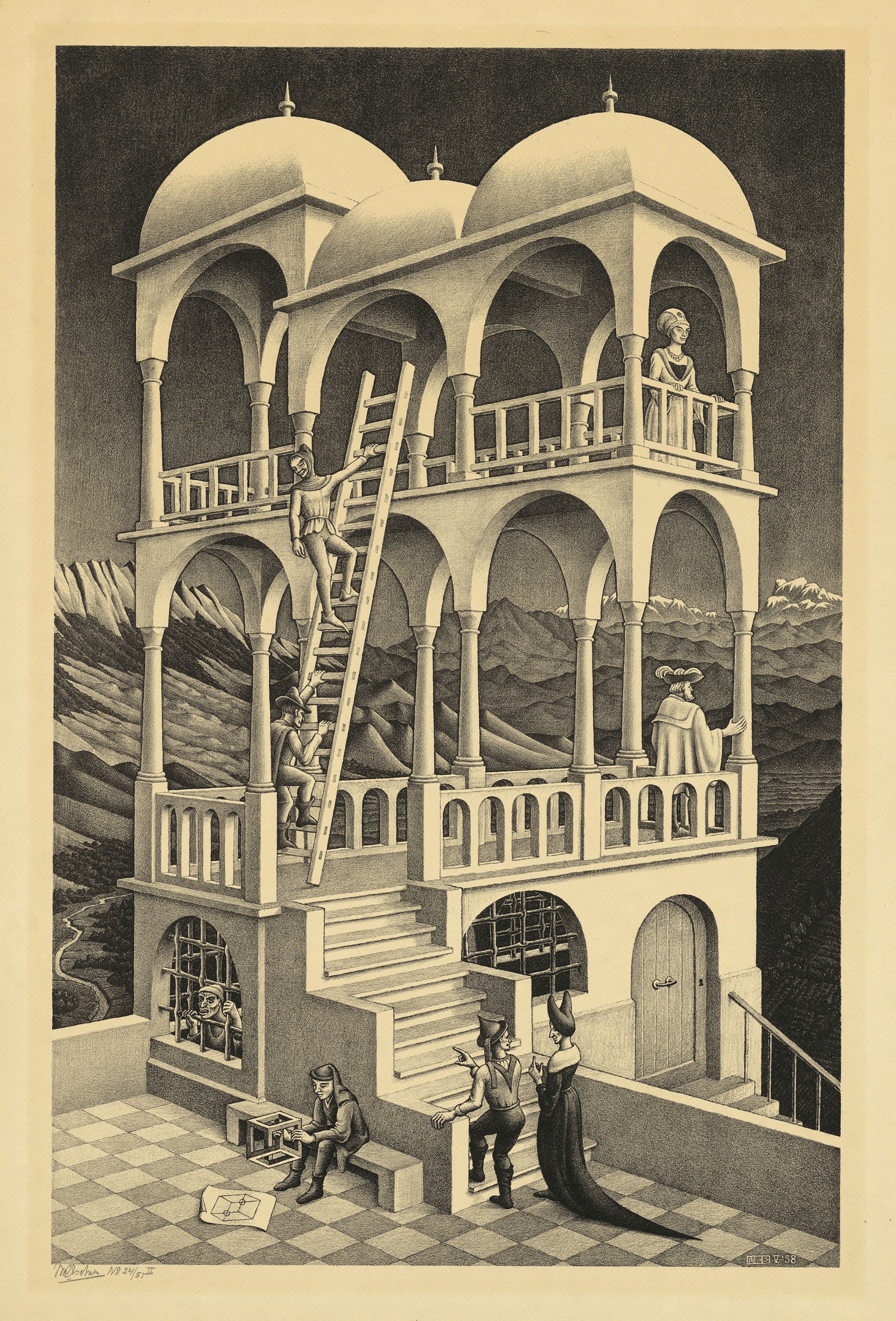
Visiting the Exhibition
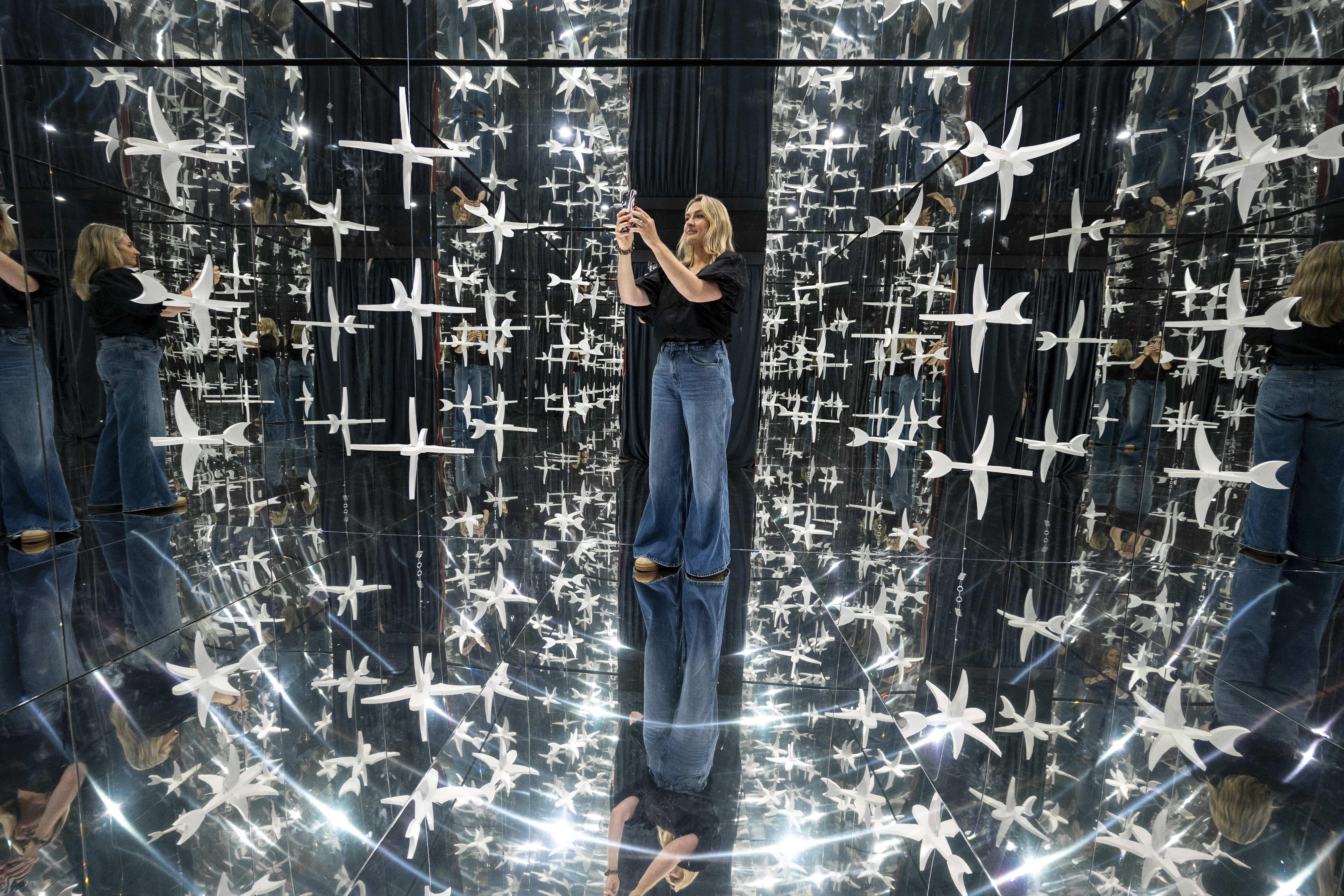
M.C. Escher: The Exhibition is open at the Embankment Galleries, Somerset House, until September 6. The experience is enhanced by several immersive rooms that allow visitors to step inside the artist’s mind, including a "Relativity Room" that challenges your sense of gravity and scale.
Tickets start at £12, available via london-mc.escher-expo.com. For those attending on June 17, the artist’s 128th birthday, the exhibition organizers, Fever, are offering a 15% discount on admission—a small gesture of celebration for a man who turned the world inside out and taught us to see the infinite in a single sheet of paper.
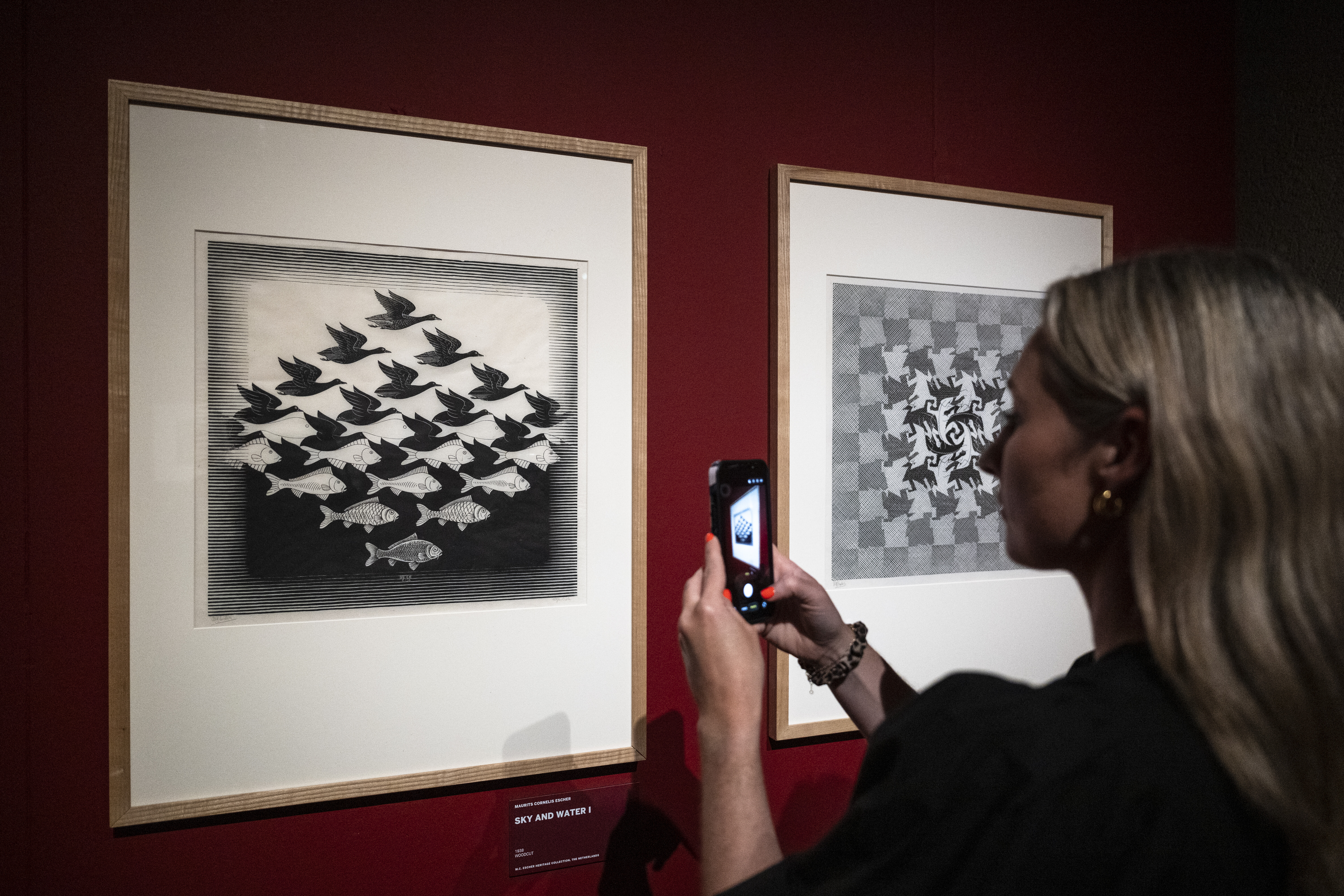
As we move deeper into an era defined by artificial synthesis, the human-made, mathematically rigorous, and deeply idiosyncratic world of M.C. Escher feels more essential than ever. He reminds us that the most incredible spaces we can inhabit are not those we build with steel and glass, but those we construct with nothing more than ink, paper, and the courage to challenge reality itself.


 Neng Nana
 Dwi Wanna