

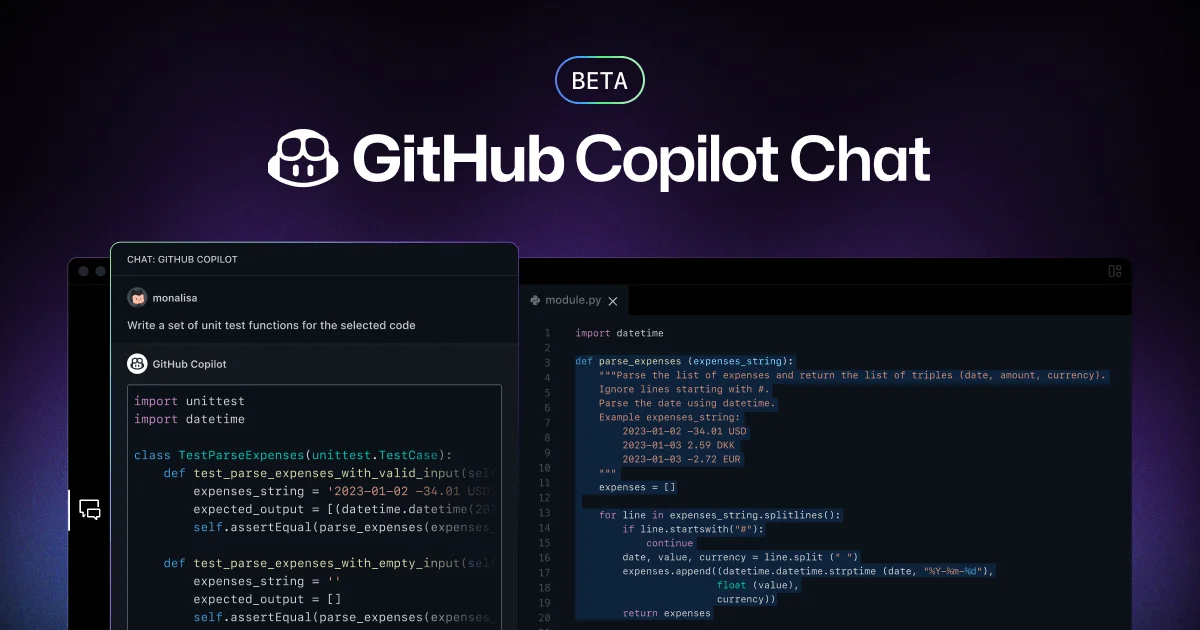
The era of predictable, low-cost AI coding assistance appears to be drawing to a close. Microsoft-owned GitHub has announced a seismic shift in its monetization strategy for Copilot, moving away from the familiar flat-rate monthly subscription model toward a granular, token-based usage system. Effective June 1, this change promises to fundamentally alter the cost-benefit analysis for independent developers and small startups alike, effectively ending the "all-you-can-eat" model that helped define the early adoption phase of generative AI in software engineering.
For many, the transition represents more than just a price hike; it signals the end of an experimental "honeymoon period" where Microsoft incentivized heavy, indiscriminate use of its LLM-powered coding assistants. As the company seeks to align its revenue models with the high operational costs of running advanced AI models, the developer community is left to grapple with the fallout.
The Shift: From Flat-Rate to Token-Consumption
For years, GitHub Copilot was marketed as a flat-rate utility, similar to a standard software-as-a-service (SaaS) subscription. Users paid a fixed monthly fee, and in exchange, they gained access to an AI pair programmer capable of generating boilerplate code, debugging complex functions, and translating natural language into syntax.
However, on June 1, that model will be retired in favor of usage-based billing. Under the new system, users will be billed based on the number of "tokens"—the fundamental units of text and data processed by large language models—consumed during their coding sessions.
For the average developer, this shift is not merely a change in administrative accounting; it is a potential financial shock. The reliance on token consumption means that a developer’s bill will be directly proportional to their interaction volume, the complexity of their prompts, and the amount of "chatter" between their IDE and the backend models. While enterprise-scale organizations may have the operational budget to absorb these fluctuations, small businesses and freelance coders are already raising alarms about the sustainability of their workflows.
Chronology of a Controversy: The Reaction
The announcement triggered an immediate, visceral reaction across social media platforms, including Reddit and X. Developers, accustomed to the stability of a $20–$30 monthly expense, were shocked to discover that their projected usage costs under the new model could reach into the thousands of dollars.
The "Financial Whiplash" Phase
In the days following the announcement, forums like the r/GithubCopilot subreddit became a hub for "bill shock" screenshots. One user shared evidence that their monthly costs—previously around $29—would balloon to nearly $750 under the new usage model. Another user reported a projected surge from $50 to a staggering $3,000.
These testimonials have created a narrative of "financial whiplash," where users who were encouraged to integrate Copilot into every facet of their workflow now find themselves penalized for the very habits they were taught to cultivate.
The Developer Divide: "Vibe Coding" vs. Engineering
The backlash has not been universal. A subset of the developer community has pushed back against the complaints, suggesting that the astronomical bills are largely the result of inefficient usage. These critics argue that users who see massive price spikes are likely engaging in what they term "vibe coding"—a style of development characterized by excessive, bloated iterations, repetitive queries, and a lack of refined prompt engineering.
"The vast difference between some of us working all day and still barely having overage and then these screenshots is stark," one developer noted in an online discussion. "The only way it gets crazy like that is if you are purely ‘vibe coding’ with a ton of bloated iterations. It’s pretty affordable for even small outfits if used as a tool."
This perspective highlights a growing divide in the industry: those who treat AI as a surgical tool for productivity, and those who use it as a "black box" engine to generate code without fully understanding the underlying mechanics of the request.
Economic Realities: The Cost of the AI "Gold Rush"
Beyond the immediate frustration of users lies a broader, more uncomfortable question: How much money was GitHub losing on the flat-rate model?
Running advanced large language models (LLMs) is an incredibly capital-intensive endeavor. The inference costs associated with processing thousands of lines of code, maintaining context windows, and supporting multi-agent architectures are substantial. For years, Microsoft arguably subsidized this behavior to capture market share and entrench Copilot as the industry standard.
As one Reddit user astutely asked, "Holy f***, how much money was Copilot losing?"
The transition to usage-based billing suggests that Microsoft has reached the limits of its "growth-at-all-costs" phase. To make the AI division profitable—or even break-even—the company is shifting the burden of inference costs directly onto the consumer. The mystery remains as to why this pivot was not handled with more transparency, particularly given the reliance of the developer community on the tool.
Implications: The "Rug Pull" Effect
Perhaps the most significant criticism leveled at Microsoft is the accusation of a "rug pull." For years, Microsoft and GitHub encouraged developers to use Copilot indiscriminately. They built tools that made it easier to spawn dozens of sub-agents, run long-duration background processes, and perform heavy-duty code generation.
Critics argue that by actively encouraging this behavior, Microsoft built a specific user dependency, only to fundamentally change the rules of the game once that dependency was firmly established.
"Microsoft provided this billing method and they kept making it easier and easier to burn through massive numbers of tokens on single premium requests," one user observed. "To all the people blaming the people who actually used the system the way that Microsoft built it… the only one at fault here is Microsoft."
The Strategic Impact
The implications of this move for the broader tech industry are profound:
- Market Consolidation: Smaller developers may be priced out of premium AI features, potentially leading to a bifurcation in the market where only elite, well-funded teams can afford the highest-tier AI assistance.
- Shift in Workflow: We may see a return to more conservative coding practices, where developers perform more logic locally before querying the AI, effectively "optimizing for token usage" rather than just productivity.
- Competitive Opportunity: This move could open the door for open-source AI coding assistants or smaller, more cost-effective competitors that offer transparent, fixed-rate pricing structures, challenging GitHub’s dominance.
Official Responses and the Path Forward
As of the time of publication, Microsoft has remained largely silent regarding the specific criticisms of the new pricing model. While the company has provided documentation on the technical aspects of the shift, it has yet to offer a formal response to the claims that the new pricing is predatory or that it unfairly penalizes long-term users.
TechCrunch reached out to Microsoft for comment, but the company did not respond by the time this article went to press.
Looking Ahead
The transition to usage-based billing is a litmus test for the sustainability of generative AI in professional software development. If the new pricing structure results in a mass exodus of smaller users, Microsoft may be forced to backtrack or introduce a "capped" tier that protects developers from runaway costs.
Conversely, if the market absorbs these costs, it will set a new precedent for the software industry: AI, once a cheap utility, is evolving into a premium, consumption-based commodity. For the developer, the lesson is clear: the era of free-flowing, cost-agnostic AI assistance is officially over. The future of coding will not just require technical skill; it will require financial literacy in the management of AI compute resources.
As June 1 approaches, the developer community remains in a state of uneasy transition, waiting to see if Microsoft will offer concessions—such as usage alerts or tiered cost-control features—to mitigate the sting of a policy that threatens to make the "AI-powered developer" a luxury rather than a standard.












No comments yet. Be the first to join the conversation!