

In an era defined by the "attention economy," marketing leaders are facing a paradox: they are drowning in information yet starving for insight. Every day, the digital landscape is flooded with an endless stream of white papers, thought-leadership LinkedIn posts, case studies, and podcasts. For the modern executive, the challenge is no longer accessing information—it is filtering it.
Convince & Convert (C&C), a prominent voice in the digital marketing strategy space, has officially recognized this shift. The organization is pivoting its flagship newsletter, formerly known as ON, into a new, streamlined, and insight-driven publication titled The Trendline. This evolution is not merely a branding exercise; it is a fundamental shift in how brands must approach audience engagement when the traditional "listicle" format no longer cuts through the noise.
The State of the Inbox: The Case for Curation
The core thesis driving The Trendline is that today’s marketing leaders do not need more content—they need better filters. With the democratization of content creation, the volume of available information has reached a saturation point where the quality bar has been raised significantly.
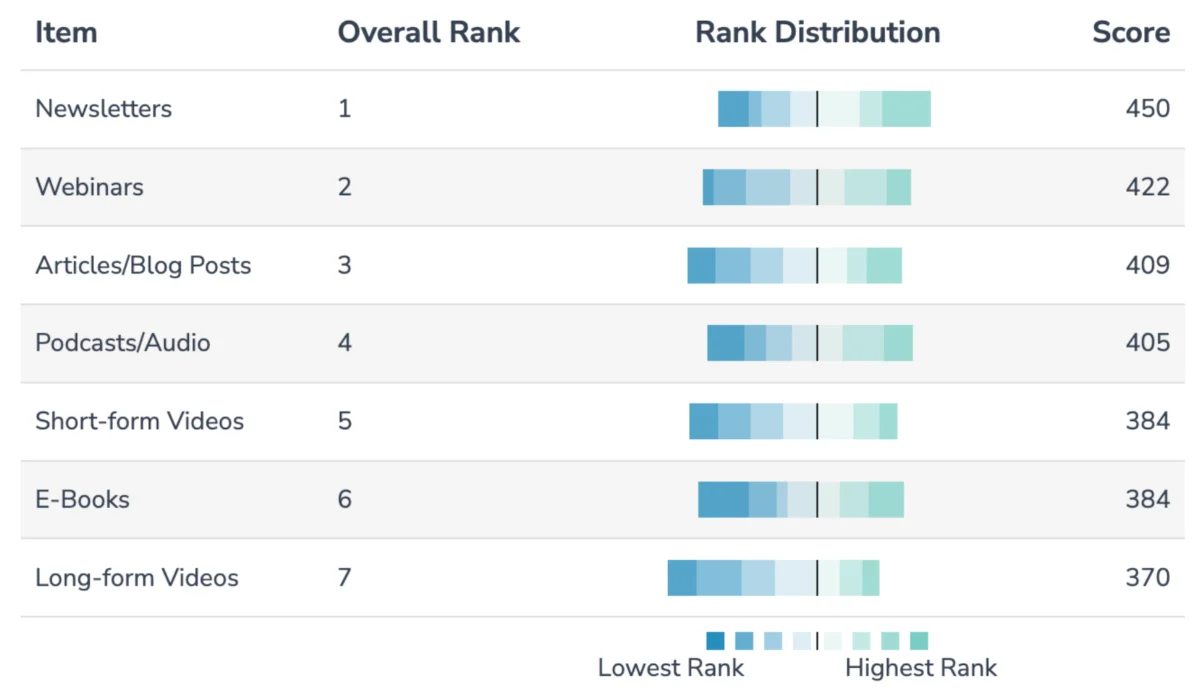
Data from recent audience research conducted by Convince & Convert reveals a telling trend: when asked to rank their preferred methods for consuming marketing insights, respondents placed newsletters at the top, significantly ahead of short-form video, webinars, blogs, and podcasts.
Chronology of the Shift
For years, the standard playbook for email marketing involved a consistent, high-volume dissemination of brand updates and content links. Convince & Convert followed this model, aggregating their podcasts, blog posts, and research into a single, reliable digest.
However, as the digital ecosystem matured, the team observed a decline in the perceived value of this "link-heavy" approach. The traditional newsletter, which functioned as a repository of links, began to struggle against the "click-fatigue" that plagues modern professionals. By analyzing engagement data and conducting annual surveys, the C&C team identified a clear gap: their audience wasn’t just looking for content; they were looking for a strategic, interpretive lens.
Supporting Data: What the Audience Wants
The decision to rebrand and restructure was backed by rigorous quantitative and qualitative analysis. When C&C surveyed its audience, the results were unequivocal: newsletters were nearly twice as likely to be ranked as the preferred source of professional insight compared to any other medium.
The rationale is psychological: a well-crafted newsletter acts as a cognitive shortcut. It saves the reader the "labor" of filtering through the noise. By providing the "why" behind the "what," a newsletter transitions from being a mere content delivery vehicle to a strategic partner. This aligns with a broader trend in the creator economy, where readers are increasingly turning to curated publications—like niche Substack newsletters or specialized industry briefs—to make sense of rapid market changes.

Implications for the Modern CMO
The implications of this shift are profound for any organization currently relying on legacy email marketing strategies. The "set it and forget it" approach to newsletters is increasingly risky. If a brand fails to provide utility within the email body itself—without forcing the reader to click a link—it risks losing the very audience it seeks to cultivate.
For marketing leaders, the lesson is clear:
- Value Upfront: Deliver insights within the body of the email. Do not hide the "aha!" moment behind a click-through barrier.
- The "Debrief" Format: Structure content as an executive summary. Focus on the implications of the news, not just the news itself.
- Strategic Context: Answer the questions: "Why does this matter?" and "What should we be doing differently because of this?"
Official Response: The Birth of ‘The Trendline’
The transition from ON to The Trendline represents a structural departure from medium-based curation to topic-based intelligence.
"Marketing leaders don’t have time for constant deep dives," the C&C team notes. By positioning The Trendline as a "debrief," the publication aims to filter out the noise and focus on actionable intelligence. The new format focuses on four key pillars:
- Topical Hierarchy: Prioritizing stories based on their strategic importance rather than the medium (e.g., blog vs. podcast).
- The "So What?" Factor: Every inclusion is accompanied by a brief analysis of its impact on the marketing landscape.
- Compact Utility: Ensuring that the newsletter is highly scannable and digestible for busy professionals on the move.
- Direct Engagement: Using interactive elements, such as "Sound Off" polls, to gather real-time sentiment from the readership.
The choice of the name "The Trendline" was intentional. It evokes a sense of movement and direction, reflecting the publication’s goal to help readers spot where the industry is headed rather than just reporting on where it has been.
Redefining Email Marketing Strategy
The overhaul of the newsletter is a microcosm of a larger, necessary evolution in content marketing. In a landscape where trust is the most valuable currency, the goal of an email strategy should be to build authority through consistency and, crucially, helpfulness.
The Anatomy of an Effective Newsletter
According to the principles adopted by the C&C team, an effective modern newsletter must possess several distinct characteristics:
- Consistent Voice: The reader should feel as though they are receiving a personal briefing from a trusted expert rather than a broadcast from a faceless corporate entity.
- Low Friction: The value must be accessible without excessive interaction. While links should be available for those who want to dive deeper, the core message must stand on its own.
- Interactive Feedback Loops: By integrating polls and questions, creators can transform a monologue into a dialogue, providing valuable data that helps refine future content.
Lessons for Marketing Leaders
For leaders at other organizations, the lessons from the C&C pivot are applicable regardless of industry. The first step in any strategy refresh is acknowledging that audience behavior has changed.

1. Prioritize Audience Research
Do not assume that the format which worked five years ago is working today. Conduct annual or bi-annual surveys to understand how your specific audience prefers to consume information. Are they looking for brevity? Deep-dive analysis? Audio summaries?
2. Shift from "Content Creator" to "Content Curator"
There is a massive surplus of content in the world. Being the "filter" for your audience is a high-value service. When you curate, you provide the value of time saved, which is a powerful incentive for loyalty.
3. Optimize for the "Mobile-First" Executive
Most professional content is consumed during gaps in a busy schedule—waiting for a meeting, commuting, or checking emails between tasks. If your content isn’t easily scannable and insightful on a mobile screen, it won’t be consumed.
4. Measure What Matters
Move beyond vanity metrics like open rates, which are becoming increasingly unreliable due to privacy changes in email clients. Focus on engagement metrics that signify deeper investment, such as replies, poll participation, and click-throughs on specific, high-value insights.
Conclusion: A New Era of Connection
The evolution of The Trendline serves as a case study for the future of B2B communication. As the digital landscape becomes increasingly crowded with AI-generated content and generic updates, the brands that win will be those that provide human-centric, curated, and strategically relevant insights.
Marketing leaders are not looking for more noise; they are looking for a signal. By respecting the reader’s time, delivering value upfront, and fostering a genuine connection, organizations can turn their newsletters from an ignored utility into a trusted, indispensable resource. The shift from ON to The Trendline is, ultimately, a commitment to the idea that in an age of infinite content, the most powerful tool a brand possesses is its ability to help its audience think more clearly.











