

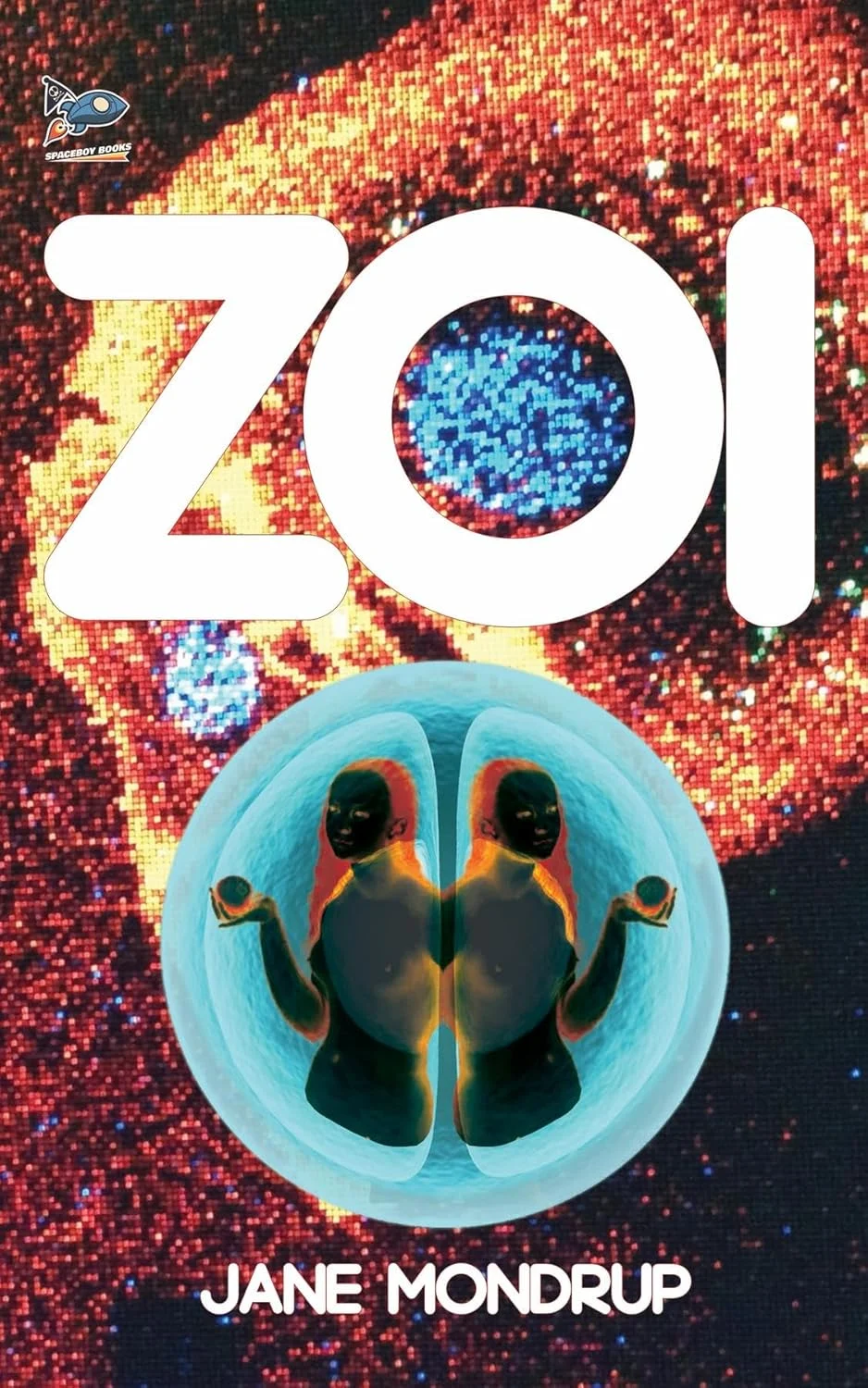
In the annals of science fiction, the "First Contact" narrative often leans heavily on the architecture of the encounter. Whether it is the grand, spinning cylinders of Arthur C. Clarke’s Rendezvous with Rama or the ominous, sleek vessels of Arrival, humanity has historically framed the alien as a mystery to be solved—a puzzle of geometry, physics, and intent. However, with the release of Jane Mondrup’s latest novel, Zoi, the genre is forced to reckon with a more visceral, biological, and unsettling paradigm.
Zoi presents a near-future solar system punctuated by the arrival of eponymous, amorphous entities. These "zoi" are not machines, nor are they monoliths. They are living, space-faring organisms that defy conventional human categorization. As they drift into our orbit, wait, and depart, they offer humanity the tantalizing keys to interstellar travel, provided we can understand them. But, as Mondrup’s protagonist Amira discovers, understanding the zoi requires a surrender of the very autonomy we define as human.
The Chronology of the Zoi: A New Space Age
The narrative arc of Zoi is bifurcated, weaving between the protagonist Amira’s formative years and the claustrophobic reality of her present.
The Arrival (Past)
The story begins with the arrival of the first zoi, an event that anchors Amira’s trajectory from the age of five. Captivated by what she described as a "shining lump between the stars," a young Amira becomes obsessed with the scientific potential of these entities. Her path is one of singular, unwavering dedication. The reader follows her through decades of preparation, academic rigor, and the shedding of personal ties—most notably her relationship with Natan, her partner—in favor of the ultimate scientific objective: a one-way expedition into the interior of a zoi.
The Departure (Present)
In the present day, Amira is one of four crew members—alongside Kiah, Evardo, and Linn—aboard a zoi as it initiates its departure from the solar system. There is no turning back. The crew has relinquished control over their trajectory, placing their lives in the hands of an entity that neither speaks nor thinks in human terms. As the zoi leaves the reaches of our sun, the narrative shifts from the wonder of discovery to the grim reality of survival.
Supporting Data: The Anatomy of an Alien
Unlike the sterile, mechanical interiors of traditional hard SF, the zoi are biological landscapes. Descriptions of "organelles," "cytosol fluid," and "transparent membranes" ground the novel in a reality that feels more like xenobiology than traditional space travel.
Physiological Reciprocity
The most striking element of the zoi is its capacity for "active hospitality." When the first astronauts probed the entity with machines, the zoi remained unresponsive. However, the moment human flesh touched its membrane, the surface yielded, forming a cavity shaped for a human body. As the crew explores further, they find the zoi actively synthesizing breathable atmospheres and chambers.
This is not a passive environment. The zoi is learning, reacting, and—perhaps most chillingly—adapting to its passengers. The crew soon discovers that while they are attempting to study the zoi, the zoi is, in turn, altering them.
The Psychological Toll: Self-Alienation
The central conflict of the novel is not found in a struggle against external villains, but in the internal disintegration of the crew. The biological influence of the zoi manifests as erratic mood swings, inexplicable physical sickness, and powerful, alien urges.
The Divergent Paths of the Crew
The four crew members represent different modes of human interaction with the "other":
- Kiah: The psychologist, who adapts rapidly to the environment, viewing the zoi as a partner in a reciprocal exchange.
- Linn: The biotech expert, who represents the human desire to exploit and synthesize. Her body, however, resists the influence of the zoi, manifesting a hostile immune response.
- Amira: The narrator, trapped in the middle. She is a woman of contradictions, having pursued this mission with "eyes open," only to find herself terrified by the loss of her own selfhood.
Amira’s struggle serves as the moral center of the book. She clings to the notion that the zoi is merely an object to be analyzed, even as her own biology shifts to accommodate the creature. When she laments her "childish faith" in the zoi’s friendliness, she is mourning the loss of the human-centric universe she once inhabited.
Official Perspectives and Philosophical Implications
While the novel focuses on an intimate cast of four, its themes resonate with broader, existential questions about humanity’s place in the cosmos.
The Myth of the "Explorer"
Mondrup offers a sharp critique of the mid-century sci-fi trope of the "explorer." In the Rama tradition, humans act upon the environment; the environment is a backdrop, a puzzle to be solved. Zoi challenges this, suggesting that this attitude is a form of hubris. By viewing the zoi as a resource for "human-model technology," Amira and her team are essentially colonizers, blind to the agency of the host they inhabit.
The Limits of Perception
The novel posits a challenging hypothesis: why should we expect an alien intelligence to conform to our standards of language or logic? The zoi communicates through hormonal and cellular interaction—a language that is far more fundamental and universal than the spoken word. The horror Amira feels is not because the zoi is "evil," but because it is indifferent to the human desire for distinction.
The zoi treats the crew as a part of its own ecology. For the reader, this raises uncomfortable questions about our own relationship with the biological environments we inhabit. We are not external observers of the world; we are embedded within it, subject to its shifts and its silent, chemical demands.
Critical Reception and Narrative Style
Mondrup’s prose is intentionally sparse, bordering on the clinical. This stylistic choice mirrors the setting: the rooms are functional, the mission is cold, and the stakes are existential. There are no grand speeches or high-octane gunfights. Instead, the pacing is driven by the mounting tension of the unknown.
Why Zoi Matters
- Authenticity of Encounter: Unlike many novels that sanitize contact, Zoi leans into the messy, bodily, and psychological costs of meeting something truly alien.
- A Shift in Focus: By keeping the scope small—four people in a few rooms—Mondrup forces the reader to focus on the interpersonal and the internal, making the "big" scientific concepts feel deeply personal.
- A Critique of Anthropocentrism: The novel successfully dismantles the idea that technology is the only path forward. It suggests that survival—and perhaps evolution—may require us to stop trying to "use" the universe and start learning how to exist within it.
Conclusion: The Final Compromise
Zoi is an essential addition to the modern science fiction canon. It effectively subverts the "Rendezvous" style of storytelling, replacing the cold wonder of a machine-made world with the terrifying, beautiful intimacy of a living one.
For those seeking a high-stakes, action-heavy space opera, Zoi may prove to be an exercise in patience. But for those interested in the profound psychological and biological implications of first contact, the novel is a masterclass. It does not provide easy answers about the motives of the zoi, nor does it offer a triumphant conclusion where humanity masters the stars. Instead, it offers something more honest: a look at the compromises we must make when our dreams finally arrive, and we realize they were never ours to control in the first place.











No comments yet. Be the first to join the conversation!