Evan Lee Salim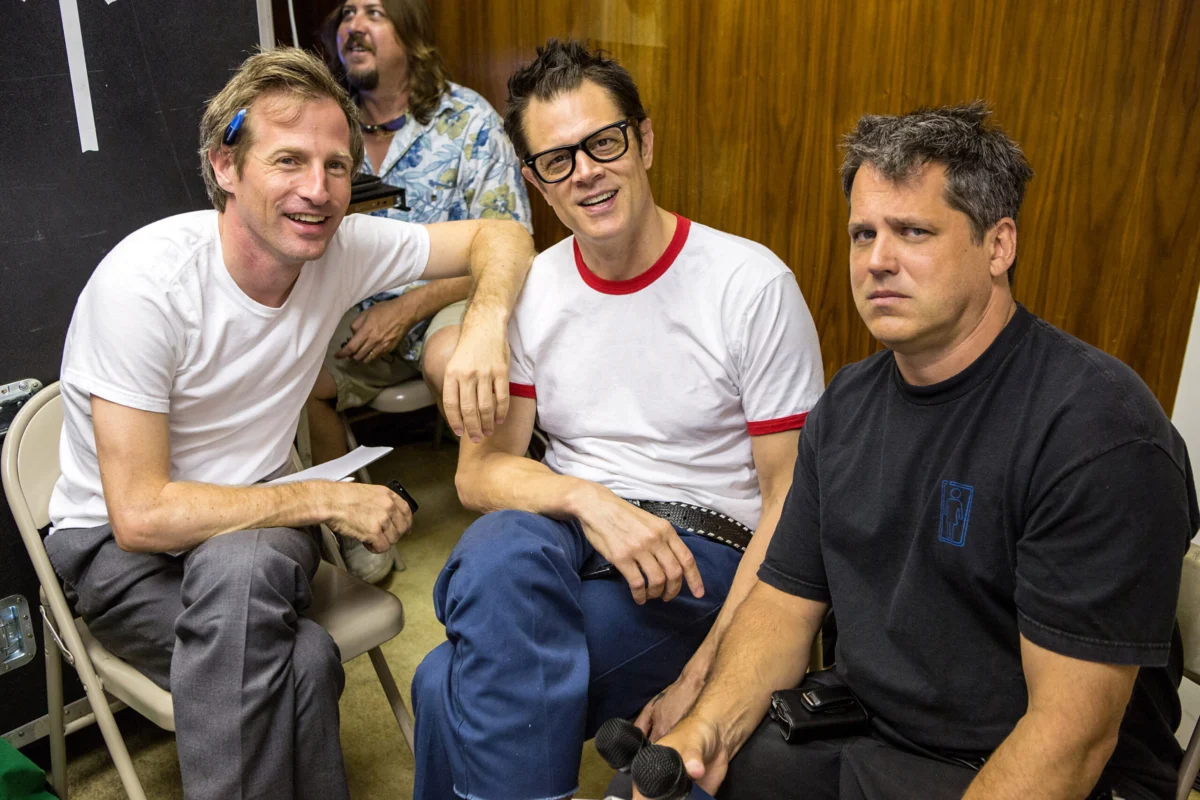
Before the MTV censors, before the worldwide box office dominance, and before the phrase "don’t try this at home" became a cultural mantra, there was a quiet, dimly lit office at Big Brother magazine and a handful of VHS tapes that looked more like evidence in a police investigation than the blueprints for a multi-million-dollar franchise.
In a recent appearance on IndieWire’s Filmmaker Toolkit podcast, director Jeff Tremaine pulled back the curtain on the origins of the Jackass phenomenon. It is a story of raw, unrefined ambition, Hunter S. Thompson-inspired gonzo journalism, and a moment of genuine terror involving a bulletproof vest and a loaded firearm that almost ended the career of Johnny Knoxville before it had even begun.
The Meeting of Minds: 1995 and the Wax Music Video
The story begins in 1995 on the set of a music video for the band Wax. The video, directed by the visionary Spike Jonze, was a masterclass in kinetic, low-budget ingenuity. It was there that Tremaine, then the editor of the seminal skateboarding publication Big Brother, first crossed paths with a young, aspiring daredevil named Johnny Knoxville.
At the time, Big Brother was carving out a niche in the subculture, serving as a chaotic, irreverent hub for skateboarders and provocateurs. It was a publication that balanced technical skate reporting with a perverse sense of humor that thrived on boundary-pushing. For Knoxville, it was the perfect vessel for his singular, if dangerous, artistic vision.
The Pitch: Gonzo Journalism and Stun Guns
By 1997, the professional dynamic between Tremaine and Knoxville had shifted. Knoxville approached his editor with a proposition that would eventually redefine the landscape of reality television. He didn’t want to write a standard profile or a mundane skate feature; he wanted to become a test pilot for his own physical endurance.
"He wanted to be a journalist, or he was trying to figure out, ‘How can I make money—I want to be a journalist that does this shit kind of a Hunter S. Thompson style,’" Tremaine recalled on the podcast.

The pitch list was, in retrospect, a harrowing inventory of potential workplace hazards. Knoxville proposed testing self-defense equipment on himself. His itinerary included being pepper-sprayed, absorbing the shock of a stun gun, enduring the piercing agony of Taser darts, and, most audaciously, donning a bulletproof vest to be shot in the chest at close range.
The Evolution of "Big Brother"
To the uninitiated, Big Brother was a skateboard magazine. To its staff, it was a "humor magazine disguised as a skateboard magazine." The editorial strategy was simple: identify individuals with massive, uncompromising personalities and document them as they navigated the fringes of society.
Tremaine, recognizing the potential in Knoxville’s reckless, self-destructive ambition, gave the green light. At the time, the magazine had begun experimenting with video production. Tremaine assigned cinematographer and future Jackass producer Dimitry Elyashkevich to document the stunt.
However, as the gravity of the bulletproof vest stunt set in, Tremaine had a moment of professional hesitation. Fearing for the safety of his star and his crew, he pulled the plug on the official production. But the spark was already lit. In a decision that would change the trajectory of their lives, Tremaine handed Knoxville a camera and gave him basic instructions on how to film himself.
The "Snuff Film" Aesthetic: A Near-Catastrophic Turning Point
The footage captured during that afternoon in the middle of nowhere is, by all accounts, far more harrowing than anything that ever made it to the MTV edit suite. In the new documentary Jackass: Best and Last, which excavates three decades of the franchise’s archive, viewers get a rare look at the raw, unvarnished tapes.
The scene is palpable in its tension. It features the sounds of nervous laughter, the heavy breathing of men who realize they are playing with mortality, and the sight of a poorly fitted, inexpensive bulletproof vest stuffed with pornographic magazines—a makeshift layer of padding that served as both a comic prop and a desperate attempt at protection.

The magazines falling out from under the vest while Knoxville held the firearm—distracted, fumbling, and dangerously close to a catastrophic accident—is the defining image of Jackass in its infancy. "It could’ve gone so fucking wrong," Tremaine admitted. "The recklessness and just home-madeness of it is what I found so compelling."
When the footage was returned to the Big Brother offices, it was clear that the project had outgrown the magazine. It wasn’t just a stunt; it was a documentary of a subculture on the brink of imploding or exploding into the mainstream.
Strategic Expansion: Enlisting Spike Jonze
Realizing he had caught lightning in a bottle, Tremaine reached out to his old friend, Spike Jonze. By this point, Jonze had already revolutionized the aesthetic of skateboard videos and was ascending toward his status as a legendary filmmaker.
"I called Spike and said, ‘Hey, I think we can make a TV show,’" Tremaine recounted. The roster of talent was already forming, with Chris Pontius, Steve-O, Wee Man, and Bam Margera circling the Big Brother orbit. But it was the sheer magnetism of the Knoxville footage—the terror, the grit, and the unscripted danger—that convinced them the concept was viable as a series.
Implications: The Legacy of "Jackass"
The pitch to MTV was straightforward, yet the execution required a delicate balance. They presented an eight-episode season that would eventually transform the cultural perception of reality television. While MTV ultimately refused to air the original footage of the gunshot stunt—deeming it too volatile for network broadcast—the ethos of the incident became the DNA of the show.
The inclusion of this origin story in Jackass: Best and Last serves as both a retrospective on their career and a stark reminder of the risks involved. The film carries a disclaimer that far exceeds any standard industry warning, underscoring that while Jackass became a global brand, it was born from a singular, irresponsible, and wildly creative impulse that was never meant to be replicated.

A Cultural Phenomenon
Looking back, the evolution from a niche magazine in California to a worldwide media empire is a testament to the power of authenticity. Tremaine never set out to be a TV executive; he was a man who loved skateboarding, humor, and the raw energy of his friends.
The Jackass legacy is not merely about the pain; it is about the camaraderie and the shared, often absurd, pursuit of the "big personality." As Tremaine noted, when he started editing that first piece of tape, he didn’t see a career path—he saw something larger than himself. He saw a cultural shift.
Today, as the franchise closes its final chapter with Best and Last, the industry looks back at the "homemadeness" of the early days with a mixture of nostalgia and disbelief. It remains one of the few instances in entertainment history where a group of friends, armed with nothing more than a camcorder and a complete disregard for their own physical well-being, successfully forced the world to look at them—and by extension, forced the industry to evolve.
For fans and filmmakers alike, the story of Jackass remains a cautionary tale about the thin line between brilliance and disaster, and a reminder that sometimes, the most influential art comes from the most reckless places.

 Asep Darmawan
 Layla Zulfa