In the 2021 satirical film Don’t Look Up, the world’s collective refusal to gaze toward the heavens served as a stinging metaphor for societal apathy regarding the climate crisis. Yet, in our modern reality, the problem isn’t that we aren’t looking up—it’s that we are almost exclusively looking down. Our collective posture has been permanently recalibrated by the smartphone, tethering our attention to a five-inch display and rendering the physical world around us as mere background noise.
However, a technological shift is on the horizon that threatens to break this cycle of digital myopia. As industry giants push toward the integration of smart glasses—wearable devices capable of projecting high-fidelity digital information, video, and augmented reality (AR) directly into our field of vision—the relationship between the physical and digital landscape is poised for a radical transformation. Far from rendering physical advertising obsolete, this evolution may well be the renaissance that the billboard industry has been waiting for.
The Evolution of Outdoor Media: A Chronology of Engagement
To understand the future of the billboard, we must first look at its trajectory. For over a century, the billboard has been a static, one-way broadcast medium. It was designed to capture a fleeting glance from a passing car or a pedestrian, relying on high-contrast imagery and punchy, memorable copy.
- The Early 20th Century: The golden age of the hand-painted wooden hoarding, relying purely on artistic impact and location.
- The Late 20th Century: The rise of vinyl wraps and high-powered floodlighting, allowing for larger, more consistent brand messaging.
- The Digital Transition (2000s–2010s): The shift to LED screens, enabling real-time content updates, animation, and dynamic video.
- The QR Code Era (2010s–Present): An attempt to bridge the gap between physical and digital. Despite heavy investment, the "scan to learn more" model has largely struggled to gain traction; the friction of pulling out a phone, opening a camera, and waiting for a browser to load is simply too high for the average commuter.
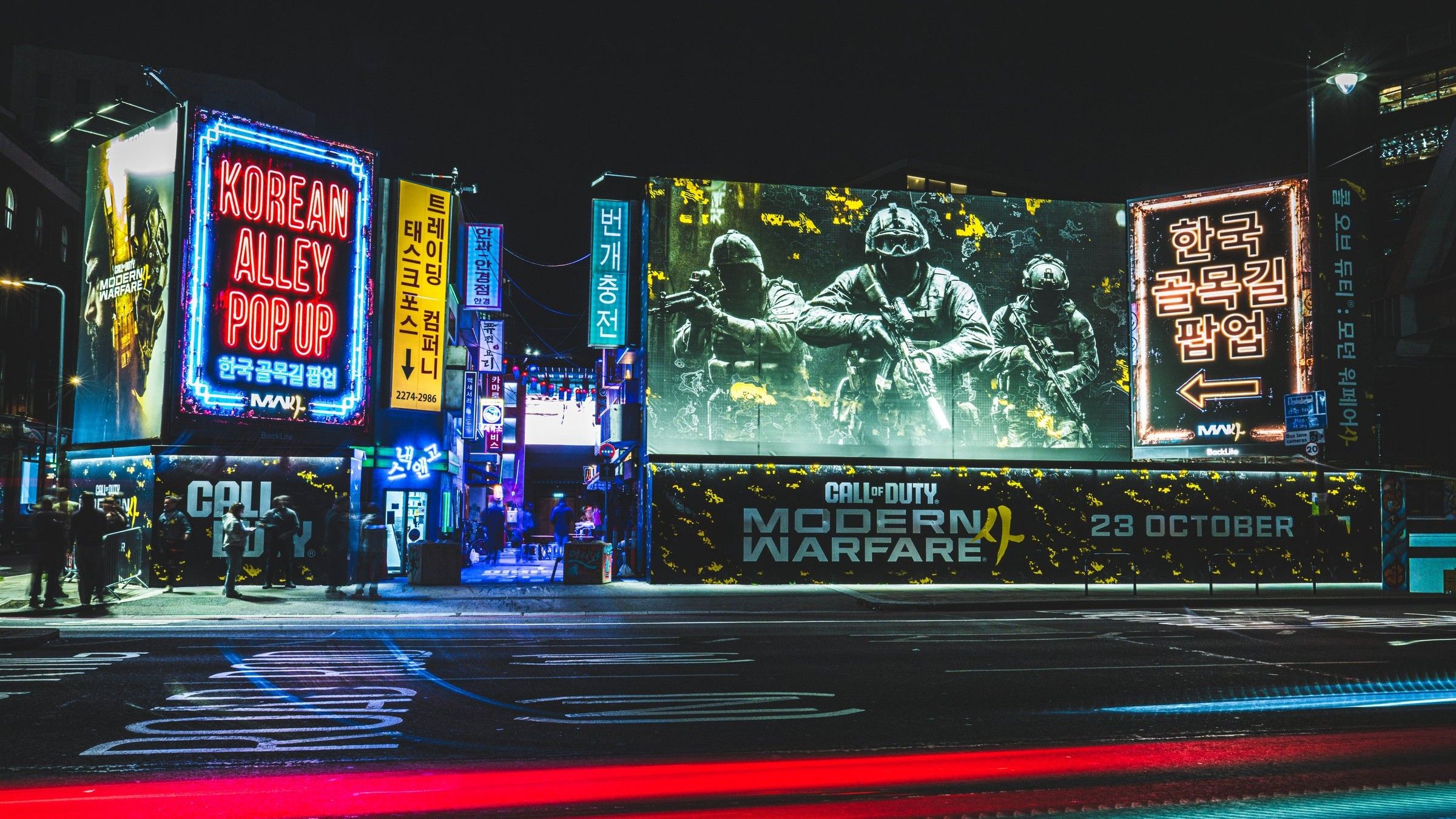
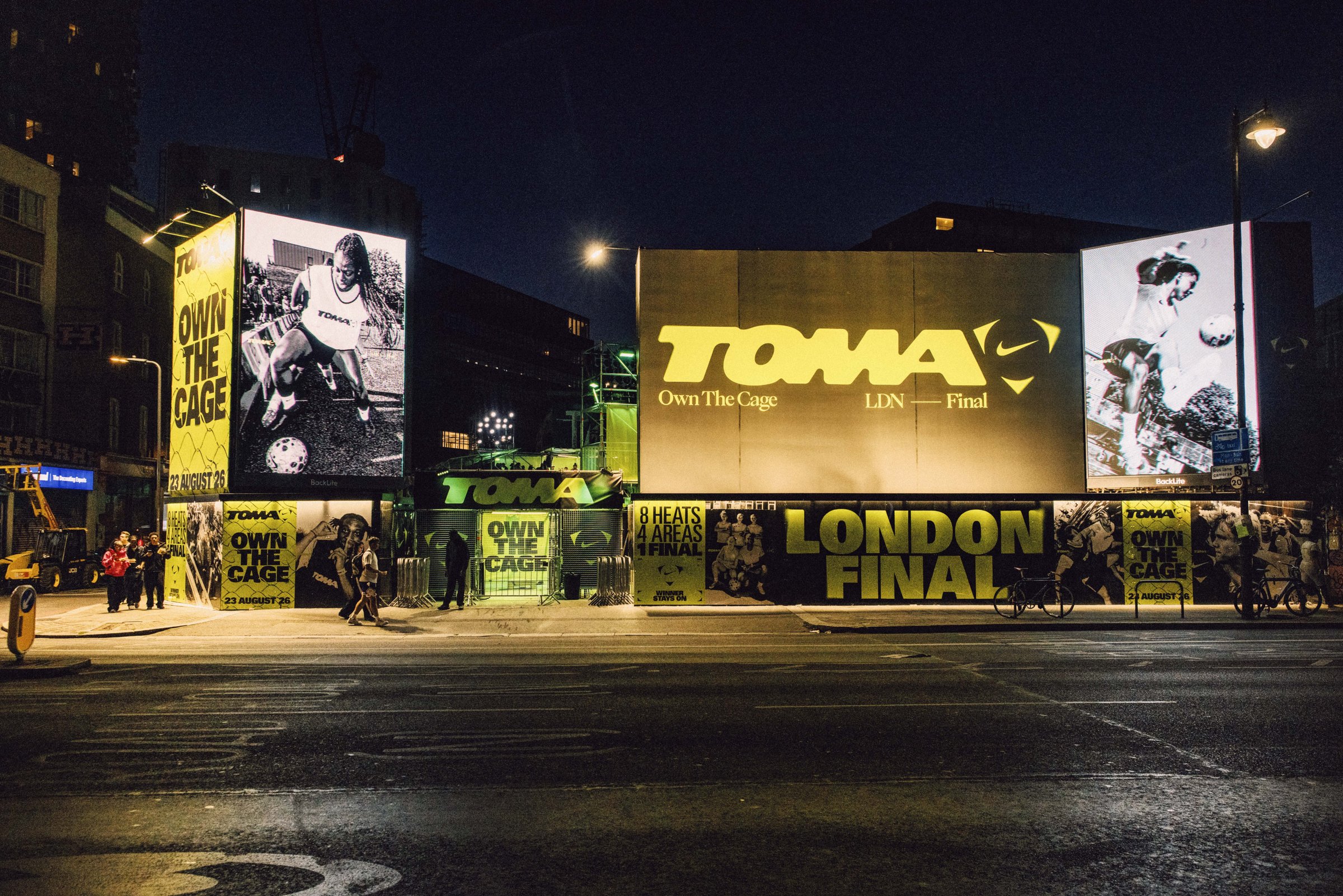
- The Immersive Present (2024–Beyond): The advent of site-specific, experiential advertising, as seen with London’s Electric Garden. This represents the current apex of physical engagement—creating a tangible, explorable space that serves as an extension of the brand’s digital presence.
The "Electric Garden" Model: Bridging Physicality and Digital Hype
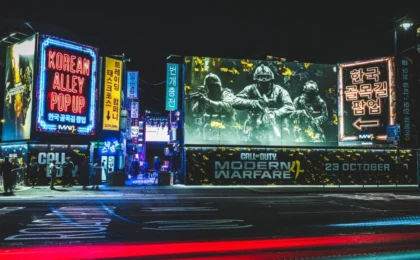
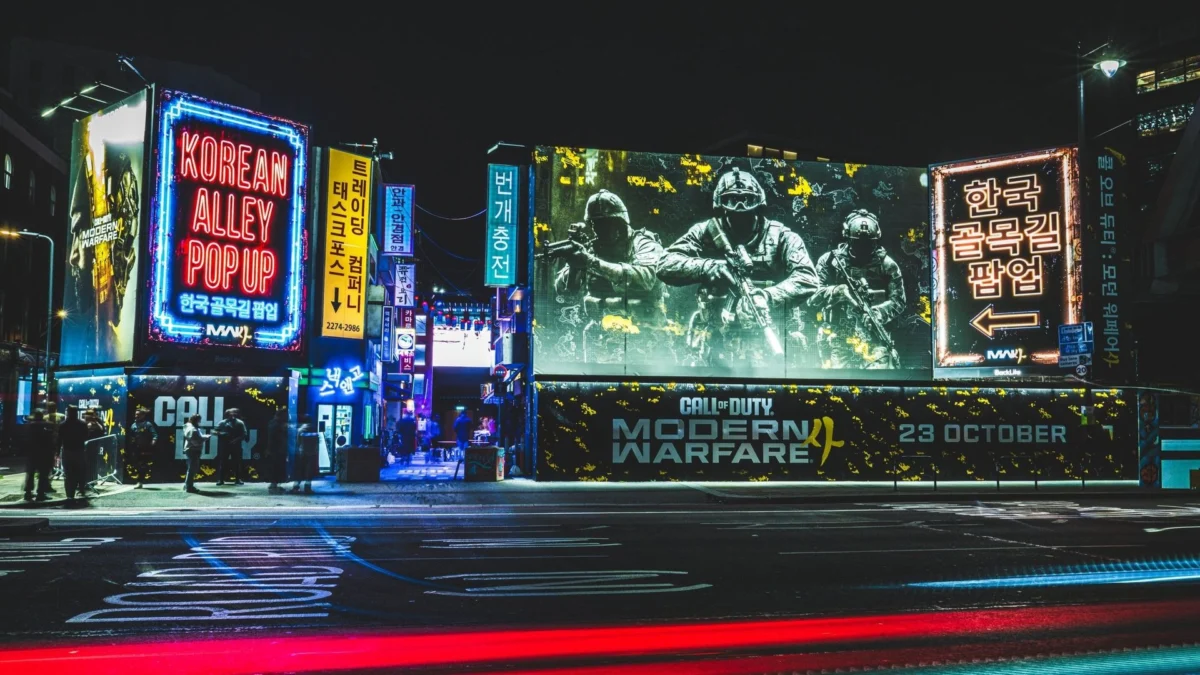
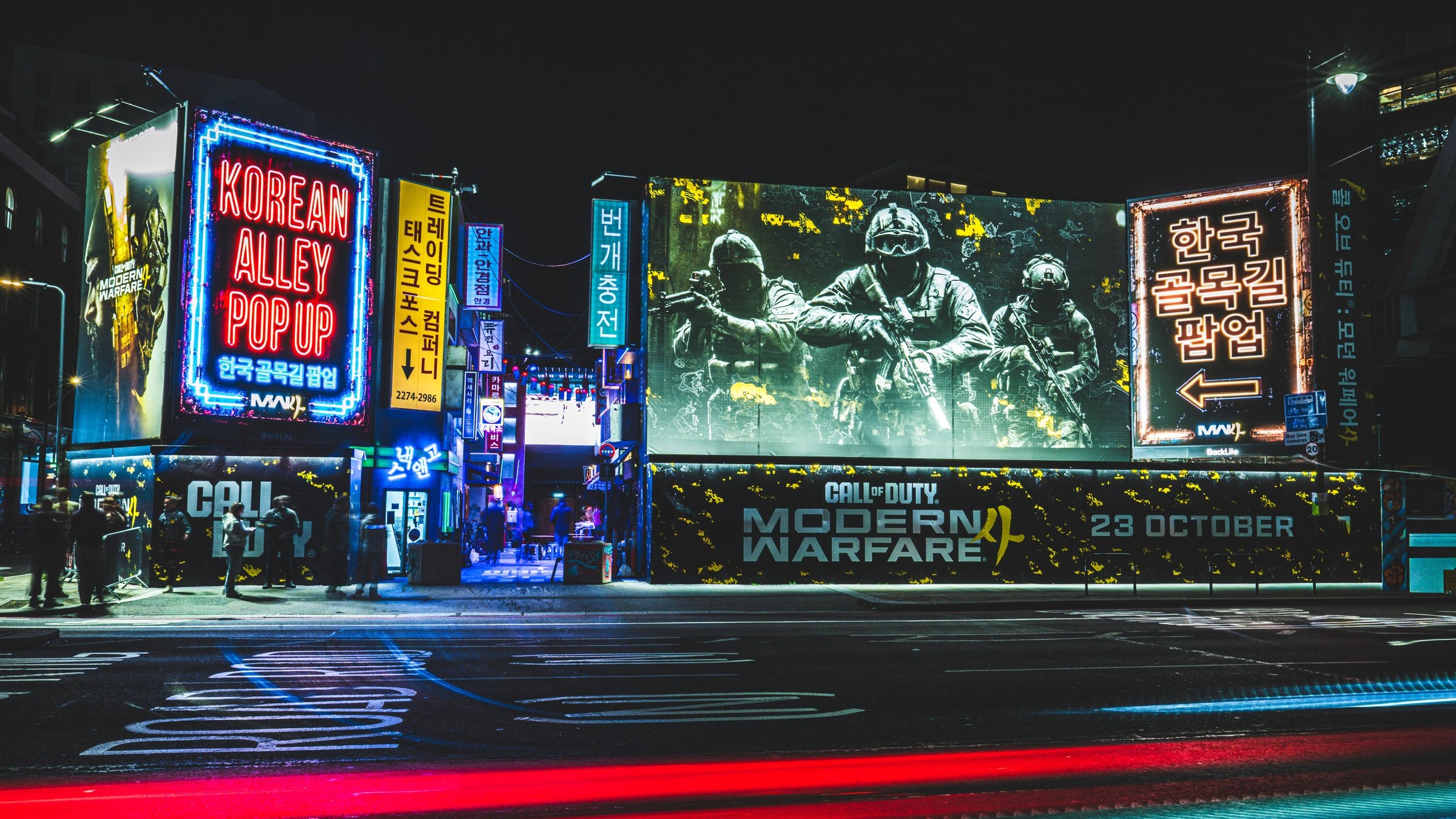
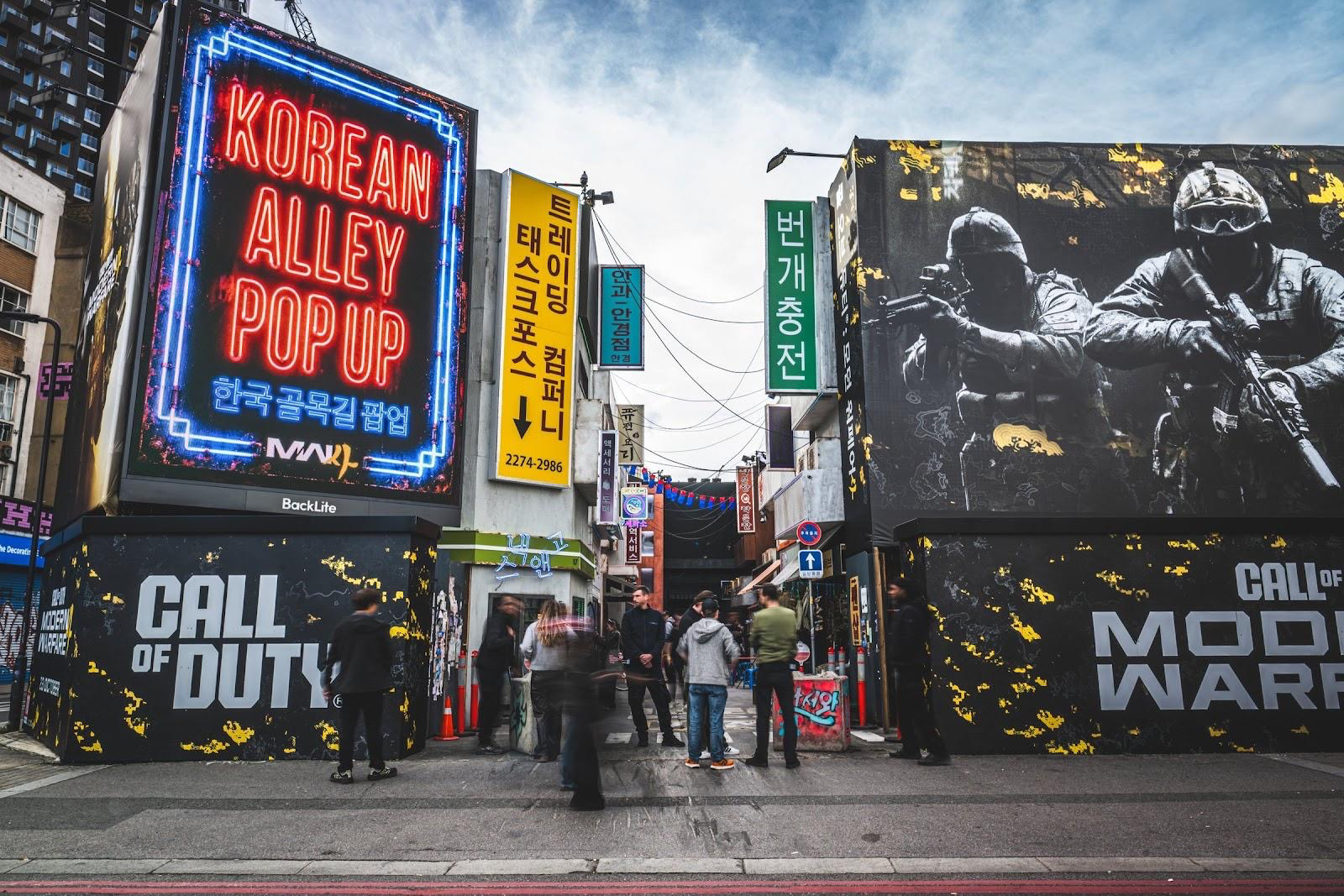
In East London, the Electric Garden on Shoreditch High Street offers a glimpse into what this hybrid future looks like. Spanning 21,000 square feet, this "walk-in billboard" is designed to transcend the limitations of the flat, two-dimensional screen.
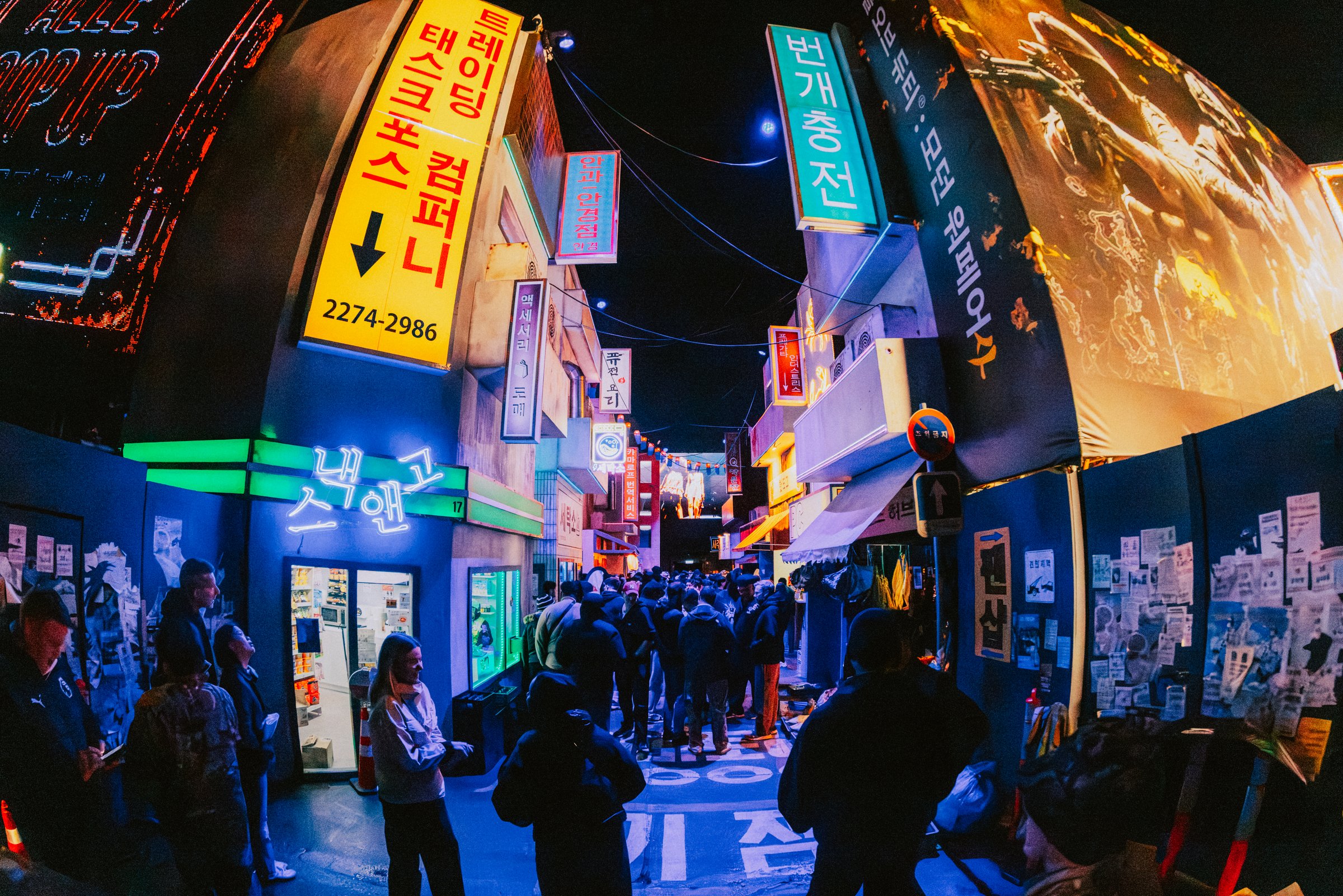
During its launch campaign for Activision’s Call of Duty: Modern Warfare 4, the site was transformed into a hyper-realistic, neon-lit alleyway inspired by the streets of Seoul. By blending physical set design—complete with convenience stores, street-side seating, and immersive soundscapes—with massive digital display walls, the campaign proved that audiences still crave physical connection.
"A screen can capture attention, but a physical experience gives people a reason to stop, take part, and share it," explains Alex Ezen, co-founder of the project. This sentiment captures the core tension in modern advertising: we are saturated with digital content, but we are starving for physical resonance.
The Smart Glasses Paradigm: A New Layer of Reality
If smart glasses successfully integrate into our daily lives, they will act as an "AR layer" over the physical world. This changes the fundamental nature of advertising. Instead of a static sign, a billboard becomes an anchor point—a trigger for a much larger, personalized digital experience.
Personalized Utility
Unlike the broad-brush approach of traditional advertising, smart glasses allow for hyper-personalization. When a consumer looks at a billboard for a new film, their glasses could identify the ad, pull up the nearest cinema’s showtimes, check their personal calendar, and project a navigation route to the theater—all without the user ever touching a smartphone.
The Death of Friction
The primary failure of the QR code was friction. Smart glasses remove that barrier. By utilizing spatial computing and object recognition, the "link" between the physical ad and the digital content becomes instantaneous and ambient. The billboard is no longer a sign; it is a portal.
Supporting Data: Why "Looking Up" is Inevitable
Industry data suggests that while digital ad spend is shifting toward social platforms, the "Out of Home" (OOH) sector is seeing a resurgence, particularly in high-traffic urban areas.
According to recent reports from the Outdoor Advertising Association, digital OOH (DOOH) revenue has grown significantly year-over-year, largely due to programmatic buying and the move toward more dynamic, interactive content. Furthermore, consumer studies indicate that "ad fatigue" is at an all-time high on social media platforms, where users have become adept at ignoring sponsored posts.
Conversely, consumers are more likely to remember OOH advertising because it is tied to a location. When you marry that spatial context with the utility of AR, the recall rate increases exponentially. The billboard becomes a service, not just a nuisance.
Official Industry Perspectives
The advertising industry is currently caught between excitement and trepidation regarding this shift. On one hand, the potential for high-engagement, measurable data from AR-enabled billboards is a marketer’s dream. On the other hand, the technical requirements for "smart" advertising are immense.
"We are moving from a world of ‘advertising at’ to ‘advertising with’," notes a creative director at a leading global ad agency. "The brief for designers is evolving. We are no longer just designing a poster; we are designing the digital architecture that lives on top of that poster. It requires a level of collaboration between graphic designers, UX specialists, and software engineers that we haven’t seen before."
Implications: The Challenges of the AR Frontier
While the prospect of an augmented cityscape is exciting, it brings with it significant challenges that must be addressed before this becomes the standard.
- Visual Noise and Regulation: If every billboard is competing for your attention with 3D animations and personalized pop-ups, our cities could become chaotic, over-stimulating environments. Municipalities will likely need to introduce strict zoning laws regarding "digital pollution."
- Privacy and Tracking: If a billboard can identify who you are and serve you a specific advertisement based on your digital profile, the potential for surveillance is massive. Consumers will demand transparent privacy standards and the ability to "opt-out" of localized, personalized advertising.
- The Digital Divide: There is a risk that this technology will only be accessible to those who can afford high-end smart glasses, creating a tiered reality where some citizens experience a vibrant, augmented world while others remain relegated to the "un-augmented" baseline.
Conclusion: A New Canvas for Creativity
The transition toward smart glasses will not kill the billboard; it will liberate it from the constraints of ink and pixel. For designers, this is perhaps the most exciting frontier in the history of communication.
We are moving toward a future where the physical world is the canvas and the digital world is the paint. Whether this results in a Black Mirror-esque dystopia or a new, more interactive urban experience depends on how we regulate this technology today. One thing is certain: we are finally going to start looking up again—not just at the billboards, but at the potential for a world where our digital and physical lives are seamlessly, and perhaps beautifully, intertwined.