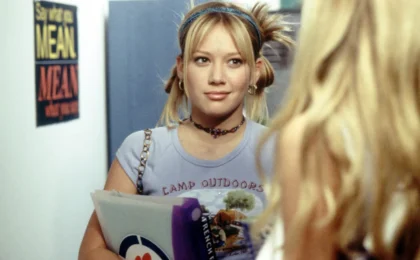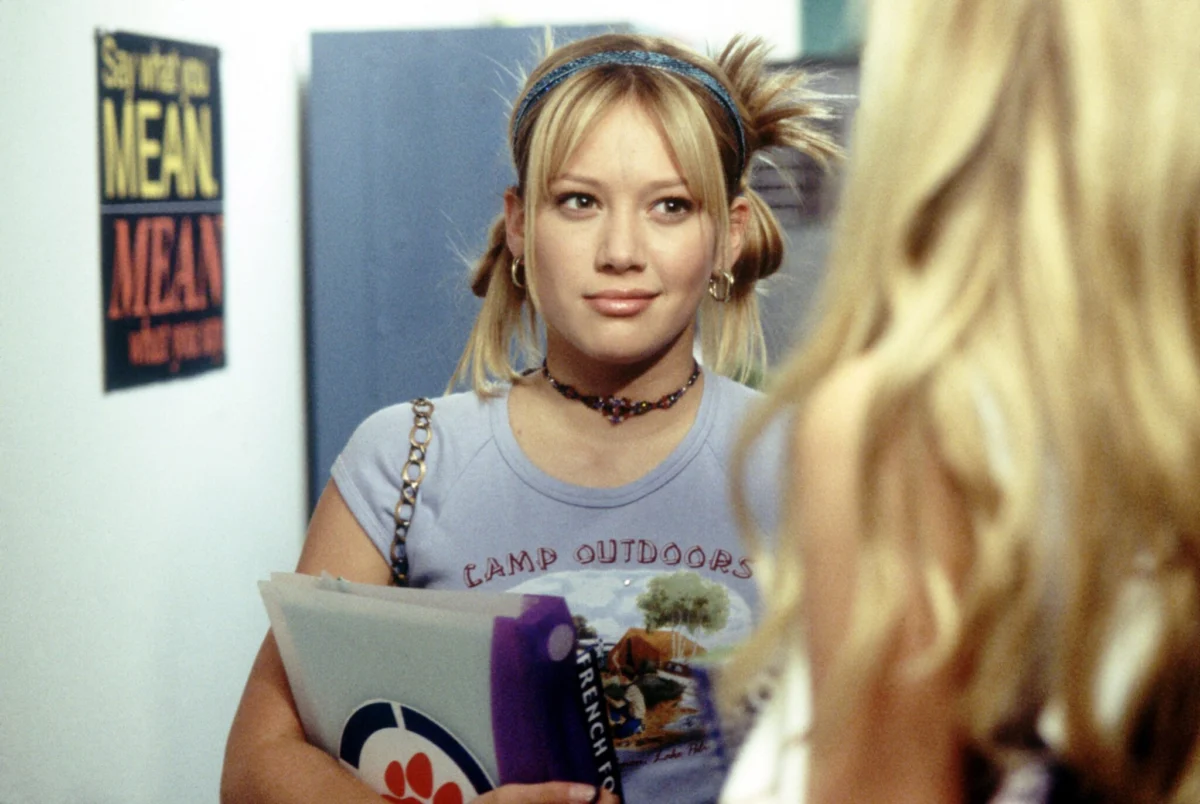
For an entire generation of millennials, the blonde, animated, and perpetually relatable Lizzie McGuire was more than just a fictional character—she was a formative cultural companion. However, for the woman who brought the character to life, Hilary Duff, the experience of being "Lizzie" was far more complex than the polished, neon-drenched reality of the Disney Channel suggested.
In a candid and revealing new interview with Paper magazine, Hilary Duff has opened up about the immense psychological toll of her meteoric rise to fame, the exhaustion that followed the conclusion of her hit series, and her journey toward finally reclaiming the music that defined her early career. As she navigates a creative resurgence, highlighted by her 2026 EP (Mine) and the ongoing "Small Rooms, Big Nerves" tour, Duff is finally making peace with the character that launched a thousand careers.
The Weight of Stardom: A Look Behind the Curtain
The narrative of a child star attempting to forge an independent identity is a trope as old as Hollywood itself, but few have navigated it as publicly as Hilary Duff. Reflecting on the filming of 2003’s The Lizzie McGuire Movie, which served as the cinematic swan song for the television series, Duff revealed a side of the production that was rarely captured in behind-the-scenes features.
"I was pretty done with Lizzie at that time," Duff admitted to Paper. The fatigue was not merely artistic; it was existential. By the time the production crew touched down in Italy to film the iconic graduation-trip climax, Duff had spent years under a relentless professional schedule. "I had filmed 30 episodes one year and 35 episodes the next. I turned into a huge star. Everyone called me Lizzie. And then I went to Italy to film that movie, and I think I was just like, ‘I’m fucking done with you.’ I want people to see me. This isn’t fun anymore."
This sentiment captures the paradoxical nature of early-2000s teen stardom. While the world saw a teenager living the dream, Duff was grappling with the loss of her own personhood. The character of Lizzie McGuire had become an all-consuming entity, and by the end of the show’s run in 2004, the boundary between the actress and the role had become dangerously blurred.
Chronology of a Cultural Phenomenon
To understand the weight of Duff’s current reflections, one must look at the timeline of the Lizzie McGuire era:
- January 2001: Lizzie McGuire debuts on the Disney Channel, introducing the world to the titular character, her animated inner monologue, and her best friends Gordo (Adam Lamberg) and Miranda (Lalaine).
- 2001–2003: The show becomes a runaway success, cementing Duff as a household name. She films a staggering 65 episodes over two years.
- May 2003: The Lizzie McGuire Movie is released in theaters, grossing over $55 million worldwide and featuring the iconic pop anthem, "What Dreams Are Made Of."
- 2004: The series concludes its run, leaving behind a massive cultural footprint and a starlet desperate to establish her own identity outside of the Disney machine.
- 2025–2026: Duff experiences a musical renaissance, re-recording her classic hits for the Luck… or Something album and the subsequent (Mine) EP, finally stepping into the songs that once felt like a burden.
Reclaiming the Anthem: "What Dreams Are Made Of"
For decades, the song "What Dreams Are Made Of" was synonymous with the finality of the Lizzie McGuire chapter—a song Duff felt she didn’t truly own. During the height of her teen pop years, she sought to distance herself from the squeaky-clean image of her television counterpart.
"I was trying to create Hilary Duff separate from Lizzie," she explained. "That was right at the midway point where I was like, ‘I’m never singing that song.’ And I didn’t even own it. It wasn’t my song to sing. But now I feel like it is."
This evolution is evident in her current tour, "Small Rooms, Big Nerves." When Duff performs the track live, the context has shifted entirely. It is no longer a performance obligation dictated by a studio; it is a collaborative moment of nostalgia shared between an artist and an audience that grew up alongside her.
"So now when I sing it, it feels so much better," she said. "I get to join the celebration of what it meant to people, and what it means to me now. I don’t want to sound ungrateful for doing it, but at the time, I was pretty exhausted by it."
Supporting Data: The Luck… or Something Era
The recent release of the (Mine) EP is more than just a nostalgia play. The seven-track project consists of newly re-recorded versions of some of her greatest hits, which were originally relegated to bonus status on vinyl variants of her 2025 album, Luck… or Something.
The decision to re-record these tracks reflects a broader industry trend of artists reclaiming their masters, but for Duff, it is deeply personal. It serves as a corrective measure for a period in her life where she felt "out of her body."
"When I look back at that, I’m like, oh my god, I would love a redo," she noted. "All of it was just so crazy. I’m so glad it resonated with people this many years later, and that they loved it and ate it up. But when I perform it now, I’m like, ‘Oh, I’m in this.’ Back then, I just feel like I wasn’t in my body yet."
Implications: A Mature Artist’s Perspective
The implications of Duff’s honesty are significant for the broader conversation regarding child stardom and mental health. By openly discussing the resentment she felt toward her most famous role, Duff validates the experiences of countless young performers who are often expected to be grateful for the very platforms that stifle their personal development.
Her ability to reconcile with the character of Lizzie McGuire while simultaneously forging a career that is distinctly her own (spanning television hits like Younger and her recent music) is a testament to her longevity. She has transitioned from a child star to a veteran performer who understands the power of her own narrative.
Furthermore, her success in re-recording her catalog demonstrates that fans are not just interested in the "nostalgia" of the past; they are interested in the evolution of the artist. By stripping away the constraints of her Disney-era contracts and the pressure of the 2000s teen idol machine, Duff has found a way to honor the past without being trapped by it.
Final Thoughts: The Legacy of a Generation
The story of Hilary Duff is the story of a generation that grew up in the digital infancy of the 21st century. The show, which starred an ensemble cast including Lalaine, Adam Lamberg, Jake Thomas, Hallie Todd, and Robert Carradine, was a touchstone for millions.
As Duff continues to tour and perform, the "Small Rooms, Big Nerves" concerts have become cathartic experiences. She is no longer the teenager in Italy trying to escape the shadow of a character; she is a woman in full command of her history.
"I was trying to create Hilary Duff separate from Lizzie," she reflected. In 2026, it is clear that she has succeeded. She hasn’t just separated herself from the character; she has integrated the character into the tapestry of her life, proving that you can both grow out of a role and eventually grow back into it on your own terms.
For the fans who have followed her from the halls of Hillridge Junior High to the stages of her current tour, watching Hilary Duff finally "be in her body" while singing the songs of their youth is the ultimate resolution to a story that began over two decades ago. The dream, it seems, is exactly what she makes of it.