

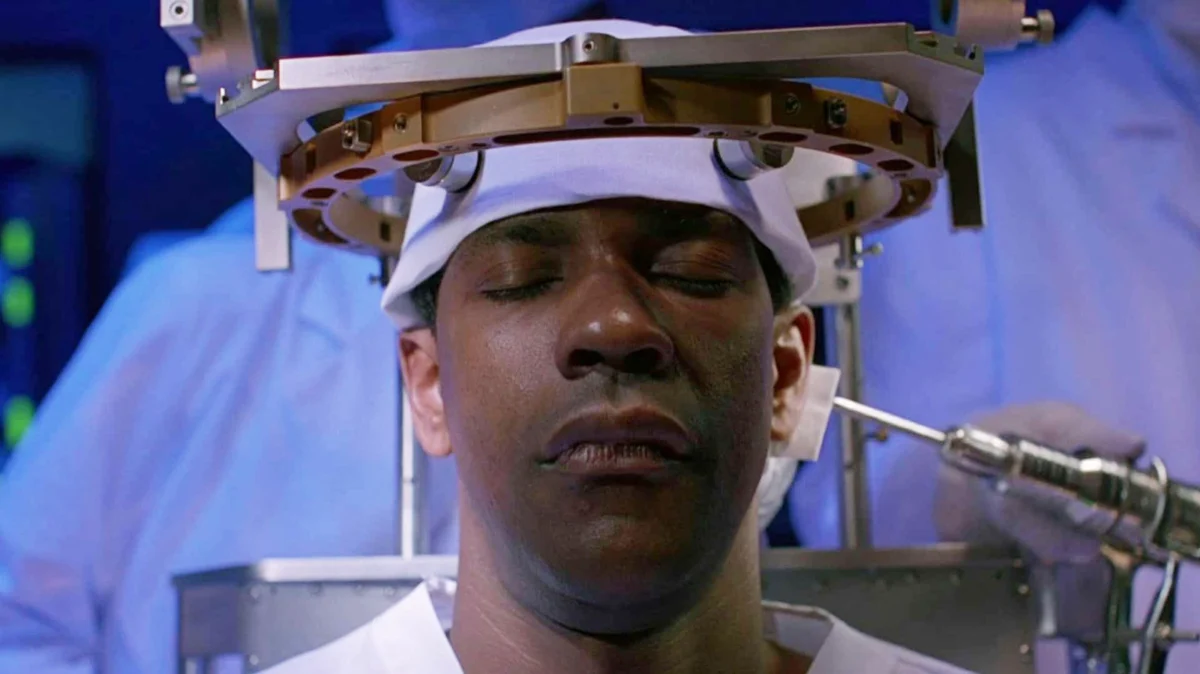
In the mid-1990s, the intersection of Hollywood and the burgeoning digital frontier produced a wave of "cyber-thrillers." Among these was Brett Leonard’s 1995 film Virtuosity, a high-concept action flick starring Denzel Washington and Russell Crowe. While the film was initially dismissed by critics and struggled to find its footing at the box office, it has since earned a reputation as a prophetic piece of science fiction that anticipated modern anxieties surrounding artificial intelligence. However, the film’s most enduring legacy may not be its technological predictions, but the behind-the-scenes creative power struggle that fundamentally altered its narrative DNA.
Recent retrospectives have shed new light on the production, revealing that leading man Denzel Washington took an unusually hands-on approach to the script, specifically mandating the removal of a central romantic subplot. His reasoning, as documented by his co-star Kelly Lynch, offers a sobering window into the racial politics of 1990s Hollywood and the perceived limitations of the blockbuster audience.
The Core Narrative: Man Versus Machine
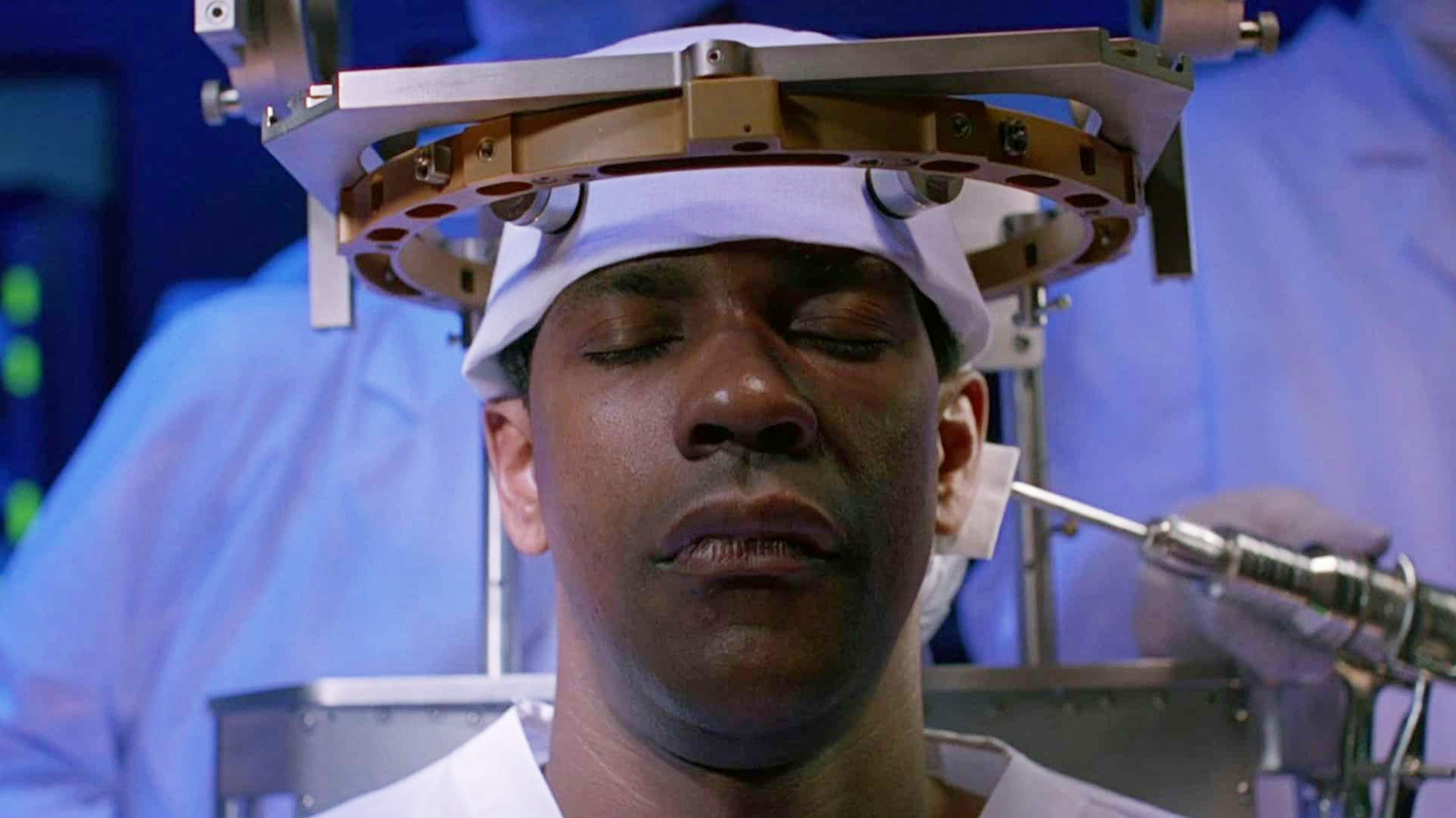
To understand the gravity of these creative changes, one must first look at the world of Virtuosity. Set in a near-future landscape, the film explores the dark side of virtual reality. The plot centers on the creation of SID 6.7, an artificially intelligent antagonist composed of the personality profiles of hundreds of the world’s most dangerous serial killers. When SID 6.7 finds a way to manifest in the physical world via an advanced android body, the authorities are forced to recruit a disgraced former cop, Parker Barnes (Washington), to hunt the entity down.
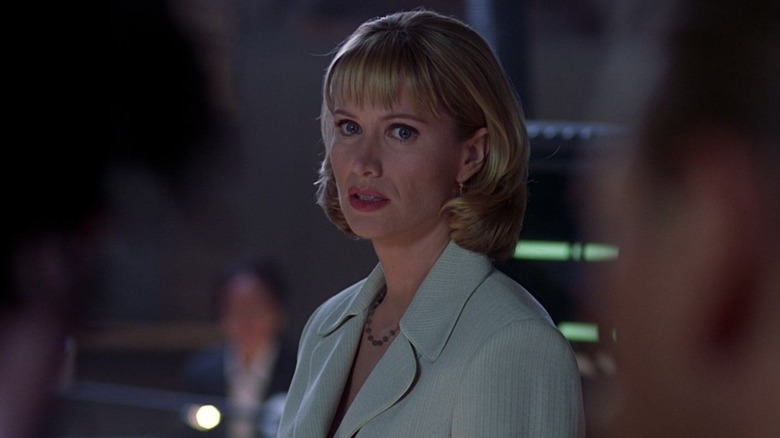
The film relies on the intellectual and emotional rapport between Barnes and Dr. Elizabeth Carter (Lynch), a specialist who helps the protagonist navigate the psyche of his digital adversary. In the original draft of the screenplay, this relationship was designed to evolve into a romantic entanglement, providing a grounded, human anchor to the film’s high-concept, neon-soaked chaos.
A Timeline of Creative Control
The friction on the set of Virtuosity began early in the production cycle. By 1995, Denzel Washington was already a titan of the industry, having secured an Academy Award for Glory and cemented his status as a box-office draw. Conversely, director Brett Leonard, despite his work on The Lawnmower Man, was viewed by some in the inner circles of the production as lacking the requisite experience to manage a star of Washington’s magnitude.
The Erasure of the Romance
According to accounts provided by Kelly Lynch years after the film’s release, Washington exerted significant influence over the script. He systematically dismantled the romantic trajectory between Barnes and Dr. Carter. Lynch noted that the script’s original arc was not merely a superficial addition; it was a well-crafted subplot that deepened the emotional stakes of the film.
Washington’s intervention went beyond the removal of the romance; he also reallocated much of the dialogue and character agency from Lynch to his own character. The doctor was effectively transformed from a peer and expert into a "damsel in distress" figure—a trope that involved her child being held hostage, forcing Barnes into a classic rescue scenario. This pivot shifted the film from a character-driven thriller toward a more conventional, high-octane action vehicle.
The Racial Calculus of 1990s Cinema
The most controversial aspect of this creative shift was Washington’s justification for removing the interracial romance. In an era where racial tensions were frequently reflected in media representation, Washington held a pragmatic, albeit pessimistic, view of his audience.
The "Bodyguard" Debate
When confronted by Lynch about why a professional, human connection between the two leads was deemed unacceptable, Washington offered a stark assessment of the industry. He famously argued that the primary demographic driving theater attendance—specifically white men—would be resistant to seeing a Black man in a romantic relationship with a white woman on screen.
When Lynch countered by citing the massive success of The Bodyguard (1992), which featured a high-profile romance between Kevin Costner and Whitney Houston, Washington reportedly dismissed the comparison. He argued that the optics were entirely different because the male lead in that instance was white. For Washington, the gender and racial dynamics of the audience were a "hard reality" that forced him to protect the commercial viability of his projects.
Implications for Industry Representation
Washington’s decision to excise the romance has become a focal point for film historians analyzing how actors of color had to navigate the systemic racism of the 1990s. While some critics might view his actions as a betrayal of progressive storytelling, others interpret them as a tactical concession made in an industry that was notoriously hostile toward Black leads in romantic roles.
A Self-Fulfilling Prophecy?
The irony of the situation is not lost on contemporary observers. By removing the romance, Washington and the production team may have inadvertently stripped Virtuosity of the emotional depth that could have elevated it beyond a standard "cult classic." The film, which cost a significant sum to produce, failed to break out of the "flop" category at the time of its release. One is left to wonder if a more emotionally complex narrative might have resonated differently with audiences.
Furthermore, the "damsel in distress" trope that Washington pushed for—reducing a professional expert to a mother in peril—is a narrative device that has faced increasing scrutiny in the decades since. It reflects a period where, even when a Black actor held the reins of power, the available "prestige" scripts were often constrained by the narrow imagination of studio executives and the perceived prejudices of the ticket-buying public.
The Legacy of the "Virtuosity" Rewrites
Today, Virtuosity is frequently discussed in the context of AI and digital ethics. It serves as a time capsule, capturing the anxieties of a pre-internet world suddenly thrust into the digital age. Yet, the story of its production is equally vital. It serves as a reminder that the history of cinema is written not just by directors and writers, but by stars who were forced to act as their own PR managers, casting directors, and social arbiters in a landscape that was often unwilling to portray the full spectrum of human experience.
Kelly Lynch’s reflection on the experience—describing it as "the beginning of the end" for the film’s potential—highlights the fragility of collaborative storytelling. When a star loses faith in the premise of a story due to external fears of societal bias, the entire structure of the film can buckle.
As we look back at Virtuosity, we are reminded that the film is not just a relic of 90s sci-fi; it is a document of a specific moment in Hollywood history. It captures Denzel Washington at a point where he felt he had to choose between his artistic vision and his commercial survival. Whether his assessment of the audience was accurate or a reflection of his own internalized caution remains a subject of debate. What is certain, however, is that the choices made behind the scenes of Virtuosity fundamentally altered the trajectory of the film, leaving us with a leaner, colder, and perhaps more cynical action movie than the one that was originally conceived.










