Pevita Pearce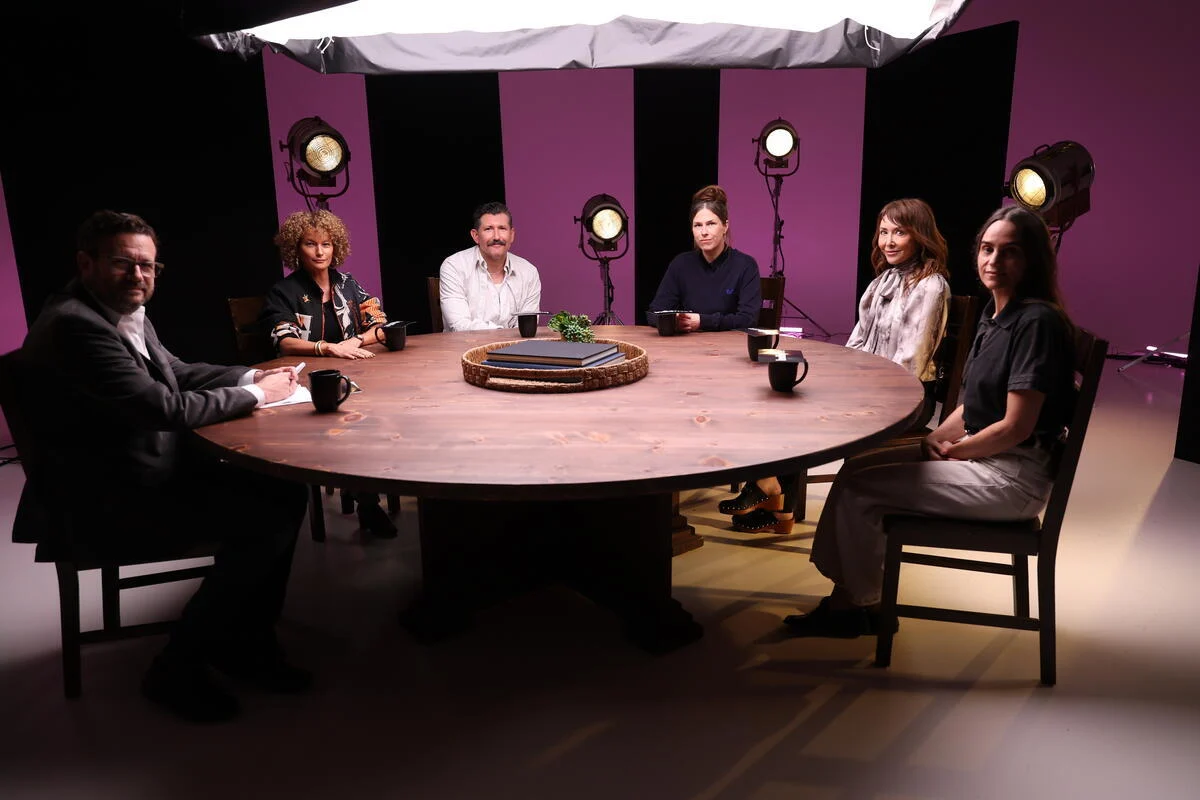
The art of costume design is often romanticized as a purely creative endeavor—a world of sketches, mood boards, fabric swatches, and high-fashion intuition. Yet, for the masters of the craft working in today’s high-stakes television landscape, the reality is far more complex. It is a grueling, exhilarating, and deeply logistical balancing act that dictates the very soul of the characters we watch on screen.
As part of IndieWire’s prestigious Craft Roundtables, a group of the industry’s most celebrated costume designers recently gathered to demystify their profession. The panel featured Sarah Evelyn (The Beauty), Trayce Gigi Field (Spider-Noir), Rudy Mance (Love Story), Kathleen Felix-Hager (Hacks and The Paper), and Natasha Newman-Thomas (Euphoria). Moderated by IndieWire’s Jim Hemphill, the discussion offered a rare, candid look into the intersection of artistry and industrial management that defines the modern costume department.
The Architecture of Character: The Creative Foundation
Before the logistics of production take hold, the costume designer serves as a silent architect of narrative. Every decision—from the subtle weighting of a silk lapel to the specific saturation of a character’s color palette—is a calculated choice intended to communicate history, class, and internal conflict.
For a series like Euphoria, as Natasha Newman-Thomas knows, the costumes act as a visual language for characters experiencing turbulent adolescence. For others, like Kathleen Felix-Hager, whose work on Hacks requires balancing the sharp, seasoned aesthetic of a comedy legend with the evolving, modern sensibilities of a young writer, the costume is a narrative roadmap.
"We are essentially storytellers who happen to use fabric instead of words," noted one panelist. This artistic core remains the "North Star" for designers, providing the motivation required to navigate the often-turbulent waters of television production.
The Reality Check: Logistics as a Creative Discipline
Despite the glamour associated with the red carpet or the awards circuit, the panelists were unanimous in their assessment: their roles are as much about spreadsheet management, labor negotiations, and supply chain logistics as they are about the fine arts.
"In costume design, I wish we were just designers," Sarah Evelyn admitted during the roundtable. "But we also do have a big hand in the budget and the labor. Sometimes I feel like, ‘Oh my god, I just got to design for 75 seconds, that was amazing!’ Because you feel like your whole day can be taken up with logistics."
This sentiment underscores a fundamental truth about contemporary television production: the "creative" window is often a sliver of the actual workday. Between managing the department’s overhead, sourcing materials during global shipping fluctuations, and coordinating with production managers to ensure that a garment is ready for a 4:00 a.m. call time, the costume designer is essentially a CEO of a small, highly specialized startup.

The Chronology of a Season: From Prep to Wrap
To understand the complexity of the job, one must look at the lifecycle of a single production season.
1. The Pre-Production Sprint
The process begins with script analysis. Designers break down the narrative arc of each character to determine the volume of costumes required. This is followed by the "budgeting phase," where designers must negotiate with production companies to ensure they have the resources to meet the creative vision. As Trayce Gigi Field noted, "You have to understand your budget and you have to have the skills to go talk to a producer about money. I think people don’t realize that that’s part of our jobs."
2. The Sourcing and Fabrication Phase
Once the vision is locked, the hunt begins. This involves a mix of bespoke tailoring, vintage shopping, and mass-market sourcing. In an era of "fast fashion" and supply chain volatility, sourcing unique items that hold up under the high-resolution demands of 4K cameras is a monumental task.
3. The On-Set Management
During the shoot, the designer’s role shifts from creator to crisis manager. If a zipper breaks on a lead actor minutes before a major scene, or if a costume color clashes with the lighting design on the day of the shoot, the designer must pivot instantly. They are present on set to ensure the integrity of the character is maintained amidst the chaos of production.
Supporting Data: The Cost of Craft
While audience members often focus on the visual impact of an outfit, the fiscal reality of costume design is staggering. A high-end drama may require thousands of individual pieces to accommodate stunts, multiples for continuity, and rapid-fire changes.
According to industry data, costume departments typically account for a significant percentage of a production’s "below-the-line" budget. This includes:
- Labor Costs: Tailors, seamstresses, shoppers, and set costumers.
- Fabrication: The cost of raw materials and custom printing or dyeing.
- Maintenance: The ongoing cost of cleaning, repairing, and aging garments to ensure they look "lived in."
- Logistics: The cost of transporting massive wardrobes between studio lots and location shoots.
The panel members emphasized that their ability to manage these costs effectively is what keeps a project viable. A designer who cannot reconcile their creative ambition with the production’s budget is a designer who will struggle to see their work come to fruition.
Official Responses and Industry Insights
The IndieWire Craft Roundtables are designed to elevate the visibility of these professionals. By bringing them to the forefront, the series aims to educate the public—and the Academy—on the nuance required to pull off a successful season.

Trayce Gigi Field emphasized that the "creative vs. logistical" split is essentially fifty-fifty. "It’s half organization and half creative. You’ve got to have that brain in order to make sure that everything is gonna happen when it needs to happen," she said. This duality is the hallmark of the modern costume designer. It is not enough to have a good eye; one must have a sharp mind for scheduling and interpersonal communication.
The Implications: Why It Matters for Future Production
As television continues to evolve, the demands on costume departments are only increasing. With the rise of massive, world-building genre shows, the need for designers who are as adept at project management as they are at fashion design is at an all-time high.
The implications for the industry are clear:
- Recognition: There is a growing movement to credit costume designers not just as artists, but as critical department heads who influence the bottom line.
- Education: Aspiring designers are now being encouraged to pursue business-related training alongside their artistic studies.
- Technology: The integration of digital asset management and 3D modeling for costumes is becoming more common as a way to streamline the logistical burden of the role.
Conclusion: The Art of the Invisible
At the end of the day, the goal of a costume designer is for the audience to believe in the character completely—to never see the "work" behind the outfit. When an audience watches Hacks or Euphoria, they are seeing the culmination of months of budget wrangling, fabric sourcing, and high-pressure negotiations, all hidden behind the effortless exterior of a character’s wardrobe.
As the panelists at the IndieWire Craft Roundtables demonstrated, the "art" of the profession is not just in the creation of the garment, but in the survival of the vision through the machinery of Hollywood. Their work serves as a reminder that every great performance is built on a foundation of hidden, rigorous, and highly skilled labor.
To view the full discussion, including in-depth breakdowns of specific scenes and the collaborative process between these designers and their directors, watch the complete IndieWire Craft Roundtables panel in the video player above. The series is currently available for streaming on PBS SoCal, the PBS App, and at IndieWire.com.

 Nana Wu
 Layla Zulfa