Layla Zulfa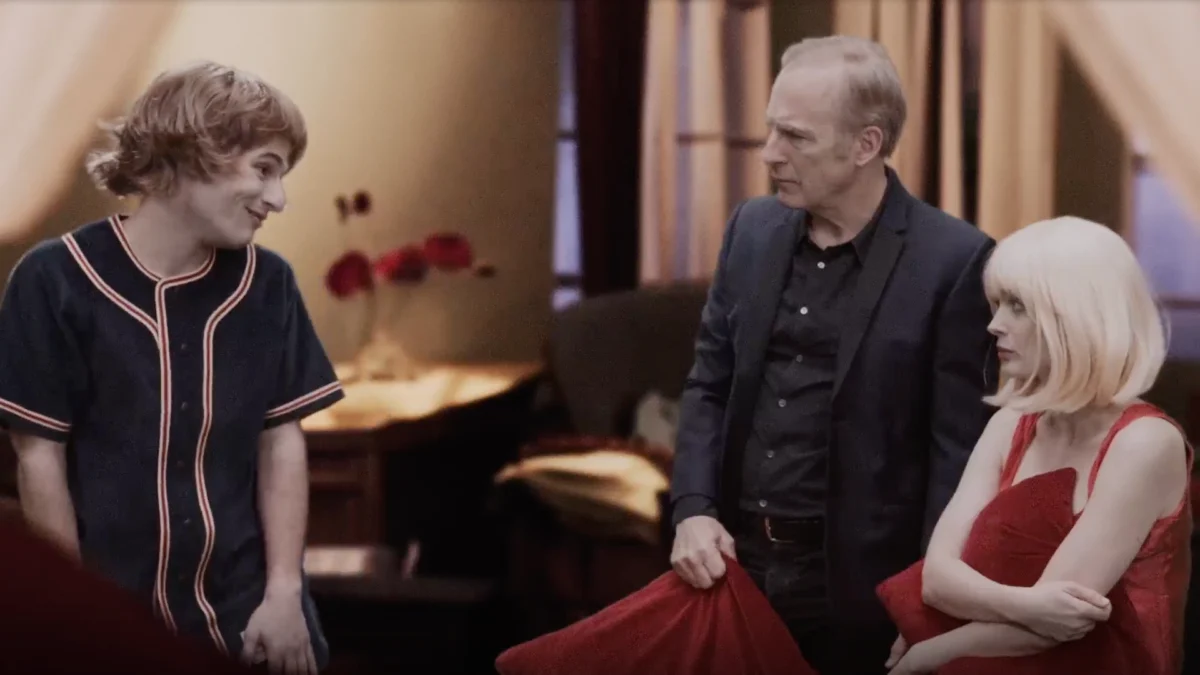
Since its bewildering debut in 2003, Tommy Wiseau’s The Room has defied the traditional laws of cinematic success. What was intended as a serious, hard-hitting melodrama evolved into the gold standard of "so-bad-it’s-good" cinema, transcending its humble, disastrous origins to become a permanent fixture in the cultural zeitgeist. Now, two decades after Wiseau first uttered the immortal line, "I did not hit her, I did not," the film is receiving a bizarre, high-profile tribute. The Room Returns, a new feature-length reimagining, sees Emmy-winning actor Bob Odenkirk stepping into the iconic role of Johnny, proving that the fascination with this enigmatic melodrama is far from fading.
The Main Facts: A Star-Studded Tribute
The Room Returns is the latest project from Acting For a Cause, an all-volunteer organization dedicated to producing high-impact special events for charitable purposes. Unlike a traditional remake that might seek to "fix" the original’s disjointed narrative, this project is a loving, if surreal, homage. The production features a star-studded cast performing the original, unadulterated script by Tommy Wiseau against a green screen that displays the familiar, mismatched locations of the 2003 film.
Joining Bob Odenkirk—whose casting as the tortured banker Johnny is perhaps the most unexpected and exciting development in the film’s history—are industry heavyweights including Greg Sestero (who reprises his connection to the franchise), Bella Heathcote, renowned horror auteur Mike Flanagan, Kate Siegel, and activist Cameron Kasky. The project is directed by Brando Crawford, who has positioned this film not as a parody, but as a deliberate artistic experiment designed to bridge the gap between low-budget infamy and high-caliber talent.
A Chronological Odyssey: From 2003 to the Present
To understand the significance of The Room Returns, one must look back at the improbable timeline of the original film.
The Genesis (2003)
When The Room premiered in Los Angeles in 2003, it was met with near-universal confusion. Written, directed, and produced by the mysterious Tommy Wiseau—who famously self-funded the $6 million project with no clear explanation of his wealth—the film told the story of Johnny, a banker whose life is dismantled by the duplicity of his fiancée, Lisa, and his best friend, Mark. With its jarring editing, non-sequitur dialogue, and inexplicable subplots (such as the character Chris-R or the recurring football toss), it was an immediate catastrophe.
The Midnight Circuit (2004–2010)
Rather than disappearing into the bargain bin of history, The Room found a second life. Audiences began flocking to midnight screenings, treating the film as an interactive experience. Fans memorized the script, threw plastic spoons at the screen, and cheered for the film’s most egregious failures. By the late 2000s, it had become the Rocky Horror Picture Show of the 21st century.

Institutionalization (2011–2017)
The film’s legacy was solidified by Greg Sestero’s 2013 memoir, The Disaster Artist, which provided a humanizing, albeit heartbreaking, look at the production. The book’s success led to the 2017 feature film adaptation directed by James Franco. Franco’s portrayal of Wiseau earned him a Golden Globe and an Oscar nomination for Best Adapted Screenplay, proving that The Room was no longer just a joke—it was an object of genuine academic and critical study.
The Current Era: The Room Returns (2024–Present)
Now, in the mid-2020s, the film has entered a phase of meta-commentary. By enlisting A-list talent to recite the exact same lines that were once mocked, The Room Returns highlights the resilience of the script. It is no longer just about laughing at the work; it is about examining why this specific story has maintained such a grip on the public imagination.
Supporting Data and Production Logistics
The logistical structure of The Room Returns serves as a stark contrast to the original. Where Wiseau’s original production was a bloated, year-long affair hampered by poor planning and creative instability, the new production is a masterclass in efficiency and mission-driven focus.
- Production Timeline: While the original took over a year to film, The Room Returns was shot in a single day.
- Budgetary Scope: The original film carried a budget of $6 million—a staggering sum for its quality—whereas the new production operates with effectively no budget, relying on volunteer labor and pro-bono contributions from its high-profile cast.
- Charitable Impact: The premiere, scheduled for June 26 at the historic Hollywood Forever Cemetery, is designed as a fundraiser. All proceeds are earmarked for two organizations:
- amfAR (The Foundation for AIDS Research): A leading non-profit dedicated to ending the global HIV/AIDS epidemic through innovative research.
- Blue Collaborative: A non-profit production entity that supports independent artists, ensuring that the legacy of DIY filmmaking continues to receive institutional support.
Official Responses and Creative Vision
Brando Crawford, the director behind this ambitious undertaking, has been vocal about the project’s intent. In a statement, Crawford emphasized that the goal was to flip the "Disaster Artist" myth on its head.
"The Room has spent twenty years proving that audiences don’t fall in love with perfection," Crawford stated. "Authenticity is what brings them back time and time again. The Room Returns is our attempt to honor that legacy while raising money for causes we care deeply about."
The involvement of industry professionals like Bob Odenkirk and Mike Flanagan provides a seal of artistic legitimacy that the original film never enjoyed. For Odenkirk, a veteran of Breaking Bad and Better Call Saul, the challenge of playing Johnny—a role defined by Wiseau’s unique, halting cadence and eccentric delivery—is a testament to his versatility. By participating, these actors are not mocking the source material; they are participating in a communal act of appreciation.

Implications: Why We Can’t Look Away
The existence of The Room Returns raises a fascinating question about the nature of modern media: Why do we continue to celebrate a film that is fundamentally "broken"?
The Death of the "Bad" Movie
The evolution of The Room suggests that the line between "good" and "bad" art is increasingly porous. In the age of internet memes and social media, the flaws in a film are no longer defects; they are features. They create a shared language, a set of cultural touchstones that allow disparate audiences to connect. When Bob Odenkirk says the words, "Oh hi, Mark," he is tapping into a global cultural handshake.
The Democratization of Cult Classics
By utilizing a green screen and a volunteer cast, The Room Returns democratizes the production process. It signals to aspiring filmmakers that the spirit of the project matters more than the production value. It is a validation of the "art for art’s sake" philosophy, albeit one that acknowledges the comedic absurdity of its own source material.
A New Model for Charity
The project also offers a blueprint for how the entertainment industry can leverage its obsession with nostalgia for social good. By taking a piece of "trash" cinema and repurposing it as a charitable vessel, the organizers are effectively laundering the reputation of the film. They are transforming a symbol of cinematic failure into a vehicle for humanitarian success.
Conclusion: The Legacy Continues
As the premiere date approaches at the Hollywood Forever Cemetery, the anticipation surrounding The Room Returns is palpable. It is a rare project that manages to be both a sincere tribute and a self-aware satire. Whether one considers the original The Room to be a masterpiece of accidental genius or a total disaster, the fact remains that it has refused to die.
With the participation of some of the most respected voices in modern television and film, The Room Returns ensures that Johnny, Lisa, and the rest of the cast will remain in the spotlight for at least another generation. It is a victory for the underdog, a boon for charitable research, and perhaps the final, most confusing chapter in one of the strangest stories in Hollywood history. One thing is certain: regardless of how the critics receive this new version, the audience will be watching—and they will likely be tossing spoons.


 Asro
Asro
 Basiran