Rifan Muazin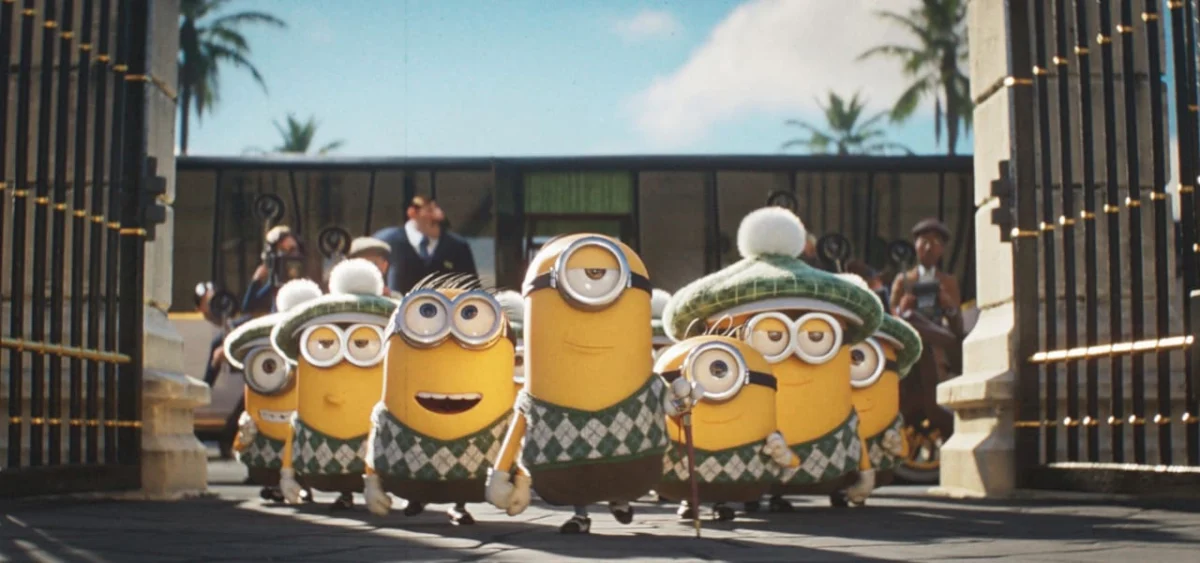
By Editorial Staff
June 23, 2026
The relationship between the Minions franchise and the Annecy International Animation Film Festival has always been one of mutual appreciation. Since the world premiere of the original Despicable Me in 2010, Illumination’s iconic yellow mascots have been a recurring fixture on the French Riviera. However, as the franchise celebrates its sixteenth year, the arrival of the seventh installment, Minions & Monsters, marks a profound departure from the established formula. Moving away from standard slapstick sequels, this latest entry represents a bold, auteur-driven experiment that reimagines the series as a sophisticated period piece.
A New Direction: The Genesis of ‘Minions & Monsters’
After seven films, the creative team at Illumination faced a familiar dilemma: how to keep a global juggernaut feeling fresh. Pierre Coffin, the visionary co-director who helped establish the franchise’s DNA, felt that if he were to return to the director’s chair, the project had to break the mold.
"I was there to try and say, ‘No, this one is different. This one is a period piece,’" Coffin told Cartoon Brew following the film’s rapturous world premiere at the 2026 Annecy festival.
The resulting film is a tonal pivot that defies audience expectations. Minions & Monsters functions as a love letter to the transition period of Old Hollywood, capturing the grandeur, excess, and technical upheaval that accompanied the arrival of "talkies." It is an ambitious synthesis of the Minions’ established physical comedy and the sweeping, decadent cinematic language found in films like Damien Chazelle’s Babylon. By utilizing inventive lighting, panoramic vistas, and a visual grammar reminiscent of Buster Keaton and Charlie Chaplin, the film elevates the franchise into the realm of high-concept meta-commentary.
Chronology of a Franchise: From Despicable to Decadent
To understand the magnitude of this shift, one must look at the trajectory of the franchise:
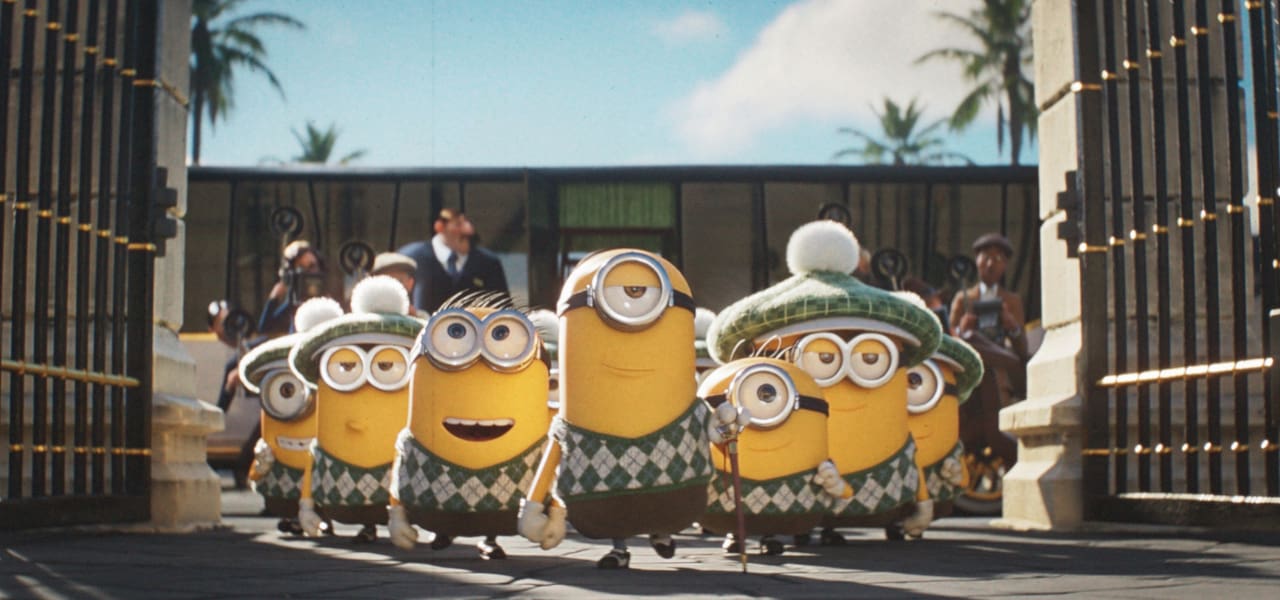
- 2010: Despicable Me premieres at Annecy, introducing audiences to Gru and his yellow cohorts.
- 2013–2017: The franchise expands with Despicable Me 2 and 3, establishing a lucrative but reliable formula.
- 2015: The Minions spin-off proves that the supporting characters can carry a feature-length narrative.
- 2022: Minions: The Rise of Gru explores the 1970s, hinting at the franchise’s interest in historical settings.
- 2026: Minions & Monsters debuts, shifting the focus to 1920s Hollywood and the "Death of the Silent Era," marking the most experimental stylistic choice in the series’ history.
The decision to delve into this specific historical epoch was not merely aesthetic. It provided a clever narrative device to address the Minions’ most defining trait: their language.
The Linguistic Challenge: Parodying the Talkie Revolution
Writing for the Minions has always been a unique challenge for Coffin, who serves as both director and the voice of the characters. Because the Minions speak a constructed language—a chaotic mix of various tongues and nonsense—traditional dialogue-heavy scripts are impossible.
"Finding things with Minions isn’t as straightforward as writing, boarding, and lighting it," Coffin explained. "Some ideas just don’t work because I don’t have the words to transmit the nuance of a conversation."
The team solved this by turning the Minions’ greatest limitation into the central plot point of Minions & Monsters. The film explores the "Talkie" revolution of the late 1920s—a moment in history when many silent-era stars saw their careers evaporate because they could not transition to spoken dialogue. In the film, the Minions find themselves suddenly irrelevant in a Hollywood that demands sound, leading to a series of comedic crises. By mirroring the historical reality of the film industry, Coffin and his team crafted a narrative that is both an homage to Singin’ in the Rain and a clever meta-commentary on the franchise’s own evolution.
Corporate Strategy: The Shift Toward Auteurism
Illumination, often criticized in the past for prioritizing commercial viability over artistic risk, has recently shown a desire to diversify its creative portfolio. CEO Chris Meledandri has been vocal about the importance of evolving the studio’s approach to directing talent.
"If you were to ask an audience before they see the film what they would want in a future Minions movie, most audiences would describe something that would sound like more of what they just saw," Meledandri noted.
.png)
However, Illumination has increasingly leaned into a more "auteur-driven" model. This trend was ignited by the hiring of Benjamin Renner for Migration, a film that signaled a transition toward a more nuanced, French-influenced storytelling tradition. Minions & Monsters is the logical extension of this strategy. Meledandri acknowledges the risk of deviating from the "familiarity" that fans expect, but he maintains that the creative health of the studio depends on taking these risks.
"I think what I’ve learned from our perspective, having no idea how this film is going to be received, is that it was very important for it to feel very different," he said.
Implications for the Future of Animation
The success of Minions & Monsters raises important questions about the future of blockbuster animation. By incorporating references to westerns, film noir, and biblical epics, the film positions itself as a "cinephile’s toybox."
Critics have pointed out the irony of calling a film about corporate mascots "original," yet the execution suggests a maturation of the medium. Much like the golden era of The Simpsons, where writers packed episodes with high-brow references to Hitchcock or Scorsese for the adults while maintaining slapstick for the children, Minions & Monsters functions on two distinct levels.
Why This Matters for the Industry:
- Talent Retention: By offering veteran animators—some of whom have worked with Coffin since his commercial animation days—a chance to experiment with period-accurate cinematography and lighting, Illumination is effectively keeping its top-tier talent engaged.
- Franchise Longevity: The "period piece" pivot proves that a franchise can avoid stagnation by changing its genre rather than just its plot.
- Audience Maturation: The studio is betting that the generation that grew up with the first Despicable Me is now ready for a more sophisticated, self-aware style of humor.
Conclusion: A Bold New Chapter
Minions & Monsters is more than just another entry in a long-running series; it is a calculated risk that pays off by grounding the chaos of the Minions in the rich, troubled history of early cinema. While it may lack the wall-to-wall musical numbers of more traditional animated fare, its commitment to a distinct creative vision is a testament to the growth of Illumination.
Whether this shift toward auteur-driven, genre-bending animation will satisfy the global box office remains to be seen. However, at the 2026 Annecy festival, the message was clear: the Minions are no longer content to be mere slapstick icons. They are ready to play their part in the history of cinema itself—even if they have to destroy a few movie sets to do it.

 Siti Muinah
 Laily UPN