Azzam Bilal Chamdy
The landscape of modern gaming has shifted dramatically toward hardware agnosticism, and few projects illustrate this transition as clearly as the recent arrival of Final Fantasy VII Remake and Final Fantasy VII Rebirth on the Nintendo Switch 2 and Xbox Series X|S. On June 3rd, 2026, Square Enix officially brought the first two chapters of their landmark trilogy to a wider audience, marking a significant milestone in the development team’s history.
In a recent exclusive interview, we sat down with Naoki Hamaguchi, the Director of both Final Fantasy VII Remake and Rebirth, to discuss the immense technical undertaking required to bring the sprawling world of Gaia to hardware with varying performance profiles. The conversation shed light on the philosophy of “uncompromised quality,” the challenges of open-world optimization, and the future of the beloved card game, Queen’s Blood.
The Mandate: "A Port That Stands on Its Own"
When developers approach a multi-platform release for a title as visually and mechanically dense as Final Fantasy VII Rebirth, the temptation is often to "downgrade" the experience to accommodate hardware limitations. However, Hamaguchi was adamant that the team rejected this path from the very beginning.
"Something we consistently kept in mind during the development of the Switch 2 version was that we were building a port that properly stands on its own, not a ‘magical’ port," Hamaguchi explained. The team established a strict internal mandate: no gameplay-altering decisions would be made simply to cater to the existence of a handheld mode.
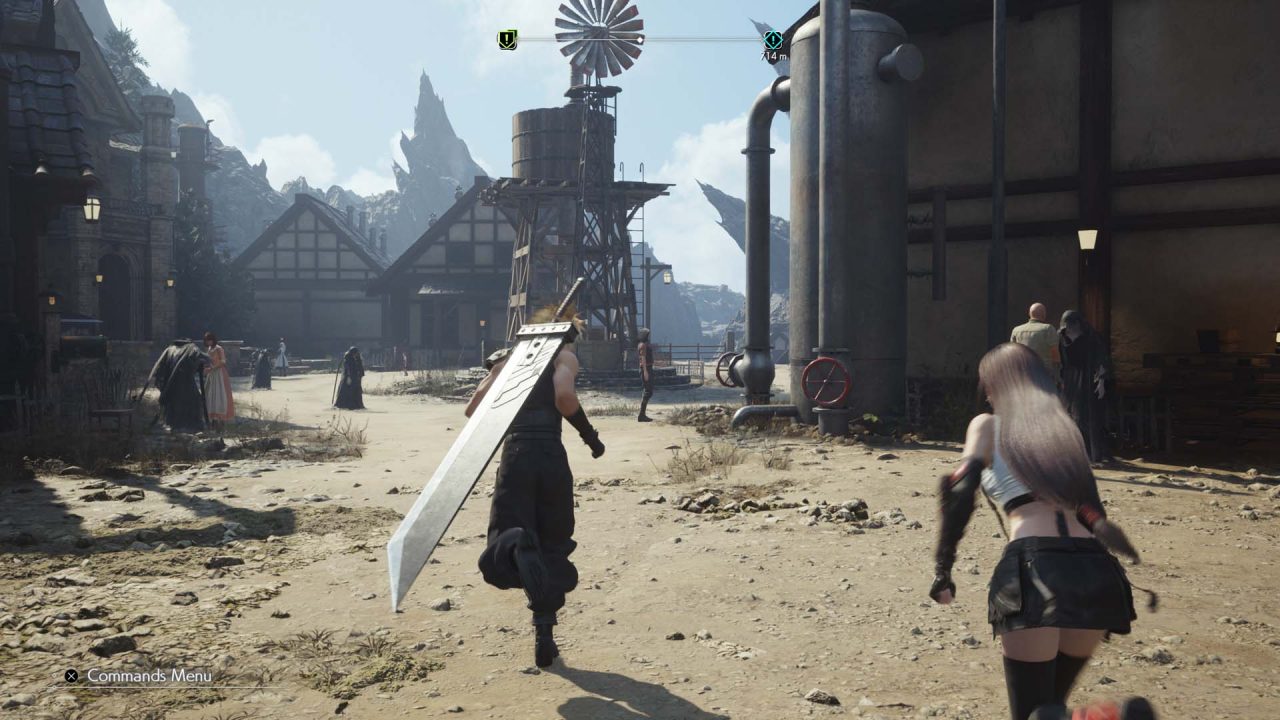
This philosophy, while noble, created a monumental technical hurdle. Final Fantasy VII Rebirth is defined by its expansive open-world design—a massive departure from the semi-linear corridors of Remake. The sheer volume of concurrent data processed within a single frame in Rebirth represents a generational leap in complexity. According to Hamaguchi, the team had to completely reconfigure how the engine processed system loads. Rather than slashing content or reducing the density of the world, they chose the path of total optimization, addressing bottlenecks one by one through rigorous, iterative engineering.
Chronology of Development: From Midgar to the World Map
The journey of the Final Fantasy VII trilogy has been one of constant adaptation. When the project began, the goal was to capture the essence of the 1997 classic using modern technology. As the project progressed into Rebirth, the ambition grew.
- Phase 1 (The Remake Era): The focus was on high-fidelity, linear narrative delivery, establishing the visual identity and combat system.
- Phase 2 (The Rebirth Expansion): The development team faced the challenge of translating that fidelity into a sprawling, seamless open world.
- Phase 3 (The Porting Challenge): Following the PS5 launch, the team pivoted to optimizing the game for diverse hardware. This required the development of the "Streamlined Progression" system, specifically designed to help players navigate the massive volume of content on the go.
- Phase 4 (The Future): Lessons learned from the technical struggles of the Rebirth port have directly informed the development of the final, currently unannounced installment of the trilogy.
The "Queen’s Blood" Phenomenon and Handheld Utility
One of the most surprising aspects of Final Fantasy VII Rebirth has been the overwhelming popularity of its internal card game, Queen’s Blood. What was intended as a side activity has morphed into a cornerstone of the game’s cultural identity.
Hamaguchi noted that the team didn’t fully anticipate how deeply players would engage with the minigame. "It’s a game you can play even in short sessions, and there’s something fun about reading your opponent’s moves and experimenting with your own strategies," he observed. For the development team, the handheld nature of the Switch 2 acts as a perfect ecosystem for Queen’s Blood. The ability to pull out the console for a quick, strategic match while commuting or during a brief break has added a new layer of depth to the experience.
Regarding the future, Hamaguchi confirmed that Queen’s Blood will return in the trilogy’s conclusion. The developers are currently exploring ways to expand its scope, suggesting that it will evolve from a minigame into an even more robust pillar of the Final Fantasy VII experience.
Technical Restraint: Why No "Gimmick" Controls?
Given the unique capabilities of the Switch 2—such as advanced motion controls and touch-interface possibilities—many fans wondered if the port would incorporate specialized input methods. Hamaguchi clarified that while the team respects these features, they deliberately avoided them to ensure stability.
"We knew that Rebirth would present major technical challenges in terms of processing load," Hamaguchi explained. "We prioritized ensuring the overall experience worked in a stable manner rather than adding further complexity."
This decision highlights a maturing mindset within Square Enix. Rather than forcing features that might introduce instability or detract from the core gameplay loop, the team focused on the "essential" experience. However, Hamaguchi left the door open for the future, noting that the team continues to study the potential of these input interfaces for future projects where they might provide "clear value" rather than just novelty.
The Streamlined Progression System: Accessibility vs. Depth
A defining feature of these new ports is the introduction of "Streamlined Progression." For many, the sheer scale of a modern Final Fantasy game can be daunting, especially for those with busy schedules.
"We wanted as many players as possible to experience this game through to the end," said Hamaguchi. The system acts as an accessibility layer, allowing players to modulate their engagement with the game’s density. Whether a player wants to dive deep into side quests or focus strictly on the narrative, the system provides the flexibility to do so without sacrificing the game’s difficulty or integrity.
This design choice serves as a microcosm of the team’s overall philosophy: accessibility should never mean a "watered-down" game. It is about providing the tools for the player to curate their own experience within a massive, high-fidelity world.
Implications for the Industry
The successful porting of Final Fantasy VII Rebirth to multiple platforms carries significant implications for the industry at large. It proves that the "impossible port" is a relic of the past, provided that developers are willing to invest the time to re-engineer core system loads rather than relying on quick, inefficient shortcuts.
Furthermore, it reaffirms the importance of player-centric design. By listening to feedback from early demos and prioritizing features like Streamlined Progression, the team at Square Enix has managed to bridge the gap between "hardcore" console gaming and the increasingly popular "on-the-go" lifestyle.
As we look toward the final chapter of the trilogy, the confidence radiating from the development team is palpable. Having conquered the technical demons of the open-world port, they are now free to push the boundaries of narrative and gameplay even further. The lessons learned in the trenches of optimization have not only made the current ports a success but have paved a smoother, more efficient path for the grand finale.
For those who have yet to jump into the journey, the release on Switch 2 and Xbox Series X|S offers the perfect entry point. The world of Gaia is no longer tethered to a single screen; it is a living, breathing experience that can be carried anywhere, offering a depth that is as portable as it is profound.


 Asro
Asro
 Muslim