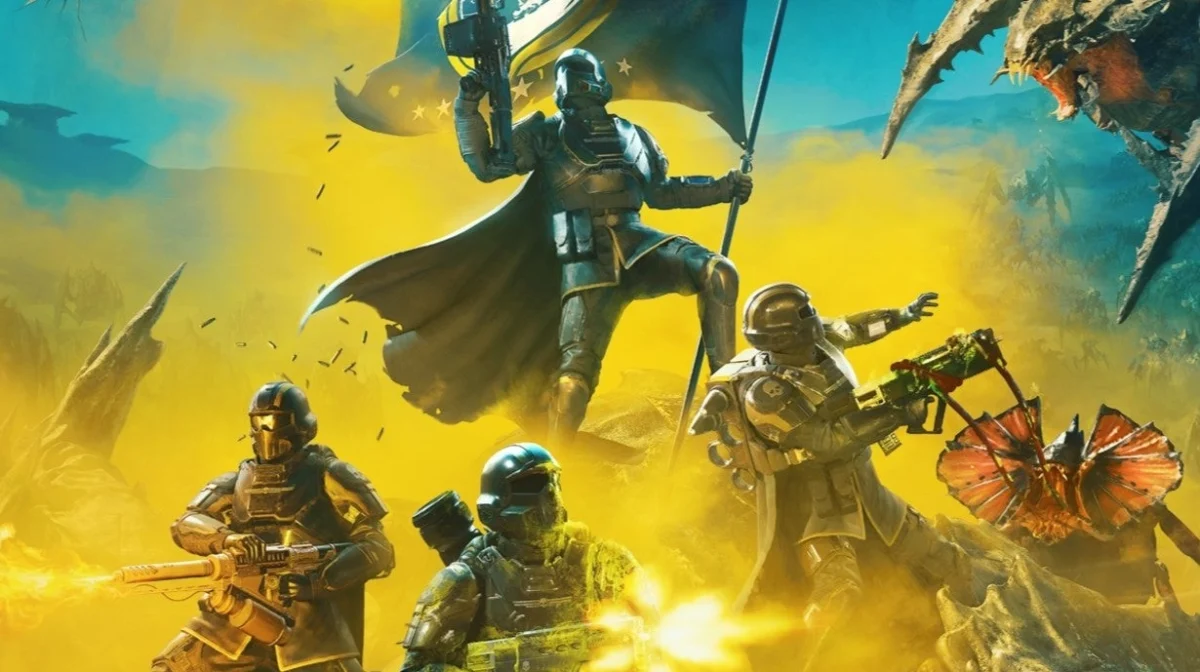
In the hyper-militarized, irony-drenched universe of Helldivers 2, the line between "managed democracy" and absolute absurdity has always been thin. Arrowhead Game Studios, the architects of this galactic struggle, have long leaned into the satirical legacy of Paul Verhoeven’s Starship Troopers. However, with the launch of the "Frontlines of Freedom" update, the developer has pivoted toward a more pointed, real-world political commentary. The introduction of "Termicide 2.0"—a massive, space-faring containment barrier designed to keep the Terminid threat at bay—serves as a thinly veiled, high-octane parody of the rhetoric surrounding the construction of border walls in the United States.
The Genesis of the Wall: From Termicide 1.0 to 2.0
To understand the current state of the galactic war, one must look at the disastrous history of the original Termicide campaign. Back in March 2024, the Ministry of Defense introduced the Terminid Control System (TCS), a chemical deterrent designed to neutralize the bug menace once and for all.
The campaign was a resounding failure in terms of actual containment. Rather than wiping out the Terminids, the deployment of the TCS inadvertently accelerated the evolution of the species, resulting in the birth of chem-addled, hyper-aggressive variants and the catastrophic transformation of entire sectors into uncontrollable supercolonies.
Despite this historic failure, the "Frontlines of Freedom" update sees the Ministry of Defense doubling down on its infrastructure-heavy approach to warfare. The trailer for the campaign proudly boasts that the new TCS 2.0 is "Bigger, better, and safer than Termicide 1 ever was." It is a narrative of bureaucratic hubris: an administration refusing to acknowledge the failure of its previous policies, opting instead to build a larger, more expensive version of the same failed solution, all while wrapping the project in the flag of "democratic resilience."
The Political Allegory: A Mirror to Modern Borders
The parallel to contemporary American politics is impossible to ignore. The concept of the "Great Wall"—a monumental physical barrier intended to solve complex, systemic geopolitical issues through sheer scale—has been a cornerstone of Donald Trump’s political platform since his 2016 campaign.
The Helldivers 2 narrative arc mirrors the cyclical nature of this debate. Much like the real-world discourse, where the promise that "Mexico will pay for it" became a rallying cry, the in-game Super Earth propaganda machine frames the construction of the TCS 2.0 as an absolute necessity for security. The trailer narration, delivered with the game’s signature jingoistic fervor, echoes the populist rhetoric of the 21st century: "The Ministry of Defense has approved a bold new initiative to make the galaxy safe again."
By embedding this parody into the game’s live-service structure, Arrowhead is not merely mocking the idea of border walls; they are highlighting the absurdity of using performative, "irony-poisoned" architecture to solve crises that are inherently biological and systemic in nature.
Chronology of the Galactic Conflict
- March 2024: The launch of the original Terminid Control System (TCS). Initial optimism is high among the Helldivers community, believing the bug threat is finally being neutralized.
- April 2024: The failure of the TCS becomes apparent. The Terminid mutations cause a spike in threat levels across the galaxy, marking the end of the first containment era.
- Early 2025: Political shifts in the real world—specifically the return of the Trump administration—provide the backdrop for the development of the latest narrative arc.
- Late 2025 (Current): The "Frontlines of Freedom" update is released. Arrowhead transitions the game’s narrative structure from weekly "Major Orders" to multi-week, high-stakes campaigns.
- Ongoing: Players are tasked with defending the construction sites of the TCS 2.0, with the promise of rewards such as the R-4 Hyena Marksman Rifle.
Supporting Data: Why Player Agency Matters
The effectiveness of Helldivers 2 as a satirical vehicle lies in its unique "Game Master" system. Unlike traditional live-service games, where the story is static, Arrowhead employs a narrative team that reacts to player performance in real-time.
When players fail a mission, the galaxy map reflects that failure. When they succeed, the Ministry of Defense shifts its tone. By making the construction of the TCS 2.0 a player-led objective, Arrowhead forces the community to become complicit in the satire. Players are not just observers of the political commentary; they are the laborers building the "wall" that the game is actively mocking.
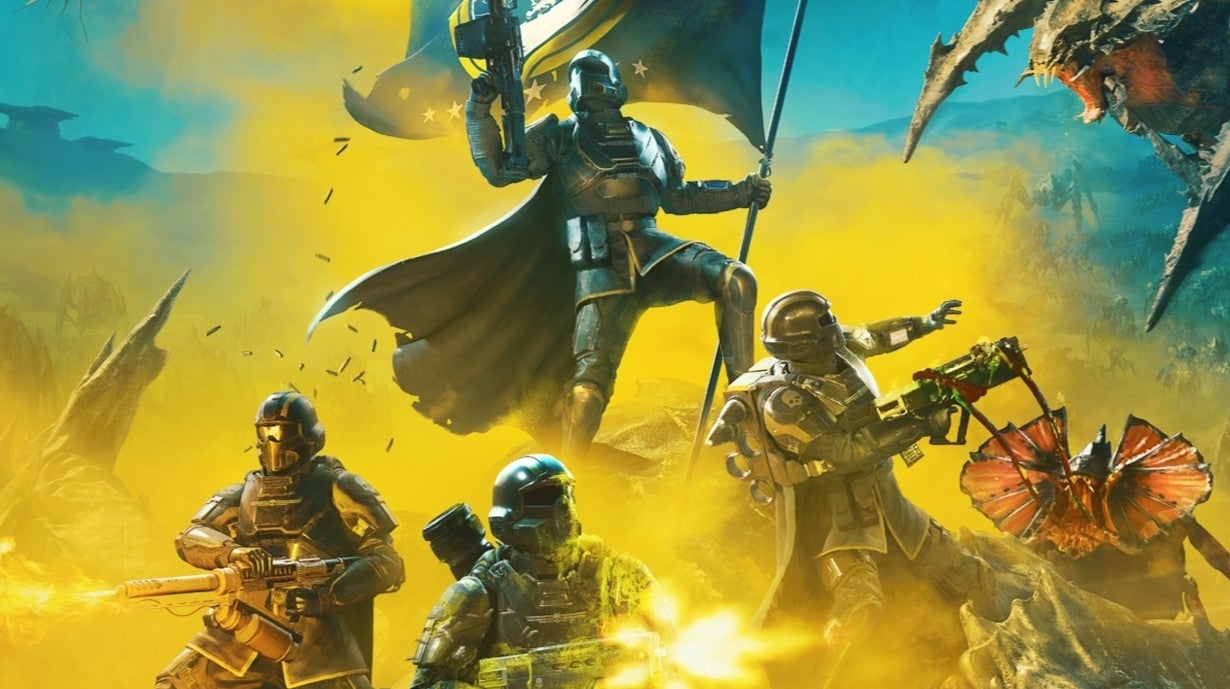
This creates a fascinating dynamic: players who may disagree with the real-world political implications of the satire are still incentivized to participate, simply to unlock new gear like the R-4 Hyena. The irony is layered: players are engaging in the very behavior—blind adherence to bureaucratic, ultimately doomed projects—that the game claims to be critiquing.
Official Responses and Developer Intent
Arrowhead Game Studios has remained largely cryptic regarding the specific political intentions behind the update, preferring to let the "Verhoevenian" tone speak for itself. However, the shift in the game’s structural narrative is a direct response to player feedback regarding the "hollow" feeling of the previous, shorter-term objectives.
"We didn’t have the content needed to do it justice at the time," the developers noted regarding the previous narrative experiments. The new, multi-week campaign structure is designed to allow for "clearer stakes and consequences." By lengthening the timeframe of the TCS 2.0 construction, Arrowhead ensures that the failure (or success) of the barrier will be felt by the community over weeks, rather than hours. This sustained engagement allows the satire to breathe, turning the game into a persistent, evolving commentary on institutional incompetence.
The Implications of "Failed Satire"
There is a growing concern within the gaming and critical community that Helldivers 2 is approaching a dangerous precipice. When a game uses satire that is so broad—and when the real-world politics it critiques are so prone to adopting ironic, self-referential language—the satire risks becoming "crapulence."
Critics argue that by making the fascist, jingoistic propaganda of Super Earth so fun to participate in, the game inadvertently validates the very ideologies it seeks to mock. If the player is having a blast while shouting "For Democracy!" and burning bugs with massive, wasteful, and ineffective barriers, is the message actually landing? Or is the game simply providing a "fascist pleasure" that the player consumes without irony?
The challenge for Arrowhead moving forward is to ensure that the "Termicide 2.0" campaign doesn’t just feel like a joke, but a warning. If the administration in the game—and by extension, the real-world inspirations—can co-opt the language of irony to further their agendas, then the satire must become more biting, more specific, and more aware of its own limitations.
Conclusion: Liberty at a Cost
As the construction of the TCS 2.0 continues, the Helldivers stand on the frontlines, R-4 Hyenas in hand, defending a structure that is likely doomed to repeat the failures of its predecessor. The brilliance of Helldivers 2 is that it allows us to laugh at the absurdity of our own reality, even as we participate in the digital reenactment of it.
Whether the "Frontlines of Freedom" update is a masterclass in political satire or a descent into redundant, "shit-eating" burlesque remains a matter of perspective. One thing is certain: as long as the Ministry of Defense keeps building walls, the Helldivers will keep fighting for them—and perhaps, in that blind, dutiful struggle, lies the most honest political commentary of all.