

The Geopolitical Stage: Cannes vs. The Festival Circuit
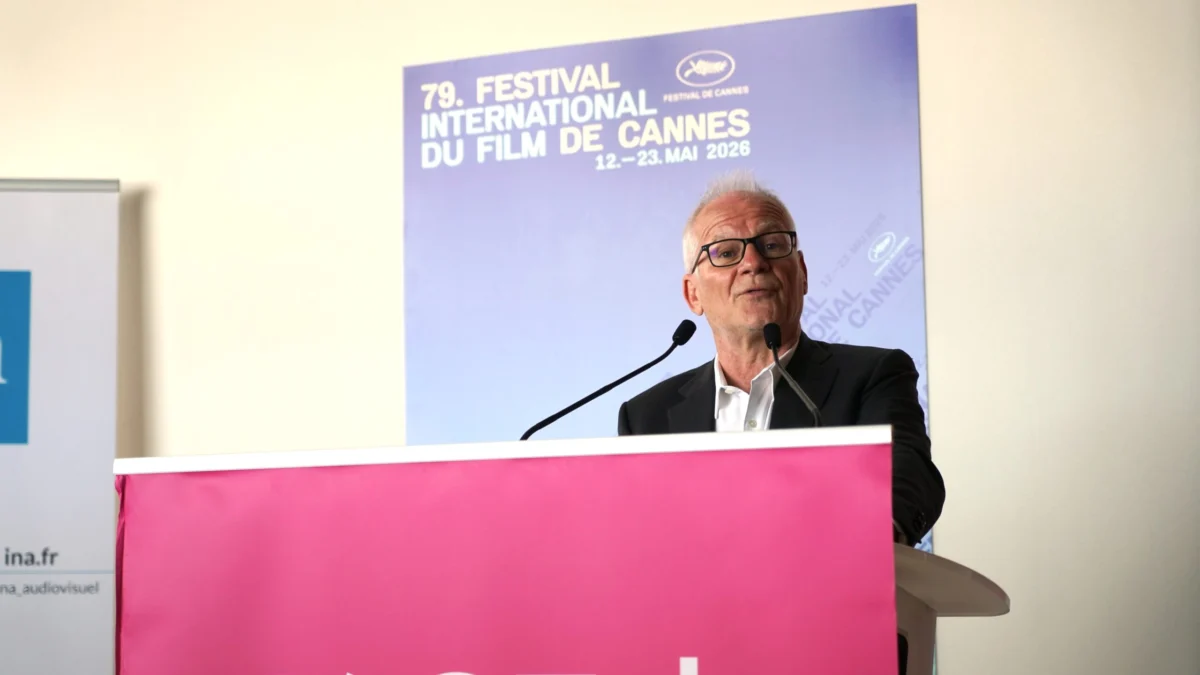
In the landscape of international film festivals, the line between art and politics is often blurred, yet rarely as sharply defined as it has been this season. While the Berlin Film Festival has frequently adopted a stance of reticence regarding specific geopolitical crises, opting for a broader focus on humanitarian abstraction, the Cannes Film Festival has chosen a different path. Under the leadership of General Delegate Thierry Frémaux, the world’s most prestigious cinema gathering has leaned into its role as a platform for political consciousness, particularly concerning the ongoing war in Ukraine.
Frémaux’s recent rhetoric serves as a definitive departure from the "neutrality" often sought by cultural institutions. During the kickoff of the prestigious L’Oeil d’or Prize—which honors the finest documentary work of the festival—Frémaux offered an unequivocal assessment of the current conflict. "This war that Ukraine will not lose and Putin will not win," he stated, referring to the full-scale invasion launched in 2022. He went on to assert that the true defeat of the aggressor is already unfolding in the cultural arena: "In any case, he already loses when there are filmmakers of such quality who make films of such quality [about Ukraine] to say what is the truth about this conflict."
A Chronology of Conflict and Creation
The intersection of the war in Ukraine and the Cannes Film Festival did not begin with a single statement, but rather through a sustained commitment to showcasing the reality of the frontlines.
- 2022: The immediate shock of the invasion saw the festival implement a strict policy against official Russian delegations, while simultaneously opening its doors to Ukrainian filmmakers and providing a global stage for their testimonies.
- 2023: Mstyslav Chernov, the visionary filmmaker whose work 20 Days in Mariupol earned him an Academy Award, solidified his status as the voice of a generation of Ukrainian documentarians.
- 2025: The festival featured 2000 Meters to Andriivka, Chernov’s poignant follow-up, which further explored the psychological and physical geography of the war.
- 2026: The current year saw a robust slate of Eastern European programming, including the premiere of Vesna, directed by Rostislav Kirpicenko, and the screening of Minotaur, a competition film by exiled Russian director Andrei Zviaguintsev, which critiques the societal rot fueled by the 2022 invasion.
This chronology reflects a festival that has evolved from reacting to the initial invasion to actively curating a cinematic record of the war’s endurance.
Supporting Data: The Burden of the Artist
The announcement of this year’s L’Oeil d’or winner—Rehearsals for a Revolution, directed by Pegah Ahangarani—was overshadowed, in the most constructive sense, by the presence of Mstyslav Chernov as the jury president. Chernov’s role highlights a growing trend: the transformation of filmmakers into essential journalists and historians.
Chernov’s perspective on the role of the artist in wartime is both profound and weary. "The Ukrainian film industry—Ukrainian art in general—has taken on a huge responsibility," he noted in an exclusive interview following the ceremony. "I would say sometimes it feels like too big of a responsibility: to carry both artistic and political values to the world. Artists are not only speaking for themselves; they are inevitably speaking for the country. It is a common mistake to think that art can exist outside of politics."

Data from industry reports and festival statistics confirm that demand for Ukrainian content remains high, though it is often accompanied by "compassion fatigue" or, more controversially, administrative exhaustion. Last year, at the Sheffield DocFest, a panel discussion titled "Are there too many Ukrainian films?" sparked significant backlash. For Chernov, the answer is simple: "No. As long as this war goes on, it will be never enough."
Official Responses and Institutional Alignment
Frémaux’s decision to align the festival with the cause of Ukrainian sovereignty is a calculated, strategic move that sets a standard for other major institutions. By platforming figures like Chernov, Cannes effectively legitimizes the documentation of war crimes and humanitarian crises as an essential component of cinematic excellence.
This alignment, however, is not without its complexities. The inclusion of works like Zviaguintsev’s Minotaur demonstrates that Cannes is attempting to navigate the nuanced space between the state of Russia and the voices of its dissenters. By contrasting the visceral, ground-level documentation of Ukrainian directors with the analytical, often sorrowful gaze of exiled Russian artists, the festival creates a dialectic that forces the audience to confront the invasion from multiple, often irreconcilable, angles.
The Evolution of the Narrative: Beyond the Battlefield
As the war drags into its fourth year, a critical question faces the Ukrainian creative community: how to represent a nation defined by trauma without being reduced to it?
Chernov is acutely aware of the "stereotype of war" that threatens to pigeonhole his compatriots’ work. "I think it is very important and I hope that Ukraine’s films and art will go beyond topics of war," he admitted. "There is just so much more to Ukrainian culture, to Ukrainian history, to present to the world."
His upcoming professional roadmap illustrates this ambition. Chernov is currently balancing his duty to document the present with a desire to explore the broader scope of his national identity. He revealed that he is currently crafting a "trilogy" regarding the war—with the final installment intended to capture the "end of the conflict"—while simultaneously developing a fiction film that steps away from the frontlines. This transition from "war documentarian" to "artist of the Ukrainian experience" is emblematic of a broader cultural movement in Kyiv and beyond, aimed at reclaiming a narrative that has been monopolized by the violence of an invader.

Implications for Global Cinema
The implications of Cannes’ stance are profound. By fostering an environment where political advocacy is not only permitted but encouraged, Frémaux has shifted the definition of "prestige." For a film to be considered among the "best," it is now expected to carry a moral weight that matches its technical prowess.
This paradigm shift suggests that the festival circuit is entering a new era. The days of "art for art’s sake" as an excuse for ignoring the world outside the cinema walls are waning. When the most important directors and producers in the world gather on the Croisette, they are now doing so under the shadow of a war that is being fought not just on the fields of Andriivka, but on the screens of the Palais des Festivals.
The "responsibility" that Chernov speaks of—the heavy lifting of defining a nation under siege—has become the new bedrock of European cinema. As long as the cameras remain rolling, the festival remains a site of resistance. The message from Cannes is clear: the truth of the conflict is being recorded, the witnesses are being platformed, and the art that survives this era will be the art that refused to look away.
As we look toward the future, the work of Chernov and his contemporaries suggests that the most enduring legacy of this era will not be the destruction wrought by the invasion, but the defiant, multifaceted, and deeply human stories that emerged from the rubble. The festival’s embrace of this narrative is not just a gesture of solidarity; it is an acknowledgement that in the 21st century, the camera is as vital a tool for survival as any other.









No comments yet. Be the first to join the conversation!