The landscape of musical instrument learning has undergone a radical transformation with Casio’s latest innovation. The company, a long-standing titan in the electronic keyboard market, has officially unveiled the CT-FS1, a device that promises to bridge the gap between novice ambition and professional-grade performance. At the heart of this release is "Feel Sync," a proprietary hardware-software ecosystem that effectively eliminates the possibility of playing a "wrong" note, allowing beginners to focus on the nuanced art of rhythm, timing, and expression rather than the fear of technical failure.
Priced at $400, the CT-FS1 arrives at a pivotal moment in music education, where digital tools are increasingly integrated into traditional practice. By leveraging advanced algorithmic analysis, Casio is aiming to lower the barrier to entry for millions of aspiring musicians.
Main Facts: What is the CT-FS1?
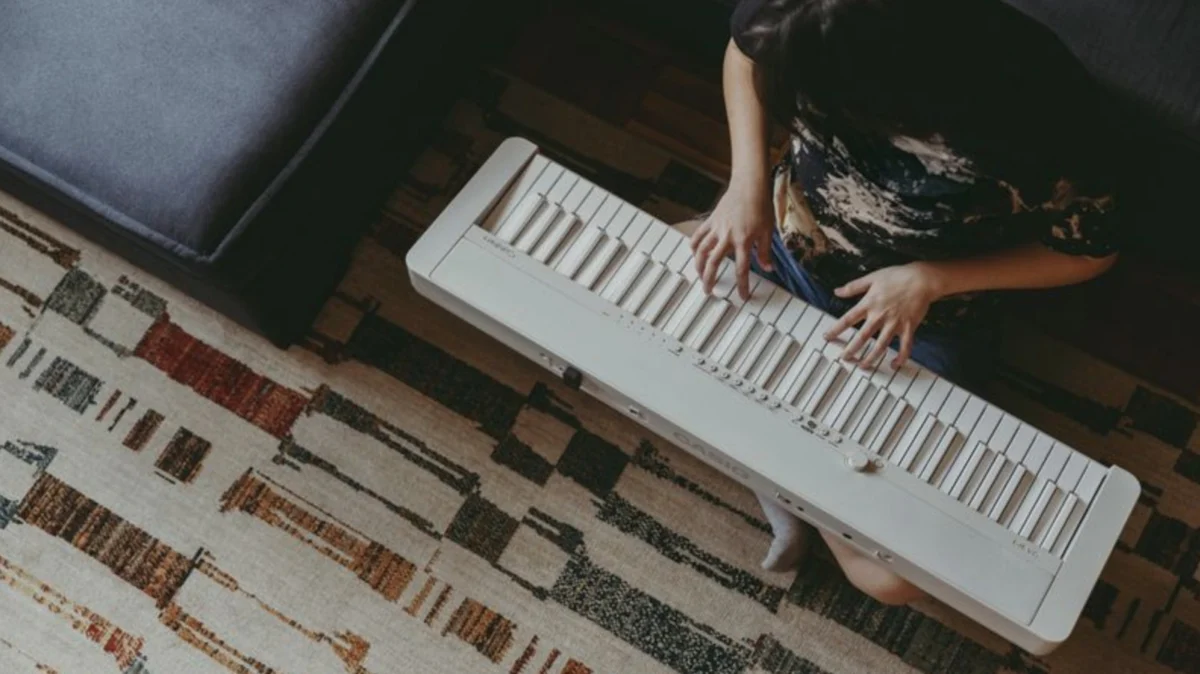
The Casio CT-FS1 is a 61-key, touch-responsive digital keyboard that, on the surface, appears to be a standard portable instrument. It features built-in stereo speakers with a dedicated surround-sound effect, Bluetooth integration, and a headphone output for private practice. Weighing in at just under ten pounds and capable of running on AA batteries, it is designed for maximum portability.
However, the defining feature is the Feel Sync technology. By utilizing a companion app, users can upload any audio file—ranging from complex jazz standards to modern pop hits. The Feel Sync algorithm analyzes the musical structure, including complex key changes and structural bridges, and maps these to the keyboard’s internal engine. Once the data is synced, the keyboard dynamically adjusts its note mapping; no matter which key the user presses, the output is guaranteed to remain in harmony with the track.
The aesthetic design is equally bold. Moving away from the traditional white-and-black key layout, the CT-FS1 is available in two completely monochrome variants: an "All-Black" model and an "All-White" model. This minimalist, monolithic design choice signals Casio’s intent to position the keyboard as both a functional instrument and a piece of modern, lifestyle-focused technology.
Chronology: The Evolution of Digital Learning
The journey to the CT-FS1 began years ago, as Casio sought to address a persistent "drop-out rate" in music education. Statistics have long shown that the steepest learning curve for new musicians occurs within the first six months, often due to the frustration associated with hitting dissonant notes and losing the "flow" of a piece.
- Phase 1: Early Software Prototyping (2020–2021): Casio’s research and development team began experimenting with real-time pitch correction software similar to vocal processors found in professional studios.
- Phase 2: Hardware Integration (2022): The challenge was transitioning this "auto-tune" logic from a software plugin to an embedded hardware chip. Engineers had to ensure zero latency so that the user felt an immediate, tactile connection to the music.
- Phase 3: Beta Testing and UX Refinement (2023): The company conducted extensive user testing with non-musicians, finding that the ability to play "in key" instantly increased session times by over 40% compared to traditional learning methods.
- Phase 4: Official Unveiling (Q3 2024): Following a series of industry trade show teasers, Casio officially launched the CT-FS1 to the global market, positioning it as the ultimate "entrypoint" device.
Supporting Data: Why "Feel Sync" Matters
To understand the utility of the CT-FS1, one must look at the data surrounding how humans learn musical expression. Traditional pedagogy often prioritizes "note accuracy" (hitting the right frequency) over "musicality" (the timing, dynamics, and emotional intent).
The Psychology of Flow
When a student is preoccupied with reading sheet music and locating the correct keys, the brain’s cognitive load is maxed out. This prevents the student from listening to the rhythm of the song. By removing the "wrong note" penalty, the CT-FS1 shifts the user’s focus to:
- Rhythmic Precision: Internalizing the tempo and groove of the track.
- Dynamic Control: Learning how to press keys with varying pressure to achieve different volumes and textures.
- Phrasing: Understanding how to group notes together to tell a musical story.
Split-Zone Versatility
The hardware architecture of the CT-FS1 includes a "split zone" feature. This is particularly useful for collaborative learning. A teacher or a more advanced player can occupy one half of the keyboard, playing standard, non-corrected notes, while the student plays in the "Feel Sync" zone. This allows the novice to participate in high-level jam sessions without the risk of ruining the composition, fostering a sense of accomplishment that is often absent in early-stage practice.
Official Responses and Industry Reception
In a press statement, Casio’s lead product designer noted, "We wanted to remove the fear that prevents people from sitting down at a keyboard. Music is a universal language, but the syntax—the scales and chords—can be intimidating. With Feel Sync, we are stripping away the syntax to reveal the emotion."
Industry analysts have been largely optimistic but cautious. Critics have pointed out that while this is a fantastic tool for rhythm and improvisation, it does not replace the necessity of learning music theory or traditional scales. However, the prevailing view is that Casio has successfully created a "gateway drug" for the music industry. By making the experience of playing rewarding, they increase the likelihood that a beginner will eventually seek out more formal, traditional training.
The monochrome design choice has sparked a lively debate on social media. Some purists argue that the lack of visual distinction between sharps, flats, and naturals (due to the monochrome keys) could hinder muscle memory development. Conversely, design enthusiasts have lauded the product for its sleek, non-intimidating aesthetic, noting that it looks more like a piece of high-end audio equipment than a "child’s toy."
Implications for the Future of Music Education
The release of the CT-FS1 has significant implications for how we define "musicianship."
1. The Death of the "Wrong Note"
The democratization of music through technology has always faced resistance from traditionalists. The piano roll, the metronome, and even the electric keyboard itself were once met with skepticism. Casio’s Feel Sync technology is simply the next logical step in this evolution. It suggests that the future of music education will be increasingly focused on the performance aspect of music rather than the mechanical aspect of fingering.
2. The Role of AI in Creative Arts
The Feel Sync app uses an algorithm to analyze the audio file. As this technology improves, we can expect to see keyboards that not only correct notes but also suggest harmonic progressions or offer real-time accompaniment based on the user’s current emotional output. This positions the keyboard not just as an instrument, but as an interactive partner.
3. Accessibility and Inclusion
Perhaps the most profound implication is the potential for accessibility. For individuals with motor control challenges or those who struggle with the cognitive complexity of traditional music theory, the CT-FS1 offers a path to creative expression that was previously locked behind years of practice. By ensuring that every note played is harmonious, Casio has created a more inclusive instrument.
Conclusion: A New Era for Casio
The Casio CT-FS1 is a bold experiment that challenges the status quo of musical instruction. By focusing on the "feel" of playing rather than the technical perfection of every keystroke, Casio has created a product that invites everyone—from the curious child to the frustrated hobbyist—to participate in the act of creation.
While it is true that the CT-FS1 does not teach the mechanics of scales or the complex history of music theory, it accomplishes something arguably more important: it creates a space where the barrier to entry is zero. For many, the CT-FS1 will not be the end of their musical journey, but rather the beginning. As technology continues to weave itself into the fabric of our creative lives, Casio has ensured that the piano—or in this case, the digital keyboard—remains a vibrant, living, and, above all, accessible instrument for the next generation of performers.
With its sleek monochrome aesthetic, robust feature set, and revolutionary Feel Sync engine, the CT-FS1 is more than just a keyboard. It is a statement that anyone, regardless of their current skill level, has the right to make music. Whether the market fully embraces the monochrome design or whether the Feel Sync technology eventually makes its way into higher-end workstations remains to be seen. However, one thing is certain: the way we approach the keys has changed forever.