Nana
Nana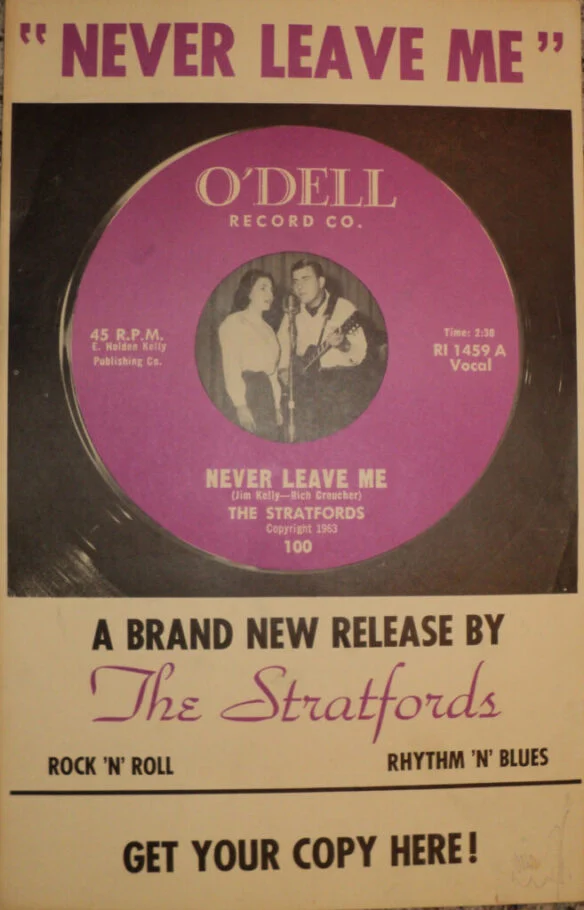
By Lee Weinstein
In the early 1960s, the American airwaves were a sprawling, unpredictable landscape. For a high school student in Philadelphia, the ritual was sacred: sitting by a reel-to-reel tape recorder, poised with a patch cord, waiting to capture the fleeting magic of the Top 100 AM radio hits. This was an era before instant streaming or digital archives. If you missed a song, it might vanish into the ether, never to be heard again.
Most of the music from that period has been codified into the "Oldies" canon—the Beatles, the Cascades, and Louis Armstrong are constants. Yet, there exists a shadow history of pop music: the songs that charted briefly, captivated a listener’s imagination, and then slipped into obscurity. For me, that haunting sound was a 1964 track titled "Never Leave Me" by a group known as The Stratfords. It would take over sixty years of periodic, obsessive research to pull this group—and the broader context of their brief, melodic reign—out of the mist of history.
The Chronology of a Sonic Mystery
The timeline of my obsession began in March 1964. The British Invasion was in full swing, and the airwaves were saturated with the jangle of guitars and the synchronized screams of "Beatlemania." Amidst the chart-topping juggernauts, a song called "Never Leave Me" climbed to number 60 on my local station’s Top 100. I heard it only two or three times. It featured a male-female duet—an arrangement I had always gravitated toward, reminiscent of Paul and Paula or Dick and Deedee. The melody was slow, melancholic, and utterly distinct from the upbeat, pop-centric hits of the day. By April, it was gone.

The 1960s were littered with such transient wonders. In June 1964, the "Bermudas"—a group I would later learn consisted of the three teenage daughters of session singer Rickie Page—released a haunting track called "Donnie." In 1967, an artist named "Dawn" released the track "Sandy." While I managed to collect these songs over decades of scouring used record bins in Northeast Philadelphia, the identities behind the music remained elusive. It was not until the dawn of the internet that the true stories behind these ghosts began to emerge.
Supporting Data: Unearthing the Stratfords
My breakthrough arrived in the late 1980s, when I finally tracked down a physical copy of "Never Leave Me" in a used record store. The label, "O’Dell," was marked "Promotion Copy – Not for Sale." It credited J. Kelly and R. Croucher as the songwriters. The flip side, an instrumental titled "Enaj," hinted at a hidden narrative—"Jane" spelled backward.
Decades later, my research finally coalesced through the Baltimore Entertainment Archive. I discovered that the O’Dell label had been a family venture, financed by Eugene Kelly for his son, Jim. A 1964 newspaper clipping by William McLaughlin provided the missing pieces of the puzzle. The Stratfords were not a small studio project; they were a nine-piece ensemble of high-schoolers, complete with a horn section and a massive lineup of guitarists and percussionists.
Joe Blizzard, the group’s drummer, noted in the clipping that he had suggested the name "Stratfords" after a pilgrimage to Stratford-on-Avon. This context transformed them from a faceless radio name into a tangible, ambitious collective of young musicians attempting to carve out a space in the post-Beatles world.

Official Perspectives and Behind-the-Scenes Realities
To understand why a band of this caliber didn’t become a household name, I reached out to Chet Dembeck, the group’s former lead guitarist. Dembeck, who transitioned from rock-and-roll to a distinguished career as a journalist and editor of speculative fiction, provided a candid look at the fragility of the 1960s music industry.
"We were approached by a small Philadelphia label that gave us regional promotion," Dembeck explained. "The record was gaining traction, but the label went bankrupt."
He offered a fascinating "what-if" scenario: "If it weren’t for the sheer force of the Beatles’ arrival right at that moment, our first record might have made number one. As it stands, it hit number three."
The band’s internal dynamics also shifted rapidly. Richard Croucher, who co-wrote "Never Leave Me," departed before the single was even released. Subsequent personnel changes, including the departure of female vocalist Sandy Mead, fundamentally altered the group’s sonic signature. The later tracks I had acquired—"Throw Stones," "A Fool and his Girl," and "Where is She Now?"—sounded like a gritty garage band, a departure from the "prettier than rock and roll" aesthetic that defined their early work.

The Intersection of Pop and the Paranormal
Perhaps the most surreal aspect of this journey is where the members of the Stratfords eventually landed. Chet Dembeck’s career took a sharp turn into the literary world. He became an authority on the paranormal, authoring works like Extreme UFO Briefing — For Your Eyes Only and editing anthologies of pulp science fiction and horror.
There is a poetic irony in this: a group whose music I pursued with the intensity of a detective tracking a cold case ended up being steered by a man who now curates tales of the unknown. The Stratfords’ history, much like the genre fiction Dembeck later edited, is a testament to the "lost" narratives of our culture—stories that exist on the periphery, waiting for someone to look closely enough to see them.
Implications: The Preservation of Sonic History
The story of the Stratfords, the Bermudas, and the mysterious "Dawn" (eventually identified as Philadelphia teen Joan Capetola) is more than a trip down memory lane; it is a commentary on the democratization of music history.
In 1964, a record’s success was determined by the whims of radio DJs and the financial stability of local labels. Today, the internet serves as a great equalizer. Websites like the Baltimore Entertainment Archive ensure that these "one-hit wonders" are not relegated to the dustbin of history. Streaming allows listeners to discover that the "hauntingly beautiful" sound of the Bermudas or the subtle, melodic arrangements of the Stratfords were not just flashes in the pan, but genuine contributions to the musical landscape of the 1960s.

The Stratfords’ appearance on Baltimore’s Buddy Deane Show—the inspiration for John Waters’ Hairspray—solidifies their place in the regional cultural fabric. While they may have only reached the "Bubbling Under Hot 100" chart, they left an indelible mark on those who were listening.
As I look back on my years of research, I realize that the hunt was, in many ways, as fulfilling as the find. The quest for "Never Leave Me" forced me to bridge the gap between the analog world of 1964 and the digital archive of 2026. It proved that no song is truly lost, provided there is someone willing to remember the melody, search the labels, and keep the tape recorder running. The music survives, not because it was a massive commercial success, but because it resonated—deeply and permanently—with the listeners who were paying attention.


 Nila Kartika Wati
 Siti Muinah