Basiran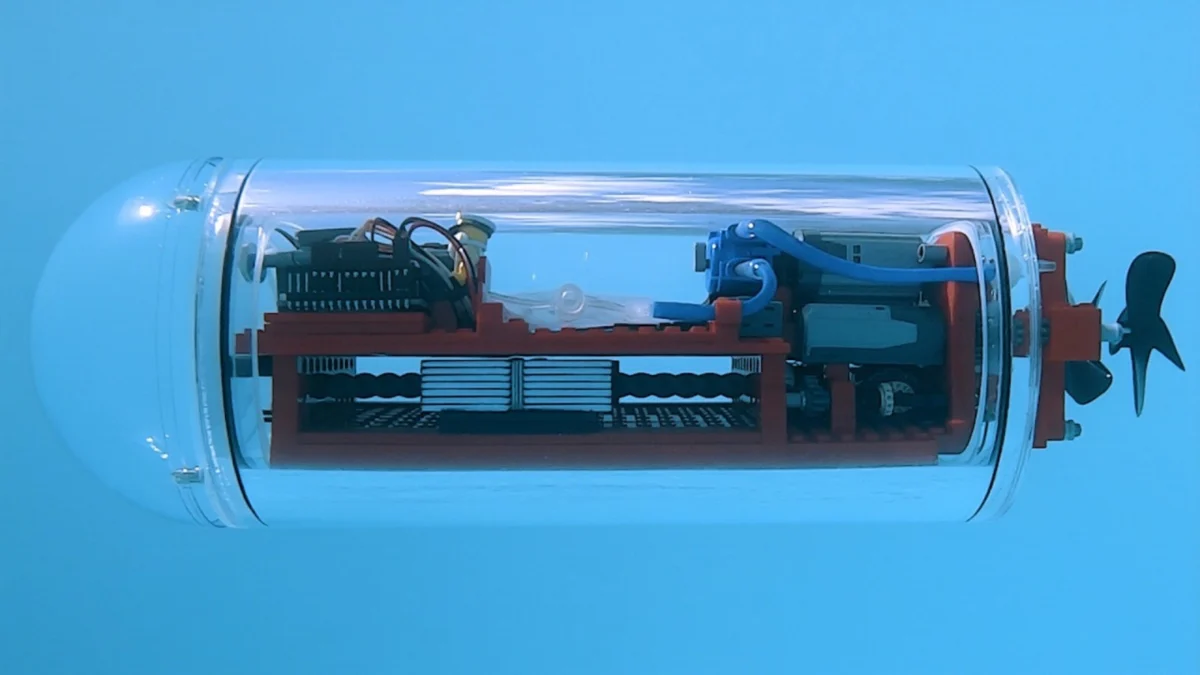
In the world of amateur engineering, few platforms offer the modular versatility of LEGO Technic. While most enthusiasts use these components to construct desktop models or simple motorized vehicles, one dedicated YouTuber, operating under the moniker "Brick Experiment Channel," has pushed the medium to its absolute physical limits. Their latest endeavor—the "Submarine 5.0"—represents a masterclass in miniaturized maritime engineering, successfully navigating both the controlled environment of a swimming pool and the unpredictable currents of a natural river.
This 6.5-pound submersible is not merely a display piece; it is a functional, radio-controlled vessel that integrates complex ballast systems, pitch-control mechanisms, and advanced micro-processing. It marks the culmination of years of iterative design, proving that even with the limitations of plastic building bricks, one can achieve sophisticated underwater performance.
The Chronology of an Underwater Evolution
The journey to Submarine 5.0 was neither short nor simple. Brick Experiment Channel has spent years refining the concept of a LEGO-based submersible, treating the project as a rigorous engineering challenge rather than a mere hobby.
The Early Iterations: Learning the Currents
The initial versions of the submarine were rudimentary, focusing primarily on buoyancy and basic waterproofing. The primary hurdle for any LEGO submarine is the inherent "leaky" nature of the plastic bricks; the joints are not designed for high-pressure underwater environments. Early models relied on basic syringe-style piston systems to manipulate water intake, providing a rudimentary method for diving and surfacing. However, these systems were bulky and unreliable, often failing under the pressure of deeper water.
The Refinement Phase
By Version 3.0 and 4.0, the creator began to experiment with more specialized hull materials, moving away from pure LEGO structures toward acrylic tubes to ensure a watertight seal for the sensitive internal electronics. Each iteration saw the removal of dead weight and the addition of more precise control systems. The transition from simple "on-off" motor controls to proportional radio controls was a turning point, allowing the vessel to move with the grace of a professional ROV (Remotely Operated Vehicle) rather than a toy.
The Birth of Submarine 5.0
Submarine 5.0 is the current pinnacle of this multi-year development cycle. It represents the integration of lessons learned from previous failures—specifically those involving structural stability, directional control at speed, and battery efficiency. By moving away from off-the-shelf solutions and toward custom-modified LEGO Technic components, the creator has achieved a level of sophistication previously unseen in the LEGO community.
Supporting Data and Engineering Specifications
The technical prowess of Submarine 5.0 lies in its internal architecture. Squeezed into a compact 250 x 120 mm acrylic tube, the vessel is a dense hive of miniaturized hardware.
Ballast and Depth Control
One of the most significant engineering breakthroughs in the 5.0 model is the overhaul of the ballast system. Previous designs consumed too much internal volume with their piston mechanisms. The new design utilizes a modified peristaltic pump that fills a 50 ml IV bag. This flexible bladder acts as a variable buoyancy tank. Because the bag can conform to the internal contours of the hull, it maximizes the available space for other critical components, such as the pitch control system.
The Tungsten Pitch System
Perhaps the most ingenious feature is the motorized pitch control. Recognizing that traditional control surfaces (fins) are often insufficient at low speeds, the creator installed a track system carrying 3 lbs of tungsten pellets. By sliding this significant mass forward or backward via a motorized rack-and-pinion, the submarine shifts its center of gravity. This mechanical "trim" allows the vessel to tilt its nose up or down, facilitating rapid dives and surfacing maneuvers that are far more responsive than those achieved by thrust alone.
Electronic Architecture
The "brain" of the submarine has also undergone a massive upgrade. The team transitioned from the older Raspberry Pi Zero to an Arduino Nano ESP32 microcontroller. This provides:
- Six-axis gyroscope and accelerometer: Essential for maintaining stability in turbulent river currents.
- Pressure sensor: Allows the vessel to maintain a specific depth autonomously.
- 40MHz radio receiver: Chosen for its superior ability to penetrate water compared to standard 2.4GHz signals.
- Power Supply: A standard 9V LEGO battery box, modified to provide stable voltage to the high-demand micro-controllers and servo motors.
Hydrodynamics: The Nose Cone Solution
A persistent issue in earlier versions was "wandering" at higher speeds. The flat-faced designs created unpredictable drag, causing the submarine to veer erratically. The 5.0 iteration introduces a 4.72-inch rounded plastic nose cone, specifically engineered to streamline water flow. This simple geometric change drastically improved the vessel’s tracking, allowing it to maintain a straight line even when moving against the current of a river.
Official Performance Metrics
During recent field testing, Submarine 5.0 was subjected to a two-stage evaluation.
- Swimming Pool Trials: In the calm, clear water of a swimming pool, the vessel demonstrated excellent maneuverability. The pitch control system allowed for smooth transitions between hovering and cruising depths, proving the viability of the peristaltic ballast pump.
- River Testing: The most rigorous test occurred in a fast-flowing river. Despite the external turbulence, the submarine maintained a consistent depth of approximately 4.9 feet. The ability to "fight" the current—a task that requires both consistent power and precise control input—validated the effectiveness of the 40MHz radio link and the onboard stabilization software.
Implications for the DIY Robotics Community
The success of the Brick Experiment Channel’s submarine has broader implications for the DIY and STEAM (Science, Technology, Engineering, Arts, and Mathematics) communities.
Democratizing Underwater Exploration
Historically, building a functional, remote-controlled submarine was the domain of well-funded hobbyists with access to CNC machines and expensive marine-grade materials. By demonstrating that high-performance maritime robotics can be achieved using affordable, modular building components, this project lowers the barrier to entry for aspiring marine engineers.
The "LEGO as Engineering" Movement
This project highlights a shift in how the public perceives LEGO. It is no longer just a children’s toy, but a viable rapid-prototyping system. When a YouTuber can successfully navigate a river with a LEGO-based vessel, it serves as a powerful testament to the modularity of the Technic system. This has sparked a trend of increasingly ambitious LEGO projects, such as Bricked MC’s viral quest to recreate the entire GTA 5 map, which demonstrates that the community is moving toward massive-scale, complex builds.
Potential for Further Research
The use of the Arduino Nano ESP32 in a waterproof housing opens doors for future automation. With the existing sensor suite, it is theoretically possible to program the submarine for autonomous waypoint navigation, where the vessel could map the floor of a pond or pool without any human intervention. The creator has shown that the platform is robust enough to handle the software complexity required for such advanced tasks.
Conclusion
Submarine 5.0 is more than just a successful YouTube video; it is a legitimate piece of engineering. Through a rigorous process of trial, error, and iterative improvement, the Brick Experiment Channel has transformed a collection of plastic bricks into a sophisticated, ballast-controlled underwater craft.
As the DIY community continues to push the boundaries of what is possible with accessible hardware, projects like this serve as a beacon for the next generation of engineers. Whether it is through the meticulous calculation of tungsten weight placement or the clever repurposing of medical supplies for buoyancy control, the message is clear: innovation is not defined by the materials one uses, but by the ingenuity applied to them. As the project continues to evolve, the maritime community will surely be watching to see if Version 6.0 can conquer even more challenging depths.


 Suro Senen
 Rifan Muazin