Ammar Sabilarrohman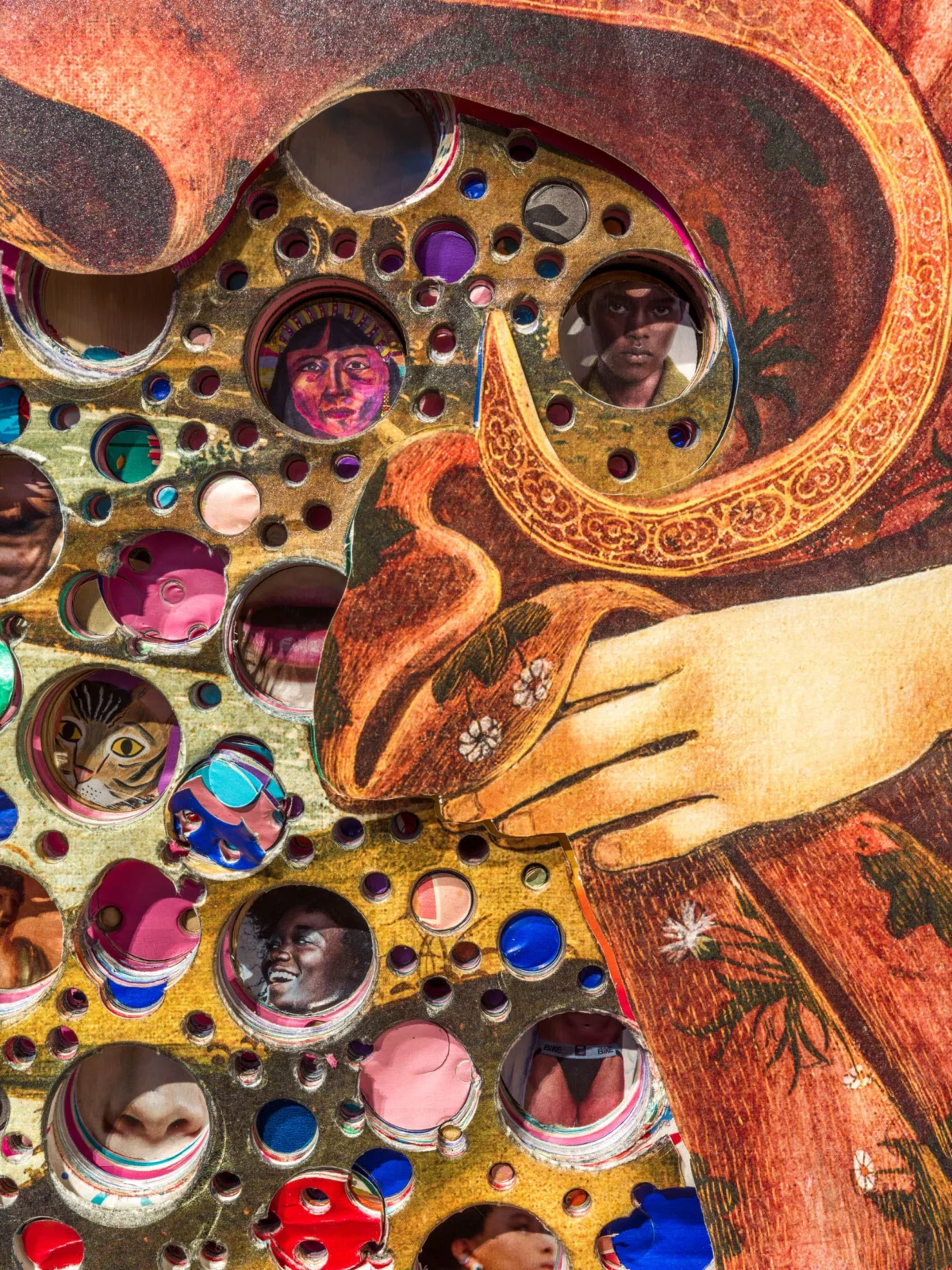
In an era defined by the relentless deluge of digital imagery and the commodification of visual culture, artist David Daigle offers a visceral, structural resistance. His upcoming exhibition, The Death of Beauty, hosted at Track 16 in East Hollywood, is not merely a collection of artworks; it is an excavation of the mechanisms that manufacture desire. Through a meticulous process of décollage—building up surfaces of commercial media only to surgically dismantle them—Daigle challenges viewers to peer through the glossy veneer of the contemporary world to confront the fragmented, often unsettling realities concealed beneath.
The Mechanics of Dissection: Main Facts
David Daigle’s practice occupies a unique intersection between sculpture, photography, and archival intervention. His latest body of work centers on the “punch-cut” technique, a laborious process of removing thousands of tiny, circular apertures from large-scale prints. Each hole acts as a portal, revealing miniature, sequestered tableaux—tiny fragments of text, color, or human features that disrupt the primary image.

The exhibition features a diverse array of source material, ranging from mass-produced home decor reproductions of Sandro Botticelli’s The Birth of Venus to deconstructed pages of high-brow publications like Artforum. By physically perforating these surfaces, Daigle strips away the "intended" meaning of the source imagery, forcing the viewer to engage with the object’s material history and the artist’s subversive critique of hyper-consumerism.
A Chronology of Artistic Development
Daigle’s trajectory has long been marked by an interest in the tension between the surface and the hidden. His evolution from traditional collage to this current, highly refined method of subtractive intervention reflects a broader shift in his engagement with socio-political themes.

- Early Period: Daigle focused on the juxtaposition of traditional photography and found materials, testing how physical distance between layers could alter the perception of a portrait.
- 2020–2023: The artist began incorporating more aggressive techniques, experimenting with how the physical degradation of a photograph could mirror the degradation of the subject matter—often focusing on environmental or geopolitical landscapes.
- 2026: The Death of Beauty represents the zenith of this approach. The works created for this exhibition represent a two-year period of intensive research into how media consumption cycles—specifically the rapid, ephemeral nature of advertising—can be frozen and examined through the physical act of puncturing.
Supporting Data: The Anatomy of the Work
The centerpiece of the exhibition, titled The Death of Venus, serves as a poignant case study in Daigle’s methodology. The work begins with a large-scale, mass-market wallpaper print of Botticelli’s Renaissance masterpiece. This choice is deliberate: it transforms a high-art icon into a cheap commodity intended for domestic consumption.
Daigle then proceeds to "overwhelm" this icon. Thousands of punch-cut holes are drilled into the surface, each serving as an aperture that reveals hidden vignettes. These snippets—an anonymous eye, a sliver of a magazine advertisement, a vibrant smear of pigment—completely erase the titular figure.

In a separate, equally sobering piece titled Gaza City (2026), the artist utilizes a panoramic photograph of the city taken in 2020. The archival pigment print is subjected to a similar cratering effect. The physical holes mirror the actual, tragic destruction the city has endured in the years since. By overlaying this with pages from literature relating to peace in the Middle East, Daigle creates a layered, sculptural narrative that speaks to the chasm between archival documentation and the volatile reality of current events.
Official Artistic Philosophy: The Artist’s Perspective
When asked about the intent behind such drastic intervention, Daigle points to the psychological weight of our visual environment. "I am interested in sublimating technical images designed to generate desire," he explains. "Through the subversive act of perforation, I search for the meanings trapped behind them. I want to see past the imagery, through the photograph itself, and ask whether media can become so untruthful that it ultimately consumes both itself and us."

Daigle views his work as an act of "excavation." He suggests that contemporary media, by design, leaves no room for silence or contemplation. By forcing the viewer to look into the paper—rather than just at it—he facilitates a moment of critical distance. The "truth" in his work is not found in the original advertisement or the reproduction of a masterpiece, but in the negative space created by his intervention.
The Implications of Visual Consumption
The implications of The Death of Beauty extend beyond the walls of the Track 16 gallery. Daigle’s work serves as a mirror to a society that treats all visual data as disposable. Whether it is the commercialization of a 15th-century painting or the desensitization brought on by the constant stream of conflict photography, the artist argues that we are effectively being "blinded by the surface."

The Commodification of the Icon
By turning Botticelli’s Venus into a canvas for industrial-grade destruction, Daigle touches on the "death of beauty" mentioned in the exhibition’s title. When culture is reduced to home decor, its capacity to inspire or provoke is neutralized. The work forces a confrontation: if we consume art the same way we consume a bus shelter advertisement, what remains of our capacity for aesthetic appreciation?
Media and Truth
The use of photographs of Gaza, juxtaposed with text about peace, highlights the "media undercurrent"—the reality that exists behind the screen. Daigle’s work implies that the more we are shown, the less we actually see. The "cratered" surface of his prints suggests that our collective media consumption is not adding to our knowledge, but rather eroding our understanding of the world.

Exhibition Details and Legacy
The Death of Beauty opens to the public on July 18 and will remain on view through September 5, 2026, at the Track 16 gallery in East Hollywood.
For those who wish to delve deeper into the artist’s process, Daigle maintains an active, ongoing dialogue with his audience via his Instagram platform, where he frequently posts progress shots and conceptual notes on the works in development.

Ultimately, David Daigle’s work is an invitation to skepticism. In a time where imagery is the primary currency of the digital age, his decision to physically destroy the image is a radical act of liberation. By puncturing the glossy, seductive surfaces of modern life, he asks us to reconsider what lies beneath—and to take responsibility for the narratives we consume every day. As the exhibition title suggests, beauty—at least the superficial, mass-marketed variety—must die so that a more complex, honest understanding of our visual reality can emerge.
Summary of Works Referenced
- The Death of Venus (2026): A large-scale reproduction of Botticelli’s painting, modified with thousands of punch-cut holes to obscure the original subject.
- Gaza City (2026): 24 x 60-inch archival pigment print featuring a 2020 panorama, layered with peace-related literature and subjected to surface excavation.
- Beige (2026): A 22 x 24-inch piece utilizing deconstructed Artforum magazines.
- Sinead O’Connor (Herb Ritts Photo) (2026): A 10 x 8-inch collaborative work featuring photography by Herb Ritts, layered with Vogue magazine fragments.
This exhibition marks a significant milestone in Daigle’s career, solidifying his role as a leading voice in contemporary mixed-media art. His ability to blend the technical precision of archival printing with the raw, aggressive energy of deconstruction makes The Death of Beauty one of the most anticipated exhibitions of the 2026 summer season.

 Suro Senen
 Siti Muinah