

In a significant response to mounting user dissatisfaction, Google has announced a comprehensive overhaul of the usage limits governing its AI powerhouse, Gemini. For weeks, power users and subscribers alike have reported that their daily or periodic usage quotas were being depleted at an alarming, often inexplicable rate. Following an internal audit, Google has pinpointed the technical bottlenecks responsible for these spikes and is now rolling out a suite of fixes designed to make the Gemini experience more predictable, transparent, and fair.
The corrective measures come after high-profile reports from developers and creative professionals—such as Ashutosh Shrivastava—who noted that attempting a single complex video generation task could exhaust a substantial portion of their entire five-hour allotment, even if the generation process failed midway through.
The Root Causes: Why Gemini Was Hitting Walls
According to Josh Woodward, Vice President of Gemini at Google, the issues were not merely a result of high traffic, but rather a series of structural inefficiencies in how the platform accounted for compute-intensive tasks.
1. The Omni-Video Generation Bug
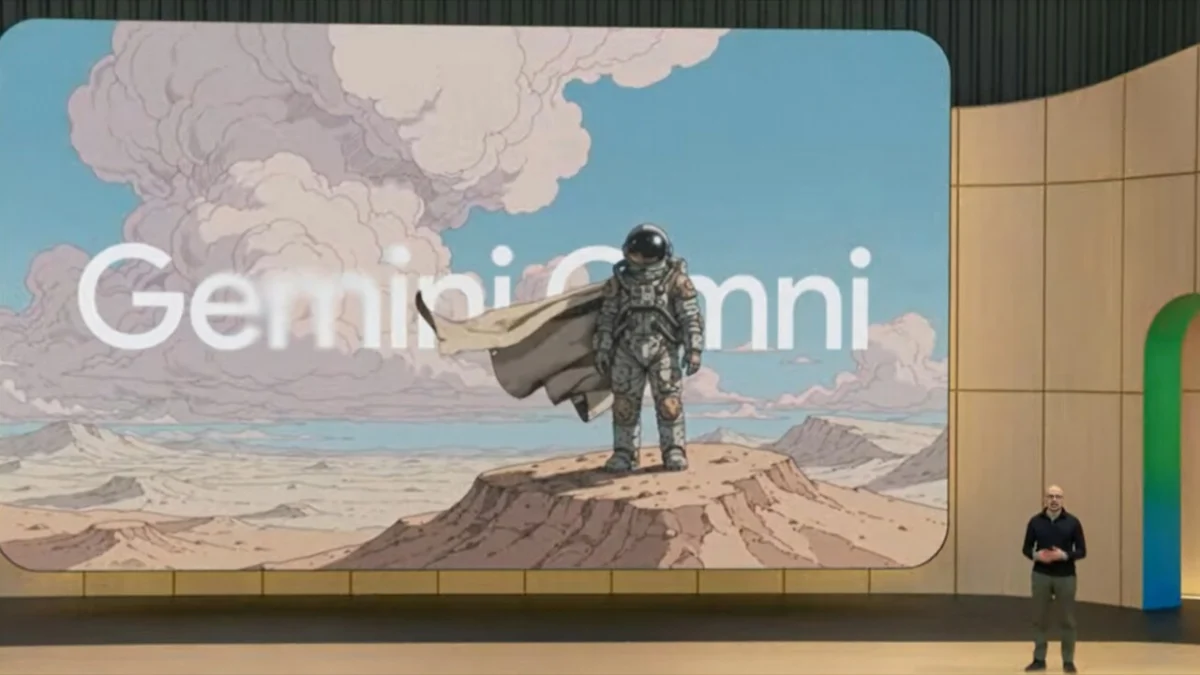
The most prominent offender was the "Omni-Video" generation tool. Users experimenting with short clips or multi-style variations found their accounts drained rapidly. The primary technical failure here was that the system docked "compute credits" from a user’s quota at the initiation of the task, rather than upon successful completion. Consequently, failed requests—which are common in the early stages of generative AI experimentation—were effectively taxing users for work that the system failed to deliver.
2. Complex Pro-Prompt Over-Allocation
"Complex-3.1-Pro-Prompts"—queries involving heavy reasoning, massive file uploads, or multi-step logic—were previously treated as monolithic tasks. This allowed a single prompt to consume an outsized portion of a user’s monthly allowance. By treating these high-complexity tasks as "all-or-nothing" compute drains, the system inadvertently penalized users who utilized the model for its intended purpose: deep, technical analysis.
3. The Failure Penalty
Perhaps the most egregious design flaw was the "Failure Tax." Internal telemetry revealed that approximately one in ten requests failed due to internal system errors or capacity bottlenecks. Despite these failures being the fault of the platform, the quota deduction system proceeded as if the task had been successfully completed.
Chronology: From User Outcry to Corporate Remediation
The timeline of this issue highlights the delicate relationship between cutting-edge AI development and user experience management.
- Early May 2026: Reports begin surfacing on social media platforms and developer forums (such as X and Reddit) regarding "impossible" quota depletion. Users note that they are hitting their 5-hour limits within minutes of starting a session.
- Mid-May 2026: Independent analysts and power users begin documenting the "Rechenbasierte Nutzung" (compute-based usage) issue, noting a direct correlation between video-prompt attempts and sudden quota exhaustion.
- Late May 2026: Google’s engineering team launches an internal investigation into the Gemini infrastructure.
- May 29, 2026: Josh Woodward officially acknowledges the feedback on X, confirming that the company is rolling out "several fixes" to make quotas more stretchable and predictable.
- June 2026 (Ongoing): Google begins deploying the technical patches, including the elimination of quotas for failed requests and the introduction of "Flash-Lite" tiers to optimize resource distribution.
Technical Solutions and System Adjustments
Google’s response is multifaceted, targeting both the underlying code of the AI models and the user interface through which limits are displayed.
H3: Redefining Quota Consumption
To prevent the "all-or-nothing" drain, Google is introducing granular consumption caps. For Complex-3.1-Pro-Prompts, the system will now apply specific upper limits per prompt. This prevents a single, highly complex query from cannibalizing a user’s entire monthly budget, effectively "throttling" the compute cost of individual prompts while allowing users to continue working without being locked out.
H3: The "Zero-Penalty" Policy
Perhaps the most welcome change is the removal of penalties for system-side failures. Under the new protocol, if a request fails due to internal errors, the system is programmed to recognize the failure instantly and refund the allocated compute cost to the user’s quota. This ensures that users are only paying—in terms of their allotment—for successful, high-quality output.
H3: Flash-Lite and the Free-Tier Strategy
In a move that serves both the user and the company, Google has designated "Flash-Lite" prompts as quota-free. This effectively creates a "freemium" layer within the paid subscription, allowing users to handle simple, low-compute tasks without dipping into their main quota.
This is a strategic shift: by incentivizing the use of lighter models for simpler tasks, Google reduces the load on its most powerful GPUs (used for deep reasoning and complex video generation). It is an elegant way to manage server resources while simultaneously providing a better user experience.
Official Responses: Transparency as a Priority
Josh Woodward’s public communication marked a turning point in Google’s transparency regarding AI resource management. By acknowledging that users were frustrated by the lack of predictability, Google shifted the narrative from "AI is expensive to run" to "We are improving our efficiency to serve you better."
For users engaged in "Deep Research" or high-end coding, Google is rolling out a new dashboard. This interface will provide detailed usage breakdowns, allowing users to see exactly which functions or prompts are consuming the most "compute tokens." This visibility is expected to help users optimize their workflows—such as breaking down massive file uploads into smaller, less compute-intensive chunks.
Furthermore, Google is introducing a "model-stickiness" feature. Gemini will now remember the user’s preferred model across sessions. This prevents the system from defaulting to a highly expensive model unless the user explicitly requests it or unless the user has exhausted their quota and the system performs an automated "downgrade" to a less resource-intensive model.
Implications: The Future of AI Resource Allocation
The implications of this overhaul extend far beyond just fixing a bug. They represent a fundamental evolution in how the AI industry approaches the scarcity of high-performance computing.
The Shift Toward "Compute Transparency"
As AI models grow more complex, the cost of inference is becoming a critical business metric. Google’s decision to move toward a more transparent, consumption-based model signals that we are moving away from the era of "unlimited" AI. Companies must now teach users how to be "efficient prompt engineers" not just for quality, but for resource management.
Impact on Competitive Advantage
By increasing the limits for "Ultra" subscribers—specifically doubling the number of Omni-Video generations—Google is actively using resource optimization as a competitive lever. If Google can make its infrastructure more efficient than OpenAI or Anthropic, it can offer higher usage limits at the same price point, creating a significant barrier to entry for competitors.
Managing Expectations
The "Flash-Lite" strategy is likely to become an industry standard. By segregating tasks by complexity and charging (or counting) accordingly, companies can preserve their most expensive hardware for the tasks that truly require it, such as scientific research, complex software development, or high-fidelity media production.
Conclusion
The recent turbulence surrounding Gemini’s usage limits served as a necessary "stress test" for Google’s infrastructure and communication strategy. By responding with technical precision and increased transparency, Google has successfully mitigated the immediate frustration of its user base.
The transition to a more granular, failure-aware, and transparent quota system suggests that Google is maturing in its role as a provider of AI as a utility. As we look toward the future of generative AI, the focus will likely shift from "what can this model do" to "how efficiently can this model perform the task." For the end user, this means a more predictable and reliable tool; for the industry, it marks the beginning of a more mature, economically sustainable era of artificial intelligence.












No comments yet. Be the first to join the conversation!