

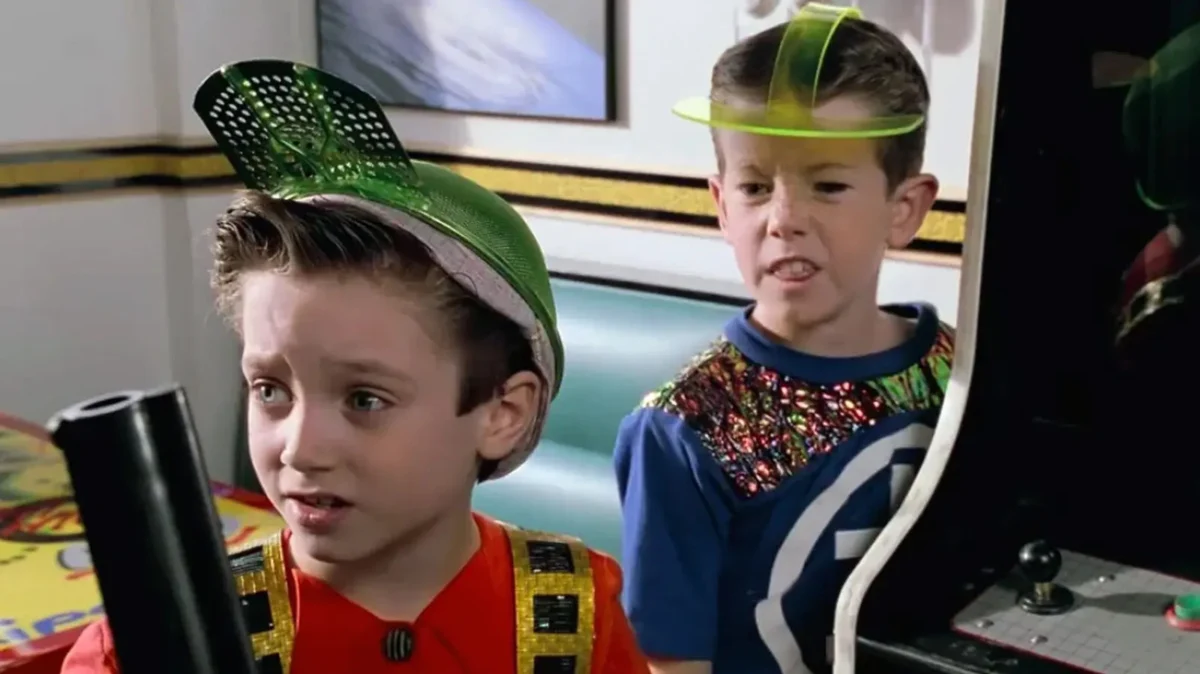
In the annals of Hollywood trivia, few "blink-and-you’ll-miss-it" cameos have aged as fascinatingly as the one found in Robert Zemeckis’ 1989 sci-fi cornerstone, Back to the Future Part II. While the film is celebrated for its visionary—and often comically inaccurate—depiction of 2015, it also served as the quiet, unassuming launchpad for one of the most prolific actors of the modern era. Long before he was bearing the burden of the One Ring in Middle-earth, a young Elijah Wood stood in a retro-themed diner, casually insulting the film’s protagonist and, by extension, the very concept of analog entertainment.
The Scene: A Glimpse into the Future’s Disdain
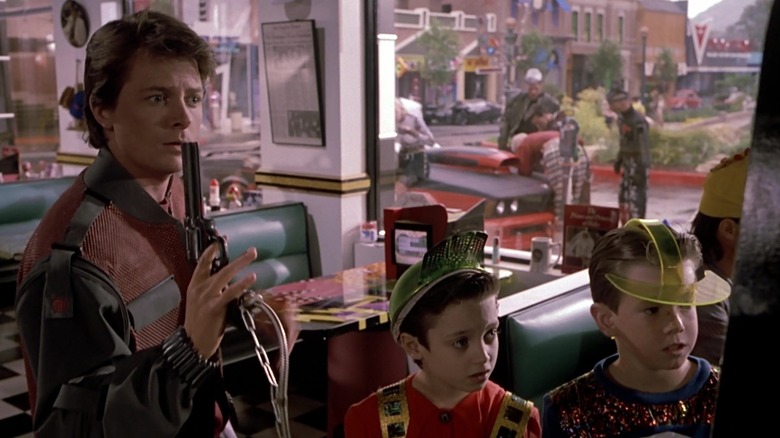
The narrative of Back to the Future Part II hinges on Marty McFly’s displacement. Having traveled from 1985 to the "far-flung" future of 2015, Marty is attempting to navigate a world of flying cars, self-lacing sneakers, and holographic cinema. His primary mission is to prevent his future progeny from falling into a life of crime, but he finds himself momentarily distracted by a sanctuary of nostalgia: the Cafe ’80s.
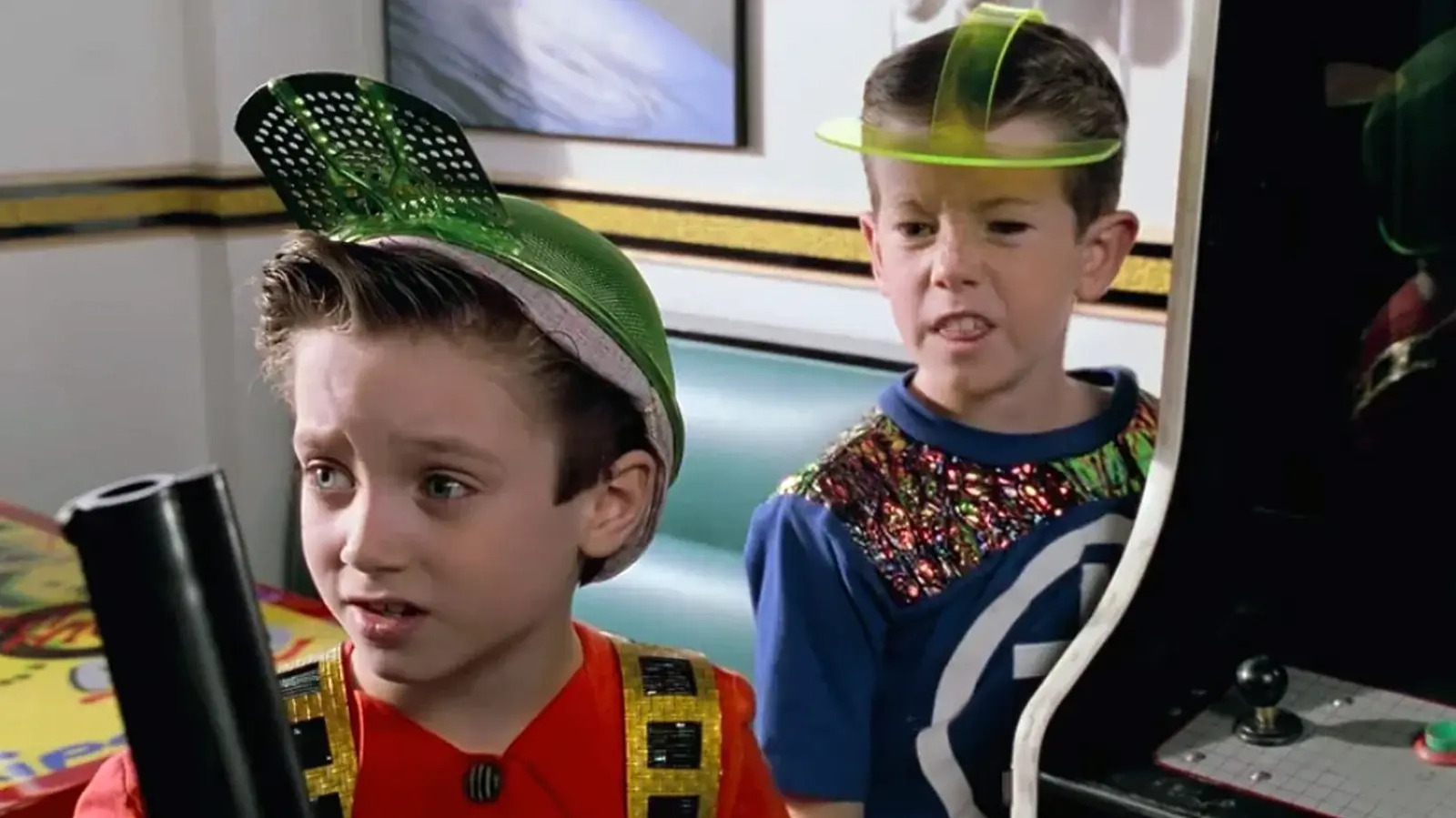
Designed as a kitschy, high-tech tribute to a decade that was, in reality, currently unfolding outside the theater walls, the diner features a vintage Wild Gunman arcade cabinet. When Marty, eager to show off his 20th-century prowess, steps up to the machine, he draws the attention of two young boys.
In a moment of accidental meta-commentary, Marty expertly dispatches the digital outlaws on screen. Expecting a reaction of awe, he is met with cold, youthful indifference. "You have to use your hands?" the boys ask, clearly unimpressed by the tactile requirements of the game. "That’s like a baby’s toy." One of those two children—a brief, dismissive voice in the wilderness of a futuristic diner—was Elijah Wood, making his feature film debut.
Chronology of a Rising Star
Elijah Wood’s path to the screen was not immediate, though his trajectory was meteoric. Before stepping into the shoes of a cynical future-kid, Wood had already begun to make his mark in the commercial and music video space. His early appearances in Paula Abdul’s 1989 music videos, "Forever Your Girl" and "Straight Up," showcased an "It" quality that casting directors were eager to harness.
The Formative Years: 1990–1995
Following his brief stint in Hill Valley, Wood’s career moved with surgical precision. 1990 proved to be a pivotal year, seeing him land roles in the gritty police drama Internal Affairs, the television movie Child in the Night, and Barry Levinson’s critically acclaimed Avalon.
By 1993, at the tender age of 12, Wood had transitioned from bit-player to lead. He headlined The Adventures of Huck Finn and starred in the chilling psychological thriller The Good Son alongside Macaulay Culkin. This early exposure to both high-stakes drama and genre filmmaking provided the foundation for a career that would consistently defy traditional archetypes.
The Blockbuster Pinnacle: The Lord of the Rings
While his resume is eclectic, it is impossible to discuss Wood without acknowledging his definitive turn as Frodo Baggins in Peter Jackson’s The Lord of the Rings trilogy. The monumental success of these films transformed Wood into a global household name. However, unlike many child actors who find themselves trapped by the gravity of a franchise, Wood utilized his newfound leverage to pivot toward the unconventional.
Supporting Data: The Arcade Anachronism
The Wild Gunman scene in Back to the Future Part II has long been a subject of pedantic delight among video game historians. Technically, the version of Wild Gunman featured in the film—which requires the player to shoot at a screen with a light gun—was an NES console title. In the actual 1980s, the arcade version of the game was a vastly different beast, utilizing 16mm film projection to display live-action footage of cowboys.
The fact that the film presents the NES version as a "vintage" arcade cabinet in 2015 suggests that, in the Back to the Future timeline, Nintendo either expanded their manufacturing or the cafe owners simply did their best with what they could find. Regardless of the hardware accuracy, the scene remains a perfect encapsulation of generational transition: the obsolescence of the past viewed through the bored eyes of the future.
Implications: The Shift Toward the Bizarre
Perhaps the most intriguing aspect of Elijah Wood’s career is not his time as a blockbuster lead, but his subsequent evolution into a horror luminary and a champion of independent, "weird" cinema.
In 2010, Wood co-founded a production company, originally known as The Woodshed and later rebranded as SpectreVision. This venture signaled a profound shift in Wood’s professional priorities. Under his stewardship as creative director, the company has become a sanctuary for genre-bending, visceral, and often polarizing films.
SpectreVision’s Impact on Horror
SpectreVision’s portfolio reads like a "best of" list for modern horror aficionados:
- Cooties (2014): A subversive take on the zombie sub-genre that leaned into dark comedy.
- A Girl Walks Home Alone at Night (2014): A stylized, atmospheric Iranian vampire western that garnered critical acclaim for its visual language.
- The Greasy Strangler (2016): A divisive, grotesque masterpiece that cemented the company’s commitment to the avant-garde.
- Mandy (2018): A hallucinogenic, heavy-metal-fueled nightmare directed by Panos Cosmatos, widely considered a modern classic of the genre.
Wood’s personal involvement as an actor in these projects—and in films like Ready or Not 2: Here I Come (2026), The Monkey, and the Toxic Avenger remake—confirms that his interest in the macabre is not merely a hobby, but a core component of his artistic identity.
The "Weird Little Guy" Renaissance
There is a poetic irony in the fact that the boy who dismissed the "baby’s toy" of an arcade game in Back to the Future Part II grew up to become a man who finds beauty in the disturbing and the eccentric.
Wood’s evolution from the wide-eyed child star to a "preeminent Weird Little Guy" is a testament to his longevity. He successfully navigated the treacherous transition from child actor to adult performer, and then, perhaps most impressively, from global A-lister to cult icon. He proved that an actor of his caliber could remain "thoughtful and interesting" even when the roles themselves were intentionally bizarre.
Looking Back at the Debut
When we look back at that 1989 diner scene, we aren’t just seeing a young Elijah Wood; we are seeing the genesis of an actor who refused to be defined by the conventions of the medium. Whether he is playing a reluctant hobbit or a character in a surrealist nightmare, Wood has maintained a consistent level of commitment that elevates the material.
His journey from a bit-part extra to a producer of some of the most daring films of the 21st century offers a roadmap for longevity in an industry that is notoriously fickle. Elijah Wood did not just survive the transition from the 80s to the 2010s; he thrived by constantly evolving, proving that while toys and technology might change, a genuine passion for the craft is the only thing that truly lasts.
As we continue to watch his career unfold, it is clear that the boy who once thought an arcade gun was a "baby’s toy" has matured into a man who understands exactly how to play the game—on his own terms.











No comments yet. Be the first to join the conversation!