Sagoh
Sagoh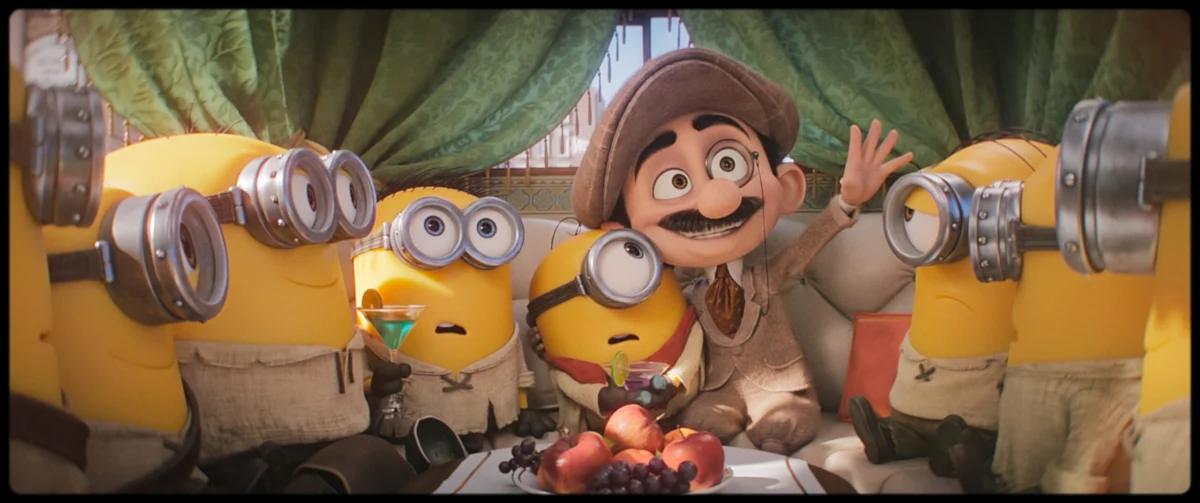
After two decades as the sonic architect and creative force behind the Despicable Me universe—a juggernaut franchise that has amassed over $5.5 billion at the global box office—French animator Pierre Coffin was ready to walk away. The yellow, gibberish-speaking Minions, which Coffin famously voices himself, had become a cultural phenomenon, but for the man who co-directed four of the six films, the process had become a grueling cycle of exhaustion.
However, a chance phone call from Illumination founder Chris Meledandri three years ago shifted the trajectory of Coffin’s career. The result is Minions & Monsters, a bold departure from the franchise’s standard fare that marks Coffin’s solo-directing debut and his most intimate project to date.
The Genesis of a New Vision
The spark for Minions & Monsters was not born from a corporate mandate, but from a simple, provocative prompt. Meledandri approached Coffin with a concept: a Minion who decides to produce a monster movie.
"When he told me that, I tuned out the monster," Coffin admits during an interview from London. "I got stuck on the word ‘movie.’ That opened something up. Suddenly, I had a billion ideas."
Coffin, who had previously stepped back to pursue short films and advertising work after the completion of Despicable Me 3, saw an opportunity to pivot. He envisioned the Minions not merely as chaotic sidekicks, but as historical agents at the dawn of the film industry. By setting the film in the 1920s—a pivotal era that saw the transition from the silent era to "talkies"—Coffin was able to infuse the franchise with a sense of cinematic history, paying homage to the foundational figures of Hollywood’s Golden Age.
Chronology: A Career Built on Chaos and Connection
To understand the significance of Minions & Monsters, one must look at the timeline of Coffin’s relationship with the franchise:
- 2010: Despicable Me launches, introducing the world to Gru and his legions of yellow, pill-shaped henchmen. Coffin’s unique vocal performance becomes the heartbeat of the series.
- 2013–2017: As the franchise grows into the highest-grossing animated series in history, the workload intensifies. Coffin balances co-directing duties with the exhausting task of recording every individual Minion voice.
- 2017–2021: Following Despicable Me 3, Coffin expresses a desire to exit the franchise, focusing on personal projects, the Olympics, and experimental short films.
- 2023: Pre-production begins on Minions & Monsters after Coffin secures creative control and the ability to co-write the script with Bryan Lynch.
- 2026: Minions & Monsters makes its world premiere at the Annecy Animation Festival, signaling a new, auteur-driven chapter for Illumination.
The Art of the Irreverent: Blending High and Low Culture
Minions & Monsters introduces viewers to James, an imaginative Minion with directorial aspirations, alongside his companions Henry and Ed. The film’s narrative is framed by the guidance of Max, a character synthesized from the legendary immigrant filmmakers of the 1920s, such as Fritz Lang, Ernst Lubitsch, and Michael Curtiz.
For Coffin, this setting allowed him to bridge the gap between his childhood influences and his adult sensibilities. Raised on Sunday-morning broadcasts of Charlie Chaplin and Buster Keaton, Coffin sees the Minions as the spiritual heirs to the silent-film greats. "In the way they move, in the way their gags are constructed, they are heirs to silent-film stars," Coffin explains.
The film is packed with references to the birth of cinema—including an opening homage to Eadweard Muybridge’s famous galloping horse experiment—but it maintains the franchise’s signature multi-layered humor. Coffin notes that he writes for two distinct audiences: children, who respond to the physical slapstick, and adults, who might catch the deeper nods to classic horror films like The Blob or the technical aesthetics of Citizen Kane.

Data and Production Realities
The production of a Minions film is an exercise in meticulous, often agonizing detail. Coffin remains the sole provider of the Minion voices, a task that requires him to be intimately involved in every script revision. "If the script changes, I have to redo all the voices," he notes. "I’m the only one doing that."
This labor-intensive approach is mirrored in the film’s visual density. Unlike standard animated fare, which often relies on simple shot-reverse-shot editing, Coffin intentionally populates the backgrounds with visual gags. Drawing inspiration from the "Where’s Waldo?" style of engagement, he encourages repeat viewings by layering details that are not immediately obvious to the viewer.
Regarding the "Minion language," Coffin debunked the notion that it is improvised. It is, in fact, a highly structured, musical language. "I write in English first," he explains. "Then, once the storyboards are drawn and the editing has begun, I add the voices. It becomes a series of little songs responding to each other."
Official Responses and Creative Freedom
For the first time in his career, Coffin felt he had the "green light" to pursue his creative instincts without the constraints usually applied to the billion-dollar franchise. "It’s the first time Chris really let me do my own thing," he says.
The collaboration with co-writer Bryan Lynch provided the necessary structure for the English-language dialogue, but the soul of the film—the 1920s setting, the homage to cinema history, and the specific character arcs—remains purely Coffin’s vision. When he proposed the inclusion of George Lucas, an icon of Coffin’s childhood, the production team facilitated a recording session with the legendary director within a week.
Implications: The Future of Animation and AI
As the industry stands at the precipice of an AI revolution, Coffin remains cautiously observant. While he acknowledges the efficiency of AI in storyboarding or changing performances after a set has been dismantled—citing examples from filmmakers like Trey Parker—he remains skeptical of its current ability to capture the "embodied" nature of animation.
"Animation is very embodied for me," Coffin says. "I work through iteration with animators: maybe the character should raise his arm, maybe he should settle back, maybe the gesture should be softer. AI, at least for now, doesn’t feel embodied in that way."
As for his own future with the franchise, Coffin remains characteristically humble and uncertain. He has moved from a place of exhaustion to a place of quiet pride. "Every time one came out, I thought, ‘You can tell only 20 people worked on it, that it was pulled in every direction,’" he recalls of previous entries. "This one feels different. Now, when I watch it, I think, ‘Actually, it’s pretty good.’"
Whether Minions & Monsters serves as a swan song or a prologue to a more auteur-driven era of Illumination remains to be seen. But for Pierre Coffin, the act of making the movie—the process of crafting a personal story within a global machine—has fundamentally changed his relationship with his most famous creations. He has proven that even in a franchise defined by chaotic, gibberish-speaking creatures, there is always room for the singular, human touch of a director who truly cares about the history of the frame.

 Ammar Sabilarrohman