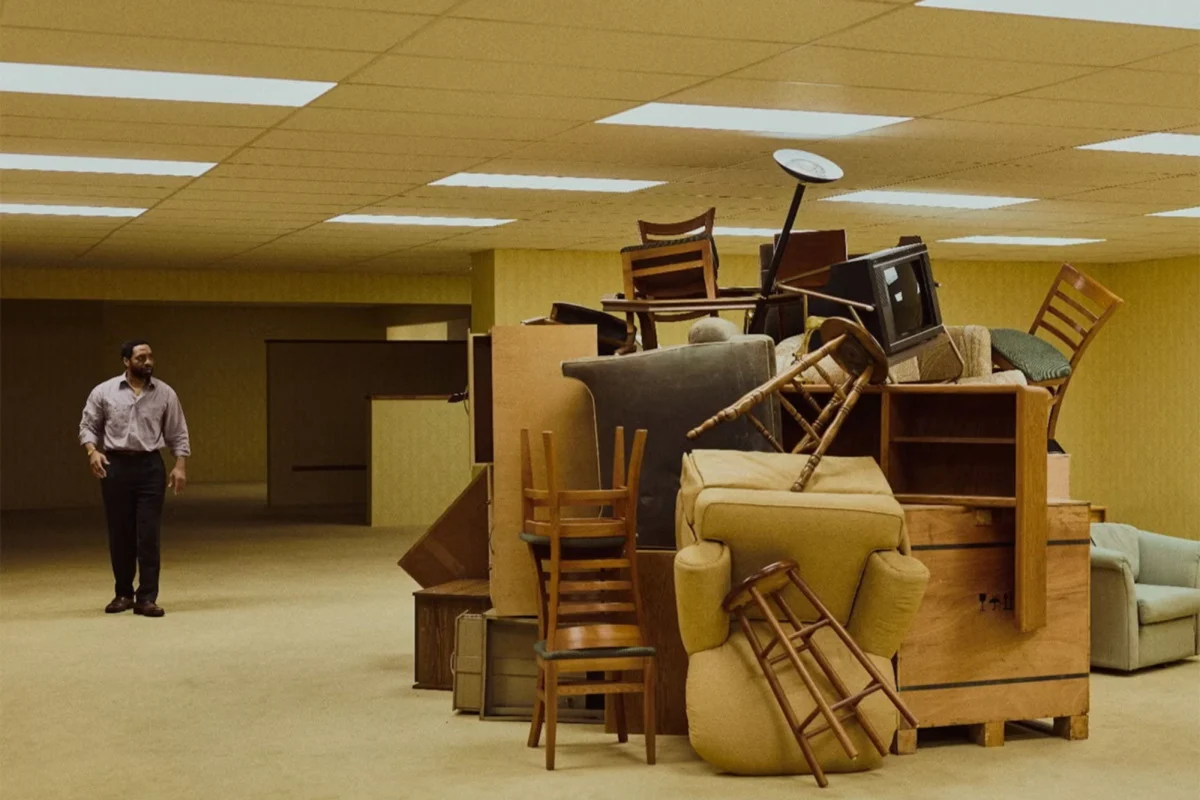
The cultural phenomenon that began as a solitary, unsettling YouTube experiment has officially cemented its status as a pillar of modern horror. A24’s Backrooms, directed by the visionary 20-year-old filmmaker Kane Parsons, is set to make a triumphant return to cinemas this holiday weekend. Marketed as the Backrooms: Everything Must Go Edition, this re-release is not merely a nostalgic victory lap; it offers a compelling reason for both die-hard fans and curious newcomers to return to the theater, featuring 15 minutes of never-before-seen post-credit footage.
As one of the most unexpected and resounding box office success stories of the decade, the film’s return coincides with a summer season defined by high-intensity blockbusters, yet Backrooms occupies a unique space in the cultural zeitgeist. With a staggering $330 million global gross against a modest $10 million production budget, the film has become the highest-grossing project in A24’s storied history, proving that the boundary between internet-native content and high-end cinema has effectively dissolved.
A Chronology of a Viral Nightmare
The ascent of Backrooms is a masterclass in modern digital storytelling. The project originated from the "liminal space" internet aesthetic—a subgenre of horror that relies on the uncanny, vacant architecture of non-descript office corridors, endless beige carpets, and the fluorescent hum of artificial lighting.
- The Foundation (2022): Kane Parsons, then a teenager, gained viral acclaim on YouTube for his short-form horror conceptualizations of the "Backrooms" creepypasta lore. His ability to evoke profound dread through low-fidelity, found-footage aesthetics caught the attention of industry heavyweights.
- The Partnership (2023): Recognizing the intellectual property’s massive potential, A24 entered into a production deal with Parsons, tasking him with expanding his singular vision into a feature-length narrative.
- The Theatrical Release (2025): The film debuted to widespread critical acclaim, praised for its restraint and its ability to turn the environment itself into the primary antagonist.
- The Expansion (2026): On July 3, 2026, the Everything Must Go Edition hits screens, adding a mysterious coda to a story that many fans felt was already perfect.
The Economics of Dread: A Box Office Juggernaut
To understand the success of Backrooms, one must look at the efficiency of its production. In an era where superhero films routinely cost upwards of $200 million, Backrooms was produced for a mere $10 million. This lean production model allowed A24 to take creative risks that larger studios would have deemed "too niche."
The film’s $330 million haul is a testament to the power of organic, internet-driven marketing. Unlike traditional tentpole films that rely on massive television ad buys, Backrooms benefitted from the "digital native" audience—a demographic that values atmosphere and lore over star power, even when that star power includes seasoned professionals like Chiwetel Ejiofor.
Ejiofor’s presence in the film served as an anchor, grounding the ethereal, surreal nature of the Backrooms with a human performance that allowed audiences to relate to the impossible situation of being trapped in a recursive, infinite hallway. The return of the film in its extended format is a strategic move by A24 to capitalize on the summer holiday window, banking on the fact that the film’s "repeatability" is high. In horror, once the scares are known, the audience often returns to analyze the background details, the sound design, and the subtle shifts in the architecture—all of which Backrooms provides in abundance.
The Architecture of Terror: Why Liminal Spaces Work
The critical reception of Backrooms has been largely centered on its rejection of standard "jump-scare" mechanics in favor of sustained, existential dread. As Reactor’s Leah Schnelbach noted in her review, the film succeeds because it treats the "liminal space" as a character rather than a backdrop.
"Liminal spaces are excellent for horror, of course," Schnelbach writes, "but I’m really, really excited that this is a movie where the liminal space IS the horror. The thing that creates the sense of dread, and even terror, is the space itself. The emptiness, the wrong-ness, gets to you long before you notice that one of the shadows in the corner looks darker than it should, or you hear footsteps in another room."
This structural approach to horror has tapped into a collective anxiety regarding the modern world’s artificiality. The setting of Backrooms—a labyrinthine, decaying office complex—resonates with a generation that spends much of its life navigating digital interfaces and corporate environments. By removing the need for a complex, exposition-heavy backstory, Parsons allows the audience to project their own fears onto the environment. Whether the viewer is a fan of the original internet creepypasta or a casual horror enthusiast, the film operates on a primal level that requires no prior knowledge to enjoy.
Official Perspectives and the Mystery of the 15 Minutes
A24 has been uncharacteristically tight-lipped regarding the nature of the 15 minutes of additional footage. In an industry where "extended cuts" are often standard practice for home video releases, the decision to bring a theatrical re-release exclusively for the sake of a post-credit addition is a bold gamble.
Industry analysts suggest this is an attempt to foster the "event cinema" atmosphere that has been missing in the post-pandemic landscape. By making the bonus footage exclusive to the theatrical experience, A24 is incentivizing a communal viewing experience.
"We wanted to give the audience something that feels like a discovery," said a spokesperson for the production team. "The ending of the film was designed to be open-ended, and these extra minutes serve to deepen the mystery rather than explain it away."
This decision has fueled intense speculation on social media forums. Will the footage reveal the origin of the "entities" that stalk the corridors? Will it show an escape? Or will it lean further into the abstract, surreal horror that defined the film’s second act? By keeping the content of the Everything Must Go Edition a mystery, the studio is effectively turning the moviegoing experience into a scavenger hunt.
Broader Implications for the Film Industry
The success of Backrooms and its subsequent expansion carry significant implications for the future of the horror genre and, by extension, the studio system.
1. The Death of the "Niche"
For years, studios avoided internet-based lore, fearing that it would alienate the general public. Backrooms has shattered this misconception. The film proves that if a concept is strong enough, the audience will engage with it regardless of its origins. We are likely to see an increase in "internet-to-theatrical" adaptations, as studios hunt for the next Backrooms.
2. The Power of the Auteur-Influencer
Kane Parsons represents a new breed of director: the "digital native" who understands how to build a world in a virtual space before bringing it to the physical screen. His ability to manage a production budget while maintaining the aesthetic integrity of his YouTube roots is a skill set that major studios are now desperate to acquire.
3. Reviving the Theatrical Experience
The Everything Must Go Edition is a clever, low-risk, high-reward strategy. It utilizes existing assets to drive ticket sales during a period where audiences might otherwise stay home. If this re-release succeeds, we can expect to see more studios experimenting with "Theatrical Plus" versions of successful films to keep the box office momentum going throughout the year.
Final Reflections
As screenings for the Everything Must Go Edition begin on July 3, 2026, the film serves as a reminder of the power of imagination. What began as a grainy, low-budget simulation of a nightmare has become a global force, drawing millions into its claustrophobic, yellow-tinted grasp.
Whether you are returning to the Backrooms to decode the hidden messages in the new footage or entering the maze for the first time, the film remains an essential viewing experience. In a world of loud, over-produced spectacles, there is something profoundly refreshing about a movie that dares to be quiet, empty, and terrifyingly, irrevocably wrong.
Those interested in witnessing the phenomenon firsthand can visit the AMC Theatres website to secure their tickets. The corridors are waiting—and this time, they have a little more to show you.