

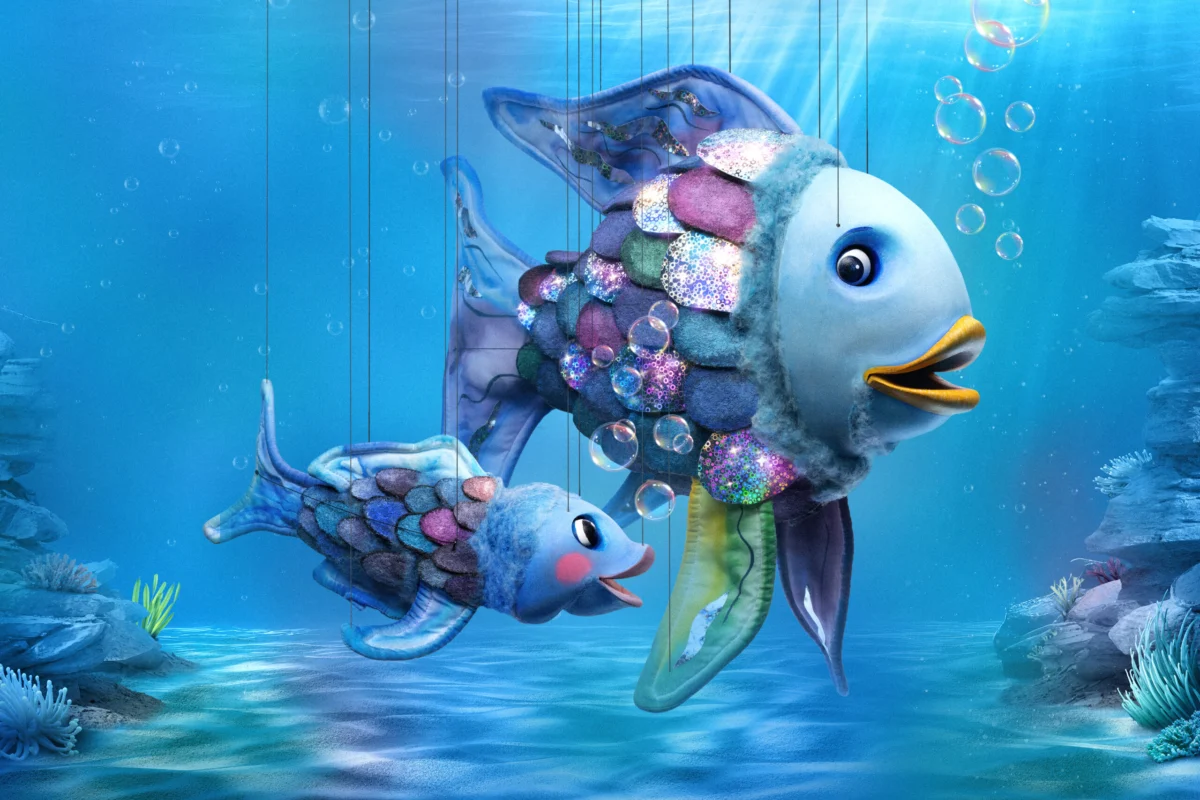
In a bold move that bridges the gap between classic literary heritage and tactile, artisanal filmmaking, Studiocanal has officially announced a new animated feature film adaptation of Marcus Pfister’s perennial children’s classic, The Rainbow Fish. The project, helmed by the studio’s German arm, promises to bring the shimmering, vanity-stricken protagonist of the 1992 bestseller to a new generation of audiences.
The production is a high-stakes gamble that marries global intellectual property with the niche, labor-intensive world of traditional puppetry, marking a distinct departure from the hyper-realistic CGI that currently dominates the animation landscape.
The Foundation: A Story of Scales and Substance
First published in 1992, The Rainbow Fish quickly became a cornerstone of global children’s literature. With over 30 million copies sold worldwide, the book tells the story of a fish with iridescent scales who is initially defined by his vanity and arrogance. After alienating his peers by refusing to share his beauty, he is guided by a wise octopus to sacrifice his unique appearance for the sake of community.
While the narrative has been a bedtime staple for over three decades, it has recently found itself at the center of a cultural firestorm in the United States. Critics of the book have argued that the story promotes problematic themes, ranging from the involuntary forfeiture of personal boundaries to the problematic messaging regarding individuality and the necessity of conforming to peer pressure to be accepted.
Despite these controversies—which have seen the book drawn into the broader "cancel culture" discourse—Studiocanal remains undeterred, betting on the story’s fundamental message of empathy and the enduring power of its visual identity.
A Proven Collaborative Force
The production of this feature is not a solitary endeavor but the latest effort in a long-standing creative partnership. Studiocanal Germany is joining forces with Claussen + Putz Filmproduktion and Zodiac Pictures. This trio is well-versed in adapting European folklore and children’s literature, having previously delivered successful screen adaptations such as The Robber Hotzenplotz, The Little Witch, and Heidi.
By leaning on established production houses, Studiocanal aims to ensure that the adaptation maintains a "European sensibility" that resonates with its primary markets while scaling for international distribution.
The Artistic Vision: Handcrafted Under the Sea
Perhaps the most compelling aspect of this production is its rejection of digital-only animation. The film is being produced in partnership with Germany’s legendary 80-year-old Augsburg Puppet Theatre (Augsburger Puppenkiste).
The director and screenwriter for the project, veteran puppeteer Florian Moch, has opted to bring the ocean floor to life through the traditional art of puppetry. Moch has personally crafted the majority of the puppets, aiming to imbue the film with a tactile, organic quality that modern CGI often lacks.
"Being able to create a contemporary, handcrafted puppet film with The Rainbow Fish is something very special—and a childhood dream come true for me," Moch remarked during the production’s announcement. This "handmade" approach is expected to be a key marketing pillar, positioning the film as a nostalgic yet fresh cinematic experience in an era of screen saturation.
Official Responses and Strategic Intent
The studio leadership has been vocal about the film’s role in their broader portfolio. Hooman Afshari and Lutz Rippe, co-heads of Studiocanal Germany, emphasized the universal nature of the project.
"The Rainbow Fish carries a universal message that is understood and loved all over the world. It is a great joy for us to reinterpret this special story together with our partners as a major cinematic experience for audiences of all ages," the pair stated.
For Studiocanal, the film represents more than just a family movie; it is a calculated effort to leverage a brand that transcends language barriers. By grounding the narrative in a visually distinct puppet world, the studio hopes to mitigate the polarization surrounding the book’s message by framing it within a broader, more adventurous journey.
The Evolving Synopsis
The screenplay takes certain liberties with the source material to expand it for feature-length runtime. The official synopsis details a shift in focus:
"With his shimmering scales, the Rainbow Fish is the most beautiful fish in the entire ocean. But he is also vain and proud, which alienates the other fish. As a result, he becomes increasingly lonely. When he eventually loses one of his beloved glittering scales, it is none other than the Little Blue fish who accompanies him on the search into the deepest parts of the ocean. An adventurous journey begins—and the Rainbow Fish learns that together we are much braver than alone, and that true friendship is more precious than the most magnificent coat of scales."
By introducing the "Little Blue fish" as a companion, the adaptation shifts from a morality play centered on sacrifice to a buddy-adventure, likely designed to soften the harsher edges of the original text that have drawn recent criticism.
A Star-Studded German Cast
To ensure the film has significant cultural footprint upon its release, the production has recruited a heavy-hitting ensemble of German talent. The voice cast includes actors Jannik Schümann and Luna Wedler, TV personality Tobi Krell, character actor Bjarne Mädel, and comedian Oliver Kalkofe.
The inclusion of high-profile figures such as musician Bela B. Felsenheimer, and veteran actors Andrea Sawatzki, Hella von Sinnen, and Mechthild Großmann indicates the studio’s commitment to making the film a "must-see" event for both children and their parents.
Implications: The Intersection of Culture and Commerce
The decision to adapt The Rainbow Fish at this specific moment in history is fraught with potential for both reward and criticism.
The "Cancel Culture" Debate
The recent U.S. backlash against the book serves as a case study in how children’s literature is being re-evaluated through modern political lenses. While the studio is clearly positioning the film as a story of "friendship" and "courage," they will inevitably face scrutiny regarding whether the film adapts the controversial message of the book or reframes it. If the film is perceived as an endorsement of the original’s "surrender your individuality" subtext, it could face renewed protests. Conversely, if it successfully pivots to a narrative about the "strength found in community," it may effectively silence those critics.
The Return of Traditional Media
From a technical standpoint, the choice to use traditional puppetry is a fascinating market signal. As AI-generated content and high-fidelity CGI become cheaper and more ubiquitous, there is a growing consumer appetite for "human-made" art. By partnering with the Augsburg Puppet Theatre, Studiocanal is banking on the "aura" of the physical object. This strategy mirrors the success of other stop-motion and practical-effect films that have prioritized texture and warmth over digital perfection.
Production Timeline and Distribution
Filming is currently underway in Augsburg, with production expected to wrap by mid-July. This leaves a significant window for post-production and marketing before the film’s scheduled theatrical release on November 19, 2026.
Studiocanal has confirmed that it will be handling both worldwide distribution and international sales, signaling that they intend to push the film into as many global territories as possible. The two-year gap between now and the release suggests a high degree of confidence in the production’s quality, as well as a recognition that the physical nature of puppet animation requires a slower, more deliberate post-production process.
Conclusion
The Rainbow Fish adaptation is a project of contrasts: it is a story of global popularity being told through a distinctly local, traditional medium; it is a beloved classic that is simultaneously a lightning rod for modern debate. Whether or not the film can successfully navigate these waters remains to be seen. However, by combining the resources of a major distributor like Studiocanal with the artisanal integrity of the Augsburg Puppet Theatre, the production team has ensured that when the Rainbow Fish finally hits the screen in 2026, it will be impossible to ignore.
The coming months will likely see more teasers regarding the visual aesthetic of the film, which will be the final arbiter in determining if this shimmering classic can capture the hearts of a new, highly critical generation.










