

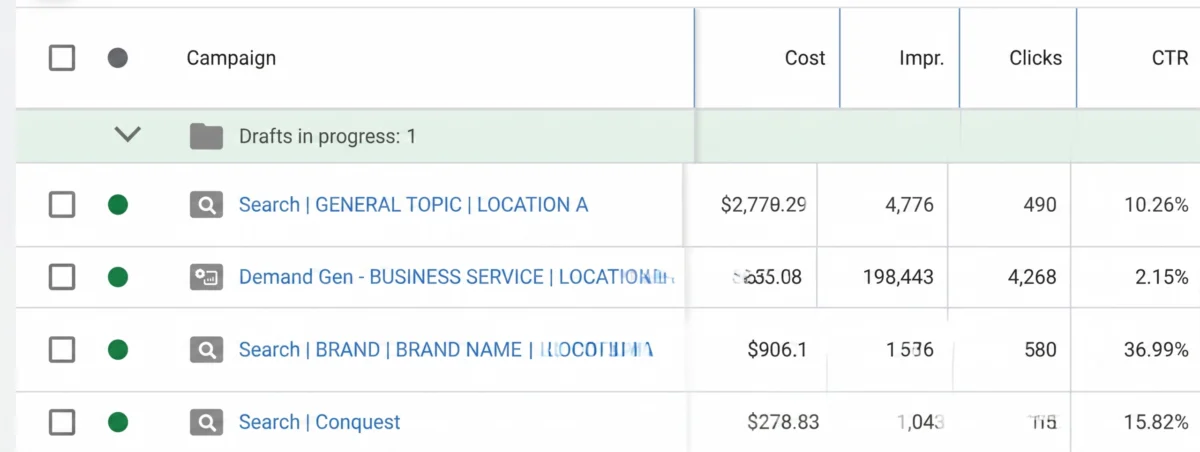
For over 15 years, the digital advertising industry has operated under a lingering ghost: the 2% benchmark for non-brand campaign click-through rates (CTR). This figure, once the gold standard of search engine marketing, became so deeply ingrained in the professional psyche that it transitioned from a helpful guideline to an unquestioned dogma. We held it up as a mirror to our creative efficacy, assuming that if our ads hovered around that 2% mark, they were "working."
However, as we navigate the complexities of 2026, it is time to confront a harsh reality: the metrics that once defined success in the early days of paid search are becoming increasingly obsolete. With the rise of advanced machine learning, algorithmic bidding, and the radical transformation of the search results page (SERP), the traditional CTR is undergoing an identity crisis. It is no longer a simple barometer of ad resonance, but rather a complex, shifting diagnostic tool that requires a fundamental change in how we evaluate advertising performance.
The Chronology of a Metric: From Human Interest to Algorithmic Proxy
To understand why CTR is losing its luster, one must look at its evolution. In the mid-2000s, search advertising was a manual game. Advertisers chose keywords, wrote text ads, and set bids. A high CTR was a direct reflection of human psychology: the copy was compelling, the intent was matched, and the user was interested. It was a clean, linear relationship between human input and human output.
As we moved into the 2010s, the introduction of Quality Score and automated bidding began to blur the lines. Google and other platforms began factoring in landing page relevance and historical performance, turning the "simple" CTR into a weighted variable.
By the mid-2020s, we reached the current era of "black box" automation. Today, bid strategies like Maximize Conversions and Performance Max (PMax) prioritize outcomes over engagement. The algorithm is no longer trying to maximize the number of clicks; it is trying to maximize the probability of a conversion. Consequently, the CTR we see in our dashboards is now an output of the AI’s decision-making process, not necessarily a sign of a "good" ad. We are no longer measuring human behavior in a vacuum; we are measuring how an AI algorithm navigates a sea of data to reach a predefined goal.
Supporting Data: Why the Denominator Matters More Than Ever
The mathematical definition of CTR—clicks divided by impressions—remains the same, but the variables within that equation have become wildly inconsistent.
Consider the impact of modern bid strategies on the visibility of your ads:
- Maximize Conversions/Value: These strategies are inherently restrictive. The algorithm only enters the auction when it believes a conversion is imminent. This leads to a smaller number of impressions (the denominator) but higher-quality traffic. In this scenario, a high CTR might be artificially inflated because the AI is filtering out the "noise" that would have otherwise resulted in an impression without a click.
- Target Impression Share: Conversely, this strategy aims for visibility. By design, it increases the denominator (impressions), often casting a wider net that includes users who are in the research phase but not yet ready to click. This strategy will almost always result in a "lower" CTR compared to a conversion-focused campaign, yet it may be the correct choice for brand awareness.
- Maximize Clicks: Here, the AI is optimized specifically for the click. The algorithm will aggressively target users with a high "click propensity," regardless of whether those users intend to purchase. This creates a high CTR that can be dangerously misleading, providing the illusion of success while failing to drive actual revenue.
This data demonstrates that comparing CTR across campaigns—or even across different time periods with different bidding goals—is like comparing apples to oranges. A 1% CTR in a high-intent, bottom-funnel campaign might be vastly more valuable than a 5% CTR in a broad-reach, awareness-focused campaign.
Campaign Architecture: The Multi-Channel Complexity
Beyond bid strategies, the architecture of the campaign itself fundamentally alters the expected CTR. The rise of Performance Max and Demand Gen campaigns has introduced a multi-channel reality where a single "CTR" is effectively a blended average of disparate experiences.

Performance Max, for example, serves ads across Search, YouTube, Display, Gmail, and Maps. Each of these placements has vastly different behavioral expectations. A display ad that generates a 0.5% CTR is often considered a success, whereas a 0.5% CTR on a branded search term would signal a major problem. When these metrics are aggregated into one account-level CTR, the number becomes effectively meaningless. It hides the success of high-performing channels behind the lower engagement rates of others. Advertisers who focus on the aggregate number are essentially flying blind, unable to discern which parts of their machine are functional and which are stalling.
Official Industry Shifts: The "Zero-Click" Reality
The most significant shift in the landscape is the emergence of generative AI and features like Google’s AI Overviews. These tools are designed to provide answers directly on the search results page, effectively eliminating the need for a user to click through to a website.
This transition toward "zero-click" searches has profound implications for how we track performance. When a user finds the answer to their query within an AI Overview, the "click" never happens, but the "impression" is often still counted. If the industry continues to obsess over CTR, we will inevitably view these new, highly efficient AI-driven search experiences as "failures" simply because they don’t drive traffic to a landing page.
Furthermore, platforms have yet to provide total transparency regarding how these interactions are reported. Are impressions within an AI snippet counted the same as traditional SERP impressions? Is a click on a cite-link within an AI summary weighted the same as a traditional search ad click? As of mid-2026, the lack of standardized definitions means that our baseline metrics are shifting beneath our feet.
Implications: Reframing Success in the Age of Automation
Does a healthy CTR indicate that your ads are successful? The answer is an unequivocal "no." In the modern PPC ecosystem, a high CTR is merely a diagnostic indicator—a sign that your messaging is potent enough to win the auction. It is a necessary component, but it is not the goal.
The true goal is the quality of the post-click action. We must pivot our focus toward:
- Conversion Quality: Are the clicks resulting in high-value leads, or are they bounce-heavy, low-intent traffic?
- CPA and ROAS Trends: If your Cost-Per-Acquisition is decreasing while your Return on Ad Spend is increasing, it does not matter if your CTR has dropped. The AI is successfully filtering out the noise.
- Revenue Generation: At the end of the day, marketing is a business function. If the revenue is growing, the algorithm is performing its function correctly, even if the CTR doesn’t fit the "2% benchmark" of 2011.
Final Verdict: From Manager to Strategist
As we move forward, the role of the PPC professional must evolve. We are no longer the "click-maximizers" of the past; we are now the architects of the data signals that feed the AI.
Stop asking if your ads are being clicked and start asking what those clicks are buying you. Let the algorithms handle the math of the CTR spectrum, and reclaim your time to focus on the things AI cannot fully replicate: deep-level audience strategy, conversion rate optimization on your landing pages, and the integration of your business goals into the machine learning loop.
The 2% benchmark is a relic of a simpler time. By letting go of this outdated metric, we open the door to a more nuanced, sophisticated, and ultimately more profitable approach to digital advertising. The era of the "click" is ending; the era of the "outcome" has arrived.











