Asro
Asro
The landscape of professional digital content creation has shifted significantly with the official release of Blender 5.2 LTS. While Long Term Support (LTS) versions are typically characterized by a conservative focus on stability, security patches, and minor bug fixes, version 5.2 defies convention. It arrives as a substantial, feature-rich update that positions the open-source suite not merely as an alternative to proprietary industry standards, but as a proactive leader in procedural workflows, simulation, and pipeline efficiency.
This release comes at a pivotal moment for the Blender Foundation, coinciding with the ambitious announcement of their inaugural feature-length animated film. As the community digests the new toolset, it is becoming increasingly clear that Blender 5.2 is designed to handle the rigors of high-end studio pipelines, offering a robust, unified environment for both 2D and 3D artists.
The Core Technical Advancements: A New Era of Simulation
Perhaps the most significant stride in this release is the integration of a Geometry Nodes-based physics system. By moving away from legacy physics modifiers and embracing a node-based architecture powered by the Extended Position-Based Dynamics (XPBD) multiphysics solver, Blender is narrowing the gap between itself and industry giants like SideFX Houdini.
Proceduralism Meets Performance
For the generalist artist, this shift represents a "best of both worlds" scenario. The interface retains the accessible, traditional modifier panel that users have come to rely on, while simultaneously exposing a deep, highly customizable node-tree architecture beneath the surface. This allows for complex cloth and hair simulations to exist directly within the geometry nodes, providing a level of control and non-destructive editing that was previously difficult to achieve without external plugins.
Early stress tests from the community confirm the system’s potency. Recent demonstrations featuring high-density hair simulations—surpassing 50,000 strands and 670,000 vertices—show that the system is not only functional but impressively fast, capable of handling complex dynamics across hundreds of frames without the catastrophic instability that often plagued older versions of the software.
Cycles and Memory Optimization: Solving the VRAM Bottleneck
One of the most persistent hurdles for 3D artists working on complex, photorealistic scenes is the limitation of Video RAM (VRAM). Blender 5.2 introduces a sophisticated texture-caching system in the Cycles render engine that directly addresses this concern.
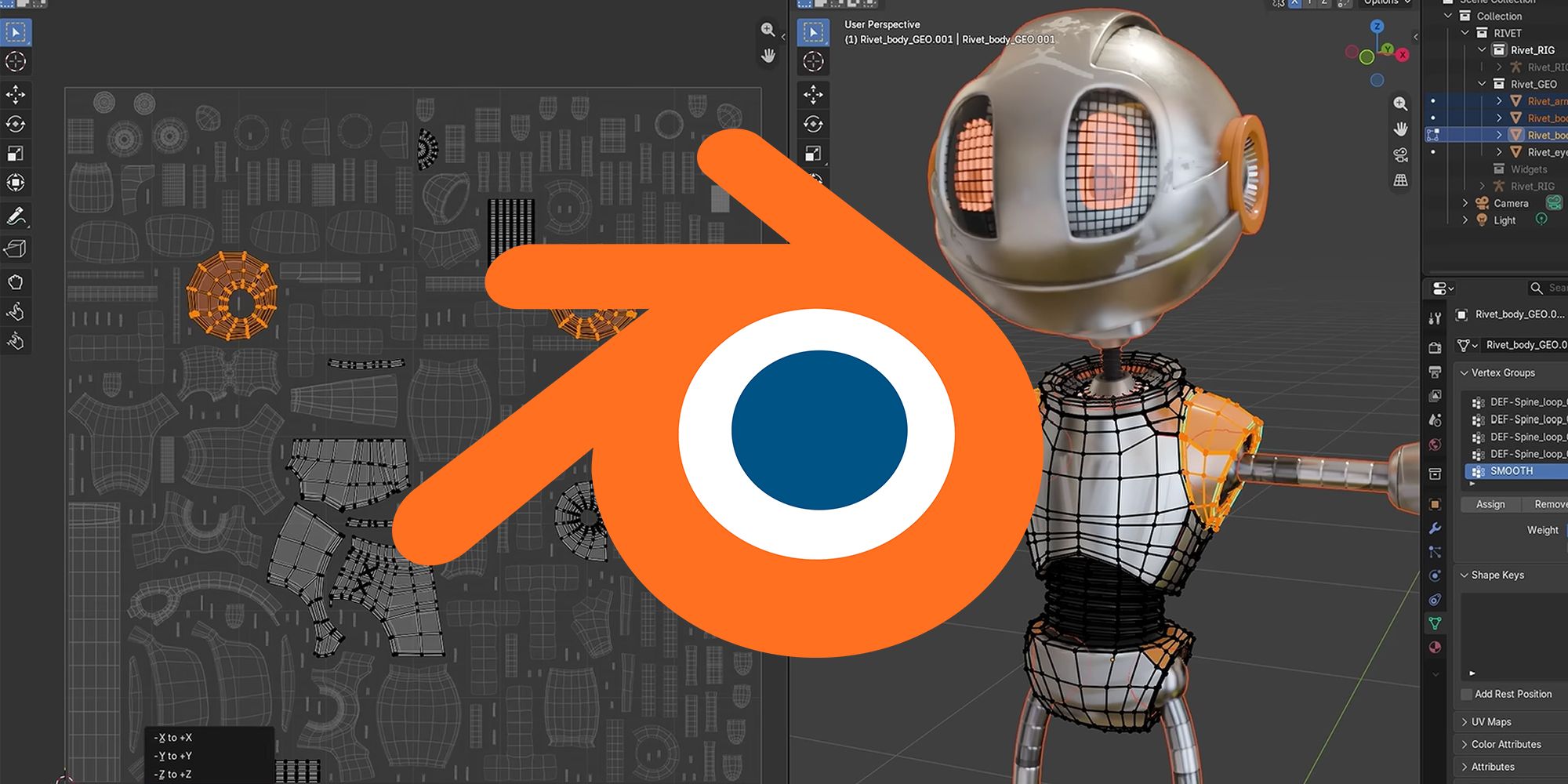
The new system dynamically generates optimized .tx files, a move that drastically lowers the memory overhead required to process large, high-resolution textures. According to technical documentation provided by the Blender team, this implementation can reduce VRAM usage by as much as 80% in scenes burdened by massive image maps. This optimization is a potential "scene-saver" for artists working on workstation hardware, preventing the common "out-of-memory" crashes that often derail rendering projects.
Streamlining the Pipeline: Remote Assets and Direct Compositing
Efficiency in a production environment is defined by how quickly an artist can move from concept to final render. Blender 5.2 tackles this through two critical workflow improvements: Remote Asset Hosting and Direct Compositing.
The Cloud-Integrated Asset Browser
The introduction of Remotely Hosted Asset Libraries marks a paradigm shift in how studios manage their digital inventories. Rather than forcing artists to store massive libraries of models, materials, and HDRIs locally, studios can now host their assets on centralized online repositories. Artists can browse, preview, and import these assets directly into their project from within the Blender Asset Browser. This reduces local storage requirements and ensures that teams are working with the latest, verified versions of project assets.
Bridging the Gap: VSE and Compositor Integration
Historically, the Video Sequence Editor (VSE) and the Compositor were distinct silos within Blender, requiring cumbersome back-and-forth workflows. With the arrival of Direct Compositing, these barriers have been dismantled. Artists can now apply complex Compositor node trees directly as effects strips within the VSE timeline. This allows for real-time color grading and visual effects application while the animation is playing, mirroring the interactive, streamlined workflows found in professional post-production software like Blackmagic Design’s Fusion or DaVinci Resolve.
Refinements Across the Board: EEVEE and Grease Pencil
While the major features command the headlines, the "quality of life" improvements in Blender 5.2 are equally transformative.
- EEVEE Enhancements: The real-time render engine has received significant attention, with refined Screen Space Raytracing and a more robust Fast Global Illumination system. The result is a cleaner, more accurate real-time viewport that requires less denoising and offers a more reliable "what you see is what you get" experience.
- Grease Pencil 2.0: For 2D animators, the introduction of the Grease Pencil Delaunay Solver represents a major technical upgrade. The new fill algorithm intelligently detects gaps in hand-drawn lines, ensuring that color fills remain accurate even when the artist zooms in or out of the canvas. This eliminates the tedious manual cleanup that often accompanies traditional digital 2D animation.
- The Principled BSDF "Thin Wall" Mode: A deceptively simple addition, the Thin Wall mode in the Principled BSDF shader simplifies the creation of light-transmitting materials. By treating surfaces as single-sided planes, artists can now realistically render paper, foliage, soap bubbles, and thin glass without needing to model complex interior geometry or rely on expensive, error-prone refraction calculations.
Implications for the Industry
The release of Blender 5.2 LTS is more than just a software update; it is a signal of intent. By focusing on scalability, collaborative asset management, and high-performance simulation, the Blender Foundation is clearly targeting professional production environments.
As the industry moves toward more collaborative, cloud-reliant, and procedural workflows, Blender is positioning itself as a central hub for creative teams. The fact that these tools are open-source and free to use for commercial projects creates a unique economic advantage for small-to-mid-sized studios. The ability to build a high-end, bespoke pipeline without the recurring costs of proprietary software licenses allows creative shops to invest more heavily in talent and infrastructure.
Chronology and Future Outlook
The development of this version was marked by a period of intense community feedback and alpha testing, particularly surrounding the Geometry Nodes integration. The rapid adoption of these tools by the community—as evidenced by the surge of high-quality demos on social media—demonstrates the market’s readiness for these changes.
Looking ahead, the roadmap remains focused on closing the remaining gaps in the simulation suite, such as advanced self-collision and pre-baked procedural forces like wind and turbulence. However, as it stands, Blender 5.2 is already being integrated into production pipelines globally.
Conclusion
Blender 5.2 LTS serves as a testament to the power of the open-source model. By listening to the demands of professional artists and focusing on the bottlenecks that hinder large-scale production, the development team has delivered a release that is both highly stable and profoundly innovative. Whether you are a solo freelancer looking to optimize your workflow or a studio manager evaluating the longevity of your software stack, the advancements in 5.2 make a compelling case for adopting this ecosystem.
As we look toward the future—and the upcoming feature-length film from the Blender team—it is clear that the software is no longer just "the best free 3D app." It has matured into a powerhouse of professional content creation, challenging the status quo and redefining what a free, community-driven tool can achieve in the modern digital age. Artists equipped with the right hardware—the best laptops for 3D modeling—will find that Blender 5.2 is not just a tool, but a complete, competitive production environment ready to take on the most demanding creative challenges.


 Rifan Muazin
 Lina Hope