True-crime fandom has evolved from a passive hobby into an active, and sometimes disruptive, force in the American judicial system. Where audiences once settled for watching televised proceedings, they now participate in "forensic fandom"—a digital phenomenon where users analyze evidence, construct alternative narratives, and, in some cases, attempt to influence the trajectory of ongoing criminal trials. This shift is currently reaching a boiling point in the high-profile murder trial of Lindsay Clancy, a Massachusetts mother charged with the 2023 killings of her three children.
The boundaries between the courtroom and the digital sphere are dissolving. As attorneys increasingly find themselves scouring social media for potential leads, the question arises: How much influence should a decentralized, often unverified, online community have on the outcome of a legal proceeding?
The Case of Lindsay Clancy: A Tragedy Under the Digital Microscope
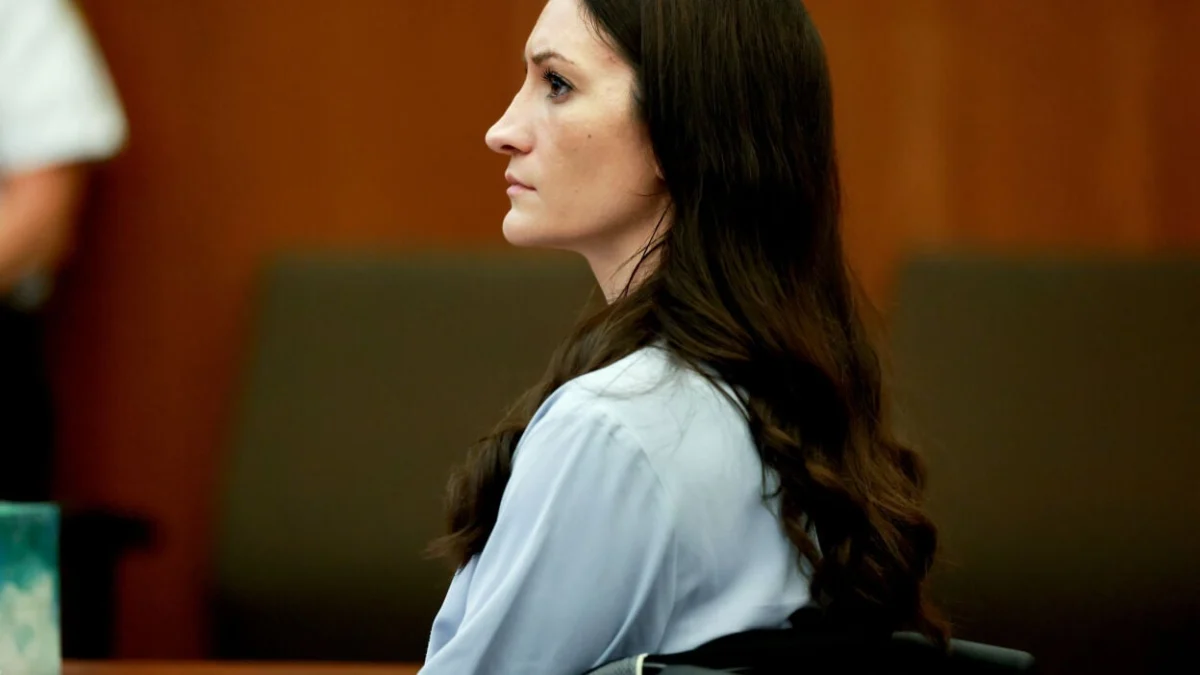
In January 2023, the town of Duxbury, Massachusetts, was shattered by the deaths of 5-year-old Cora, 3-year-old Dawson, and 8-month-old Callan Clancy. Lindsay Clancy, their mother, was subsequently indicted on charges of first-degree murder. Her defense team has not disputed that she took the lives of her children, but they have centered their strategy on the assertion that she was suffering from severe, untreated postpartum psychosis. They argue that her state of mind rendered her not criminally responsible for her actions, pointing to a complex and rapid succession of psychiatric medications as a contributing factor.
As the case moved toward trial in August 2026, it became an immediate focal point for true-crime creators on TikTok. While the legal proceedings focused on the narrow, technical aspects of mental health and psychiatric care, the online discourse diverged into speculation. Some users questioned the prosecution’s timeline, while others promoted unsubstantiated theories involving the children’s father, Patrick Clancy. Despite these theories being refuted by law enforcement, phone records, and surveillance footage from a local CVS, the "parallel investigation" continued to thrive, feeding a constant stream of content to a global audience.

The TikTok-to-Courtroom Pipeline: A Strategic Shift
The most startling development in this trial occurred when the digital influence moved from the comments section directly into the courtroom. The defense team, led by attorney Kevin Reddington, sought to include Emily Thorndike, a licensed independent clinical social worker, on their witness list. Thorndike, who had no personal connection to the Clancy case, had posted a viral TikTok video critiquing the staffing and resources at McLean Hospital—the facility where Clancy received treatment.
Thorndike’s video, which amassed over 5 million views, challenged the prosecution’s portrayal of the care provided at the hospital. For the defense, this was an opportunity to bolster their argument that Clancy did not have access to the adequate care the prosecution claimed she ignored.
The origin of this testimony is a milestone in legal history. During an August 11, 2026, hearing, Reddington admitted that he had no personal familiarity with TikTok. It was a viewer of the trial’s online community who emailed the video to his office, urging him to take notice. "I hardly know what TikTok is," Reddington told the court. The subsequent effort to contact Thorndike—which involved private investigators visiting her home because she assumed their outreach was an AI-generated hoax—highlights the bizarre friction between traditional legal procedure and the chaotic world of social media.
The Forensic Fandom Phenomenon
The Clancy case is part of a broader trend of "forensic fandom." Katy Coduto, an assistant professor of media science at Boston University, argues that this behavior stems from a psychological need for agency. When a tragedy is high-profile, audiences become deeply invested. Following the case through the news is no longer sufficient; they feel a compulsion to "solve" it.

This is not a new phenomenon, but the tools have changed. The 2021 search for Gabby Petito saw travel vloggers providing the FBI with actual, actionable footage that helped locate her remains. However, the dark side of this enthusiasm is equally apparent. In the case of musician D4vd (David Burke), internet sleuths spent months circulating unverified theories and personal information before his formal arrest, often prioritizing viral speculation over verified facts. Similarly, in the University of Idaho case, a TikTok creator faced a $10 million defamation judgment after baselessly accusing a professor of orchestrating the murders.
Chronology of Influence: From Observers to Participants
The evolution of digital influence on trials can be mapped through a series of recent, high-profile cases:
- 2021 (Gabby Petito): A rare, positive intersection where crowdsourced information assisted law enforcement in a missing person case.
- 2024 (The Menendez Brothers): The Netflix dramatization and subsequent TikTok revival brought long-dormant questions about their trial back into the public eye, exerting pressure on the legal system to revisit their habeas petition.
- 2025 (Karen Read): The "Turtleboy" blogger phenomenon saw a non-traditional actor become central to the trial, with his daily livestreams and "Free Karen Read" movement creating a massive grassroots campaign that some argue fundamentally shifted the cultural perception of the case.
- 2026 (Lindsay Clancy): The current trial represents the latest stage: where defense teams are actively harvesting potential witnesses from social media feeds.
Official Responses and Judicial Constraints
The judiciary has been forced to respond to this influx of digital noise. Judge William Sullivan, presiding over the Clancy trial, was clear in his skepticism regarding the use of TikTok-born witnesses. When the defense moved to include Thorndike, the judge noted, "This is not TripAdvisor." He correctly identified that a social media critique of a hospital’s general staffing is not the same as expert medical testimony regarding a specific patient’s care.
The prosecution, led by Assistant District Attorney Shanan Buckingham, argued that such testimony belongs in the "court of public opinion" rather than the courtroom. The judge’s caution highlights the fundamental conflict: the legal system is built on strict rules of evidence and cross-examination, whereas the internet is built on engagement, volume, and opinion.

The Implications for the Justice System
The influence of social media on trials carries significant, often conflicting, implications:
- Increased Scrutiny vs. Misinformation: While social media can hold institutions accountable, it often does so through the lens of misinformation. The spread of "thirst-trap" edits of attorneys or the manufacturing of conspiracies regarding innocent parties can cause irreparable harm.
- The Jury Pool Problem: Harvard Law professor Ron Sullivan has warned that constant social media coverage makes it increasingly difficult to keep juries untainted. When jurors are exposed to "parallel proceedings" online, they are exposed to inadmissible evidence that can cloud their judgment.
- The Weaponization of the Public: Attorneys are increasingly viewing TikTok as a source of crowdsourced intelligence. While this can provide helpful leads, it also turns trials into spectacles, potentially pressuring prosecutors or judges to react to public sentiment rather than the cold facts of the case.
- The Burden of Truth: The legal system is now in an arms race with the internet. If an attorney fails to look at TikTok, they might miss a witness like Thorndike. If they do look, they risk inviting chaos into their trial strategy.
Conclusion: A New Legal Reality
The Lindsay Clancy trial serves as a warning and a template for the future of American justice. The days of lawyers ignoring the digital world are over. Whether the judge ultimately permits the testimony of online figures like Thorndike or not, the precedent has been set.
The legal system relies on the assumption that a trial is a contained environment, shielded from the prejudices and whims of the general public. However, in an era where anyone with a smartphone can broadcast to millions, containment is no longer possible. The challenge for the courts in the coming years will be to protect the integrity of the judicial process while navigating a public that is no longer content to sit in the gallery—a public that demands to be, and is becoming, an active participant in the pursuit of their own version of justice. As the legal community continues to adapt, one thing is certain: the spectacle of the modern courtroom is now, for better or worse, inextricably linked to the screen in our pockets.