Raul Delapena Setiawan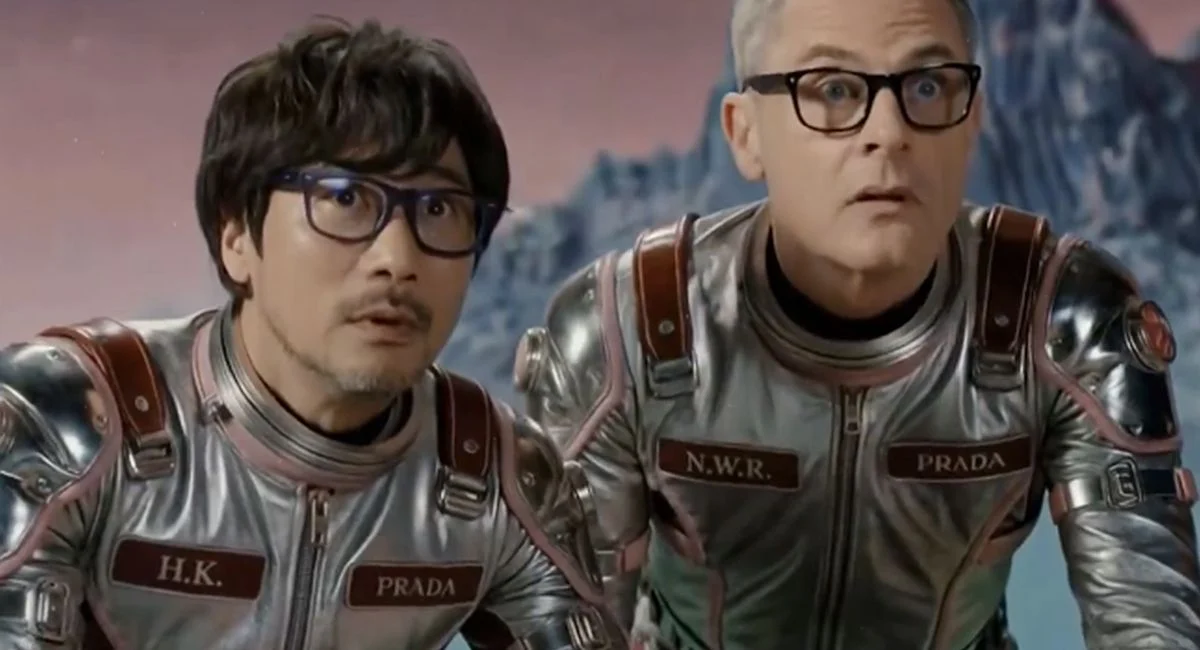
In the rarefied air where high fashion intersects with cutting-edge digital art, few collaborations have generated as much intellectual friction as the latest partnership between luxury powerhouse Prada and legendary video game auteur Hideo Kojima. As the duo prepares to unveil Satellites II at the iconic Hotel Chelsea in New York this June, the creative community finds itself entangled in a debate that reaches far beyond the aesthetic: does the use of generative AI in a high-profile artistic campaign represent a betrayal of a creator’s core philosophy?
The Main Facts: Prada Mode and the New York Connection
Prada Mode, the house’s nomadic social club, is designed to provide members with a unique cultural experience that transcends the traditional boundaries of a fashion show. The 14th iteration of this series, Satellites II, is slated for June 3 through June 7 at New York’s historic Hotel Chelsea.
The exhibition is a joint venture between the Italian fashion label and Danish filmmaker Nicolas Winding Refn—a director known for his hyper-stylized, neon-drenched visual language in films such as Drive and The Neon Demon. The project is framed as an exploration of "love, language, and creativity," manifesting through an enduring dialogue between the two artists.
However, the spotlight has been hijacked by the release of a surreal, AI-generated teaser short. In the footage, Kojima and Refn appear as space travelers whose UFO experiences a catastrophic landing on an alien world. The sequence—complete with a confrontation against a tentacled kaiju and a psychic rescue by a mysterious blonde figure—is a deliberate, campy homage to 1960s and 70s exploitation and sci-fi cinema. While the project is intended to be a multi-sensory, immersive experience, the discourse has shifted entirely to the ethics of the tools used to create it.
A Chronology of the Collaboration
The partnership between Kojima and Prada did not emerge in a vacuum. To understand the current controversy, one must look at the timeline of this high-fashion fusion:
- Mid-2023: Hideo Kojima and Nicolas Winding Refn begin a public-facing creative dialogue, emphasizing their shared sensibilities as outsiders in their respective industries.
- Late 2023: The pair begins teasing a collaboration in Tokyo, which eventually leads to the formal announcement of the Satellites II exhibition.
- May 2024: The teaser for the New York exhibition is released, featuring a 6-minute short film. The visual quality, marked by the distinct "hallucinations" and stilted motion characteristic of current generative AI video models, immediately triggers a backlash on social media platforms like X (formerly Twitter).
- June 2024: The exhibition opens at the Hotel Chelsea. The program is set to feature guest rooms transformed into micro-television studios, hosting performances that will eventually be open to the public as static installations.
The Philosophical Paradox: Kojima’s AI Conflict
The central tension of this event lies in the perceived hypocrisy of Hideo Kojima’s involvement. For decades, Kojima has been hailed as a visionary, with his Metal Gear Solid series acting as a prescient warning against the dangers of digital overreach.
Throughout the 1990s and 2000s, Kojima’s writing explicitly grappled with the consequences of algorithmic control, the proliferation of echo chambers, and the erosion of truth through AI-driven misinformation. In Metal Gear Solid 2: Sons of Liberty, he posited a world where the "Patriots"—an AI system—manipulated human history to ensure total societal control.
By utilizing generative AI to promote a fashion collaboration, fans argue that Kojima is validating a technology he once framed as a tool for authoritarian manipulation. One critic on social media succinctly summarized the sentiment of the community: "Have you even played your own games, Kojima? What happened to the warnings about AI corrupting the truth and stripping away our humanity?"
Examining the Technology: Is it Art or Indulgence?
The teaser film serves as a Rorschach test for the audience. Winding Refn, known for his love of the "cult and exploitation" genre, appears to be using the inherent flaws of generative AI—the morphing textures, the incoherent physics, and the uncanny valley aesthetics—as a stylistic choice.

Is this a calculated meta-commentary? By using AI to replicate the campy, low-budget special effects of 1970s "monster movies," Refn and Kojima may be suggesting that the "sloppiness" of modern AI is simply the latest iteration of the experimental, B-movie practical effects of the past. If a rubber suit monster in a 1965 film is accepted as art, why is a digitally hallucinated monster viewed as an ethical violation?
Official Responses and Creative Intent
In a statement provided to Women’s Wear Daily, Nicolas Winding Refn offered a window into the conceptual framework of the piece: "Throughout our extended friendship, Hideo Kojima and I have shared the feeling that we were somehow split from the same consciousness moving through different lives while orbiting the same obsessions. That idea became the spark for a film: a space odyssey following us as we traverse a sci-fi dreamscape."
Kojima’s own stance, while seemingly contradictory in this specific campaign, has been clarified in past interviews. Speaking to CNN in late 2023, Kojima addressed the role of AI in his professional creative process: "Rather than having AI create visuals or anything like that, I’m more interested in using AI in the control systems. By using AI, enemy behavior could change based on the player’s experience, actions and patterns. That kind of dynamic response would make much deeper gameplay possible."
This distinction is crucial. Kojima differentiates between generative AI—which creates content—and systemic AI, which enhances the interactive nature of a simulation. The Prada campaign, however, sits firmly in the former category, leaving fans to wonder if he views the fashion project as a "low-stakes" experiment compared to the "high-stakes" development of his flagship video games.
Implications for the Creative Industries
The Satellites II controversy highlights a broader shift in the creative economy. Luxury houses like Prada are increasingly pivoting toward digital-first, high-concept experiences to maintain relevance among a younger, tech-savvy demographic. By integrating AI, they are not only keeping pace with the industry’s rapid adoption of new tools but are also creating "cultural artifacts" that generate conversation—even if that conversation is polarized.
However, the backlash also points to a growing fatigue among audiences regarding the unchecked use of generative media. When an artist of Kojima’s stature, who has built his career on the critique of technological systems, adopts those very tools, it forces a reckoning. The implications are two-fold:
- The Normalization of AI: As high-fashion brands continue to utilize generative tools, the barrier between "human-made" and "AI-assisted" art continues to dissolve, potentially devaluing the labor of traditional visual artists who feel sidelined by the technology.
- The Responsibility of the Auteur: Does an artist have a moral obligation to remain consistent with the themes explored in their body of work? For Kojima, the answer remains murky. His fans view his output through the lens of his past narratives, creating an expectation of intellectual purity that is difficult for any artist to maintain in a commercial environment.
Conclusion: A New Frontier or a Misstep?
The Satellites II project at the Hotel Chelsea is a microcosm of the current cultural moment. It is a space where the past (the retro-aesthetic of exploitation cinema) meets the future (generative AI), curated by two of the most influential figures in modern media.
Whether one views this collaboration as a cynical grab for relevance or a clever, self-aware experiment, it is undeniably effective at forcing a dialogue. Prada has successfully created an "immersive, multi-day experience" that reflects the balance between the private and the public, the creative and the commercial.
As we approach the June dates, the final verdict will likely rest on the exhibition itself. If the experience succeeds in creating a "spatial narrative" that justifies the AI-assisted visuals, the controversy may subside. However, if the project feels like a mere tech demo, it may serve as a reminder that even the most celebrated auteurs are not immune to the pressures of the digital age. In the end, the devil may wear Prada, but he is clearly still learning how to navigate the complexities of his own digital creations.


 Neng Nana
 Asep Darmawan