

Following the successful July launch of the Radeon RX 6600 XT—a card squarely aimed at high-fidelity 1080p gaming—AMD has officially expanded its mid-range lineup. The company has now introduced the non-XT Radeon RX 6600, a GPU that has been the subject of intense speculation and industry leaks for months. Designed to bring the benefits of the RDNA2 architecture to a broader consumer base, the RX 6600 aims to dominate the mid-range segment by offering high-refresh-rate performance without the power overhead associated with higher-tier hardware.
The Chronology: From XT to the Standard 6600
The path to the RX 6600 began with the RDNA2 architecture’s rollout across the high-end RX 6000 series. When AMD released the RX 6600 XT in late July, it set a new benchmark for 1080p gaming, promising high frame rates and responsive performance. However, with the GPU market facing unprecedented supply constraints and high demand, enthusiasts and budget-conscious gamers alike looked toward a more accessible entry point.
Rumors regarding a "vanilla" RX 6600 began circulating almost immediately after the XT’s launch. These leaks correctly identified that AMD would utilize the same Navi 23 silicon but with a strategic reduction in specifications to hit a lower price point. On October 13, 2021, AMD confirmed these suspicions, officially pulling back the curtain on the card intended to serve as the new standard for 1080p gaming in the mid-range market.
Technical Specifications: Navigating the Navi 23 Cuts
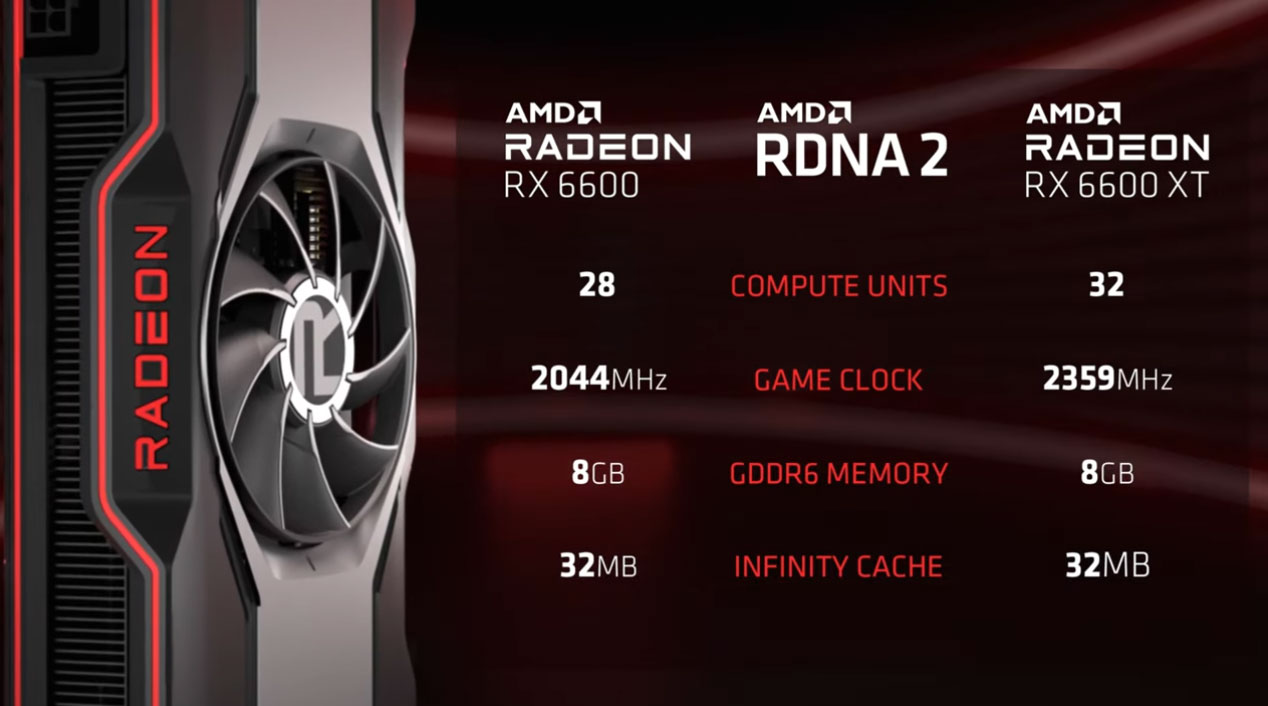
To understand the Radeon RX 6600, one must first look at its relationship with its older sibling, the XT model. Both cards are built upon the exact same Navi 23 RDNA2 GPU die. This shared DNA allows for architectural consistency, though the non-XT variant is subjected to several hardware "cuts" to justify a $50 lower MSRP.
Core Processing and Memory
The primary differentiator lies in the stream processor and texture unit count. The standard RX 6600 features a proportional reduction in these core components compared to the XT version, though interestingly, the Raster Operations Pipelines (ROPs) remain unchanged at 64. This ensures that the card retains a significant portion of its pixel-pushing throughput.
Beyond the core counts, the card operates at lower GPU boost and game clock speeds. Furthermore, the memory subsystem has been adjusted; while both cards utilize GDDR6, the non-XT variant runs at 14Gbps compared to the 16Gbps found on the XT. These changes are deliberate trade-offs designed to optimize the card for efficiency and cost-effectiveness while still maintaining a "future-ready" status for 1080p titles.
Power Efficiency: The 132W Advantage
Perhaps the most impressive aspect of the RX 6600 is its power profile. With a board power of just 132W, the card is remarkably efficient. This low power draw makes it an ideal candidate for smaller form-factor builds and systems with more modest power supplies.
However, a quirk of the current market is the physical design of the cards. Because board partners are looking to minimize development costs, many have recycled the cooler designs intended for the higher-wattage 160W RX 6600 XT. Consequently, the market is currently saturated with RX 6600 cards featuring bulky, over-engineered triple-fan or large dual-fan solutions. While this might be overkill for a 132W chip, the upside is that these cards run exceptionally cool and whisper-quiet, providing a high level of acoustic comfort for the end-user.
Supporting Data: Benchmarking the Competitive Landscape
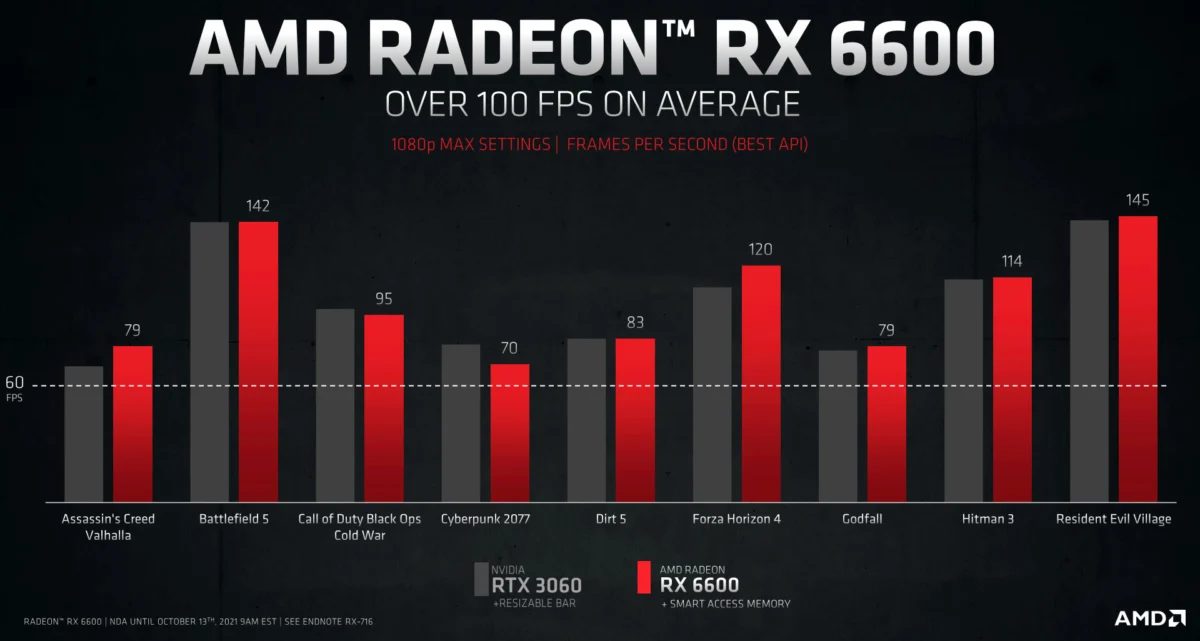
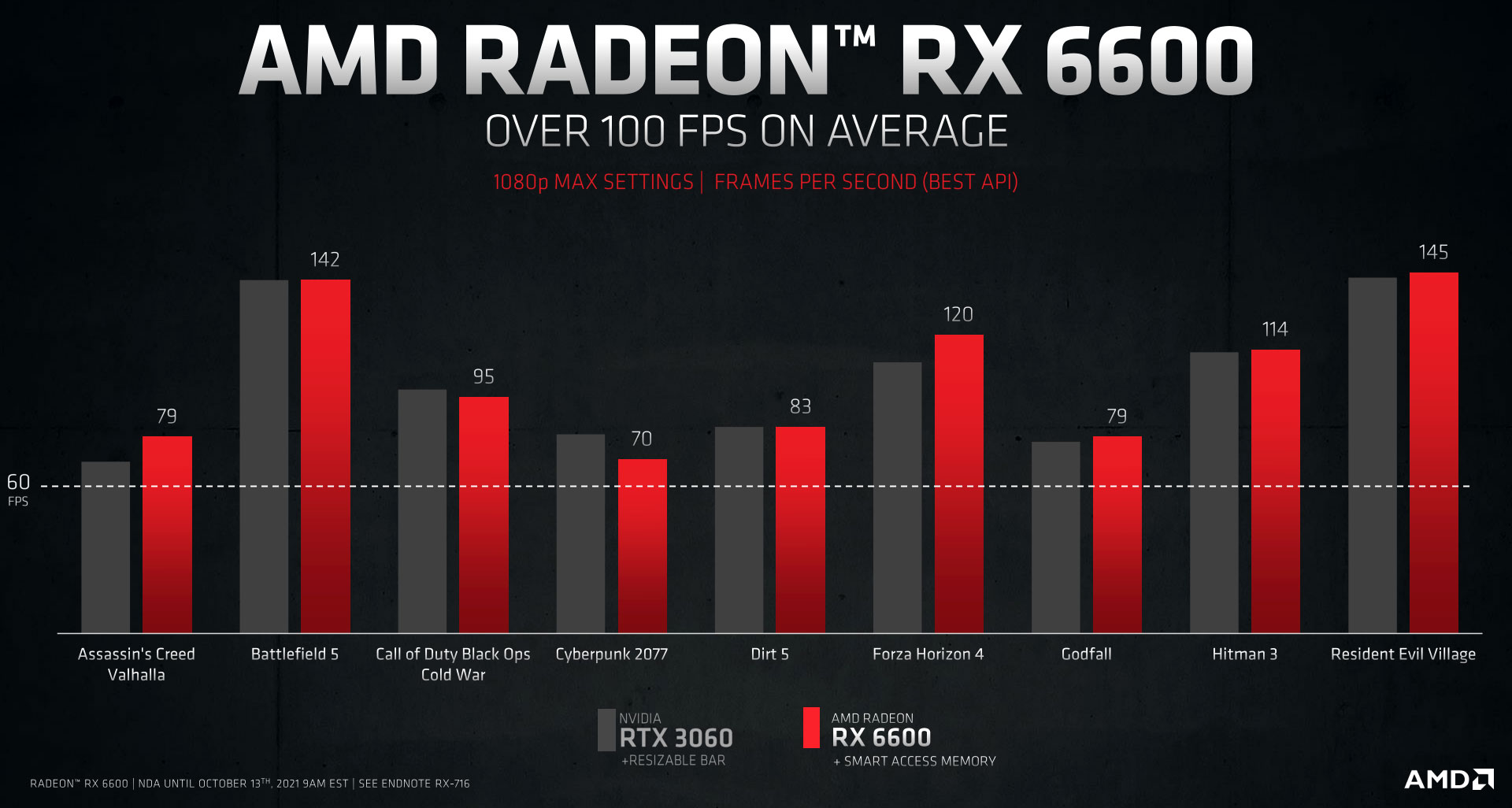
The release of the RX 6600 has triggered a flurry of third-party benchmarking. When compared to the Nvidia GeForce RTX 3060—the card’s primary market rival at the same MSRP—the performance results are nuanced.
AMD vs. Nvidia
In direct head-to-head testing, the RX 6600 and the RTX 3060 prove to be closely matched contenders. As is common in the industry, the "Green Team" (Nvidia) often sees better optimization in specific game engines, while the "Red Team" (AMD) excels in others. The RX 6600 frequently holds its own, offering competitive frame rates at 1080p and even entry-level 1440p settings, depending on the game’s graphical intensity.
Ray Tracing and FSR
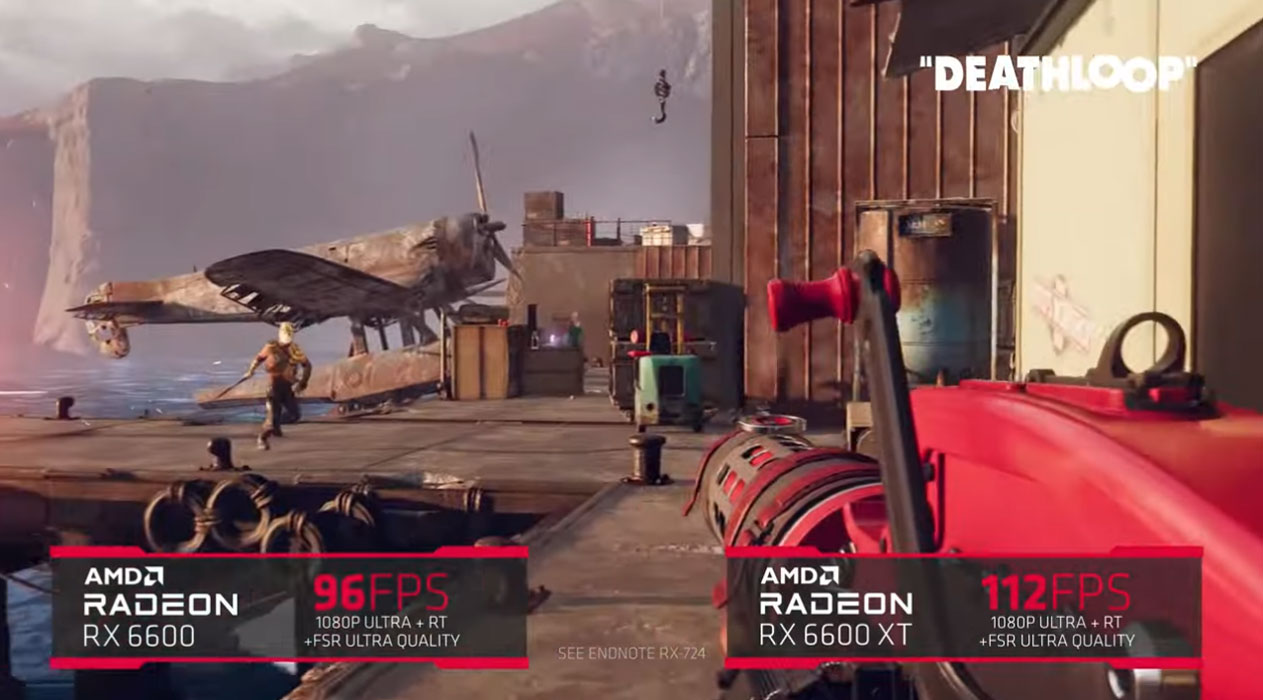
One area of intense debate is ray tracing performance. While the RX 6600 can handle basic ray tracing in supported titles, it is not a heavy-hitter in this department. When enabled, users will frequently need to rely on AMD’s FidelityFX Super Resolution (FSR) to maintain playable frame rates. FSR serves as a vital bridge, allowing the card to output high-fidelity visuals while keeping performance levels high.
Official Responses and Strategic Positioning
AMD’s marketing for the RX 6600 emphasizes the "high-refresh-rate 1080p gaming experience." By focusing on this specific segment, AMD is addressing the largest demographic of gamers—those who are still playing on 1080p monitors and prioritize fluidity and response times over the extreme pixel counts required for 4K.
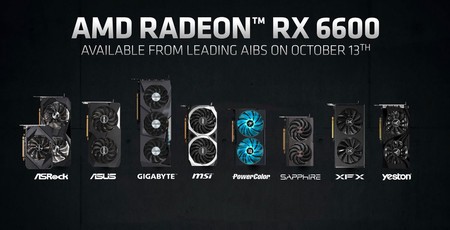
The company has successfully partnered with a wide array of manufacturers, including ASRock, Asus, Gigabyte, MSI, PowerColor, Sapphire, XFX, and Yeston. These partners are responsible for the variety of models hitting shelves, ensuring that the RX 6600 is available in different aesthetic and thermal configurations. Additionally, AMD has confirmed that the card will be a staple in upcoming pre-built gaming PCs, which may provide the most reliable path for consumers to acquire one at a reasonable price point in the current volatile market.
Market Implications and Future Outlook
The launch of the RX 6600 does not occur in a vacuum. The industry is currently observing the card as a bellwether for how manufacturers handle the mid-range crisis.
The Impact on Consumer Choice
In an ideal world, consumers would have a wealth of options at MSRP. In reality, the "luxury of choice" has been severely diminished by silicon shortages. If a consumer can secure an RX 6600 near its recommended price, it represents a strong value proposition for 1080p enthusiasts. However, the price-to-performance ratio remains heavily dependent on availability.
Rumors of a Competitive Response
The arrival of the RX 6600 has already fueled speculation about Nvidia’s next move. Industry chatter suggests that Nvidia may be preparing to roll out a desktop version of the GeForce RTX 3050 or 3050 Ti to counter AMD’s latest offering. There are even rumors circulating about these potential cards featuring improved VRAM quotas—potentially 6GB or 12GB GDDR6 models—which would represent a significant shift in how entry-level cards handle memory-intensive assets.
Conclusion: Is it Right for You?
The AMD Radeon RX 6600 is a calculated, efficient, and highly capable GPU. It is not designed to break 4K records, nor is it a powerhouse for heavy ray tracing. Instead, it fulfills a specific, vital role: providing a reliable, cool, and quiet experience for the gamer who values high-refresh-rate 1080p performance.
As we look toward the remainder of the year, the success of the RX 6600 will be determined by two factors: the stability of the supply chain and the competitive reaction from Nvidia. For those stuck on aging hardware, the RX 6600 offers a compelling upgrade path—provided one can navigate the current landscape of availability to find one at the right price. The card is a testament to the fact that, even in a constrained market, architectural efficiency can still deliver a top-tier experience to the mainstream gamer.












No comments yet. Be the first to join the conversation!