

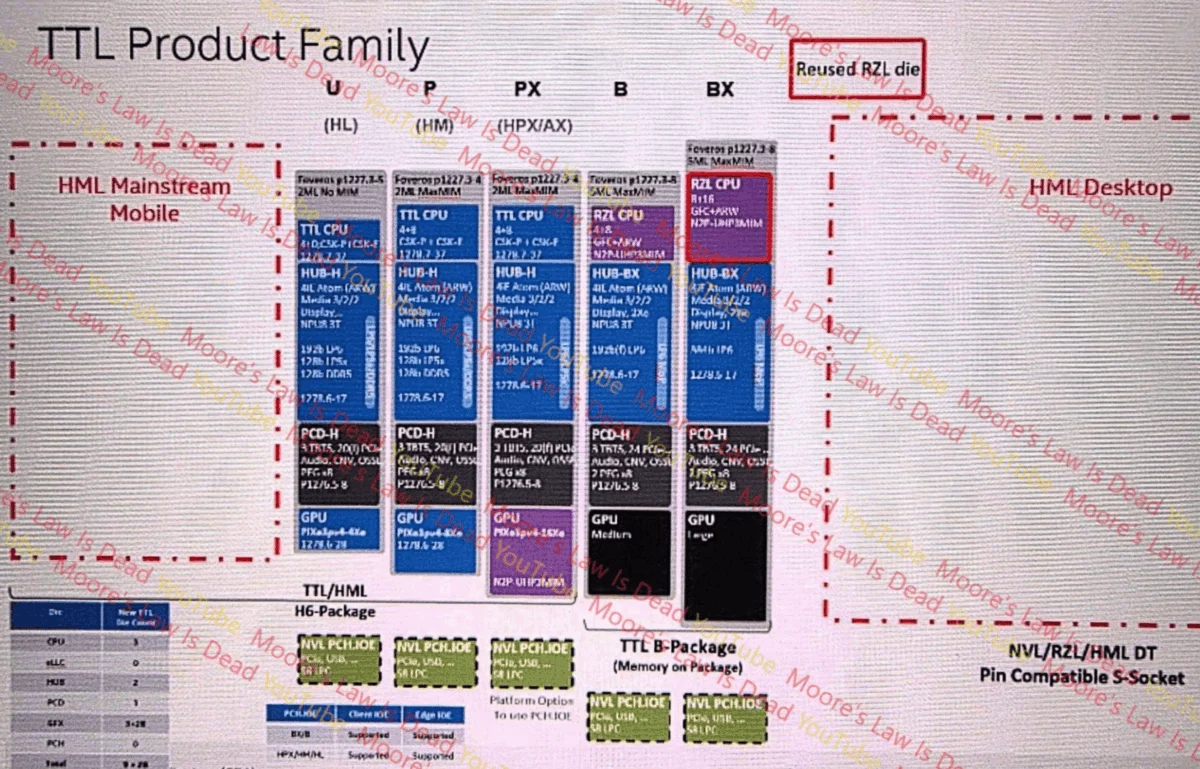
In a significant move aimed at extending the longevity of its desktop platforms, Intel has begun advising motherboard manufacturers to standardize the use of 64MB BIOS chips across its latest lineup. This directive, while not strictly mandated, serves as a foundational step in ensuring that the LGA 1954 socket—introduced with the Nova Lake architecture—remains viable for several future processor generations. By moving to larger flash memory capacity, Intel intends to avoid the historical pitfalls of "BIOS bloat," where limited storage space previously forced manufacturers to drop support for older CPUs to accommodate new microcode and feature sets.
The Push for 64MB BIOS Chips: Future-Proofing the Platform
The transition toward 64MB BIOS modules is a calculated strategy to accommodate the rapidly expanding complexity of modern processor microcode. As Intel prepares to move from its current architecture to the highly anticipated Razor Lake and subsequently the Hammer Lake families, the memory footprint required to maintain comprehensive support for these chips grows significantly.
According to industry reports and recent insights from hardware leakers like Jaykihn, Intel is strongly recommending this upgrade even for budget-oriented chipsets, such as the B960. While the high-end Z990 and Z970 chipsets are expected to be the primary beneficiaries of this increased headroom—offering robust PCIe 5.0 support and advanced overclocking features—the inclusion of the budget segment suggests that Intel is aiming for a seamless transition across its entire product stack.
This approach is a departure from Intel’s historical tendency to frequently cycle through sockets, a practice that has often drawn criticism from the DIY enthusiast community. By ensuring that boards built today can handle the firmware demands of chips arriving several years from now, Intel is signaling a commitment to a more sustainable desktop ecosystem.
Chronology of Socket Evolution and Compatibility
To understand the gravity of this change, one must look at the historical context of Intel’s socket strategies. For years, the "tick-tock" or "process-architecture-optimization" models often necessitated motherboard upgrades every two years. Users became accustomed to the "socket dance," where a new generation of processors inevitably required a new motherboard chipset.
- The Era of Frequent Upgrades: For over a decade, Intel platforms were notorious for short lifespans. This was partly due to power delivery requirements and partly due to the limitations of the BIOS chips on the motherboards.
- The Shift to Longevity: With the introduction of the LGA 1954 socket for Nova Lake (NVL), Intel has pivoted. The goal is to establish a platform that can accommodate multiple iterations of processor designs, including the upcoming Razor Lake (RZL) and the groundbreaking Hammer Lake (HML) architectures.
- The BIOS Bottleneck: In the past, specifically during the AM4 era for AMD, many users experienced the "BIOS dilemma," where older boards could not support newer Ryzen CPUs due to space constraints on the BIOS flash chips. Manufacturers were forced to either strip out support for older processors or issue "MAX" versions of motherboards with larger chips. By proactively pushing for 64MB chips now, Intel aims to skip this messy transition period entirely.
Supporting Data: Why 64MB Matters
The requirement for larger BIOS storage is driven by the sheer volume of data involved in modern firmware. Modern UEFI environments are no longer simple bootloaders; they contain complex microcode, management engines, sophisticated security protocols, and support for an ever-increasing array of peripheral devices.
Architectural Complexity
Hammer Lake, in particular, represents a massive shift in Intel’s internal design philosophy. Rumors suggest the introduction of a "Unified Core" architecture, which bears a striking resemblance to AMD’s successful implementation of performance (Zen) and efficiency (Zen c) cores. Managing the scheduling and power management policies for such hybrid designs requires significant space within the BIOS, as the firmware must hold the instruction sets and optimization parameters for these distinct core types.
The Comparison with Competitors
AMD’s AM5 platform has largely managed to avoid the 32MB vs. 64MB crisis thus far, as current iterations of Zen 6 are still able to fit comfortably within 32MB constraints. However, as the roadmap extends toward Zen 7, industry analysts suggest that AMD may eventually face the same capacity wall that Intel is currently attempting to circumvent. Intel’s preemptive move to 64MB provides it with a competitive "buffer" that could potentially allow for more frequent firmware updates and better feature integration than a more constrained memory chip would allow.
Official Stance and Industry Response
The directive from Intel has been met with a pragmatic response from motherboard manufacturers. While the 64MB requirement is technically an "adoption recommendation" rather than a strict, non-negotiable mandate, it is widely viewed as a "de facto" requirement for any partner wishing to fully support the upcoming product roadmap.
Jaykihn, a reputable voice in the hardware community, clarified the situation on social media: "Yes. The B960 boards are recommended for vendor adoption of 64MB flash, but it is not mandated."
This distinction is important. It allows budget-focused manufacturers to potentially shave costs on entry-level boards while providing a roadmap for those who want to market their products as "future-ready." Manufacturers like ASUS, MSI, and ASRock, who have previously navigated these waters with the AM5 platform, are likely to embrace the 64MB standard to avoid the logistical nightmare of supporting multiple hardware revisions for the same chipset generation.
Implications for the Consumer
For the average consumer and the PC enthusiast, the move toward larger BIOS chips is an unequivocally positive development. Here are the primary implications:
1. Enhanced Upgrade Paths
Users who purchase a Z990 or even a B960 board today will likely be able to upgrade their CPU to a Hammer Lake variant three years down the line without needing to perform a full system teardown or replace their motherboard. This lowers the total cost of ownership over the life of a computer.
2. Feature-Rich BIOS Updates
With double the memory capacity compared to traditional 32MB chips, manufacturers have the freedom to include more robust diagnostic tools, better UI/UX, and more complex overclocking profiles without worrying about running out of space. It allows for "feature-rich" BIOS updates that can extend the life of the board even further.
3. Stability and Security
Security in the UEFI layer has become paramount. Larger BIOS chips allow for the inclusion of more comprehensive security patches and verification protocols, which are essential in an era where firmware-level attacks are increasingly common.
4. Market Segmentation
While high-end boards will certainly utilize the extra space for performance tuning, the trickle-down effect to the B-series chipsets ensures that even mid-range builders benefit from this longevity. It effectively democratizes the ability to upgrade, moving away from the "planned obsolescence" model that plagued earlier desktop cycles.
The Road Ahead: Hammer Lake and Beyond
The horizon for Intel looks significantly different than it did just a few years ago. With Hammer Lake, Intel is set to reintroduce SMT (Simultaneous Multithreading) refinements and the Unified Core architecture, both of which are designed to improve efficiency and raw performance. The fact that these advancements will be pin-compatible with the current LGA 1954 socket is a testament to the engineering foresight Intel is applying to this generation.
As we look toward the future, the transition to 64MB BIOS chips serves as the bedrock upon which this longevity is built. It is a quiet, behind-the-scenes adjustment that will likely be remembered as the moment Intel shifted its strategy toward a more consumer-friendly, long-term upgrade cycle. For the DIY community, the message is clear: if you are investing in an LGA 1954 system, check the specifications to ensure your board is equipped with the 64MB flash, and you will likely be set for years of high-performance computing.










No comments yet. Be the first to join the conversation!