

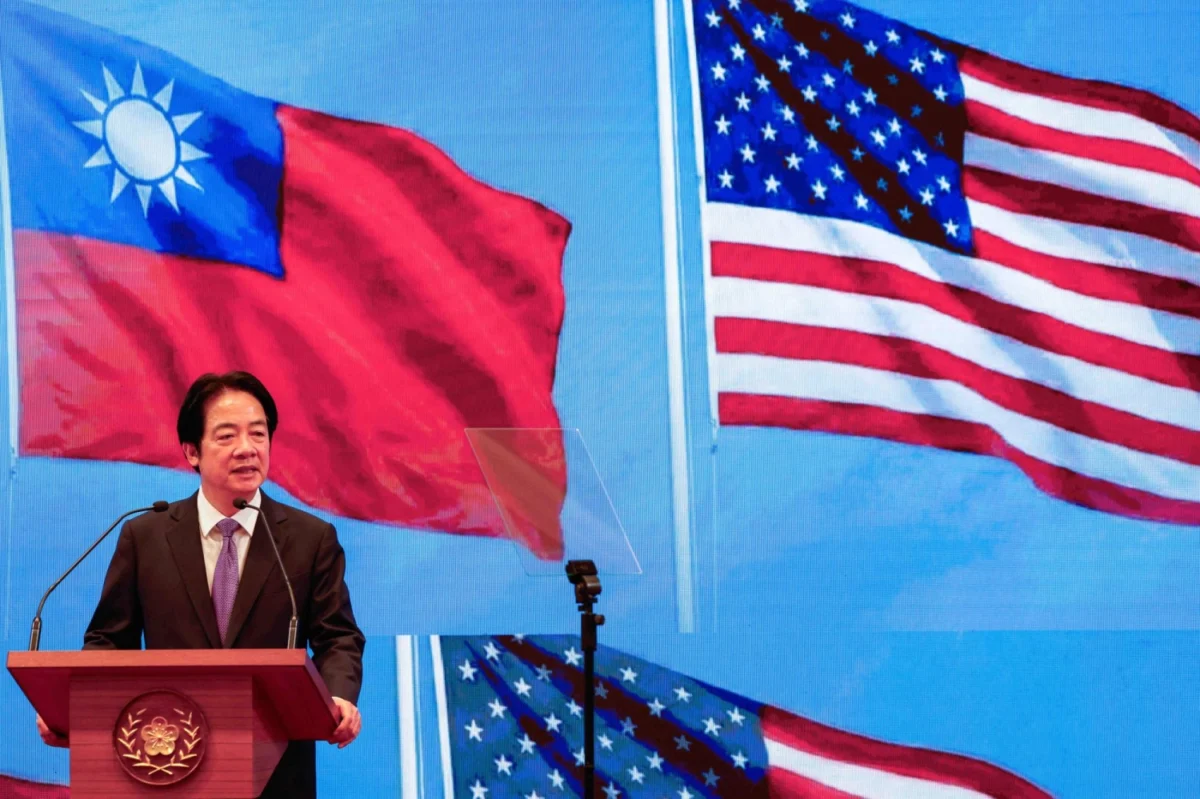
TAIPEI — In a sharp diplomatic exchange that has reverberated across the Indo-Pacific, Taiwan’s Presidential Office issued a defiant statement on Saturday, asserting the island’s status as an "independent democratic country." The declaration came as an immediate, pointed response to comments made by U.S. President Donald Trump, who cautioned the Taiwanese leadership against pursuing a formal declaration of independence.
The friction highlights the increasingly delicate balancing act between Taipei’s desire for international recognition and the constraints imposed by the "One China" policy framework, which continues to govern the volatile geopolitical relationship between Washington, Beijing, and Taipei.
The Core Conflict: A Clash of Perspectives
The current diplomatic flare-up began when President Trump, in a series of remarks that have sparked international concern, warned Taipei against taking unilateral steps toward formal independence. For the White House, the messaging appears aimed at preventing any sudden shifts in the status quo that could trigger a military confrontation with the People’s Republic of China (PRC).
However, the administration of President Lai Ching-te has moved swiftly to clarify its position. Presidential Office Spokesperson Karen Kuo issued a formal statement on Saturday, framing Taiwan’s sovereignty not as a political choice, but as a matter of established fact.
"The Republic of China is a sovereign, independent democratic country; this is self-evident," Kuo stated. She further dismissed Beijing’s long-standing territorial claims over the island, noting that they are "without merit." By utilizing the formal name, the Republic of China (ROC), the administration sought to bridge the gap between historical legitimacy and modern democratic reality.
Chronology of Recent Diplomatic Friction
To understand the current volatility, one must look at the recent timeline of high-stakes maneuvering:
- February 2026: President Lai Ching-te holds a series of high-level economic talks with U.S. officials in Taipei. These meetings were designed to bolster bilateral trade ties and solidify the U.S.-Taiwan security partnership, signaling a deepening of the relationship that Beijing frequently labels a "red line."
- Early May 2026: Rhetoric from the White House regarding the necessity of maintaining the status quo in the Taiwan Strait begins to harden. Sources close to the administration suggest an increasing concern that Taiwan’s domestic political discourse may drift toward a formal independence referendum.
- May 16, 2026: President Trump delivers a public warning, urging Taipei to exercise restraint. The statement is interpreted by analysts as an effort to avoid an accidental conflict with Beijing during a period of heightened domestic economic pressures in the U.S.
- May 16, 2026 (Afternoon): Spokesperson Karen Kuo issues the official rebuttal, emphasizing that Taiwan’s democratic identity is non-negotiable, while simultaneously attempting to placate Washington by citing assurances from senior U.S. officials.
Supporting Data: The Strategic Landscape
The ongoing tension is underpinned by a complex web of strategic interests. Taiwan, the world’s leading producer of advanced semiconductors, remains the "silicon shield" of the global economy.
Economic Interdependence
According to trade data from 2025-2026, the U.S. remains Taiwan’s most critical strategic partner. However, the economic integration of the region remains high, with Taiwan maintaining significant trade links to the mainland. The Lai administration has argued that its economic prosperity is inextricably linked to its democratic freedoms, suggesting that any loss of sovereignty would result in the degradation of the global supply chain.
Security and Defense
The U.S. policy toward Taiwan, often described as "strategic ambiguity," has been tested by the modernization of the People’s Liberation Army (PLA). Despite the warnings from President Trump, the U.S. remains committed to the Taiwan Relations Act. Secretary of State Marco Rubio has repeatedly signaled that the U.S. stance—supporting Taiwan’s ability to defend itself while discouraging unilateral changes to the status quo—"remains unchanged." This "dual-track" messaging is a cornerstone of current U.S. foreign policy, though it is increasingly viewed as insufficient by both Taipei and Beijing.
Official Responses: Navigating the "Status Quo"
The response from Taipei was carefully calibrated. By highlighting "multiple reaffirmations" from the U.S. side, including those from Secretary of State Marco Rubio, the Presidential Office is attempting to maintain a narrative of strong U.S. support despite the President’s personal warnings.

The View from Taipei
Taipei’s strategy is clear: emphasize the democratic nature of the island to garner international sympathy while maintaining that the status quo—the existence of the ROC as a self-governing entity—is already a form of independence that does not require a formal "declaration" that might provoke war.
The View from Beijing
Beijing’s reaction to these developments has been characteristically sharp. The PRC continues to maintain that any move toward "official" independence is an act of war. The Chinese state media has intensified its focus on the U.S. role in the region, accusing Washington of "hollowing out" the One China policy through military aid and political visits.
Geopolitical Implications: What Lies Ahead
The diplomatic skirmish of this past weekend has profound implications for the stability of the Indo-Pacific region.
1. The Erosion of Strategic Ambiguity
As the geopolitical climate grows more polarized, the traditional policy of strategic ambiguity is becoming harder to maintain. President Trump’s explicit warning represents a departure from the more indirect signals usually employed by U.S. administrations. This shift forces Taipei into a defensive posture, as they must balance the need for U.S. military support with the reality of U.S. political pressure.
2. Domestic Politics in Taiwan
For President Lai Ching-te, the pressure is two-fold. He must reassure the Taiwanese public that their democratic rights are being protected, while simultaneously ensuring that he does not alienate his most important ally, the United States. His administration is currently navigating a period where nationalist sentiment in Taiwan is high, and any perceived submission to foreign pressure—whether from Beijing or Washington—could carry significant domestic political costs.
3. Impact on Global Supply Chains
Markets remain jittery. The prospect of a potential blockade or conflict in the Taiwan Strait is the primary "black swan" risk for the global tech sector. Investors are closely watching these diplomatic exchanges to gauge the likelihood of a major escalation.
4. The Role of the U.S. State Department
Secretary of State Marco Rubio finds himself at the center of this diplomatic storm. His task is to reconcile the President’s warnings with the broader, long-term strategic goal of ensuring that Taiwan remains a democratic, self-governing entity. His reaffirmations of policy are essential to calming nerves in Taipei, yet they do little to silence the underlying concerns about the U.S.’s long-term commitment.
Conclusion: A Delicate Balance
The events of this weekend demonstrate that the Taiwan issue remains the most volatile flashpoint in global politics. While the U.S. continues to provide the security umbrella that allows Taiwan to thrive, the political friction between Taipei and Washington regarding the process of maintaining independence has become more public and more pronounced.
For the international community, the situation requires close monitoring. The path forward for Taiwan—a nation that views itself as a beacon of democracy in Asia—is fraught with danger. As the Presidential Office stated, the island’s democratic existence is "self-evident." Whether that reality can continue to coexist with the competing demands of global superpowers remains the defining question of the decade.
As the situation develops, the world waits to see if the rhetoric will remain confined to diplomatic statements or if these verbal warnings signify a deeper, more substantive shift in how the United States will manage its most consequential international relationship in the years to come. The dialogue between Taipei and Washington is far from over; it is, in many ways, only entering a more complex and hazardous phase.












No comments yet. Be the first to join the conversation!