SEO Keywords: Krafton, Unknown Worlds, Subnautica 2, video game lawsuit, Ted Gill, Max McGuire, Charlie Cleveland, game development, legal settlement, publisher-developer relations, Early Access, bonus payout
Main Facts: A Costly Resolution and Leadership Change
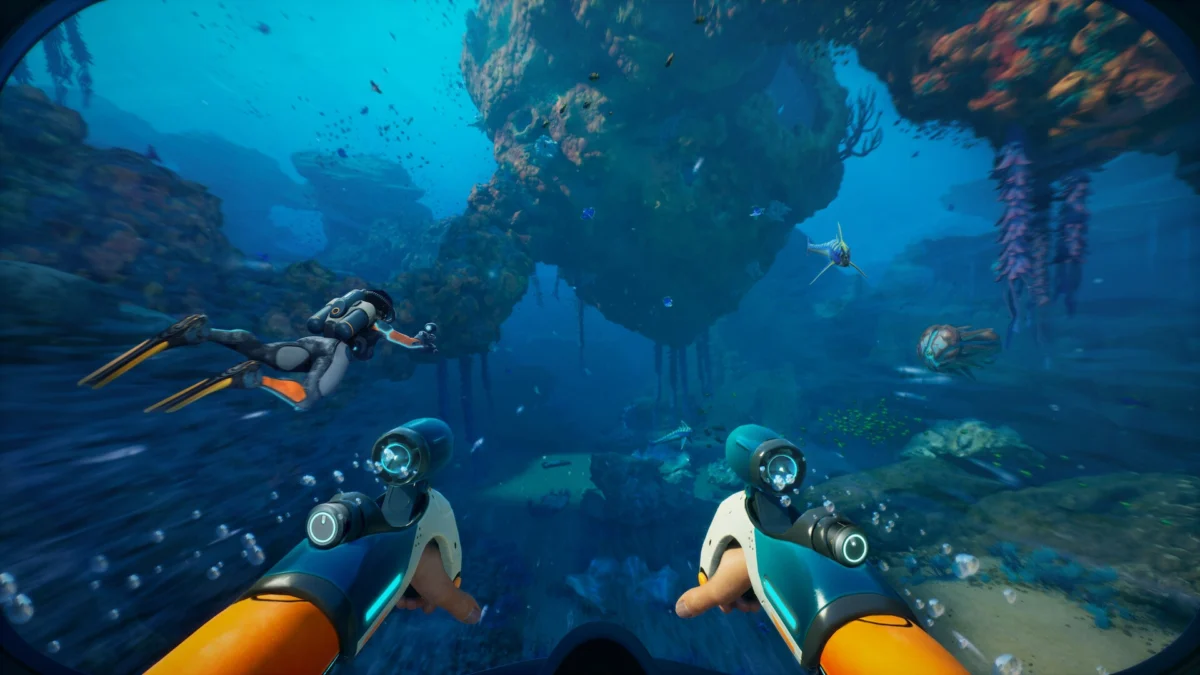
In a significant development that brings an end to a high-stakes legal battle, South Korean gaming giant Krafton Inc. has settled its protracted dispute with the former leadership team of Unknown Worlds Entertainment, the acclaimed studio behind the Subnautica series. The settlement, reportedly valued at the full $250 million disputed bonus, resolves allegations of "pressure tactics" by Krafton to delay the 2025 Early Access launch of Subnautica 2 and avoid a substantial payout.
As part of the agreement, Ted Gill, who had previously been reinstated as CEO of Unknown Worlds by court order, has stepped down from his role. Gill stated, "We mutually agreed to part ways," emphasizing that "new leadership is the best way for the studio to move forward." Crucially, the settlement extends beyond the former leadership, with Krafton agreeing to pay bonuses across three installments to the entire staff of Unknown Worlds, including recent recruits, with reports suggesting the team will be "compensated significantly more" than initially stipulated. Krafton is now expected to appoint an external CEO to guide the studio into its next chapter, including the highly anticipated Subnautica 2.
This resolution draws a line under a contentious period marked by bitter accusations, counter-accusations, and legal maneuvers that brought the intricate and often fraught relationship between game publishers and developers into sharp focus. The financial magnitude of the settlement underscores the immense value placed on the Subnautica intellectual property and highlights the complexities inherent in multi-million dollar acquisition deals tied to performance-based incentives.
Chronology: A Deep Dive into the Legal Saga
The legal drama that unfolded between Krafton and the former executives of Unknown Worlds Entertainment has been a saga of escalating tensions, accusations of corporate malfeasance, and significant financial stakes. The dispute centered around a colossal $250 million bonus payout, tied to specific revenue targets for the 2025 Early Access release of Subnautica 2.
The Genesis of the Dispute: An Acquisition and a Lucrative Bonus
The roots of the conflict trace back to Krafton’s acquisition of Unknown Worlds. Such deals often include "earn-out" clauses or performance-based bonuses designed to incentivize the acquired company’s founders and key personnel to meet specific financial or developmental milestones post-acquisition. In this instance, the $250 million bonus was contingent upon Subnautica 2 achieving certain revenue thresholds following its planned Early Access launch in 2025.
Public Complaint and Allegations of "Pressure Tactics"
Details of the legal complaint against Krafton Inc. by the former leadership of Unknown Worlds Entertainment — specifically, founders Max McGuire, Ted Gill, and Charlie Cleveland, represented by Fortis Advisors LLC — became public approximately a year prior to the settlement. The core of their complaint alleged that Krafton had employed "pressure tactics" with the deliberate intent of delaying Subnautica 2‘s launch. The former shareholders argued that these delays were not creatively driven but rather a cynical strategy by Krafton to avoid triggering the revenue targets that would necessitate the $250 million bonus payout. This accusation painted a picture of a publisher prioritizing financial avoidance over the timely development and release of a highly anticipated title.
Krafton’s Counter-Allegations: Threats and Data Breaches
Krafton, in its robust defense, launched a series of counter-allegations that intensified the legal battle. The publisher claimed that the three former leaders had threatened to "self-publish Subnautica 2." This was a severe accusation, implying a potential breach of contract and a blatant disregard for Krafton’s ownership and investment in the studio and its intellectual property. The act of self-publishing would effectively cut Krafton out of the game’s distribution, marketing, and revenue streams, undermining the very purpose of the acquisition. Krafton contended that this left them with "no choice but to terminate their employment."
Adding another layer of severity, Krafton also alleged that Max McGuire, Ted Gill, and Charlie Cleveland had downloaded "tens of thousands of ‘company files’ and emails" in the period leading up to their terminations. This accusation raised concerns about data security, intellectual property theft, and potential industrial espionage, significantly broadening the scope and gravity of the legal dispute.
Founders Deny, Accuse Krafton of "Changing Story"
The founders of Unknown Worlds strenuously denied Krafton’s allegations. They asserted that the claims of threatening to self-publish and downloading company files were baseless. Furthermore, they accused Krafton of "changing its story mid-litigation" regarding the reasons for their termination and the seizure of control over Unknown Worlds. This accusation suggested a shifting narrative from Krafton, potentially indicating a lack of consistent justification for their actions against the former leaders.
A Court-Ordered Reinstatement: A Pivotal Moment
A pivotal moment in the legal saga occurred earlier this year when a bombshell judgment was delivered. A court demanded that Krafton "immediately reinstate ousted CEO" Ted Gill and return his authority over Subnautica 2. This ruling was a significant setback for Krafton and a major victory for the former leadership. It legally challenged Krafton’s right to summarily remove a key executive, underscoring the complexities of corporate control within acquisition agreements and the limits of a parent company’s authority, especially when legal disputes are ongoing. Gill’s reinstatement, albeit temporary, highlighted the strength of the founders’ legal position and likely put significant pressure on Krafton to seek a resolution.
The Settlement: A Quarter-Billion Dollar Resolution
The protracted legal battle finally culminated in a settlement. A new report by Bloomberg confirmed that Krafton had agreed to pay the disputed bonuses. The specifics of the settlement, beyond the $250 million figure, included provisions for bonuses to be paid to the "entire staff of subsidiary Unknown Worlds Entertainment." This broad distribution of the bonus, across three installments and including recent recruits, suggests a move by Krafton to stabilize morale within the studio and mend internal relationships following the contentious period. The indication that the team will be "compensated significantly more" than initially agreed further emphasizes Krafton’s desire to fully resolve the matter and foster a more positive environment.
Ted Gill’s Departure: A Final Act
Following the settlement, Ted Gill announced his departure from the CEO role. His statement, "we mutually agreed to part ways" and "new leadership is the best way for the studio to move forward," reads as a carefully crafted corporate communication. While acknowledging the past turmoil, it focuses on the future stability of Unknown Worlds. Gill also expressed excitement about Subnautica 2‘s potential, stating, "We’re all super excited about Subnautica 2 and its tremendous success," a statement that carries significant weight given the context of the bonus dispute. Krafton is now expected to search for an external CEO, signaling a fresh start for the studio under new, independent leadership.
Supporting Data: The Stakes and the Industry Landscape
The dispute between Krafton and Unknown Worlds was not just about a quarter-billion dollars; it illuminated several critical aspects of the modern video game industry, from the power dynamics between publishers and developers to the increasing financialization of creative endeavors.
The Subnautica Franchise: A Valuable IP
At the heart of this conflict lies the Subnautica franchise, an intellectual property of immense value. The original Subnautica, launched in 2018, garnered widespread critical acclaim for its unique blend of open-world survival, exploration, and compelling underwater narrative. Its sequel, Subnautica: Below Zero, further solidified the series’ reputation. Both titles are celebrated for their atmospheric design, innovative gameplay mechanics, and strong sense of discovery, cultivating a dedicated fanbase.
The success of Subnautica made Unknown Worlds a highly attractive acquisition target, and Subnautica 2 (or the next major iteration) represents a cornerstone for the studio’s and Krafton’s future revenue streams. The $250 million bonus payout attached to its Early Access performance underscores the profound financial expectations and the strategic importance Krafton placed on the title’s success. This figure is not merely a bonus; it’s a reflection of the projected value and revenue generation capability of a major franchise within the publisher’s portfolio.
Acquisition Dynamics and the Perils of Earn-Outs
The dispute serves as a stark reminder of the inherent tensions that can arise in publisher-developer acquisition deals, particularly those involving performance-based "earn-out" clauses. While such clauses are designed to align interests and incentivize founders to remain engaged and deliver results, they can also become points of severe contention. The acquired entity’s former owners often seek to maximize their payout by hitting targets as quickly as possible, while the acquiring publisher might prioritize long-term strategic goals, sometimes at the expense of short-term financial triggers.
In this case, the allegation that Krafton used "pressure tactics" to delay Subnautica 2‘s release to avoid the bonus highlights a cynical interpretation of these dynamics. It suggests a potential misalignment of incentives, where the pursuit of financial savings for the parent company might overshadow the creative and operational needs of the studio, and ultimately, the anticipation of its player base.
The Early Access Model and its Financial Implications
The fact that the bonus was tied to the 2025 Early Access release of Subnautica 2 is also significant. Early Access has become a popular development model, allowing studios to gather player feedback, iterate on designs, and build community engagement during active development. However, it also introduces variables. Development timelines can shift, features can be added or removed, and the initial launch quality can vary widely. Tying a quarter-billion-dollar bonus to an Early Access revenue target places immense pressure on both the development schedule and the early commercial performance of the game. Any perceived delay, whether for creative reasons or alleged financial maneuvering, would directly impact the bonus eligibility.
The Financial Magnitude and Industry Trends
A $250 million settlement is an astronomical sum in any industry, but particularly so in game development, where even successful studios rarely see such figures in bonuses. This payout reflects Krafton’s significant financial might as the publisher behind the global phenomenon PUBG: Battlegrounds. It also signals the increasing financial stakes within the video game industry, which has seen unprecedented growth and consolidation in recent years. Large-scale acquisitions and multi-million-dollar deals are becoming commonplace, and with them, the potential for equally large legal and financial disputes. The industry watches such cases closely for precedents on how contractual obligations, intellectual property rights, and developer-publisher relationships are navigated in an increasingly complex landscape.
Official Responses: Navigating Corporate Statements
Throughout the dispute, official statements from both sides have been carefully managed, often revealing more through their omissions and corporate phrasing than direct admissions.
Ted Gill’s Departure Statement: A Diplomatic Exit
Following the settlement, Ted Gill’s statement regarding his departure from the CEO role was a model of corporate diplomacy: "We mutually agreed to part ways," and "new leadership is the best way for the studio to move forward." This language, while professional, offers little insight into the specific terms or motivations behind his exit beyond the immediate resolution of the lawsuit. The phrase "mutually agreed" is standard in such scenarios, designed to project an amicable parting rather than a forced removal, even if the underlying circumstances were contentious. His additional comment, "We’re all super excited about Subnautica 2 and its tremendous success," serves to redirect focus towards the game itself, attempting to end his tenure on a positive and forward-looking note, despite the past legal battles. It also implicitly confirms that the bonus payout has cleared a significant hurdle for the game’s perceived future success.
Krafton’s Stance: From Accusation to Resolution
Krafton’s official responses during the litigation period were primarily defensive, counter-accusing the former leadership of threatening to self-publish and downloading company files. These statements aimed to justify their actions, including the termination of employment. The allegation that the founders "downloaded tens of thousands of ‘company files’ and emails" was a severe claim, painting the former leaders as potentially malicious actors.
However, with the settlement, Krafton has not issued a detailed public statement beyond the confirmation of the payout. The nature of legal settlements often involves non-disclosure agreements, limiting what parties can publicly say about the terms or even the reasons behind the resolution. The decision to pay the full $250 million, plus "significantly more" to the entire staff, speaks volumes more than any direct statement. It indicates a strategic choice by Krafton to absorb a substantial financial cost to bring an end to a damaging public dispute, secure the future of a key IP, and likely stabilize the morale of the development team at Unknown Worlds. The absence of a triumphal statement from Krafton suggests a desire to move on quietly and focus on future operations.
The Founders’ Perspective: A Shifting Narrative
The former founders, represented by Fortis Advisors LLC, consistently denied Krafton’s allegations and accused the publisher of "changing its story mid-litigation." This accusation highlighted a perceived inconsistency in Krafton’s defense, suggesting that the publisher struggled to maintain a coherent justification for its actions. While the settlement brings financial recompense, the public record of their denials and counter-accusations remains, reflecting their commitment to clearing their names throughout the legal process. Their success in securing the bonus payout, especially after the court-ordered reinstatement of Ted Gill, stands as a vindication of their claims regarding Krafton’s alleged attempts to avoid the bonus.
Implications: Charting the Future for Unknown Worlds and Subnautica 2
The resolution of this high-profile legal dispute carries significant implications for all parties involved: Unknown Worlds Entertainment, Krafton Inc., the future of Subnautica 2, and potentially the broader game development industry.
For Unknown Worlds Entertainment: Stability Amidst Change
The immediate implication for Unknown Worlds is a sense of renewed stability. The payment of the $250 million bonus, distributed across the entire staff and reportedly "significantly more" than initially agreed, is a massive morale boost. This financial windfall for the developers could significantly improve their quality of life, reinforce their value to the company, and foster a more positive and motivated work environment after a period of intense uncertainty and legal strife. Such a large payout could also attract top talent to the studio, eager to work on a high-profile franchise under favorable conditions.
However, the departure of Ted Gill, one of the key figures involved in the studio’s leadership and the legal battle, signifies a major leadership transition. While Gill stated "new leadership is the best way for the studio to move forward," an external CEO, as expected to be appointed by Krafton, will bring a fresh perspective and potentially a different strategic vision. This could lead to shifts in creative direction, development processes, or studio culture. The challenge for Unknown Worlds will be to maintain its unique creative identity and development philosophy under new management while integrating more closely into Krafton’s larger corporate structure. The hope is that the legal cloud has lifted, allowing the developers to fully focus on creating Subnautica 2.
For Subnautica 2: A Clearer Path Forward
The most direct beneficiary of this settlement might be Subnautica 2. With the bonus dispute resolved, the alleged "pressure tactics" to delay its launch should cease. This removes a significant distraction and potential impediment to the game’s development. The development team can now proceed with their work without the shadow of a contentious lawsuit hanging over their heads. The 2025 Early Access target, which was central to the bonus conditions, may now be approached with a clearer focus on quality and timely delivery, rather than being entangled in financial maneuvering.
The expectation for Subnautica 2 remains incredibly high. The success of its predecessors has built a loyal and eager fanbase. The stable environment and well-compensated team post-settlement should ideally translate into a more focused and productive development cycle, ultimately benefiting the quality and reception of the game upon its eventual Early Access launch and full release.
For Krafton Inc.: A Costly but Strategic Resolution
For Krafton, the settlement represents a substantial financial outlay, a quarter-billion dollars being a significant sum even for a publisher of its size. However, it’s a strategic investment in long-term stability and the reputation of a key IP. By settling, Krafton avoids the continued drain of litigation costs, the potential for further damaging public revelations, and the risk of an even more unfavorable court judgment. More importantly, it secures the future development of Subnautica 2 and the viability of Unknown Worlds as a productive studio within its portfolio.
The decision to pay bonuses to the entire staff also serves as a powerful message. It helps to rebuild trust and morale within Unknown Worlds, demonstrating Krafton’s commitment to its developers, even after a bitter dispute with former leadership. This could prevent further internal dissent and ensure the smooth integration of the studio into Krafton’s broader ecosystem. Moving forward, Krafton will need to carefully consider how it structures acquisition deals and manages its relationships with acquired studios to prevent similar conflicts in the future. The appointment of an external CEO signals Krafton’s desire for a clean slate and direct control over the studio’s strategic direction.
Broader Industry Implications: Contracts, Culture, and Control
This case sends several important messages across the game development industry:
- The Importance of Clear Contracts: The dispute underscores the absolute necessity of meticulously drafted contracts, especially in acquisition deals involving performance-based incentives. Ambiguities or perceived loopholes can lead to costly and damaging legal battles.
- Publisher-Developer Power Dynamics: The allegations of "pressure tactics" highlight the often-uneven power dynamic between large publishers and smaller, acquired studios. This case serves as a reminder for developers to protect their interests vigorously and for publishers to maintain ethical business practices.
- Impact on Studio Culture: Prolonged legal battles and leadership turmoil can severely impact a studio’s creative output and employee morale. The decision to compensate the entire staff in this settlement might set a precedent for how publishers handle the fallout of such disputes, aiming to stabilize the workforce.
- Financial Stakes in Gaming: The $250 million figure is a testament to the colossal financial stakes now present in the video game industry, where successful franchises can command enormous valuations and generate immense revenue.
In conclusion, the settlement between Krafton and the former leadership of Unknown Worlds marks the end of a turbulent chapter. While costly for Krafton, it paves the way for a more stable future for Unknown Worlds and, critically, for the highly anticipated Subnautica 2. The lessons learned from this quarter-billion-dollar dispute will undoubtedly resonate throughout the industry, influencing how acquisitions are structured and how publisher-developer relationships are managed in the years to come.