Rifan Muazin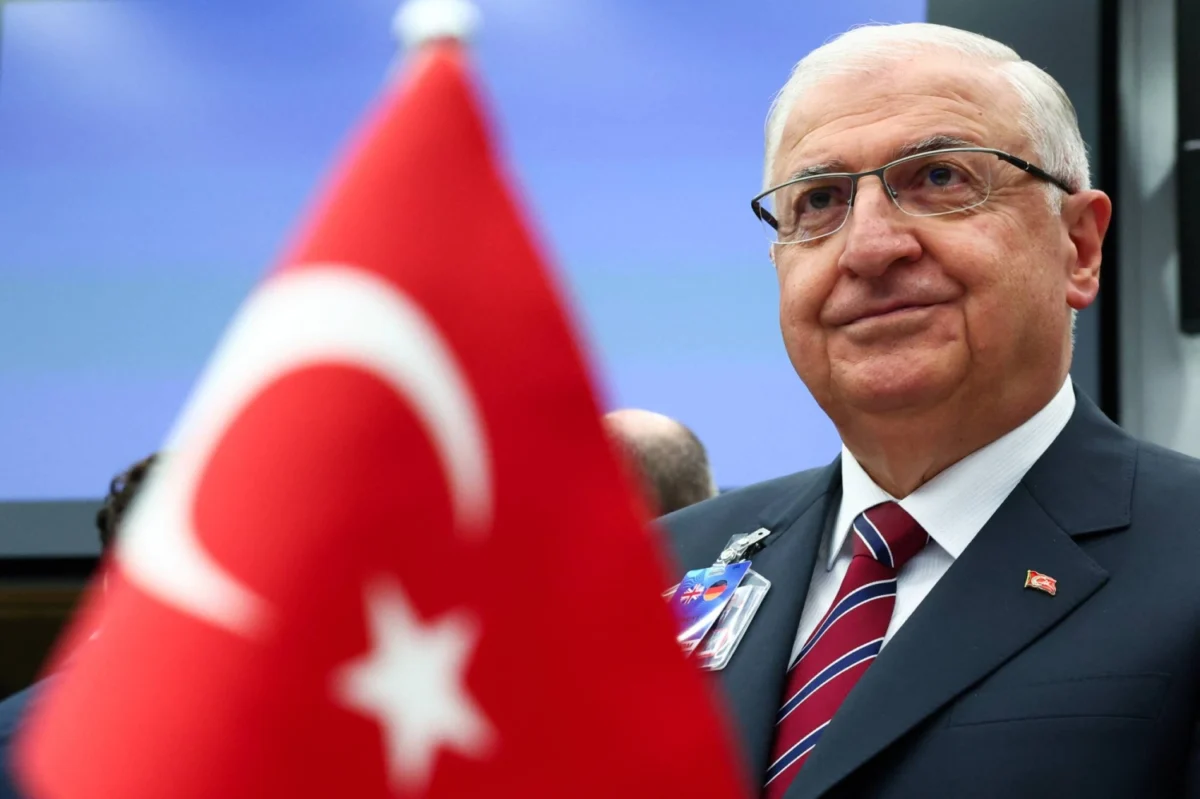
ANKARA — As the international security architecture faces its most significant stress test since the end of the Cold War, Turkey is positioning itself as the epicenter of a pivotal diplomatic effort. With the upcoming NATO summit scheduled for July 7–8 in Ankara, Turkish Defense Minister Yasar Guler has issued a clear message to the alliance’s members and observers alike: the trans-Atlantic bond remains intact, even as it undergoes a painful, necessary evolution.
Against a backdrop of shifting power dynamics and skepticism from Washington regarding the efficacy of traditional alliances, the Ankara summit is tasked with a Herculean objective: reaffirming collective defense while navigating a complex web of disputes over military burden-sharing, regional naval security, and the future of global stability.
The Core Mandate: Unity in the Face of Fragmentation
The Ankara summit is set to host 32 NATO heads of state, alongside an expanded roster of delegates from the Gulf and the Asia-Pacific region. This diversification of attendees underscores a fundamental shift in NATO’s strategic outlook—moving beyond the traditional North Atlantic theater to acknowledge that security in the 21st century is indivisible.
Minister Yasar Guler, speaking ahead of the event, emphasized that the alliance is currently engaged in a high-stakes recalibration. “NATO is adjusting to a shifting security landscape,” Guler remarked. Addressing the elephant in the room—the persistent rumors of a potential U.S. withdrawal—Guler offered a firm reassurance: “The United States is not seeking to leave the alliance.”
Despite the Minister’s diplomatic optimism, the reality on the ground is more nuanced. The summit aims to emphasize "alliance unity" and "bolster deterrence," but doing so requires addressing the grievances that have strained the bloc for years.
A Chronology of Growing Tensions
The path to the Ankara summit has been paved with diplomatic friction and policy pivots that have left the alliance in a state of flux.
- 2023–2024 (The Burden-Sharing Debate): As global inflation impacted defense budgets, the perennial U.S. demand that allies meet the 2% of GDP target for defense spending became increasingly contentious. Washington’s frustration grew as it perceived European capitals as being overly reliant on the American security umbrella.
- Early 2025 (The Pivot to the Indo-Pacific): The U.S. signaled a strategic pivot, moving troops, advanced aircraft, and naval assets away from Europe to focus on emerging challenges in the Indo-Pacific. This repositioning, while strategically logical from a Washington perspective, left European NATO members feeling exposed and neglected.
- May 2025 (The Strait of Hormuz Crisis): Tensions reached a boiling point when the U.S. openly criticized NATO allies for their perceived lack of involvement in securing the Strait of Hormuz. Washington viewed the apathy of its partners as a dereliction of duty, leading to further troop withdrawals from European bases as a sign of American dissatisfaction.
- June 2025 (The Ukraine Defense Contact Group): Minister Yasar Guler represented Turkey at the Ukraine Defense Contact Group in Belgium, where he stressed that the war in Ukraine—and its spillover effects—required a more unified, better-funded, and more coordinated NATO response.
- July 2025 (The Ankara Summit): The current summit serves as the final attempt to resolve these systemic disagreements before the alliance risks permanent paralysis.
Supporting Data: The Cost of Disunity
The friction within NATO is not merely rhetorical; it is reflected in the shifting deployment maps of the alliance. According to recent intelligence reports, the reduction of U.S. military presence in Europe is not merely a political gesture but a tactical reality.
Military Asset Realignment
- Troop Levels: U.S. ground forces stationed in Central Europe have seen a reduction of approximately 15% compared to 2022 levels.
- Naval Assets: The reassignment of carrier strike groups from the Mediterranean and North Atlantic to the South China Sea has created a "security vacuum" that regional powers are struggling to fill.
- Defense Spending: While some NATO members have successfully increased their defense budgets, the aggregate spending remains uneven. The United States continues to account for over 70% of the total defense spending of the entire alliance, a statistic that continues to fuel the political rhetoric in Washington.
The economic reality is that the "security dividend" enjoyed by Europe in the post-Cold War era has effectively expired. The Ankara summit will likely introduce new mechanisms for burden-sharing, potentially moving toward a "tiered" contribution model that ties regional influence to specific financial and material commitments.
Official Responses: Navigating the Trump Factor
The looming presence of U.S. President Donald Trump, who has frequently questioned the utility of NATO, remains the central variable in the alliance’s future. Trump’s threats to withdraw the U.S. have served as a catalyst for a "Europeanized" defense strategy, yet the consensus among the remaining 31 members is that a NATO without the United States is, at present, an impossibility.

Minister Guler’s comments in Ankara serve as a diplomatic bridge. By positioning Turkey—a nation with a unique strategic relationship with both the West and the East—as a mediator, Ankara is attempting to de-escalate the rhetoric.
"The alliance is more than the sum of its political cycles," a senior NATO official remarked on condition of anonymity. "The goal of this summit is to institutionalize our commitments so that they are not subject to the whims of individual electoral outcomes."
However, the skepticism remains palpable. European leaders are increasingly vocal about the need for "strategic autonomy," while Washington’s focus on the Strait of Hormuz and the Indo-Pacific suggests that the U.S. is no longer willing to be the "world’s policeman" at its own expense.
Implications: A New Security Architecture?
The outcomes of the Ankara summit will likely ripple far beyond the borders of Europe. If the alliance manages to project a united front, it could serve as a powerful deterrent against regional aggression. If it fails, the implications are severe:
- The Rise of Bilateralism: If NATO’s collective security guarantee is perceived as weak, member states will likely pivot toward smaller, bilateral security pacts, effectively fracturing the alliance from within.
- Increased Regional Instability: A diminished NATO presence in the Middle East and Eastern Europe would create opportunities for revisionist powers to expand their sphere of influence.
- Economic Consequences: Defense budgets are projected to skyrocket as nations move to "go it alone," potentially redirecting funds from social programs and infrastructure, leading to domestic political instability.
The Turkish Role
Turkey’s role as the host is symbolic of its rising influence. By bringing Gulf and Asia-Pacific officials to the table, Turkey is signaling that NATO must become a global security partner rather than a regional relic. This "globalization" of NATO, however, is not without risk, as it may dilute the alliance’s original mandate and complicate decision-making processes.
Conclusion: The Road Ahead
As the delegates arrive in Ankara, the atmosphere is one of cautious resolve. The challenge is clear: NATO must prove that it is not a fading relic of the 20th century but a dynamic organization capable of evolving to meet the threats of the 2020s.
The success of the summit will not be measured by the strength of the final communique, but by the tangible commitments made regarding force readiness and financial burden-sharing. Minister Yasar Guler has provided the invitation; it is now up to the 32 nations to decide whether they are willing to pay the price for continued unity.
In a world defined by the rapid dissemination of information and the equally rapid spread of misinformation, the Ankara summit stands as a litmus test for the viability of international cooperation. Whether it becomes a turning point for renewal or a footnote in the history of institutional decline remains to be seen. For now, the eyes of the world are fixed on Ankara, waiting to see if the trans-Atlantic bridge holds firm under the weight of modern history.


 Neng Nana
 Asro
Asro