

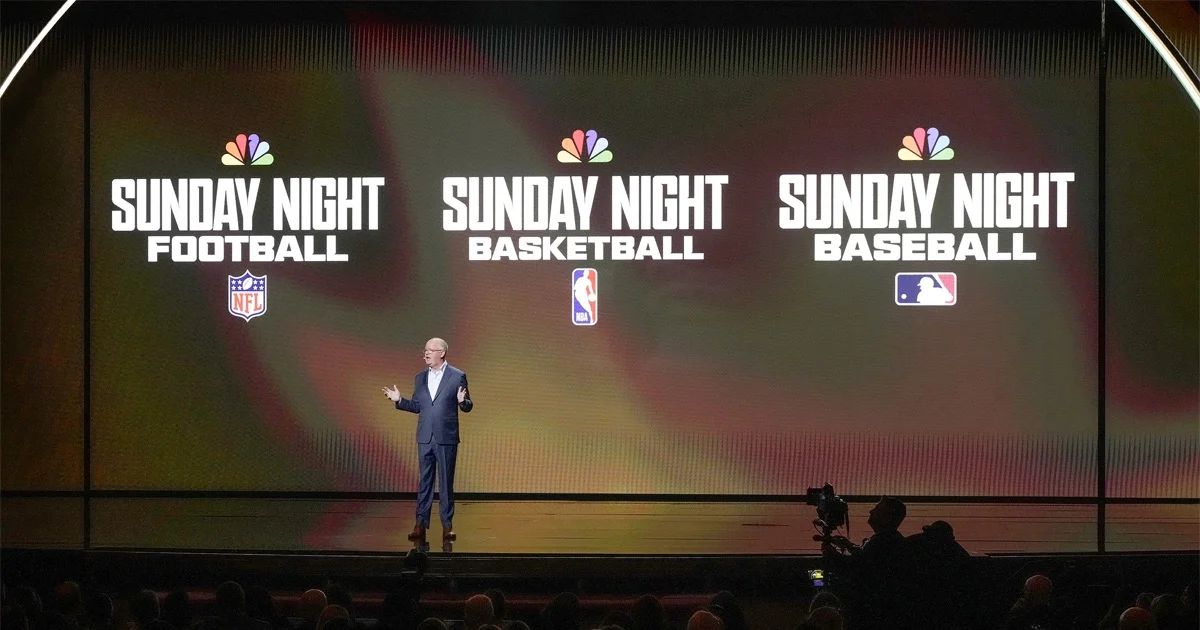
NBCUniversal’s annual Upfront presentation at Radio City Music Hall on May 11 was far more than a routine showcase of fall programming. It was a calculated demonstration of legacy meeting innovation. As the media giant prepares to celebrate a monumental 100th anniversary, the event served as a high-stakes pitch to advertisers: NBCUniversal is not just a collection of cable, broadcast, and streaming assets, but a unified, data-powered engine capable of reaching audiences across every conceivable touchpoint.
With a star-studded lineup—including an unexpected appearance by Vin Diesel to announce Fast and Furious spinoffs for Peacock—and a heavy emphasis on proprietary ad-tech, NBCU signaled that it is aggressively modernizing its business model to compete in an era of fractured viewer attention.
The Main Facts: A Centennial Celebration of Scale
The central narrative of this year’s Upfront was the concept of "The Extended Family." NBCU leveraged its upcoming centennial—a milestone marking 100 years of the NBC network, alongside 75 years of the Today show and two decades of The Real Housewives—to create a unified brand identity.
For advertisers, the pitch is simple: simplicity through consolidation. In a market where buyers are often forced to manage disparate budgets for linear television, streaming platforms, and niche cable networks, NBCU is positioning its "singular buy" strategy as the ultimate efficiency tool. By integrating entertainment, news, and sports across English and Spanish-language platforms, NBCU is effectively telling the advertising world that they no longer need to look elsewhere to achieve full-funnel marketing coverage.
Chronology: A Morning of Innovation and Surprise
The event, which drew an in-person crowd of 4,000 and an additional 4,000 digital attendees, broke from traditional industry pacing.
- The Pre-Show Atmosphere: Guests arriving at Radio City were greeted by a live Bravo talk show in the lobby, a nod to the network’s intense fandom culture and an appetizer for upcoming events like BravoCon. This underscored a shift in how NBCU views its clients: not just as buyers of inventory, but as active participants in the "fan economy."
- The Ad-Tech Kickoff: In a departure from industry norms, where technical specifications are often relegated to the end of a presentation, NBCU led with its ad-tech roadmap. The announcement of the Performance Insights Hub was the morning’s anchor, setting the stage for a conversation about measurement and ROI before a single trailer for a new show was played.
- The Star Power: Following the tech deep-dive, the presentation pivoted to content. The high-energy reveal of Fast and Furious content headed to Peacock provided the necessary "wow" factor, followed by a retrospective look at the network’s history, capped off by an appearance from Tina Fey to tease the NBC 100th anniversary special.
Supporting Data: Why the Performance Insights Hub Matters
The industry has long grappled with the "silo" problem: the inability to measure a single viewer’s journey as they move from a live sports broadcast on linear television to a niche show on a streaming app.
Mark Marshall, NBCU’s ad sales chief, underscored the gravity of this hurdle in his post-event interview. "If people are really just looking at streaming in isolation, even in the premium video marketplace, they’re missing three out of four impressions," he noted.
The Performance Insights Hub, slated for a Q4 launch, is designed to bridge this gap. It represents a multi-year effort to harmonize data sets across linear and streaming channels. By offering advertisers a granular, cross-platform view of their campaigns, NBCU is attempting to shift the conversation from "ratings" (which are increasingly viewed as a legacy metric) to "performance."
This is not merely a technical upgrade; it is a defensive and offensive maneuver. As CTV (Connected TV) becomes increasingly crowded, NBCU is betting that the platforms that provide the clearest evidence of efficacy—the "proof of performance"—will capture the largest share of the remaining linear budgets.

Official Responses: Mark Marshall on the State of the Industry
In an exclusive conversation following the presentation, Mark Marshall addressed the elephant in the room: the volatility of late-night television. Despite the headlines surrounding FCC scrutiny of ABC’s Jimmy Kimmel and the impending conclusion of Stephen Colbert’s Late Show on CBS, Marshall expressed unwavering confidence in the daypart.
"Late night has had back-to-back up years in terms of revenue," Marshall stated. "Advertisers are interested in the daypart because of the immediacy. The ability to be the conversation for tomorrow is a value proposition that hasn’t changed, even if the delivery platform has."
When pressed about the creative risks associated with live television—such as Seth Meyers’ biting humor during the presentation—Marshall remained unfazed. He views the talent not as liabilities, but as brand partners who drive engagement. "We have more brands that want to be involved with these guys than we did five years ago," he added, reinforcing the idea that brand-safe, high-engagement content remains the gold standard for advertisers.
Implications: The Future of the Upfront
The NBCU Upfront provided a blueprint for how legacy media companies intend to survive the next decade. There are three key takeaways for the industry at large:
1. The Death of the "One-Way" Relationship
For the first 94 years of its existence, NBC operated on a "push" model: content was broadcast, and success was measured by external entities like Nielsen weeks later. With the rise of Peacock and the deep integration of second-by-second feedback loops, the network has moved to a two-way model. They are now using real-time data to program content, promote shows, and decide exactly where advertising should play a role—whether that’s in long-form spots or new, bite-sized "microdramas."
2. The Return to Live Events as Organizing Mechanisms
Despite the digital transformation of media, the physical Upfront remains an essential ritual. With 8,000 combined attendees and high engagement across national offices, the event functions as the "organizing mechanism" for the media-buying industry. Marshall confirmed that NBCU is fully committed to the format for 2026, noting that agencies and clients view the week as a vital touchpoint for strategic planning.
3. Content-First, Tech-Second Integration
The most successful aspect of NBCU’s strategy is its refusal to choose between "content" and "data." By using the excitement of the Fast and Furious franchise and the nostalgic pull of the 100th anniversary to keep audiences engaged, they have successfully created a captive environment for their technical pitches. They are essentially teaching advertisers that the Performance Insights Hub is the tool that makes the creative content work harder.
Conclusion: A Strategy Designed to Last
As NBCUniversal looks toward its next century, it is clear that the company is no longer content to be a traditional broadcaster. By aggressively adopting AI-driven ad tech, embracing the fluidity of streaming spinoffs, and maintaining the prestige of their live legacy, they are crafting a strategy that acknowledges the realities of a digital-first world while leaning into the scale that only a legacy titan can provide.
The message to the industry is clear: the future of brands is not just about the content they sponsor, but the precision with which they understand their audience. For NBCUniversal, the next 100 years begin with the data they collect today.









No comments yet. Be the first to join the conversation!