

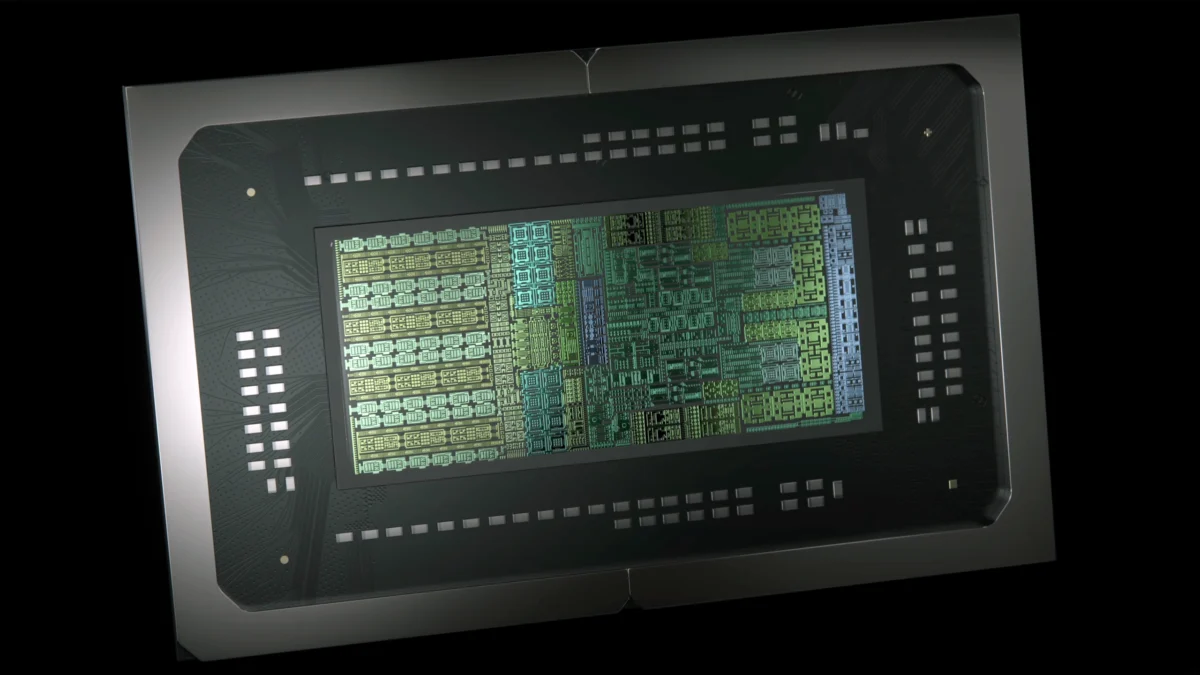
The tech industry is standing on the precipice of a significant architectural shift. As Computex 2026 kicks off in Taipei, all eyes are turned toward Nvidia, which is widely expected to break its silence on the long-rumored "N1" family of Systems-on-Chip (SoCs). For years, the whisper network surrounding Nvidia’s potential re-entry into the client PC market has been dominated by speculation, patents, and cautious optimism. Now, on the eve of the official reveal, a comprehensive leak courtesy of Videocardz has laid bare the specifications of the N1 and N1X lineup, suggesting that Nvidia is preparing to challenge the dominance of the x86 duopoly and Apple’s formidable Silicon division.
The Main Facts: A Dual-Tier Strategy
The leaked documentation, which dates back to internal roadmaps from 2024, reveals that Nvidia is adopting a two-pronged approach to its N-series architecture. By splitting the lineup into the standard N1 and the performance-oriented N1X, Nvidia is clearly positioning itself to compete across multiple market segments, ranging from thin-and-light professional laptops to high-end mobile workstations.
The N1: Efficiency and Versatility
The entry-level N1 series is designed for power-efficient computing. According to the leaks, the N1 comes in two distinct configurations:
- The 12-core variant: Featuring an 8+4 architecture paired with 2,560 CUDA cores.
- The 10-core variant: Featuring a 7+3 architecture with 2,048 CUDA cores.
Both models support up to 64GB of LPDDR5X memory across an 8-channel bus and offer a flexible PCIe configuration comprising 8x PCIe 5.0 lanes and 3x PCIe 4.0 lanes, facilitating support for up to two M.2 NVMe SSDs. With a TDP ranging from 18W to 45W, these chips appear aimed at the ultraportable market, where battery life is as critical as processing throughput.
The N1X: The Performance Titan
The N1X represents the "full-fat" implementation of Nvidia’s silicon ambitions. These chips share a bloodline with the GB10 "Superchip" found in Nvidia’s recently announced DGX Spark mini-PC. The N1X is offered in two configurations:
- The 20-core flagship: Utilizing a 10+10 core count with a staggering 6,144 CUDA cores—equivalent to the desktop RTX 5070.
- The 18-core variant: Featuring a 9+9 core layout and 5,120 CUDA cores.
Operating within a 45W to 80W power envelope, these chips are clearly intended for power users and mobile gamers. The platform is significantly more robust, supporting up to 128GB of LPDDR5X memory across a 16-channel interface. With 12x PCIe 5.0 lanes and 5x PCIe 4.0 lanes, the N1X platform can handle up to three high-speed M.2 SSDs, making it a formidable foundation for desktop-class performance in a laptop chassis.
A Chronology of Ambition: The Long Road to N1
Nvidia’s journey to this moment has been anything but linear. The company is no stranger to the client PC space, but its previous attempts—most notably the Tegra series in the early 2010s—struggled to find a foothold against the entrenched dominance of Intel’s x86 processors.
- 2011: Nvidia attempts to enter the laptop market with ARM-based chips. The initiative met with limited success, failing to achieve the software compatibility required for the mainstream Windows experience.
- 2020–2023: As Apple’s M-series chips demonstrated the efficiency of the ARM architecture, industry analysts began tracking Nvidia’s renewed interest in client computing. Reports surfaced regarding collaborations between Nvidia and other industry players to design custom ARM CPUs for Windows-based client PCs.
- 2024: Internal documentation, now leaked, began to solidify the existence of the N1 and N1X platforms. During this period, Nvidia CEO Jensen Huang began publicly acknowledging the "GB10" superchip, fueling speculation that this architecture would eventually bridge the gap between AI data centers and consumer laptops.
- 2026 (Computex): The official unveiling. After years of rumor, the market is finally seeing the culmination of Nvidia’s multi-billion dollar investment in high-performance ARM design.
Supporting Data: Why the N1X Might Lead the Pack
The specifications leaked for the N1X suggest that Nvidia is not merely trying to catch up with AMD and Intel; they are attempting to leapfrog the competition in memory bandwidth and graphics density.
The reported memory speed of 8,533 MT/s is particularly noteworthy. If these figures hold, the N1X will offer higher memory bandwidth than AMD’s upcoming "Strix Halo" processors, which have long been touted as the gold standard for high-end mobile SoCs. This bandwidth is crucial for the N1X’s massive GPU core counts; without high-speed memory, the 6,144 CUDA cores would be starved for data, limiting their effectiveness in both gaming and AI-driven tasks.
Furthermore, the integration of 16 channels of memory support for the N1X provides a level of memory headroom that is virtually unheard of in the traditional laptop market. This suggests that Nvidia is targeting not just gamers, but also developers, data scientists, and creative professionals who require massive datasets to be held in memory.
Official Responses and Industry Context
While Nvidia has remained tight-lipped regarding specific pricing or release dates for the N1X-powered laptops, the company has been active in coordinating with Microsoft. Recent social media activity between the two companies has heavily teased a "new era of the PC," which, in the context of Windows on ARM, suggests that the N1 series is built to be a primary vehicle for the future of the Windows ecosystem.
Nvidia CEO Jensen Huang has been vocal about the "DGX Spark" systems, confirming that they are powered by the same N1 silicon architecture as the forthcoming laptops. This move to unify the product stack—using the same underlying silicon for professional workstations and consumer laptops—is a page taken directly from Apple’s playbook. It allows Nvidia to achieve economies of scale and ensures that software optimization for one platform benefits the entire ecosystem.
Implications: A New Era for Consumers and Competitors
The arrival of the N1 and N1X will have profound implications for the laptop market.
1. The Death of the "Gaming Laptop" Stereotype
For years, gaming laptops have been synonymous with heavy chassis, abysmal battery life, and loud cooling fans. By utilizing an ARM-based SoC with such a high degree of integration, Nvidia could potentially deliver "desktop-grade" gaming performance in a chassis that is as thin and efficient as a MacBook Pro. This would redefine the gaming category, making high-end performance accessible to a broader demographic of users.
2. The Shield TV Renaissance
The mention of the N1 architecture has reignited hope for a successor to the legendary Nvidia Shield TV. If the N1 is scalable, a "Shield Pro" powered by a down-clocked N1 chip could transform the home media landscape, offering console-quality gaming and local AI processing in a living room form factor.
3. The Price Challenge
Despite the excitement, the economic reality of 2026 presents a hurdle. We are currently in the midst of a global memory supply constraint. High-end LPDDR5X, especially at the quantities required for a 16-channel 128GB configuration, is expensive. Early estimates suggest that N1X-equipped laptops will command a premium price tag, likely exceeding $2,000. While the N1 might serve as a more accessible midrange alternative (targeting the sub-$1,500 market), Nvidia will have to prove that its performance-per-dollar ratio justifies the cost compared to traditional x86 solutions from Intel and AMD.
4. The Software Gap
The biggest question remains software compatibility. While Microsoft has made significant strides in Windows on ARM, the success of the N1 family will ultimately depend on how well legacy x86 games and applications run through translation layers. Nvidia’s success will require not just superior hardware, but a seamless "it just works" experience that consumers have come to expect from competitors.
Conclusion: A Paradigm Shift
Nvidia’s return to the client PC market with the N1 and N1X is not a casual experiment; it is a calculated, aggressive move to redefine what a laptop can do. By leveraging its dominance in the GPU and AI sectors to create an SoC that integrates massive compute power with ARM efficiency, Nvidia is challenging the very foundation of the PC market.
As the industry converges on Computex for the official announcement, the narrative is clear: the age of the x86-only laptop is coming to an end. Whether the N1 and N1X will be the disruptive force they appear to be depends on the pricing, the software ecosystem, and the thermal management of these powerful new chips. However, for the first time in over a decade, Nvidia has the hardware, the software alignment, and the architectural vision to make a serious run at the throne. The market is ready for a change, and if the rumors are to be believed, that change is arriving tomorrow.












No comments yet. Be the first to join the conversation!