Evan Lee Salim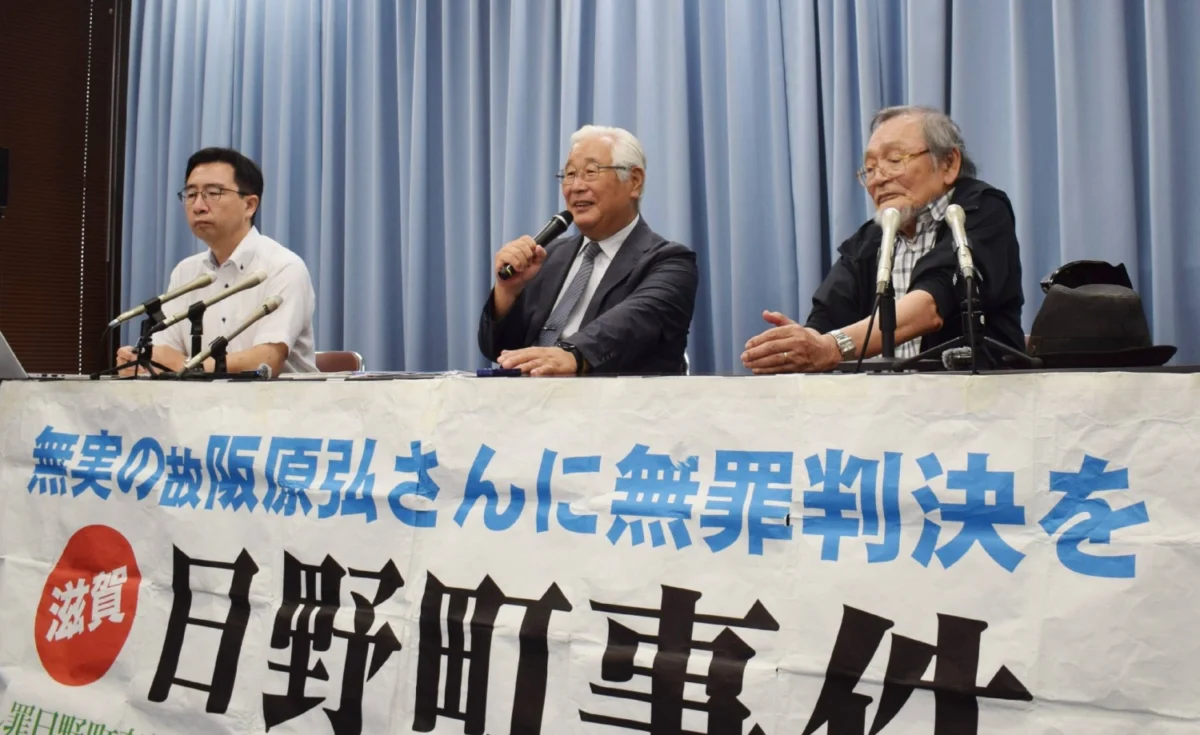
OTSU, SHIGA PREF. — In a landmark development that marks a rare, albeit belated, admission of judicial fallibility, public prosecutors announced on Friday that they will not seek to prove the guilt of Hiromu Sakahara, a man convicted of a 1984 robbery-murder who died while serving a life sentence in prison.
The decision, communicated to the Otsu District Court, effectively clears the path for Sakahara to be formally acquitted. This resolution concludes a decades-long struggle by the Sakahara family to clear the name of a man they maintain was a victim of a flawed investigative process and a coerced confession.
Main Facts: A Case Built on Fragile Foundations
The case centers on the 1984 robbery and murder of a liquor shop owner in the town of Hino, Shiga Prefecture. During the incident, the victim was killed and a safe was stolen from her premises. Following an intensive investigation, Hiromu Sakahara was arrested in 1988.
For nearly four decades, the Japanese legal system held Sakahara responsible for the heinous crime. However, the prosecution’s decision on Friday—following a series of court rulings that chipped away at the credibility of the original conviction—serves as a tacit acknowledgment that the evidence used to incarcerate Sakahara was fundamentally unsound.
Sakahara, who consistently maintained his innocence throughout his trial despite an initial confession to investigators, passed away from illness in 2011 at the age of 75. He died while still under the shadow of a life sentence, never having seen the justice his family fought for after his passing.
Chronology: The Long Road to Retrial
The timeline of the Hino case reflects the glacial pace of Japan’s retrial system and the immense hurdles faced by those challenging finalized criminal convictions.
- 1984: A liquor store owner is murdered in Hino, Shiga Prefecture. A safe is stolen from the property.
- 1988: Hiromu Sakahara is arrested by local police. During interrogation, he allegedly provides a confession, though he recants this in court and pleads not guilty.
- Conviction: Sakahara is sentenced to life imprisonment for robbery-murder, a verdict that stands through subsequent appeals.
- 2011: Hiromu Sakahara dies of illness in prison at age 75.
- 2018: The Otsu District Court, reviewing new evidence, grants a retrial. The court concludes that Sakahara’s confession was inconsistent with objective evidence and lacked the credibility required for a conviction.
- 2023: The Osaka High Court upholds the lower court’s decision to grant a retrial, further scrutinizing the evidence gathered in the 1980s.
- February 2024: The Supreme Court of Japan finalizes the decision, clearing the final legal hurdle for the retrial proceedings to commence.
- October 2024: Public prosecutors announce they will not attempt to prove guilt in the retrial, signaling an impending acquittal.
Supporting Data: Why the Evidence Failed
The turning point for the case was the exhaustive re-examination of the physical evidence and the circumstances surrounding Sakahara’s interrogation. In their 2018 ruling, the Otsu District Court highlighted significant discrepancies between the state’s narrative and the objective facts of the crime scene.
Experts who reviewed the case noted that the "confession" extracted from Sakahara in 1988 contained details that were geographically and physically impossible given the layout of the store and the nature of the robbery. The reliance on this confession, which the defense argued was coerced during high-pressure, prolonged interrogations, became the primary focus of the retrial petition.
By comparing the autopsy reports, the time of death, and the physical capabilities required to move the stolen safe, the court found that the prosecution’s theory was not merely improbable—it was contradicted by the very evidence the state claimed proved Sakahara’s guilt.
Official Responses: A Family’s Bittersweet Relief
The announcement from the prosecutors brought a wave of raw emotion to the Shiga Prefectural Government office, where members of the Sakahara family gathered to speak with the press.
Koji Sakahara, 65, the eldest son of the deceased, expressed a mix of profound relief and lingering sorrow. "I’m really happy," he stated, reflecting on the realization that his father’s name would finally be cleared in the eyes of the law.
His sister, 63-year-old Miwako, echoed these sentiments, though her words highlighted the personal toll of the legal battle. "I’m happy, but I still miss him," she said. For the siblings, the victory is not just a legal technicality; it is the restoration of their father’s dignity after 40 years of being branded a murderer.
Legal representatives for the family noted that the prosecutors’ decision to step back was a "careful consideration" of the court’s repeated findings. According to the defense lawyer who attended the meeting with court officials on Friday, the prosecution acknowledged the gravity of the court’s directive to allow a retrial, essentially conceding that they could no longer sustain the burden of proof.
Implications: Reforming the Japanese Justice System
The case of Hiromu Sakahara is not an isolated incident; it has become a rallying point for critics of Japan’s "hostage justice" system. The reliance on confessions obtained during long periods of detention without the presence of legal counsel has long been a subject of international concern.
The Problem of "Confession-Based" Justice
The Hino case highlights the inherent dangers of a system where a confession—often obtained under extreme psychological pressure—is treated as the "king of evidence." When investigators prioritize a confession over physical forensics, the risk of miscarriages of justice increases exponentially. The eventual acquittal of Sakahara underscores the necessity of corroborative evidence.
The Difficulty of Posthumous Exoneration
One of the most tragic aspects of this case is the amount of time elapsed before the truth was recognized. Because Sakahara died before his retrial could be finalized, his family had to navigate a complex and emotionally taxing legal process for over a decade. The slow progress of the judicial system meant that the man most affected by the injustice was never able to hear the words "not guilty" while he was alive.
A Signal for Future Retrials?
Legal scholars suggest that the prosecution’s decision in the Sakahara case may signal a shift in how the state handles high-profile, long-standing criminal cases where evidence has been debunked. By choosing not to fight a retrial they know they cannot win, the prosecution is attempting to avoid the optics of a protracted, embarrassing courtroom defeat. However, activists argue that this "quiet withdrawal" does not absolve the state of the need to address the structural issues that led to the wrongful conviction in the first place.
As the court moves toward the final act of this long-running drama—a formal acquittal—the legacy of Hiromu Sakahara serves as a somber reminder of the limitations of the legal system. It is a story of a life stolen by both a crime and a state, and the enduring power of family members who refused to let their loved one’s reputation remain buried under the weight of an error.
The case remains a pivotal chapter in the ongoing debate over the necessity of reform within the Japanese Ministry of Justice, particularly concerning interrogation practices and the accessibility of the retrial process for those who have already passed away. For the Sakahara family, the coming days will bring a long-awaited closure, but the questions raised by the case will likely resonate in legal circles for years to come.


 Neng Nana
 Asro
Asro