

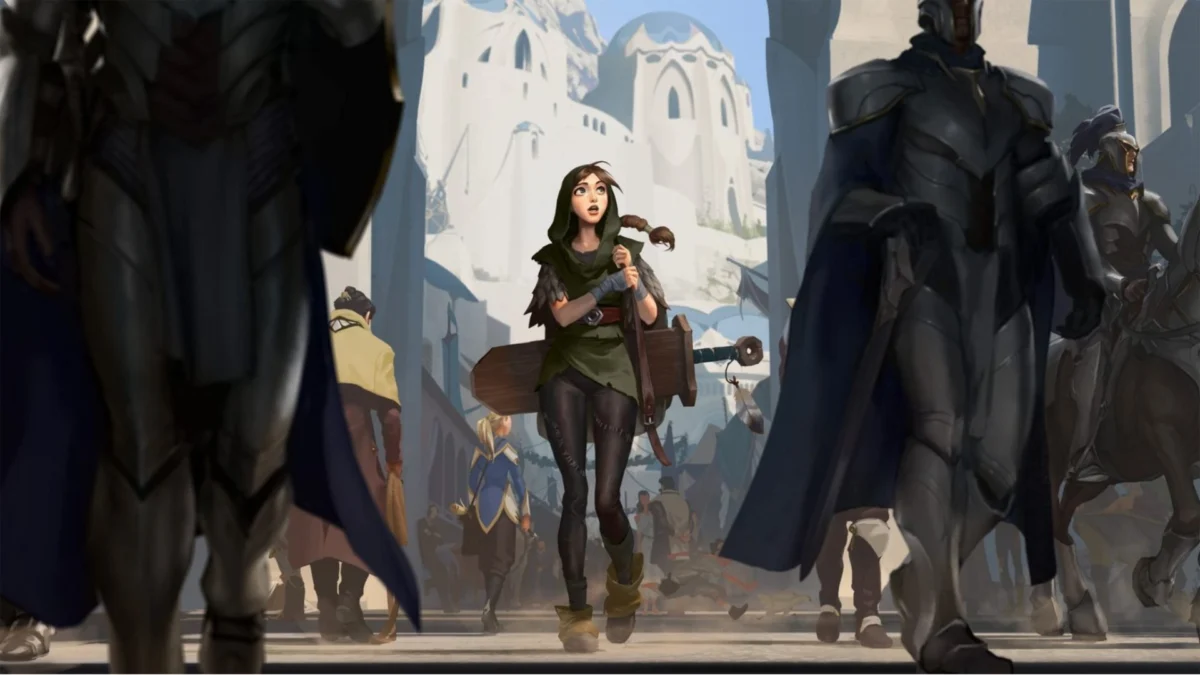
The silence surrounding Riot Games’ ambitious, untitled League of Legends massively multiplayer online (MMO) project has often been mistaken for inactivity. However, recent corporate maneuvers suggest that the publisher is doubling down on its commitment to carving out a permanent home for the denizens of Runeterra. In a significant talent acquisition that signals a renewed focus on core gameplay mechanics, Brian "Swolinka" Holinka—the former Lead Combat Designer for World of Warcraft—has officially joined Riot Games to serve as the Principal Game Designer for the project.
This hiring is more than a simple personnel change; it is a clear strategic play by Riot to bolster its ranks with veteran expertise in a genre notoriously difficult to master. As the project enters a critical phase of its "reset" development cycle, the integration of an industry heavyweight like Holinka provides a roadmap for what Riot hopes will be a genre-defining experience.
A Legacy of Ambition: The Chronology of Development
To understand the weight of this announcement, one must look back at the arduous journey of the project thus far. It has been over five years since the world first learned that Riot Games—the titan behind the most popular MOBA on the planet—was venturing into the world of persistent online role-playing games.
The Initial Announcement (December 2020)
In December 2020, then-Vice President of the project Greg Street broke the internet with a simple yet explosive tweet, confirming that Riot was officially working on an MMO set within the League of Legends universe. For years, the community had speculated about the potential of a massive world exploring the depths of Demacia, the jungles of Ixtal, and the shadows of the Shadow Isles. The confirmation felt like the natural evolution of a company that had successfully expanded its IP into card games (Legends of Runeterra), tactical shooters (Valorant), and animation (Arcane).
The "Reset" and Departure (2023–2024)
The road, however, was not without its potholes. In early 2023, the industry was shocked by the departure of Greg Street, the face of the project, who cited personal reasons for his exit. Following this, Riot Games confirmed that it had effectively "reset" development. The rationale was both transparent and pragmatic: internal playtests indicated that the game simply wasn’t unique enough to justify its existence in a crowded market already dominated by juggernauts like World of Warcraft and Final Fantasy XIV.
Riot’s leadership, specifically Chief Product Officer Marc Merrill, doubled down on the commitment, stating that the reset was not a sign of failure but a necessary pivot to ensure the project met the high standards players expect from the Riot brand.
The Current Landscape (2026)
As of June 2026, the project remains largely under wraps. There have been no public trailers, no gameplay reveals, and no target release windows. Yet, the hiring of Brian Holinka suggests that the "reset" is firmly in the rearview mirror and that the team is now in the thick of mechanical refinement.
The Architect of Combat: Why Brian Holinka Matters
Brian Holinka’s resume reads like a masterclass in modern MMO design. Between 2012 and 2023, he was a pivotal figure at Blizzard Entertainment, holding two roles that are arguably the most challenging in the genre: Lead PvP Designer and Lead Combat Designer for World of Warcraft.
Crafting the "Feel" of an MMO
In the world of MMORPGs, combat is the foundational pillar. Whether a player is questing solo or engaging in high-stakes end-game raiding, the "feel"—the responsiveness, the skill-shot accuracy, and the mechanical depth—determines the game’s longevity. By recruiting someone who spent nearly a decade defining the combat loop for the world’s most successful subscription-based MMO, Riot is signaling that they are not just looking to build a world; they are looking to build a combat system that rivals the crisp, high-skill ceiling of League of Legends itself.
A Pattern of Recruitment
Holinka is not an isolated hire. He joins a growing cohort of industry veterans who have migrated from the Blizzard ecosystem to the Riot Games campus. Most notably, former World of Warcraft Lead Producer Raymond Bartos has also transitioned to a Senior Game Producer role at Riot. This influx of talent suggests a deliberate strategy: Riot is not attempting to reinvent the wheel from scratch. Instead, they are importing the institutional knowledge of developers who understand the common pitfalls and technical hurdles of large-scale, persistent online worlds.

Official Responses and Corporate Sentiment
Riot Games has mastered the art of the "slow burn," maintaining a tight-lipped strategy while occasionally offering breadcrumbs to reassure the fanbase. The last formal update, provided by Marc Merrill in November 2024, remains the gold standard for their communication policy.
Merrill emphasized that the team was "working very hard" and had finally found a "great direction." This language is critical. It implies that the "reset" was a success—that they moved from a place of ambiguity to a place of vision. Merrill’s consistent public support for the team suggests that Riot’s executive leadership is willing to grant the development team the time and resources necessary to get the project right, rather than rushing a subpar product to market.
The Implications: What Does This Mean for the Future?
The recruitment of a veteran like Holinka has several significant implications for the future of the League of Legends MMO:
1. Prioritizing Mechanical Excellence
Given Holinka’s background in PvP (Player vs. Player) design, one can reasonably infer that the upcoming MMO will place a heavy emphasis on competitive systems. League of Legends is inherently a competitive game; it would be a missed opportunity if the MMO did not integrate deep, skill-based combat mechanics that allow for arenas, guild warfare, and high-intensity duels.
2. A Commitment to the Long Haul
Hiring high-level talent in 2026 indicates that this is a multi-year effort that is still in its active construction phase. Investors and fans should adjust their expectations: a 2026 or even 2027 release window seems highly unlikely. Instead, we are looking at a project that intends to define the next generation of online play, rather than competing with the current market incumbents.
3. The "Riot Quality" Standard
Riot Games has a reputation for "shipping when it’s ready." From the ten-year development cycle of Valorant’s core concepts to the meticulous polish of Arcane, Riot rarely releases products that feel unfinished. By hiring experts who understand the complexity of MMO architecture, Riot is insulating itself against the common bugs, balance issues, and scaling problems that plague new MMO launches.
Conclusion: A World Still Waiting
For the millions of players who have spent over a decade in the lanes of Summoner’s Rift, the prospect of an open-world Runeterra remains one of the most exciting, albeit distant, horizons in gaming. The journey has been long, the path has been reset, and the silence has been deafening. Yet, with every high-profile hire like Brian Holinka, the picture becomes clearer.
Riot is no longer just dreaming of an MMO; they are methodically assembling the team required to build one that can stand the test of time. While we remain in the dark regarding a launch date, the internal momentum is palpable. The "reset" was not a retreat—it was a recalibration. And if the current hiring trend is any indication, the final product will be a culmination of the best minds in the industry, striving to create a version of Runeterra that feels both familiar to the veteran and revolutionary to the newcomer.
Until the day Riot finally pulls back the curtain, we are left with the knowledge that in the quiet offices of their development studios, a new world is being forged—one that is being built, piece by piece, by the very people who defined the genre for the last two decades.












No comments yet. Be the first to join the conversation!