

Long before the technicolor triumphs of the Golden Age of Animation and the digital dominance of modern CGI, a revolutionary art form was being chiseled out of nitrate film stock in the flickering light of early 20th-century projection booths. Today, these seminal works—which defined the visual language of comedy and character—face the threat of permanent erasure due to chemical decay.
A new initiative, Silent Cartoon All-Stars: Vol 1, has launched on Kickstarter with the mission of rescuing these cinematic artifacts. Spearheaded by restoration expert Mauricio Alvarado and collaborator Brandon Adams (known as "Not An Animation Historian"), the project aims to bring approximately 20 classic silent cartoons to Blu-ray for the first time, utilizing high-resolution 4K and 5K scans of archival elements. This endeavor is more than a home video release; it is a vital act of cultural preservation.
The Pioneers of the Moving Image
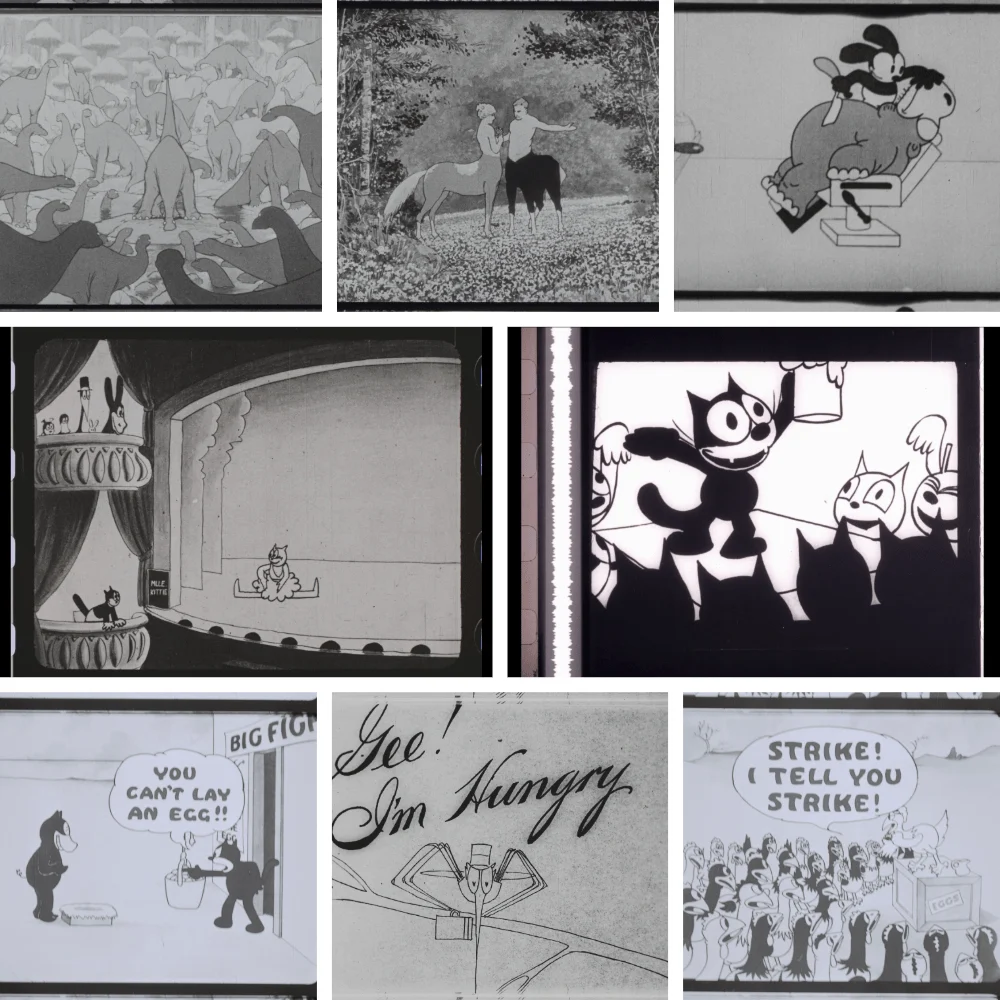
To understand the significance of this campaign, one must look back at the architects of the medium. In the 1910s and 1920s, animation was an experimental frontier. Winsor McCay’s Gertie the Dinosaur (1914) is widely regarded as the first cartoon to imbue a character with a recognizable, endearing personality, moving beyond the simple "trick films" that preceded it.
Following in these footsteps, Felix the Cat emerged as the world’s first true international cartoon superstar, a pop-culture icon whose reach in the 1920s arguably eclipsed any animated character seen since. Then came Oswald the Lucky Rabbit, the brainchild of Walt Disney and Ub Iwerks. The loss of the Oswald contract—and the subsequent pivot to create Mickey Mouse—remains one of the most pivotal "sliding door" moments in entertainment history. Simultaneously, Max Fleischer was pushing the boundaries of technology with Koko the Clown, introducing rotoscoping and surrealist visuals that would define the Fleischer Studio’s aesthetic for decades.
These characters were not merely novelties; they were the bedrock upon which modern animation was built. Yet, while their successors are household names, the original films that launched these icons have largely languished in archives, often surviving only on deteriorating nitrate film stock that is rapidly approaching the end of its chemical life.
The Restoration Process: A Digital Archaeology
The technical requirements for preserving these films are as demanding as they are precise. The Silent Cartoon All-Stars: Vol 1 team is not simply digitizing old prints; they are performing a form of "digital archaeology."
The workflow begins by sourcing original 35mm and 16mm archival elements from private and public collections across the globe. Once acquired, these elements undergo high-resolution scanning at 4K to 5K resolution to capture every nuance of the original film grain.
The subsequent restoration process is painstaking. Because these films are nearly a century old, they are often plagued by physical degradation, including severe scratching, dust, emulsion peeling, and chemical staining. The team employs frame-by-frame digital cleanup, a labor-intensive process where each individual frame—sometimes numbering in the thousands for a single short—is corrected by hand. This involves:
- Scratch and Dust Removal: Utilizing sophisticated software to remove debris while maintaining the integrity of the original image.
- Image Stabilization: Correcting the "jitter" caused by aging, shrunken film stock that does not feed perfectly through modern scanners.
- Contrast and Density Balancing: Ensuring that the blacks are deep and the whites are luminous, reflecting how these films would have appeared in a pristine theater setting in the 1920s.
This is not the team’s first foray into such a demanding field. Their previous success—a fully funded and delivered Blu-ray collection of Mutt & Jeff cartoons—serves as a proof-of-concept for their technical capabilities. Furthermore, Alvarado’s professional background includes working alongside Paramount on the ambitious, ongoing Fleischer Cartoons restoration project, providing him with the institutional experience required to handle these sensitive, historically significant assets.
A Race Against Time: Why Now?
The urgency of this project cannot be overstated. Nitrate film, the standard medium for motion pictures until the early 1950s, is notoriously unstable. It is chemically volatile and, in some cases, flammable. Over time, the silver images within the film migrate and fade, and the plastic base becomes brittle.

Without the intervention of projects like Silent Cartoon All-Stars, many of these films risk becoming "orphan works"—pieces of history that are neither protected by active copyright management nor preserved by major institutional archives. By crowdsourcing the funding, the team is circumventing the traditional studio reluctance to invest in "niche" historical products, proving that there is a dedicated, passionate audience for film history.
Official Responses and Project Scope
The Kickstarter campaign, which currently has 15 days remaining, offers tiered rewards to backers. The base entry point is $30 for the Blu-ray, with a bundled option priced at $50 that includes the previously released Mutt & Jeff set.
The response from the animation community has been overwhelmingly positive. Historians, collectors, and casual fans have rallied around the campaign, noting that the inclusion of these shorts on a high-definition format allows for a level of scrutiny and appreciation that was previously impossible. When viewed on a high-definition screen, the nuances of the animators’ linework—the raw, kinetic energy of the early pencil tests and the inventive transitions—become visible in a way they never were in lower-quality, bootleg transfers.
"We are not just selling a disc," the creators have noted in their campaign materials. "We are ensuring that these characters remain a part of our shared cultural heritage."
The Implications for Film History
The implications of the Silent Cartoon All-Stars project extend far beyond the home theater. By creating a definitive, restored version of these shorts, the project establishes a new standard for archival preservation.
- Academic Access: Scholars and researchers will finally have access to stable, high-quality digital masters to study the development of animation techniques, such as early character acting and the evolution of the gag.
- Cultural Preservation: The project ensures that the visual identity of icons like Felix and Koko the Clown is preserved in a format that will survive long after the physical film elements have disintegrated.
- The Power of the Crowd: This campaign serves as a blueprint for other independent historians and archivists. It demonstrates that the lack of corporate interest in "pre-talkie" cinema does not mean the material lacks value; rather, it suggests that the responsibility for history is shifting into the hands of the fans and independent experts.
Conclusion: Securing the Future of the Past
As the campaign enters its final stretch, the success of Silent Cartoon All-Stars: Vol 1 seems assured, yet every contribution remains critical to reaching the stretch goals that would allow for even more extensive restorations.
For the animation enthusiast, this is a rare opportunity to participate in the act of historical preservation. We live in an era where media is increasingly ephemeral, disappearing from streaming services without warning. A physical Blu-ray, sourced from the highest quality scans, represents a permanent anchor in a shifting digital landscape.
By backing this project, supporters are not merely buying a movie; they are ensuring that the pioneers of the medium—the dinosaurs, the clowns, and the cats that started it all—are not lost to the dust of the 20th century. The foundation of the art form is crumbling; it is time to lay the cornerstone for its survival.
For more information or to contribute to the preservation of these films, visit the official Kickstarter campaign page.











No comments yet. Be the first to join the conversation!