

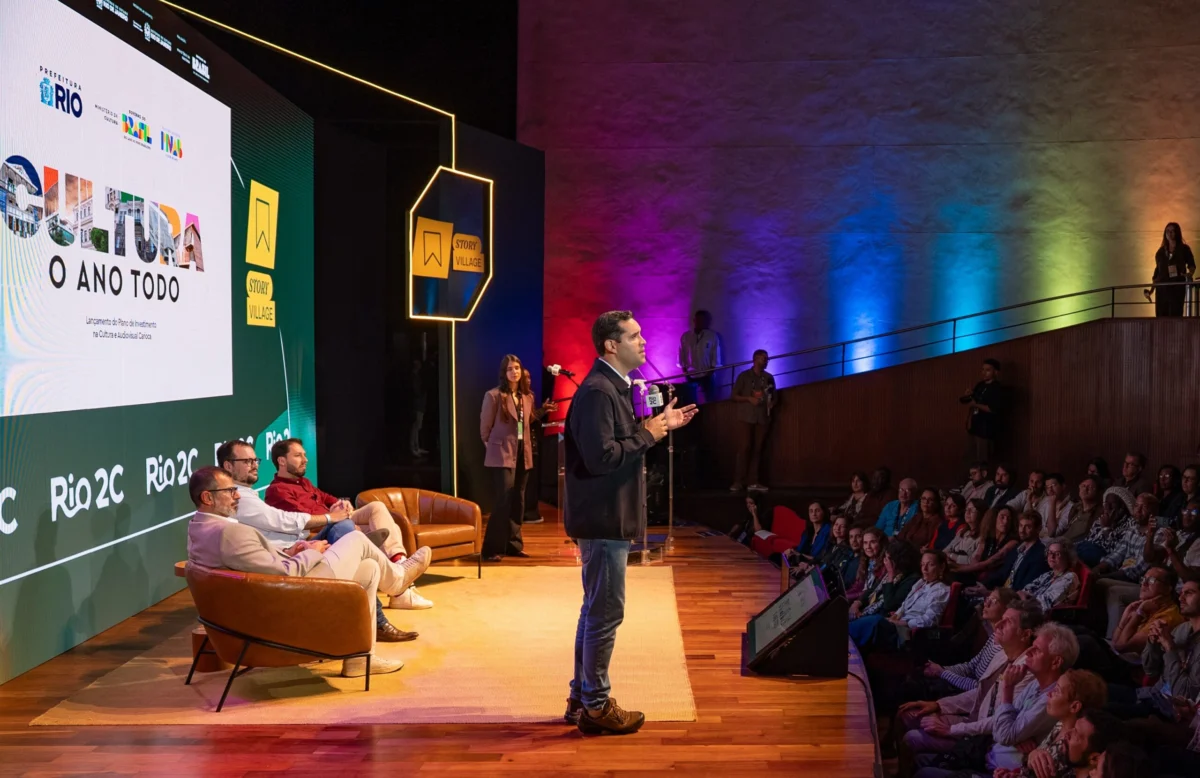
RIO DE JANEIRO, Brazil — In a move designed to cement its status as the heartbeat of Latin American creativity, the city of Rio de Janeiro has announced a sweeping $45 million (225 million Brazilian reais) investment package dedicated to the revitalization and expansion of its cultural and audiovisual sectors. The ambitious initiative, spanning through 2028, represents one of the most significant municipal commitments to the arts in recent Brazilian history, aiming to transform the "Marvelous City" into a premier global hub for film, television, and artistic innovation.
The announcement was made during the opening stages of Rio2C, the continent’s most influential gathering for the creative economy. Mayor Eduardo Cavaliere, flanked by key stakeholders from both federal and local government, framed the investment not merely as a subsidy, but as a strategic economic engine designed to generate high-skilled jobs, drive tourism, and elevate the city’s international brand.
Main Facts: A Blueprint for Cultural Growth
The "Plan for Culture and the Audiovisual Industry" is a multifaceted strategy intended to streamline the way the city interacts with its creative class. At its core, the 225 million real investment is bifurcated into support for established audiovisual production houses and the nurturing of grassroots, community-based cultural initiatives.
The funding is scheduled to be distributed through 2028, providing a stable, multi-year runway for creators to plan long-term projects. By decentralizing funding and moving away from traditional, often sluggish bureaucratic grant cycles, the municipal government hopes to ensure that Rio remains a competitive destination for both local independent filmmakers and international production companies looking for world-class filming locations.
Chronology: The Road to the Investment Package
The genesis of this policy follows years of lobbying by industry leaders and cultural activists who argued that Rio’s natural beauty and talent pool were being underutilized due to a lack of structured financial support.
- Late 2023 – Early 2024: Discussions began between the Municipal Secretariat of Culture and industry leaders, including representatives from Riofilme and the Brazilian Cinema Academy, to address the "boom-and-bust" cycle of creative funding.
- May 2026 (Rio2C): The official unveiling of the investment plan occurs at Rio2C, signaling the formal commitment of the city to the long-term project.
- 2026–2028 Implementation Phase: The city will begin rolling out the four-cycle funding model, with the first wave of grants expected to reach production houses by the end of the current year.
- 2028 and Beyond: The project aims to have reached full maturity, with a sustainable ecosystem of film studios, preserved cultural archives, and a permanent workforce trained in modern production technologies.
Supporting Data: The Economic Engine of Culture
The audiovisual sector is not merely a soft-power asset; it is a measurable economic driver. According to municipal data, every real invested in the audiovisual chain in Rio de Janeiro generates a significant ripple effect in local services, including hospitality, logistics, specialized equipment rental, and post-production services.
The decision to implement a "continuous-flow" funding policy is a direct response to data suggesting that the primary barrier to growth for independent producers is the volatility of cash flow. By creating four selection cycles per year—each capable of funding up to eight distinct projects—the city is attempting to provide the "predictability" that investors and banks demand before signing off on larger film budgets.
Furthermore, the commitment to research and artistic residencies, alongside the preservation of archives, acknowledges that the "creative economy" is built upon the foundation of intellectual property and historical memory. By investing in the "Library of Knowledge" at Praça Onze and the "Rio Africas Cultural Center" at Cais do Valongo, the city is protecting its cultural heritage while simultaneously providing the infrastructure for modern creators to build upon that history.
Official Responses: A Unified Front
The unveiling of the plan featured a notable cross-section of Brazilian cultural leadership, emphasizing the collaborative nature of the effort.
Mayor Eduardo Cavaliere, in his keynote address, was emphatic about the shift in strategy: "We have signed the release of a record investment that places the city of Rio in a leading position within the highly important audiovisual industry. This investment will make hundreds of productions possible. The creative industry generates jobs, creates income, and, especially, makes Rio de Janeiro a relevant place in the world."

Márcio Tavares, executive secretary of Brazil’s Ministry of Culture, echoed the sentiment, noting that the federal government views Rio’s initiative as a model for other state capitals. Lucas Padilha, Rio’s secretary of culture, highlighted the internal restructuring of the city’s grant processes as the "real victory," pointing out that speed and efficiency are the new mandates for his office.
Leonardo Edde, president of Riofilme, and Renata Magalhães, president of the Brazilian Cinema Academy, emphasized that the investment would provide the necessary stability to keep talent within Brazil. "For too long, our best creators have had to look abroad for consistent support," Magalhães remarked. "This plan tells them they have a home, a budget, and a future right here in Rio."
Implications: Rio’s Role in the Global Market
The implications of this investment are profound, both for Brazil and for the global film community.
1. Attracting International Co-productions
Rio de Janeiro has long been a sought-after filming location, but high operational costs and bureaucratic hurdles have historically scared off some international productions. By professionalizing the funding process and offering a dedicated, stable framework, the city is signaling to international streamers and production houses that it is "open for business."
2. Strengthening the Local Workforce
The funding is not just for finished products; it includes provisions for training and artistic residencies. This is a crucial step in maintaining a skilled labor force capable of handling high-end visual effects (VFX), sound engineering, and complex production management, ensuring that local workers are hired for high-level roles rather than just as production assistants.
3. Cultural Preservation as Economic Strategy
By linking the audiovisual sector to the preservation of cultural landmarks like the Cais do Valongo, the city is creating a unique selling proposition. Rio is not just a collection of beaches and backdrops; it is a city with a deep, complex history that can serve as a rich narrative well for original content. This cultural depth is precisely what global audiences, increasingly tired of homogenized content, are looking for.
4. Decentralization and Inclusivity
A critical component of the plan is the focus on "popular and urban cultural expressions." By moving away from purely commercial, high-budget criteria and creating dedicated awards for grassroots creators, the city is ensuring that the "audiovisual capital" label does not exclude the diverse voices from Rio’s favelas and outskirts. This inclusive approach is expected to lead to a more authentic and varied cinematic output, which historically travels better in the global marketplace.
Looking Toward the Future
As the city moves into the implementation phase of the Plan for Culture and the Audiovisual Industry, the eyes of the Latin American cultural sector will be on Rio. The success of this initiative will be measured not just by the number of films produced, but by the long-term retention of talent, the sustained growth of ancillary service industries, and the ability of the city to maintain this financial momentum beyond the 2028 window.
Mayor Cavaliere’s vision is clear: he aims to transform Rio de Janeiro into a city where "culture is all year round." By integrating government policy with private industry needs, the city is attempting to build a sustainable, resilient, and globally competitive cultural engine. If the enthusiasm at Rio2C is any indicator, the creative community is ready to embrace this challenge, eager to see if the promise of a revitalized industry can indeed make Rio the true audiovisual capital of the world.











No comments yet. Be the first to join the conversation!