Sagoh
Sagoh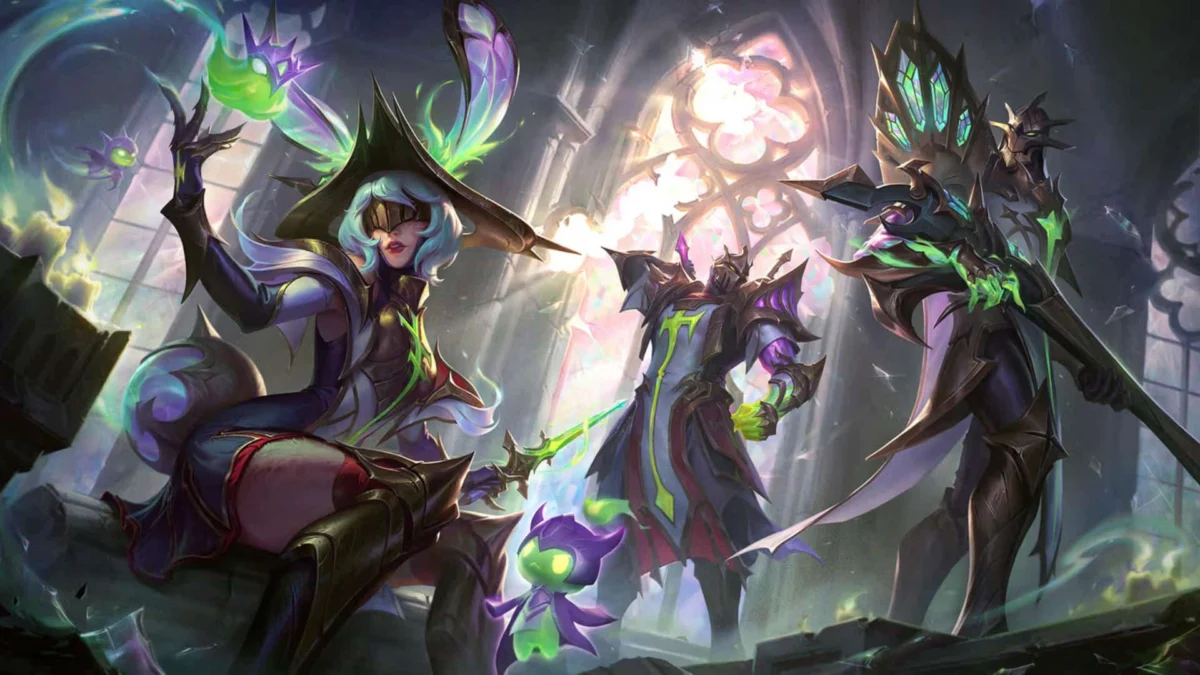
By Craig Robinson, Senior Editor | Updated: June 24, 2026
In an era where League of Legends is constantly balancing the needs of a growing, diverse player base against the rigid competitive integrity expected by its veteran community, Riot Games has once again found itself at a crossroads. Following the release of Patch 26.13, the developer introduced a "Last Hit Indicator"—a quality-of-life feature designed to help players identify the exact moment a minion can be executed for gold.
The backlash was immediate, visceral, and overwhelming. Within hours of the patch going live, Riot Games made the rare decision to pull the feature from all Ranked queues, restricting it to Normal Draft and practice environments. This move highlights a recurring tension in modern game development: how much "assistance" is too much when a game is defined by its mechanical difficulty?
The Genesis of Patch 26.13
When the notes for Patch 26.13 were first teased, the intent behind the Last Hit Indicator seemed benign, if not altruistic. Riot Games described the feature as a visual accessibility tool. A faint white indicator would appear on the health bar of any minion currently within the attack-damage threshold of the player’s champion.
The stated goals were threefold:
- Lowering the Barrier to Entry: Helping new players grasp the fundamental rhythm of laning.
- Improving Pacing: By securing gold more consistently, Riot hoped to speed up early-game item progression and reduce the frustration of "missing" waves.
- Skill Transition: The philosophy was that if players could learn the cadence of last-hitting through visual cues, they would eventually internalize the timing, leading to better overall performance in Ranked play.
However, the inclusion of this feature in Ranked queues proved to be a bridge too far for the community, which views the manual labor of "farming" as a sacred pillar of the League of Legends experience.
A Timeline of the Backlash
- June 23, 2026 (Early Morning): Patch 26.13 goes live. The community begins testing the new indicator. Within minutes, clips begin circulating on social media platforms like X (formerly Twitter) and Reddit, questioning why a "training wheel" feature is present in competitive ladders.
- June 23, 2026 (Afternoon): Public sentiment reaches a fever pitch. High-level content creators and professional players begin to speak out. The prevailing argument is that last-hitting is not just a chore—it is a core skill expression.
- June 24, 2026 (Early Morning): Recognizing the depth of the community’s frustration, Riot Games issues an emergency update. The Last Hit Indicator is disabled in all Ranked modes effective immediately.
The Community Divide: Skill Expression vs. Accessibility
The core of the controversy lies in the definition of "skill." For many veterans, the ability to judge health bars against one’s own attack damage—while simultaneously monitoring the minimap, managing ability cooldowns, and avoiding enemy poke—is the hallmark of a skilled laner.
The Purist Argument
Professional players and high-ELO content creators were the loudest voices in the room. Personality Dragdar, a well-known Ezreal specialist, didn’t mince words on X: "This change is absolutely absurd. Last hitting minions is quite literally League of Legends."
This sentiment resonated deeply. For the ADC role, in particular, farming is a constant calculation of risk and reward. To remove the requirement of manual timing is, to many, akin to giving a painter a stencil instead of a brush. The fear is that if Riot automates the "easy" parts of the game, the skill gap—the very thing that makes the game competitive—will inevitably shrink.
The Challenger Perspective
Interestingly, not all high-level players viewed the change as a "dumbing down." Alexis "Koala" Gonzalez, a top laner for Karmine Corp Blue, offered a pragmatic counter-perspective. He argued that even at the Challenger level, players miss CS (creep score).

"There are legit zero reasons to not activate it every time and handicap yourself," Koala noted. His argument centers on the idea that if a tool exists, competitive players will use it to optimize their performance. In his view, the indicator doesn’t just help beginners; it allows veteran players to offload a portion of their mental stack, freeing up attention for map awareness and positioning.
The "Distraction" Factor
Not everyone in the pro scene felt the need to panic. Former C9 jungler William "Meteos" Hartman offered a more measured, if slightly dismissive, take. After testing the feature, he concluded that he preferred to keep it off, finding it more distracting than helpful. This suggests that for the most elite players, the visual clutter of the indicator may actually hinder performance, proving that such features are not the "auto-win" buttons that critics feared.
Historical Context: A Pattern of Change
The Last Hit Indicator is not an isolated incident. Over the past year, Riot Games has experimented with several controversial features intended to make the game more approachable.
The most prominent example was the introduction of WASD movement support in April 2026. League of Legends was built on the foundation of RTS-style mouse-clicking. Shifting to a WASD control scheme felt, to many, like an existential threat to the game’s design. Critics argued it would allow for "abusable" movement patterns, particularly on champions like Kalista, who rely on precise kiting mechanics.
Yet, months later, WASD support remains a niche option that has not fundamentally broken the competitive integrity of the game. The "Last Hit" saga follows a similar arc: a period of intense, reactionary fear, followed by a period of adjustment. Riot’s decision to pull the indicator from Ranked but leave it in Normal play suggests they are learning to balance "accessibility" with "integrity" through compartmentalization.
Implications for Future Game Design
What does this mean for the future of League of Legends?
- The "Opt-In" Era: Moving forward, we can expect Riot to lean into "opt-in" features. By keeping the indicator in Normal Draft, they maintain their commitment to new players without forcing the change upon those who find it antithetical to the game’s identity.
- Community Feedback Loops: The speed of the reversal (within 24 hours) indicates that Riot is listening to the pulse of the community, even if that pulse is erratic. This is a positive development for player relations, though it highlights the difficulty of introducing modern quality-of-life improvements to a game with a fifteen-year-old legacy.
- The Complexity Ceiling: As League of Legends ages, developers are faced with the "complexity ceiling." New players find it harder to join than ever before. Riot is clearly attempting to bridge this gap, but they must do so carefully. If they tilt too far toward automation, they risk alienating the hardcore fanbase that built the game’s esports ecosystem.
Looking Ahead: Patch 26.14 and Beyond
With the dust settling on the Last Hit Indicator controversy, all eyes are turning to Patch 26.14. While official patch notes have not yet been released, we know for certain that the T1 World Championship 2025 skins are slated for inclusion.
The community will be watching closely to see if Riot introduces any further "accessibility" features or if they decide to retreat entirely into the status quo. For now, the "Last Hit" experiment serves as a reminder that League of Legends is a game defined not just by its champions and items, but by the pride of the players who have mastered its most difficult mechanics. Whether the community likes it or not, the game is evolving—but as this week has proven, the community still holds the veto power on what "evolution" looks like.
Craig Robinson has been covering the esports industry since 2015. A graduate of Manchester Metropolitan University, he specializes in the intersection of game design, community culture, and the evolving professional landscape.

 Lina Hope
 Reynand Wu