Azzam Bilal Chamdy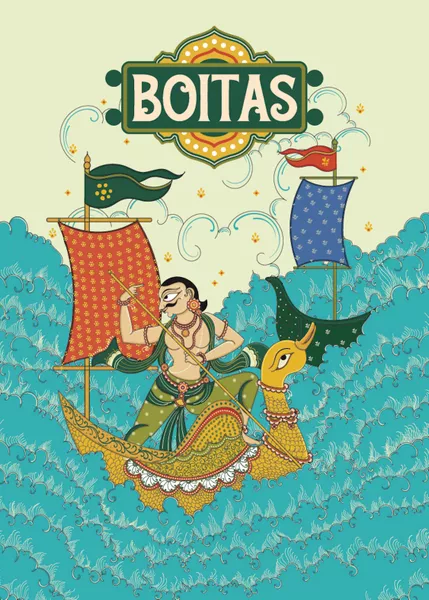
In the crowded landscape of modern tabletop gaming, the trick-taking genre often feels like a well-trodden path. For decades, players have navigated the same tropes—kings, queens, and the inevitable social friction of competitive card play. However, Boitas, the latest offering from publisher Kheo Games, dares to chart a different course. Designed by Sidhant Chand with evocative, culturally resonant art by Janki Bavle, Boitas invites players to step into the sandals of the Sadhaba—the ancient sea traders of Odisha, India.
By blending the mechanical rigor of traditional trick-taking with the strategic foresight of set collection and market management, Boitas offers a refreshing, vibrant, and surprisingly deep experience that manages to honor its historical roots while feeling entirely contemporary.
The Core Data: What You Need to Know
Boitas is designed for 2–4 players and offers a highly efficient playtime of 15–30 minutes, making it an ideal choice for both game-night openers and casual sessions.
Quick Reference Guide
- Designer: Sidhant Chand
- Artist: Janki Bavle
- Publisher: Kheo Games
- Player Count: 2–4 Players
- Duration: 15–30 Minutes
- Genre: Trick-Taking / Set Collection
The game package is compact yet substantial, featuring high-quality, glossy cards and durable, chunky cardboard tokens. Its accessibility is one of its greatest strengths; while it requires a fundamental understanding of how trick-taking works, the barrier to entry is low, making it a perfect gateway for families looking to transition from traditional games like Hearts or Spades into the modern tabletop ecosystem.
Chronology of Play: The Life of a Sadhaba Trader
The game is played over four distinct rounds, each structured to simulate the journey of a maritime merchant. Each round consists of three intense trick-taking phases followed by a pivotal market phase.
The Trick-Taking Phase
In the initial phases of the round, players deploy numbered cards from four distinct suits. Unlike standard games, where the highest card simply wins, Boitas introduces a dynamic trump mechanic. Each round features a shifting trump suit, and the game introduces "port values" that allow specific trump cards to override higher-numbered cards. This creates a fluctuating hierarchy that keeps even veteran players on their toes.
The inclusion of the "Elephant" cards acts as a powerful wild-card element, capable of trumping nearly any other play. However, these are not invincible, as clever players can find ways to counter them. Winning a trick provides the first pick of imported goods tokens; the runner-up secures the remaining token, while all other participants receive cowries—the ancient currency of the region—which becomes essential for the subsequent market phase.
The Market Phase
Once the three tricks have concluded, the gameplay shifts from the table to the market. Players spend their accumulated cowries to purchase better, more efficient cards for future rounds. This creates a "hand-building" element that forces players to balance their short-term desire for prestige (goods) against their long-term need for engine power (better cards).
Supporting Data: Why the Mechanics Work
The success of Boitas lies in its ability to balance tension with accessibility. While it avoids the aggressive "take that" style of many modern games, it maintains a high level of table interaction.
The Math of Interaction
Because every card played impacts the availability of goods, players must constantly monitor the intentions of their opponents. Do they want the spices, or are they fishing for the cowries to pivot in the next market phase? By intentionally losing a trick, a player can sometimes set themselves up for a superior position later, adding a layer of depth that belies the game’s short runtime.
Scoring Strategies
The game’s dual-scoring system is a masterstroke of design. At the conclusion of the game, players can choose to maximize their points by collecting the highest-value token of every category or by focusing exclusively on two specific types of goods. This bifurcated path ensures that no two games feel the same. Players are constantly forced to evaluate whether to "chase" a lead or pivot toward a more specialized, potentially higher-scoring, set-collection strategy.
Official Perspective: Embracing Cultural Heritage
One of the most noteworthy aspects of Boitas is its commitment to its cultural identity. In an industry that often leans on Eurocentric themes, the decision to center the narrative on the maritime history of Odisha is both bold and commendable.
Historical Context
The game honors the Sadhaba merchants who sailed across the Bay of Bengal to trade in distant lands. By grounding the game in this specific history, Kheo Games has provided more than just a diversion; they have provided an introduction to a rich, often overlooked, chapter of global commerce.
While the mechanics are essentially those of a modern card game, the thematic integration—the market phases, the ports, and the goods—creates a cohesive experience. It occupies a "middle ground" where the abstraction of the card mechanics does not feel disconnected from the theme. The artwork by Janki Bavle further cements this, utilizing a distinct visual language that is both culturally authentic and highly readable. The iconography is clean and intuitive, ensuring that the visual flair never compromises the clarity of the game state.
Implications for the Hobbyist Market
For fans of modern trick-taking hits like Cat in the Box, Rebel Princess, or The Crew, Boitas is a must-try. It bridges the gap between traditional, simple trick-takers and the more complex, "modern" titles that have defined the last five years of gaming.
Is it Right for You?
- The Pro-List: If you enjoy games that reward careful planning, tactical hand management, and a slight curveball in the rules, you will likely find Boitas addictive. Its replayability is bolstered by the shifting market and changing trump suits, ensuring that every session feels fresh.
- The Con-List: It is important to note that Boitas does not attempt to reinvent the wheel. If you fundamentally dislike the core loop of trick-taking—where your success is tied to reading the table and managing a fixed hand of cards—this game will not change your mind. It is an evolution of a classic, not a departure from it.
A Gateway to Modern Gaming
For families, Boitas serves as an excellent "next step." It removes the intimidation of heavy rulebooks while keeping the brain-burning decisions that make modern gaming so rewarding. The lack of mature content or complex bookkeeping means that players can focus entirely on the social and strategic interaction.
Final Assessment: A Fresh Wind
Boitas is a triumph of balance. It is a game that feels light enough to play with a casual group but possesses enough mechanical grit to satisfy a competitive table. The production quality—from the chunky tokens to the high-gloss card finish—is indicative of a publisher that cares about the tactile experience of play.
Ultimately, Boitas earns its place in the rotation not by reinventing the genre, but by refining it. It manages to be culturally significant, mechanically sound, and genuinely fun. By weaving the story of the ancient Indian sea traders into a fast-paced, high-stakes card game, Sidhant Chand and the team at Kheo Games have created a title that deserves to be on every trick-taking fan’s shelf. Whether you are a seasoned collector or a casual player looking for a new favorite, Boitas offers an experience that is well worth the journey.


 Sagoh
Sagoh
 Ammar Sabilarrohman