Suro Senen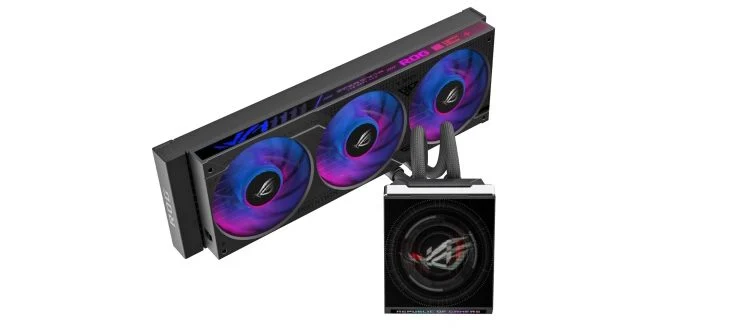
The landscape of PC cooling has long been defined by a persistent, tangled challenge: cable management. As enthusiast builds have grown increasingly complex, the aesthetic burden of managing dozens of individual PWM and ARGB headers has become a primary pain point for system builders. Asus has moved to address this head-on with the launch of its latest flagship cooling solution, the ROG Strix LC IV series of All-In-One (AIO) liquid CPU coolers. By introducing a proprietary wireless "Q-Connector" module, Asus is attempting to shift the industry paradigm toward a truly cable-free aesthetic.
Main Facts: The Evolution of ROG Cooling
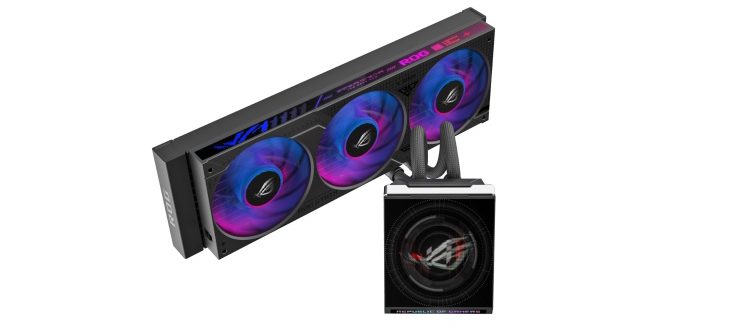
The ROG Strix LC IV series represents a significant departure from traditional AIO design. While the core function of these units remains the efficient dissipation of thermal energy from high-TDP processors, the engineering focus has pivoted toward integration and streamlined assembly.
The series is headlined by the standard LC model and the specialized SLC (Shortened Liquid Cooling) variant. Both units feature a prominent 5.08-inch IPS display mounted directly atop the pump block, boasting a 720×720 resolution. This screen is not merely for aesthetics; through the new Asus InfoHub software, users can monitor real-time thermal metrics, stream video, or display custom graphical assets.
The most revolutionary aspect of this launch, however, is the AIO Q-Connector. By utilizing a USB-C interface that bridges with Pogo pins on compatible motherboards, Asus has effectively eliminated the need for external data and power cabling running from the pump to the motherboard headers. This direct-contact approach ensures a cleaner aesthetic while simplifying the installation process for both novice and experienced builders.
Chronology of Development and Design
The development of the ROG Strix LC IV series appears to be a multi-year effort by Asus to integrate its cooling ecosystem with its motherboard architecture.
- Early 2024: Industry rumors began circulating regarding a "wireless" cooling solution from Asus. Early reports suggested the integration of Pogo-pin technology into the next generation of ROG motherboards.
- Mid-2025: Asus began finalizing the "unified fan frame" design, which consolidates three 120mm fans into a single structure. This move was designed to combat the "spaghetti cable" phenomenon common in modern builds.
- Late June 2026: The official unveiling occurred, showcasing the synergy between the X870E platform and the new LC IV coolers. The announcement confirmed that the technology is currently exclusive to high-end ROG Crosshair and Strix motherboards.
This chronology highlights Asus’s strategy of vertical integration: by controlling both the motherboard (the source of the Pogo-pin contact points) and the cooler (the hardware utilizing those points), the company is creating a "walled garden" that offers superior convenience for those invested in the ROG ecosystem.
Technical Specifications and Supporting Data
The performance metrics of the LC IV series indicate that Asus has not sacrificed cooling capability for the sake of its new form factor.
Thermal Performance and Fan Dynamics
The cooling system utilizes a unified fan frame—three 120mm fans linked together to share a single connection point. These fans are rated for a speed range of 800RPM to 2500RPM. Under maximum load, the unit delivers up to 82.57CFM (Cubic Feet per Minute) of airflow, supported by a static pressure rating of 4.36mmH2O. This pressure is essential for pushing air through the dense fin stacks of the radiator, especially in systems where the radiator might be restricted by case airflow patterns.
Compatibility and Variants
- Standard LC IV: Features 400mm tubing attached to the radiator via ball-joint fittings, allowing for greater flexibility in orientation and easier installation in various case sizes.
- SLC IV Variant: Designed for specialized builds, this model features shorter 250mm pipes centered along the radiator, catering to compact or unique chassis layouts where long, dangling tubes would be detrimental to the build’s flow.
- Socket Support: Both models provide broad compatibility, supporting AMD’s AM4 and AM5 platforms, as well as Intel’s LGA1700 and the newer LGA1851 sockets.
The Q-Connector Interface
The Q-Connector is the heart of the system’s innovation. By interfacing with the motherboard’s dedicated contact points, it handles power and data transmission for the pump and display. However, users must be aware that this is not a universal standard. As of the launch, only specific motherboards—the ROG Crosshair X870E Glacial, the ROG Crosshair X870E Dark Hero, and the ROG Strix X870E-E/A Gaming WIFI7 Neo—support this feature.
Official Responses and Market Positioning
Asus has marketed the ROG Strix LC IV as a premium solution for the enthusiast market. At an entry price point of approximately €220, the product occupies the upper echelon of the AIO market.
In official statements, Asus emphasizes the "clean build" philosophy. "Our objective was to strip away the clutter that plagues modern PC builds," a spokesperson noted during the announcement. "The Q-Connector is the next step in our vision of a modular, cable-free system."
The market reception has been largely positive regarding the innovation, though industry analysts have raised questions about the "lock-in" effect. By tying the wireless functionality to specific high-end motherboards, Asus is effectively creating a premium tier of PC assembly that requires significant financial commitment to achieve the advertised "wireless" experience.
Implications for the DIY PC Industry
The launch of the ROG Strix LC IV series has several profound implications for the future of custom PC building.
1. The Death of the Cable?
Asus is not alone in the push for cable-free builds. Companies like Lian Li and Corsair have also experimented with daisy-chained fans and magnetic connectors. However, Asus’s approach of utilizing the motherboard as a central "hub" via Pogo pins is a distinct evolution. If this technology gains traction, we may see a future where the motherboard becomes the primary power and data distribution point for the entire cooling loop, eventually rendering traditional header cables obsolete.
2. Standardization Challenges
The biggest hurdle for this technology is standardization. For the Q-Connector to truly change the industry, it would need to be adopted by multiple motherboard manufacturers. Currently, the proprietary nature of the Asus implementation means that users cannot mix and match components from different brands while maintaining this cable-free functionality. This fragmentation could slow the widespread adoption of the technology, as consumers are generally wary of hardware that limits their future upgrade paths to a single manufacturer.
3. Impact on Case Design
The shift toward unified fan frames and shorter, specialized tubing (as seen in the SLC variant) will likely influence future chassis designs. PC case manufacturers, such as Fractal Design or NZXT, may need to adjust their internal dimensions and cable routing holes to accommodate the unique physical footprint of these new, highly integrated cooling solutions.
4. Long-Term Reliability
A common concern with Pogo-pin connectors is long-term durability and signal integrity. Unlike traditional wired connections, which offer a secure mechanical lock, Pogo pins rely on surface contact. Enthusiasts will be watching closely to see how these connections hold up over years of thermal expansion and contraction within a hot PC chassis. If the connection remains stable, it will likely be viewed as a massive quality-of-life improvement; if not, it may be remembered as an overly complex solution to a problem that was already solved by simple cable ties.
Conclusion
The ROG Strix LC IV series is a bold statement from Asus. It acknowledges that, in the modern era of glass-paneled cases and RGB lighting, the "look" of the machine is just as important as the thermal performance. By consolidating connections and removing the visual mess of cables, Asus has created a product that feels distinctly "next-gen."
For the prospective builder, the LC IV series offers a glimpse into a cleaner, more efficient future. While the reliance on specific, high-end motherboards acts as a barrier to entry, the convenience of the Q-Connector system is undeniable. As we move further into the second half of the decade, it is highly probable that other manufacturers will attempt to replicate or iterate upon this design. Whether this leads to a universal "contact-based" standard or remains a boutique feature for the ROG faithful remains to be seen. For now, however, Asus has set a new benchmark for what a premium AIO cooler can look like—both on the inside and the outside.

 Reynand Wu
 Pevita Pearce