Ammar Sabilarrohman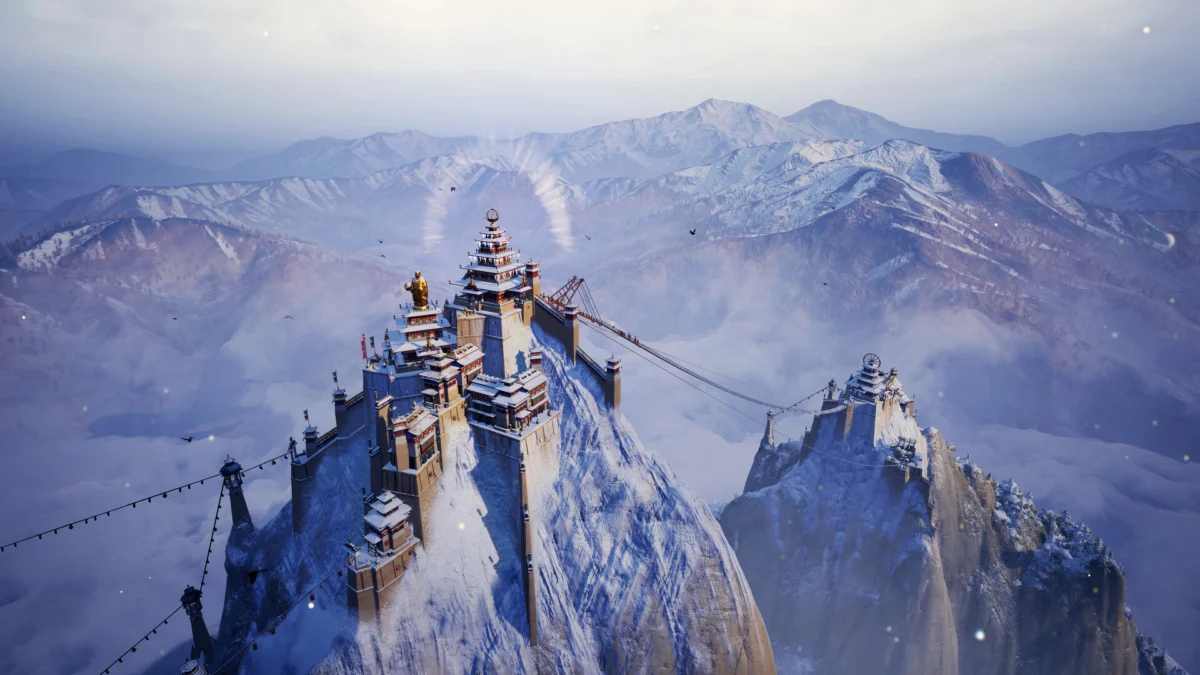
Developer: Nejcraft | Publisher: Quite OK Games | Genre: City Builder / Strategy | Platform: Nintendo Switch (Reviewed), PC
City-building simulation games have long been defined by the pursuit of horizontal expansion. From the sprawling urban grids of SimCity to the agrarian flatlands of Banished, the genre has traditionally prioritized the conquest of open space. However, developer Nejcraft and publisher Quite OK Games have introduced a radical departure from this convention with Laysara: Summit Kingdom. By shifting the focus from the plains to the precarious, oxygen-thin heights of jagged mountain ranges, the game demands a complete recalibration of how players approach urban planning.
Main Facts: The Architecture of Altitude
At its core, Laysara: Summit Kingdom is a complex logistics puzzle masquerading as a picturesque settlement builder. Unlike traditional titles where land is a commodity that can be terraformed or expanded upon at will, Laysara treats mountain real estate as a strictly finite, high-value resource. Every square meter of ridge and slope is a premium asset that must be optimized.
The game tasks players with establishing a network of interconnected settlements across varying altitudes. The ultimate objective is not merely to survive, but to ascend: players must cultivate their populations to eventually construct a grand temple at the mountain’s summit. This journey is divided into three distinct social tiers—Lowlanders, Artisans, and Monks—each possessing unique demands, architectural needs, and production requirements.
The logistical backbone of the game relies on a sophisticated trade network. Because specific resources can only be harvested at certain altitudes, players must establish reliable supply chains that move goods up and down the treacherous slopes. This verticality transforms standard production chains—usually a matter of simple distance in other titles—into three-dimensional engineering challenges.
Chronology: The Evolution of the Mountain Kingdom
The developmental trajectory of Laysara reflects a growing trend in the simulation genre: the desire for "niche" complexity. Following its initial PC release, the port to the Nintendo Switch represents a significant milestone for the title, proving that the dense, menu-heavy gameplay of modern city builders can indeed find a home on hybrid consoles.
- Early Concept & Prototyping: Nejcraft focused heavily on the physics of mountain settlements, specifically how avalanches and structural stability would impact long-term city planning.
- PC Launch: The game debuted on Steam, receiving acclaim for its unique Tibetan-inspired aesthetic and challenging mechanical depth.
- Optimization Phase: Between the PC release and the console port, the development team worked to streamline the UI to accommodate the limitations of a controller versus a mouse-and-keyboard setup.
- Nintendo Switch Arrival: The current iteration brings the full, uncompromised depth of the mountain management experience to handheld play, marking a shift in how strategy games are consumed on the go.
Supporting Data: The Mechanics of the Ascent
The complexity of Laysara is best illustrated by its reliance on, and management of, limited space. In most city builders, building a farm is a matter of finding a flat field. In Laysara, you must consider the slope, the risk of environmental hazards, and the proximity to the next node in your logistics chain.

The Three-Tier Social Hierarchy
- Lowlanders: The foundation of the kingdom. They provide the basic labor force and raw material gathering.
- Artisans: The mid-game population. They require more processed goods and provide the technological upgrades necessary to climb higher.
- Monks: The elite tier. Stationed at the highest points, they focus on spiritual and cultural pursuits, demanding the most refined goods produced by the layers below them.
Vertical Logistics
The game utilizes a unique "transportation node" system. Players must manage the flow of goods across mountain passes. When a landslide occurs or a path becomes congested, the economic ripple effects are felt instantly across all connected settlements. This necessitates a "buffer" system—storage silos at critical junctures—which further complicates the limited space management.
Official Perspectives: The Philosophy of Design
According to developers at Nejcraft, the goal of Laysara was to move away from the "infinite expansion" trope. In interviews regarding the game’s design philosophy, the team emphasized that they wanted players to feel the pressure of the environment.
"The mountain is not a backdrop; it is an antagonist," a representative noted during the game’s initial launch phase. By forcing players to build on narrow ridges, the designers ensure that no two playthroughs look identical. The "Tibetan-inspired" visual identity was chosen not just for its beauty, but to emphasize the harmony between human settlement and the natural environment. The soundtrack, composed to evoke a sense of high-altitude tranquility, serves as a psychological counterbalance to the intense frustration that can arise when a production chain collapses due to poor planning.
Implications: The Future of the City-Builder Genre
The success of Laysara on the Nintendo Switch suggests that the genre is evolving to prioritize "density over sprawl." While players have traditionally been rewarded for how large their cities could get, Laysara rewards them for how effectively they can organize a small, constrained area.
Challenges in Portability
The transition to console is not without its caveats. As noted in recent critical assessments, the "cumbersome interface" is a recurring hurdle. When managing hundreds of production units, a controller—even with high-quality mapping—cannot compete with the precision of a mouse. Navigating the sub-menus for trade routes and population happiness meters requires a level of micro-management that can feel tedious on a smaller screen.
Replayability and Longevity
The inclusion of campaign, sandbox, challenge, and free-build modes provides significant value. The "challenge" mode, in particular, acts as an excellent proving ground for players to test their understanding of the game’s harsher mechanics, such as managing the inevitable infrastructure overhauls that come in the late game.
A Critical Assessment: Is the Climb Worth It?
Laysara: Summit Kingdom is not a game for the casual dabbler. It is a demanding, rigorous exercise in optimization.

Strengths:
- Unique Aesthetic: The Tibetan-inspired visual design is stunning and stands out in a crowded market.
- Mechanical Innovation: The verticality and logistics of mountain management provide a fresh perspective on the genre.
- Atmospheric Audio: The soundtrack creates a meditative environment that helps mitigate the stress of complex planning.
Weaknesses:
- UI Constraints: The transition to console has highlighted the difficulty of managing dense, menu-heavy strategy games on a controller.
- Late-Game Frustration: The requirement to constantly rebuild and re-optimize old infrastructure can feel less like "strategic adjustment" and more like "punishing repetition."
- High Entry Barrier: The game does not hold the player’s hand; failure is frequent and often the result of minor oversights early in the process.
Final Verdict
For enthusiasts of the city-builder genre who feel they have seen everything the "open plain" format has to offer, Laysara: Summit Kingdom is a breath of fresh, albeit thin, mountain air. It successfully translates the complexity of high-stakes logistics into a beautiful, if occasionally frustrating, package.
While the Nintendo Switch port is commendable for its visual fidelity and content density, it is a title that requires patience. Players who find joy in the "puzzle" aspect of city builders—the precise alignment of production chains, the careful allocation of limited space, and the satisfaction of a perfectly flowing network—will find much to love here. Those who prefer the relaxing, low-stakes expansion of titles like Cities: Skylines may find Laysara to be an exhausting endeavor.
Ultimately, Laysara: Summit Kingdom succeeds in its primary mission: it forces the player to look up, to plan for the vertical, and to appreciate the sheer difficulty of building a home among the clouds. It is a niche experience, but one that is expertly crafted for the audience it aims to serve.


 Sagoh
Sagoh