Rifan Muazin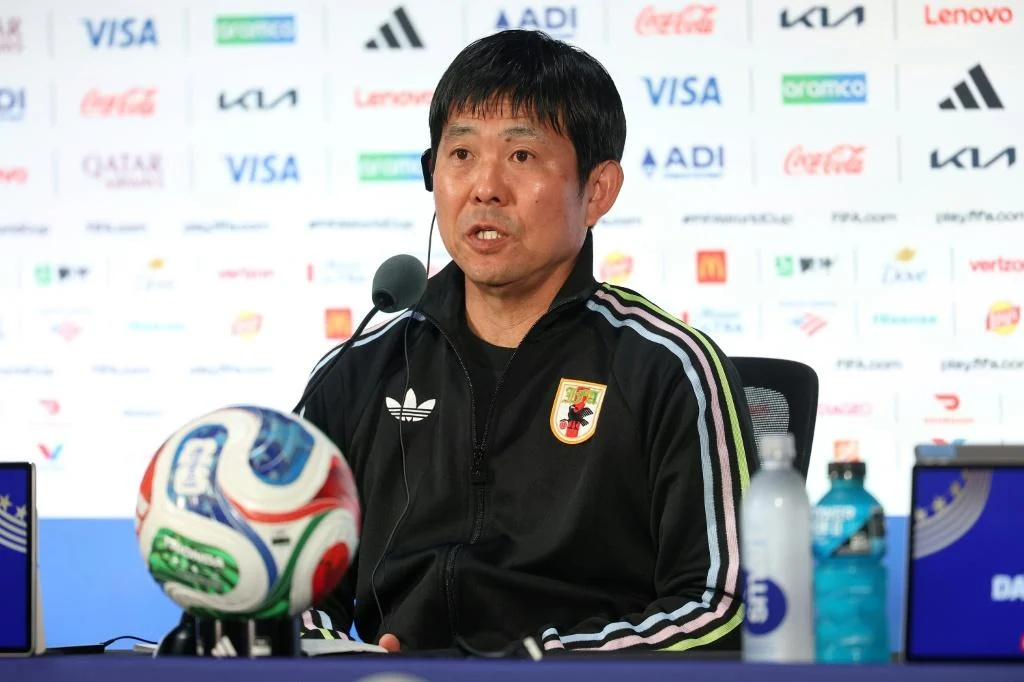
DALLAS — The air in Dallas is thick with anticipation as Japan’s national team prepares for a decisive showdown against Sweden this Thursday. For manager Hajime Moriyasu and his squad, the objective is singular: secure a victory that guarantees the top spot in Group F and provides a tactical advantage in the looming knockout stages of the 2026 World Cup.
While a draw would technically suffice to see the "Samurai Blue" through to the last 32, Moriyasu has made it clear that his side is not interested in settling for anything less than a clean win. As the group stage reaches its frantic conclusion, the implications of this match extend far beyond simple qualification.
Main Facts: The Path to Monterrey
The mathematical reality of Group F is as tight as it is compelling. Japan and the Netherlands are currently locked in a dead heat, both sitting on four points. While the Dutch hold a marginal advantage in goals scored—the primary tie-breaker given their identical goal difference—Japan’s fate remains firmly in their own hands.
The stakes are binary and brutal. By finishing first in the group, Japan avoids a collision course with the tournament favorites, Brazil. The runner-up of Group F is slated to face the five-time world champions in Houston, a daunting prospect for any nation. Conversely, the winner of the group earns a ticket to Monterrey to face Morocco, a significantly more favorable matchup on paper.
For Moriyasu, the destination is just as important as the opponent. "As for our objectives, we want to win and qualify in first place," the manager stated during Wednesday’s pre-match press conference. "I think playing in Monterrey would be the best option. We had a pre-tournament training camp there, we played against Tunisia there, and the players have already experienced the atmosphere of the stadium as well as the pitch conditions. Being able to play in a place we’re already familiar with is definitely an advantage."
Chronological Overview: A Campaign of Momentum
Japan’s journey to this moment has been defined by resilience and tactical evolution. Their tournament opened with a high-octane 2-2 stalemate against the Netherlands, a match that served as a statement of intent for both sides. It was a fixture characterized by end-to-end action, proving that both teams possessed the firepower to compete with the world’s elite.
Following that draw, Japan asserted their dominance in their second outing, dismantling Tunisia 4-0. The victory was comprehensive, showcasing a fluidity in attack that had previously been lacking in international tournaments for the side. This emphatic performance moved Japan to four points, putting them in the enviable position they occupy today.
Sweden’s journey, by contrast, has been one of turbulent recovery. After a devastating 5-1 loss to the Dutch, the Swedes are fighting for their tournament lives. Despite the lopsided scoreline in their previous match, they remain a dangerous, physical opponent capable of disrupting Japan’s rhythm if Moriyasu’s men are not at their clinical best.
Supporting Data: Tactical Analysis and Player Profiles
The tactical narrative of Thursday’s match revolves around the battle between Japan’s disciplined defensive structure and Sweden’s Premier League-tested attacking prowess.
The Swedish Threat
Despite their heavy loss to the Netherlands, Sweden remains a formidable opponent. Their offensive output is anchored by two of the most potent strikers in European football: Alexander Isak and Viktor Gyokeres. Both players possess the pace, physical strength, and technical finishing ability to punish any lapse in concentration.
Moriyasu, ever the pragmatist, is not underestimating the threat. "Sweden are a very strong side," he acknowledged. "They’re solid in defense and quick in attack. It won’t be an easy match. First and foremost, we need to focus on winning. I hope our defenders enjoy coming up against world-class strikers like Isak and Gyokeres."
Japan’s Tactical Blueprint
Japan has historically relied on a high-pressing, high-energy system that forces turnovers in dangerous areas. Against a Swedish defense that struggled under pressure against the Netherlands, Japan’s midfielders will likely look to exploit the space between the defensive and midfield lines.
The depth of the Japanese squad is also a point of pride. With goals coming from multiple sources in the 4-0 win over Tunisia, the team has moved away from a reliance on a single talisman, instead favoring a collective approach that makes them difficult for opponents to scout and contain.
Official Responses: Moriyasu’s Vision for Growth
Hajime Moriyasu has spent much of his tenure attempting to shift the Japanese mindset from "participant" to "contender." His comments on Wednesday reflected this long-term vision. By framing the clash with Sweden as a "valuable experience," he is emphasizing the importance of individual development within the context of team success.
"I hope they make the most of this as a valuable experience to help them improve their own game," Moriyasu said regarding his defenders’ impending duel with the Swedish strikers. This approach—viewing elite competition as a classroom—is emblematic of the modern Japanese football philosophy. It is a calculated effort to build mental fortitude, ensuring that when the high-pressure moments of the knockout stages arrive, the players are conditioned for the intensity of the world stage.
Implications: Breaking the Last 16 Curse
The historical context of this tournament cannot be ignored. Japan has reached the knockout stages four times in their history, yet they have never successfully navigated the round of 16. The painful memory of their penalty shootout exit to Croatia in 2022 still lingers in the collective consciousness of the fans and the squad.
The "Brazil Factor"
The immediate implication of the Sweden match is the avoidance of Brazil. Historically, Brazil has been a stumbling block for nations looking to make a deep run. By securing the top spot, Japan would enter the Monterrey bracket, where the path to the quarterfinals is perceived to be less obstructed. While Morocco is an organized and disciplined opponent, they do not carry the psychological weight or the pedigree of the Brazilian squad.
Building a Legacy
Beyond the bracket, this match represents a chance to redefine Japan’s status in world football. Consistency is the hallmark of a true heavyweight. By finishing first in a group containing a European power like the Netherlands, Japan would send a clear message to the rest of the tournament: the era of being an underdog is over.
Should they defeat Sweden, the momentum gained would be significant. A win would not only provide a favorable draw but also instill the kind of winning culture that is essential for deep runs in major tournaments. As the team takes the pitch in Dallas, they carry the weight of a nation’s history, but more importantly, they carry the confidence of a squad that believes its best days are still ahead.
The clock is ticking toward kickoff. For the players in blue, the directive is clear: win, advance, and assert their place among the elite. The world will be watching to see if Japan can finally transcend the limitations of its past and march into the latter stages of the 2026 World Cup with the confidence of a true contender.
© 2026 AFP


 Neng Nana
 Asro
Asro