Suro Senen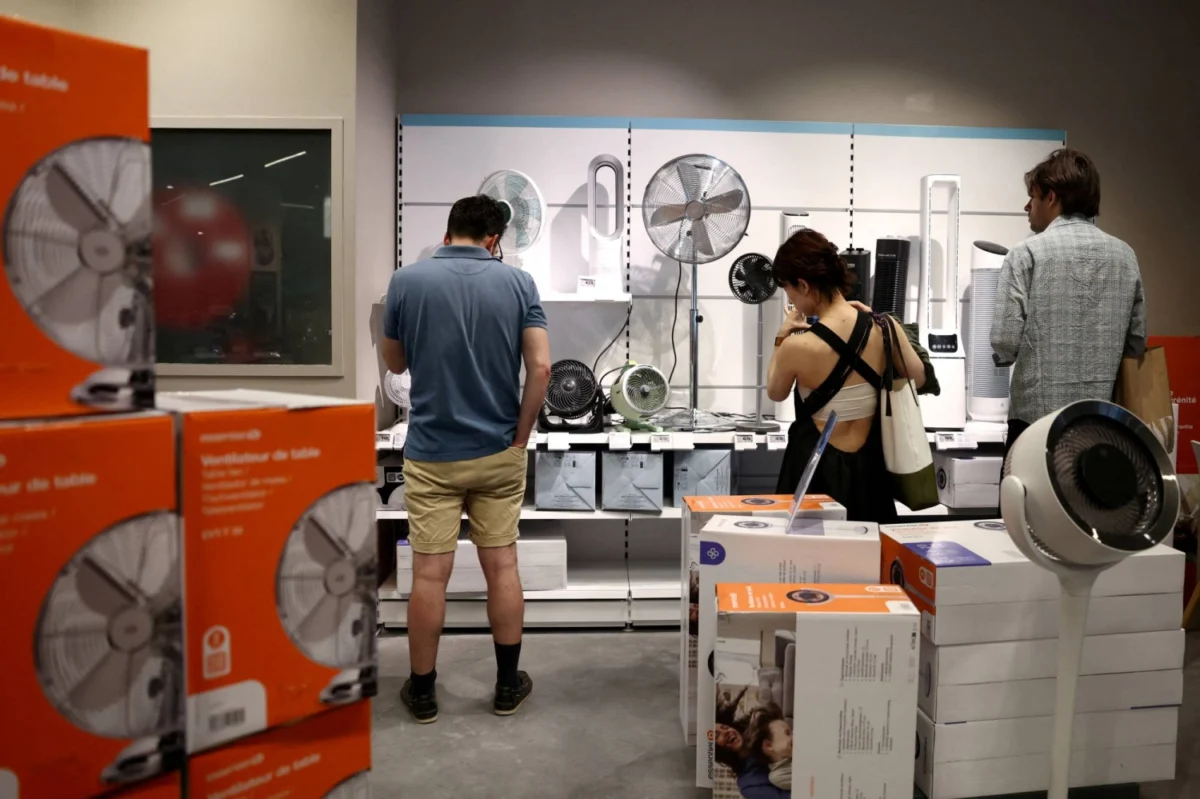
SEOUL/BEIJING/PARIS — As Europe finds itself in the grip of a relentless and record-shattering heat wave, the continent’s infrastructure—long optimized for mild summers—is facing an existential test. While citizens scramble for relief, a significant industrial pivot is underway. Asian manufacturing titans, including Samsung Electronics, Midea, and Mitsubishi Electric, are experiencing an unprecedented surge in demand for air conditioning and cooling technologies, filling a critical gap in a market historically unaccustomed to artificial climate control.
The Scramble for Relief: A Market in Flux
Across major European capitals, from the historic boulevards of Paris to the sun-drenched plazas of Madrid and Rome, the scene is identical: consumers are crowding hardware stores and electronics retailers in a desperate hunt for relief. Portable fans, window units, and high-end split-system air conditioners have become the most coveted commodities of the season.
For decades, air conditioning (AC) was viewed in Europe as a luxury or an unnecessary indulgence, relegated to commercial high-rises or ultra-modern luxury apartments. Unlike the hyper-urbanized centers of Seoul, Tokyo, or Shanghai, where climate control is a ubiquitous utility integrated into public transport, schools, and housing, Europe’s architectural heritage—characterized by stone, brick, and poor ventilation—has left its inhabitants vulnerable to the escalating extremes of climate change.
"With temperatures expected to rise further from June onward, we expect sustained demand through the peak cooling season," a spokesperson for Samsung Electronics stated, confirming that the company has seen double-digit sales growth across key markets, specifically Italy, Spain, and France, during the first half of this year.
Chronology of a Heat Crisis
The current crisis did not emerge in a vacuum. It is the culmination of a decade of shifting meteorological patterns that have pushed European summers into dangerous territory.
- 2018–2020: The Warning Signs: Consecutive summers of record-breaking heat across Western Europe began to challenge the "passive cooling" philosophy that had dominated European urban planning.
- May 2026: The Early Onset: The current heat wave arrived with unusual ferocity in late spring. By mid-May, temperatures in Paris and parts of Germany soared well above historical averages, triggering an immediate run on retail stock.
- Early June 2026: The Infrastructure Strain: As temperatures breached 40°C (104°F) in several regions, the demand for electricity spiked, placing the European power grid under unprecedented stress.
- Late June 2026: The Strategic Pivot: Asian manufacturers began reallocating inventory from domestic markets to European distribution hubs to meet the supply shortfall. Retailers in London, Paris, and Berlin report that inventory levels are being depleted faster than supply chains can replenish them.
Supporting Data: The Scale of the Shift
The economic implications of this transition are profound. The European HVAC (Heating, Ventilation, and Air Conditioning) market, traditionally a slow-growth sector, is currently seeing a "step-change" in adoption rates.
According to market analysts, the demand isn’t just for cooling; it is a structural shift in how European real estate is being managed.
- Market Penetration: While less than 10% of households in many Western European countries had installed air conditioning as of 2020, current projections suggest that number could triple by 2030.
- Regional Trends: Italy and Spain, which have historically higher temperatures, are leading the surge, but Northern European markets—including the UK and the Netherlands—are seeing the highest percentage growth in new installations.
- The "Asian Edge": Companies like China’s Midea and Japan’s Mitsubishi Electric have leveraged their massive manufacturing scales to provide cost-effective solutions. Their ability to mass-produce units that are energy-efficient is proving vital, as European regulators are increasingly wary of the carbon footprint associated with a continent-wide shift to AC usage.
Official Responses and Public Health Imperatives
Governments across the EU are in a delicate position. While they recognize that air conditioning is becoming a public health necessity to prevent heat-related mortality, they are also bound by stringent "Green Deal" energy efficiency targets.
"We are balancing the immediate need to protect the elderly and vulnerable from heat-related illnesses with the long-term necessity of decarbonizing our energy sector," said a representative from a regional energy agency in France. "The current situation is not just an inconvenience; it is a public health crisis that disrupts schools, shuts down industrial production, and places a heavy burden on our healthcare systems."

In response, many municipalities are fast-tracking permits for the installation of cooling systems in public buildings and schools, acknowledging that the "passive cooling" of the past is no longer sufficient to ensure public safety in a warming world.
Implications: The New Normal
The mass adoption of air conditioning in Europe carries long-term socio-economic implications that go far beyond the quarterly earnings reports of Asian electronics giants.
1. The Energy Dilemma
The most immediate challenge is the grid. Most European power grids were built to handle winter heating loads, not the simultaneous, massive power draws of millions of AC units in the summer. Utility providers are now racing to upgrade distribution infrastructure and integrate more renewable energy sources to handle the summer peak, a task made more difficult by the volatility of the current climate.
2. Urban Planning Redesign
Architects and urban planners are now forced to rethink the European city. The reliance on heavy, heat-retaining materials in historic buildings is being challenged. We are seeing a move toward "smart cooling"—retrofitting older buildings with external shading, heat-reflective roofing, and integrated, high-efficiency heat pumps that can both heat in the winter and cool in the summer.
3. The Geopolitics of Cooling
The dominance of Asian manufacturers in this market shift highlights a broader trend: the globalization of climate-adaptation technology. As Europe turns to Seoul, Tokyo, and Beijing for its cooling needs, it is also importing the standards and technical expertise of these nations. This creates a new trade dependency that may shift diplomatic and economic relationships over the coming decade.
4. The Human Cost
Ultimately, the statistics on sales and energy consumption mask the human reality. The "searing heat" has been linked to increased respiratory distress, heat exhaustion, and fatalities among the elderly. The normalization of air conditioning is being viewed by many as a life-saving intervention, yet it also highlights the growing inequality gap between those who can afford to "buy their way out" of the heat and those who remain vulnerable to the climate’s extremes.
Conclusion
As the 2026 summer progresses, the image of Europeans queuing for fans is more than a commercial anecdote; it is a sign of a fundamental transition. The "Cooling Race" is on, and it is reshaping Europe’s economy, its architecture, and its relationship with the environment. For Samsung, Midea, and Mitsubishi, the immediate reward is a spike in sales. For Europe, the challenge is to manage this transition in a way that provides safety without compromising the sustainability goals that the continent has spent years championing.
In this new era, the hum of an air conditioner is rapidly becoming the soundtrack of the European summer—a sound that signals both the ingenuity of global industry and the stark reality of a changing climate. As the market continues to evolve, the focus must inevitably shift from mere consumption to the development of sustainable, low-carbon solutions that allow society to thrive even as the mercury continues to climb.


 Neng Nana
 Asro
Asro