

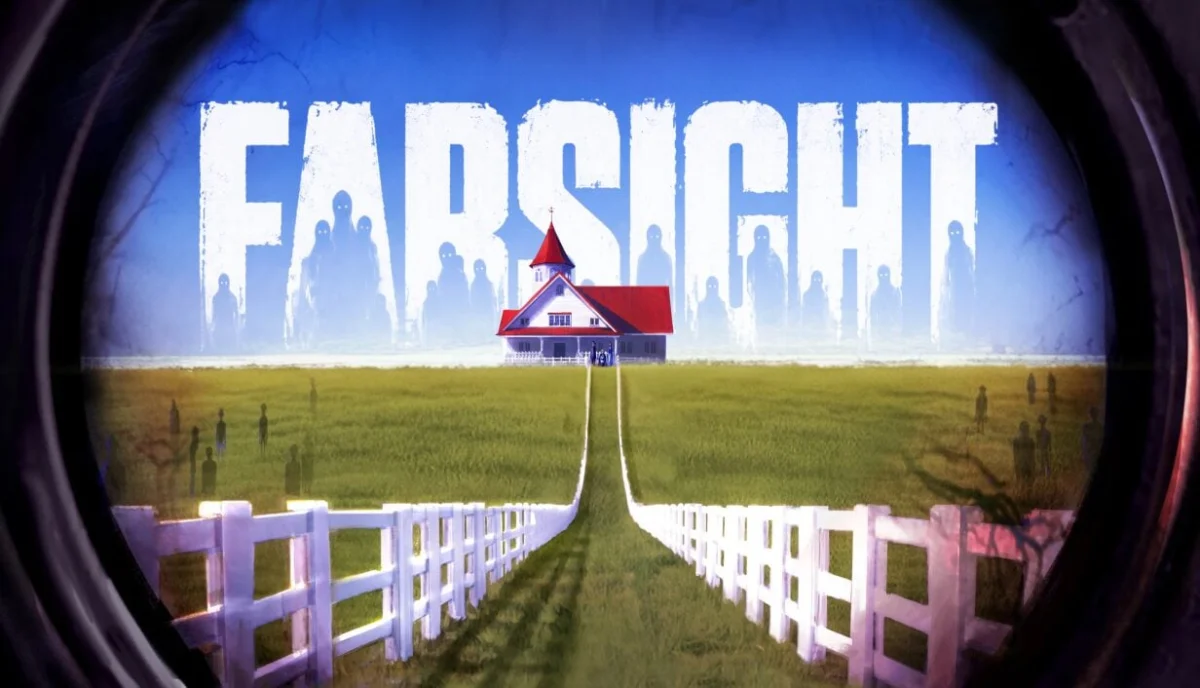
NEW DELHI, India – June 1, 2024 – The global gaming landscape continues to diversify and innovate, with a significant new entry emerging from the burgeoning Indian development scene. Studio Noori, an ambitious independent developer, has officially lifted the veil on Farsight, a first-person liminal psychological horror game slated for a Q3 2026 release on PC via Steam. The announcement has immediately captured the attention of horror aficionados, promising a unique blend of unsettling atmosphere, childhood vulnerability, and a profound questioning of reality itself. Console versions are expected to follow at an unspecified later date, broadening the game’s reach to a wider audience.
The reveal of Farsight introduces players to a deeply unsettling premise: the familiar yet alienating experience of a child undergoing a routine eye exam, which spirals into a nightmarish exploration of memory, perception, and institutional control. Through its evocative Steam page description and an accompanying announce trailer, Studio Noori invites players into a world where the ordinary morphs into the terrifying, challenging the very notion of what is "seen" and "unseen."
Main Facts
The Genesis of Farsight: A New Vision in Horror
Farsight is positioned as a groundbreaking title, not only for its thematic depth but also as a significant project from an Indian development studio aiming for international acclaim in a highly competitive genre. The game promises a singular experience rooted in liminality – the unsettling spaces of transition, ambiguity, and in-betweenness – combined with the pervasive dread of psychological horror. This dual approach seeks to tap into primal fears while also exploring complex narrative themes.
Studio Noori’s Emergence: An Indian Developer’s Ambition
Studio Noori, though a relatively new name in the global industry, has already signaled its intent to carve out a distinct niche. Their decision to debut with a title as conceptually ambitious as Farsight speaks volumes about their confidence and creative vision. The studio’s Indian origin adds another layer of interest, as it contributes to the growing narrative of diverse voices and cultural perspectives enriching the global gaming tapestry. While the specific influences of their heritage on Farsight remain to be fully detailed, the game’s themes of perception, control, and the subversion of innocence could resonate universally while potentially being infused with unique cultural sensibilities.
Genre Nuances: Liminal Psychological Horror Defined
At its core, Farsight is described as a liminal psychological horror game. Liminal spaces, a concept popularized in recent years, refer to places that are transitional, forgotten, or simply "off" – like empty malls, vacant schools, or the infinite corridors of a dream. These spaces evoke a sense of uncanny familiarity combined with profound isolation and unease. Farsight appears to leverage this by centering its narrative around the "house in the eye exam" – a universally recognizable yet non-existent space that blurs the lines between imagination and reality.
Psychological horror, on the other hand, preys on the mind rather than relying solely on jump scares or gore. It delves into characters’ internal struggles, fears, and distorted perceptions, often questioning their sanity and the reliability of their senses. Farsight‘s premise, involving a 12-year-old whose "eyes have betrayed" them and a clinic focused on "behavioral discipline," perfectly aligns with this subgenre, suggesting a narrative rich in paranoia, self-doubt, and existential dread. The combination of these two horror subgenres indicates a game designed to deliver a deeply unsettling and thought-provoking experience.
Initial Release Details and Future Prospects
The primary launch platform for Farsight will be PC, specifically through Valve’s ubiquitous Steam platform, in Q3 2026. This timeframe provides Studio Noori with ample development runway to refine their vision and execute on the ambitious concepts outlined. The choice of PC as the initial platform is a common strategy for independent developers, leveraging Steam’s vast reach and robust community tools. The subsequent release on "unspecified consoles at a later date" indicates a clear long-term strategy for broader market penetration, contingent perhaps on the PC version’s reception and the necessary optimization efforts for console hardware. This staggered release approach allows the studio to focus its resources on a single platform initially, ensuring a polished debut.
Chronology
The Announcement Event: A Quiet Unveiling
The reveal of Farsight occurred on June 1, 2024, through a multi-pronged approach that included the launch of its Steam page, an announce trailer, and the establishment of an official website. This synchronized rollout allowed Studio Noori to immediately provide concrete details, visual assets, and a clear call to action for potential players (wishlisting on Steam). The timing of the announcement, well in advance of the Q3 2026 release, suggests a strategic decision to build anticipation over an extended period, allowing for community engagement and iterative feedback during the development cycle. Such an early reveal is also typical for indie studios seeking to gauge interest and potentially attract further investment or publishing partnerships.
Development Timeline and Anticipation Building
With a release window set for Q3 2026, Farsight has approximately two years of development ahead from its announcement date. This substantial period allows for meticulous craftsmanship, extensive playtesting, and the integration of advanced features. For players, this means a longer wait, but also the potential for a more refined and polished product upon launch. The extended timeline also opens opportunities for Studio Noori to share development updates, behind-the-scenes glimpses, and perhaps even early access opportunities or demos closer to the release, fostering a dedicated community around the game. The current anticipation stems from the intriguing premise and the promise of a unique horror experience, setting a high bar for the studio to meet over the coming months.
Studio Noori’s Journey: Crafting a Debut
While specific details about Studio Noori’s formation and prior projects are not widely publicized, the ambition behind Farsight strongly suggests a team driven by a clear creative vision and a passion for the horror genre. The development of such a conceptually rich game likely began well before its public announcement, with initial brainstorming, prototyping, and narrative design taking shape over an extended period. For many indie studios, the debut title is often a culmination of years of collective experience and a passion project, aiming to make a significant first impression. Farsight appears to be Studio Noori’s vehicle to introduce their unique voice to the global gaming community, showcasing their ability to weave intricate narratives with compelling gameplay mechanics within the horror sphere.
Supporting Data
Deep Dive into Farsight‘s Premise: Unpacking the Uncanny
The core of Farsight‘s appeal lies in its disquieting premise, expertly crafted to resonate with universal anxieties.
-
The "Eye Exam House" Mystery: The game’s opening line, "You know the house in the eye exam," immediately establishes a profound sense of uncanny familiarity. This house, a recurring visual in optometric tests, exists in a collective subconscious, a non-place that everyone recognizes but no one has physically visited. By making this abstract image a tangible, navigable space, Studio Noori transforms a mundane medical context into a liminal nightmare. The question, "But how do you so intimately recognize a place you’ve never been?" is the central enigma, hinting at fractured memories, shared dreams, or an insidious manipulation of perception that transcends individual experience. This familiar-yet-foreign setting is fertile ground for psychological horror, where the player’s own mind becomes an unreliable guide.
-
Childhood Perception and Control: The narrative centers on a 12-year-old protagonist, a crucial age for identity formation and a heightened sense of vulnerability. "Everything is strange when you’re twelve years old. They tell you how to talk, how to behave, how to see." This speaks volumes about the themes of conformity, societal conditioning, and the suppression of individual expression during childhood. The protagonist’s tendency to "make up stories" and "just want to play" is presented not as innocent childlike behavior but as a transgression that has been "noticed." This suggests an oppressive environment where imagination and deviation from prescribed norms are deemed pathological, requiring "fixing." The game appears to explore the trauma of having one’s internal world policed and pathologized by external authorities.
-
"Your Eyes Have Betrayed You": This chilling statement is a linchpin of the game’s psychological horror. It implies that the very sense organ responsible for perceiving reality has become compromised, turning perception itself into a source of terror. This subverts the player’s trust in their own senses, creating an environment of constant doubt and paranoia. Are the horrors seen real, or a product of a malfunctioning vision, a distorted mind, or something more sinister implanted by the institution? This theme is particularly potent in a first-person game, where the player’s perspective is intrinsically linked to the protagonist’s vision.
Gameplay Mechanics Unpacked: Tools for Terror and Escape
Farsight promises a unique set of gameplay mechanics designed to enhance both the horror and the narrative depth.
-
Observation and Surveillance: "Peer through keyholes. Watch from a distance with binoculars." These mechanics emphasize a sense of voyeurism, vulnerability, and careful observation. They suggest a gameplay loop where stealth, investigation, and strategic information gathering are crucial. The act of peering through keyholes evokes a classic horror trope of forbidden knowledge and the terror of glimpsing something you shouldn’t. Binoculars, typically associated with safety and distance, here become a tool to witness unsettling events unfold, perhaps from a position of powerlessness. These tools immerse the player in a state of perpetual vigilance, reinforcing the feeling of being watched or needing to watch.
-
The FUNTIME-GO Camera: This is arguably one of the most intriguing mechanics. The FUNTIME-GO camera allows players to "Peek beneath the surface of reality." This suggests a supernatural or meta-perceptual ability, enabling the protagonist to perceive hidden layers of the environment, spectral entities, or distorted truths that are otherwise invisible. This mechanic is a direct extension of the "eyes have betrayed you" theme, implying that conventional vision is insufficient or deliberately obscured. The camera becomes a vital tool for uncovering the true nature of the CWell Eyecare facility and the horrors within, adding a puzzle-solving dimension where players must actively manipulate their perception to progress.
-
The FUNTIME-GO Handheld Console: In a stark contrast to the surrounding terror, the game introduces a nostalgic escape: the FUNTIME-GO handheld console. Players can "play with FUNTIME-GO… Check out a small library of game cartridges from the 90s and take 2-bit photos!" This mechanic serves multiple potential purposes. It could be a genuine coping mechanism for the child protagonist, a momentary reprieve from the overwhelming horror, grounding the player in a semblance of childhood normalcy. It could also function as a meta-narrative device, with the 90s-era games containing hidden clues, symbolic messages, or even directly influencing the main narrative. The ability to take "2-bit photos" with the console further blurs the line between the game’s internal reality and the player’s interaction with it, perhaps capturing distorted images of the environment that reveal deeper truths or simply documenting the protagonist’s descent into psychological distress. This blend of nostalgic comfort and impending dread creates a fascinating dynamic.
The Ominous Setting: CWell Eyecare
The primary setting, CWell Eyecare, is meticulously crafted to be unsettling, transforming a seemingly innocuous medical facility into a locus of dread.
-
"Established 1987": This detail firmly places the clinic in a retro, slightly outdated aesthetic, which perfectly complements the liminal horror genre. The architecture, décor, and technology of the late 80s/early 90s can evoke a sense of uncanny familiarity, often associated with forgotten or abandoned spaces, enhancing the game’s unsettling atmosphere. It suggests a history, perhaps a legacy of questionable practices, that predates the protagonist’s arrival.
-
"Specialists in pediatric vision care, refractive correction, longitudinal observation, and behavioral discipline": While the first two services sound benign, "longitudinal observation" and especially "behavioral discipline" are deeply alarming in the context of an eye clinic. "Longitudinal observation" hints at long-term monitoring, possibly without consent, suggesting a sinister data collection or experimental aspect. "Behavioral discipline" outright implies control, correction, and potentially punishment for perceived non-conformity. This transforms CWell Eyecare from a healthcare provider into an institution designed to mold, control, and "fix" its young patients, echoing the protagonist’s experience of being "taken somewhere that promises to fix you." This institutional control is a powerful source of psychological horror.
-
"CWell Eyecare. Where everyone is seen.": This slogan, initially reassuring, takes on a chilling double meaning in the context of "longitudinal observation" and "behavioral discipline." It shifts from promising clarity of vision to implying constant surveillance and a lack of privacy. The promise that "everyone is seen" becomes a threat, suggesting that no deviation or secret can escape the watchful eyes of the institution, reinforcing the game’s themes of observation, control, and the betrayal of trust.
Visual and Audio Elements: Crafting the Atmosphere
Based on the announce trailer and the concept, Farsight is poised to deliver a highly atmospheric experience. The visuals likely lean into a muted, perhaps slightly desaturated color palette, emphasizing the sterile yet decaying nature of liminal spaces. Lighting will play a crucial role, utilizing stark contrasts, flickering fluorescents, and deep shadows to heighten tension. The environments are expected to be eerily quiet, punctuated by subtle, unsettling ambient sounds – distant whispers, creaking doors, the hum of ancient machinery, or distorted echoes that suggest a presence just beyond perception. The 90s aesthetic, particularly through the FUNTIME-GO console, could offer moments of visual and auditory contrast, providing temporary relief before plunging back into the core horror. The provided screenshots, accessible via the gallery link, would further illustrate this commitment to atmospheric design, showcasing the blend of mundane and surreal elements that define the game’s aesthetic.
Official Responses
Developer’s Voice: Studio Noori’s Vision and Aspirations
While Studio Noori has yet to issue detailed statements beyond the initial announcement and Steam page description, the carefully crafted synopsis provides a strong indication of their creative philosophy. It’s evident that the team is deeply invested in narrative-driven horror that transcends mere jump scares. Their focus on liminality, childhood psychology, and institutional dread suggests an ambition to create a game that is not only terrifying but also thought-provoking.
One can infer that Studio Noori aims to deliver a highly immersive experience, leveraging the first-person perspective to put players directly into the shoes of the vulnerable protagonist. Their choice of such a unique premise likely stems from a desire to stand out in a crowded genre, offering a fresh take on horror that resonates on a deeper, more existential level. The inclusion of the FUNTIME-GO console also points to a team interested in experimenting with gameplay mechanics that enhance both narrative and player engagement, creating a multi-layered experience. For an emerging Indian studio, Farsight represents a significant opportunity to showcase their talent and establish their reputation on the global stage, demonstrating their capacity for original concept development and sophisticated storytelling.
Publisher’s Role: Self-Publishing and Steam’s Importance
Currently, Farsight appears to be self-published by Studio Noori, leveraging the accessibility and reach of Steam for its PC release. For independent developers, Steam serves as a vital platform, offering robust tools for distribution, community management, and direct engagement with players. This self-publishing route grants Studio Noori full creative control over their project, allowing them to realize their vision without external creative interference. The success of Farsight on Steam will be crucial, potentially paving the way for future publishing deals for console versions or subsequent projects. The ability to attract a dedicated wishlist following on Steam will be a key metric of initial interest and a strong indicator of the game’s potential commercial viability.
Community Reaction: Early Anticipation and Speculation
The initial community reaction to Farsight‘s announcement, even with limited information, is expected to be one of intrigue and cautious optimism within horror gaming circles. The unique premise, particularly the "eye exam house" and the unsettling CWell Eyecare clinic, immediately sparks curiosity. Players familiar with the liminal spaces phenomenon will likely be excited to see it explored in a dedicated game. Comparisons might be drawn to other psychological horror titles that delve into distorted realities or childhood fears, such as P.T., Layers of Fear, or even the more abstract elements of games like Control.
Speculation will likely revolve around the nature of the horror – whether it’s purely psychological, involves supernatural elements, or if the "behavioral discipline" hides a darker, more tangible threat. The FUNTIME-GO console, with its 90s cartridges, will undoubtedly generate discussion about its role in the narrative and potential hidden meanings. The community will be eager for more gameplay footage, developer insights, and deeper dives into the lore as Studio Noori continues its development journey towards the 2026 release.
Implications
Impact on the Horror Genre: Pushing Boundaries of Perception
Farsight has the potential to make a notable impact on the horror genre by emphasizing nuanced psychological terror over conventional scares. By focusing on themes of unreliable perception, institutional control, and the vulnerability of childhood, it could push developers to explore deeper, more existential forms of dread. The innovative use of mechanics like the FUNTIME-GO camera to "peek beneath the surface of reality" offers a fresh approach to interacting with a horror environment, inviting players to actively question what they see and experience. Should Farsight succeed, it could inspire a new wave of horror games that prioritize intricate narrative, subtle atmospheric tension, and profound psychological engagement, further cementing liminal horror as a potent subgenre.
Significance for Indian Game Development: A Global Statement
Studio Noori’s unveiling of Farsight is a significant moment for the Indian game development industry. India has long been recognized for its talent in technology and IT, and its game development sector has been steadily growing, moving beyond outsourcing to create original IP. A title like Farsight, with its ambitious scope and international appeal, signals a maturation of the Indian indie scene. It demonstrates that studios in India are capable of producing high-quality, creatively daring games that can compete on the global stage. Success for Studio Noori could open doors for other Indian developers, attracting more investment, talent, and international recognition for the country’s burgeoning creative industries. It further diversifies the global gaming narrative, potentially bringing unique perspectives and storytelling sensibilities to established genres.
Future of Studio Noori: A Promising Debut
The successful launch of Farsight could firmly establish Studio Noori as a significant new player in the independent game development landscape. A strong critical and commercial reception would provide the studio with the resources and momentum to pursue subsequent projects, whether sequels, spiritual successors, or entirely new IPs. It would validate their creative vision and technical capabilities, attracting top talent and potentially securing more lucrative publishing deals for future endeavors. Conversely, the high bar set by the game’s intriguing premise means that execution will be paramount, and the studio’s long-term trajectory will heavily depend on their ability to deliver on the promises made in this early announcement.
Broader Themes and Societal Commentary: Reflecting Anxieties
Beyond its immediate horror elements, Farsight appears to delve into broader societal commentaries. The themes of childhood vulnerability, institutional control, and the manipulation of perception resonate deeply with contemporary anxieties about surveillance, misinformation, and the pressures of conformity. The CWell Eyecare clinic, with its focus on "behavioral discipline," could be interpreted as a metaphor for various institutions that seek to normalize or "fix" individuals who deviate from societal norms. The game could serve as a powerful exploration of how authority figures can exploit vulnerability, and how the very tools designed to help (like an eye exam) can be twisted into instruments of control and terror.
Anticipation and Outlook: A Glimpse into a Disturbing Future
As Farsight progresses through its development cycle towards its Q3 2026 release, anticipation is expected to steadily build. Studio Noori has presented a compelling vision for a horror experience that promises to be both deeply unsettling and intellectually engaging. By tapping into universal anxieties about perception, memory, and institutional power, and by grounding its horror in the uncanny familiarity of liminal spaces, Farsight is poised to offer a fresh and impactful contribution to the psychological horror genre. Gamers and critics alike will be keenly watching to see how Studio Noori translates its ambitious concepts into a tangible, terrifying, and ultimately unforgettable experience, marking a potential new chapter for both the horror genre and Indian game development.












No comments yet. Be the first to join the conversation!