Lina Hope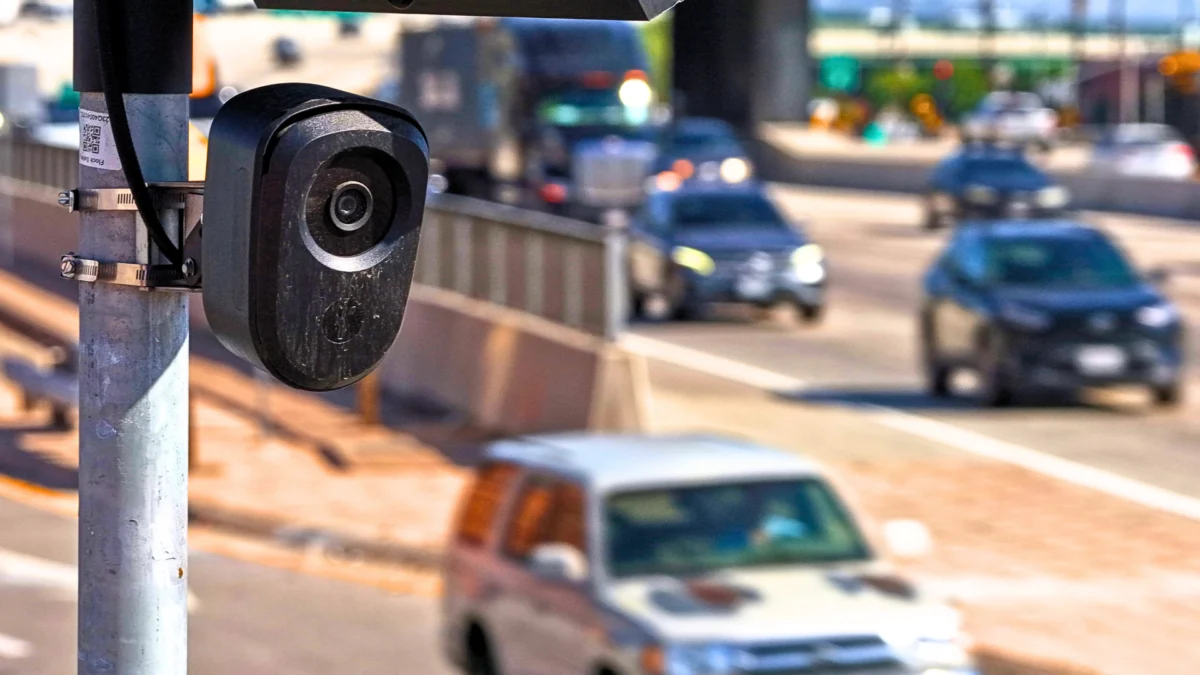
The promise of modern smart-city surveillance rests on a foundation of trust. Companies like Flock Safety, which provides automated license plate recognition (ALPR) and advanced monitoring cameras to law enforcement agencies and private neighborhoods across the United States, have long marketed their systems as fortress-like infrastructures. Their primary value proposition is not just the data they collect, but the security with which they handle that data.
However, that trust has been significantly shaken by a recent investigation from 404 Media. A hacking group known as "stegan0gram" successfully compromised a physical Flock camera, revealing that the company’s claims regarding on-device encryption and data retention were, at best, misleading. The incident exposes critical vulnerabilities in the physical and digital security protocols of the surveillance industry, raising urgent questions about how thousands of these devices currently watch over the American public.
The Core Breach: Shattering the Encryption Myth
For years, Flock Safety has maintained a firm stance on its data protection protocols. The company has repeatedly stated that its cameras are protected by robust on-device encryption. Even when independent security researchers previously pointed to potential flaws, Flock dismissed the concerns, arguing that any exploitation would require direct physical access to the device—a scenario they framed as unlikely—and that images were only "briefly" retained on the device before being offloaded to a secure cloud.
The investigation by stegan0gram has dismantled this narrative. By physically removing a Flock camera from its mount over a public roadway, the hackers gained the "physical access" the company claimed was a prerequisite for a breach. What they found inside contradicted the company’s public assurances.
The Anatomy of the Hack
Upon accessing the device’s internal hardware, the hackers bypassed the supposed layers of protection. While they reported they did not gain access to the most sensitive, high-level administrative data, they were able to interact with the device’s underlying Android-based operating system.
The hackers discovered two primary storage partitions: one labeled "vendor" and another labeled "media." The "media" partition contained the smoking gun—a hardcoded encryption key. This key acted as a master skeleton key, allowing the hackers to decrypt and access the contents of the entire media partition. Once inside, they found a treasure trove of surveillance data that the company had claimed was either ephemeral or safely encrypted.
Chronology of a Vulnerability
To understand the scope of the breach, one must look at the timeline of events that led to the exposure of millions of files.
- Pre-Breach (The Marketing Phase): Flock Safety builds its brand on the concept of "privacy-first" security. The company emphasizes that its cameras are "Privacy by Design," promising that data is encrypted at rest and in transit.
- The Incident: The hacking group stegan0gram identifies a target: a Flock camera mounted on public infrastructure. The hackers physically take down the device to perform a "post-mortem" analysis of its local storage.
- The Discovery: Within the Android file system, the hackers isolate the partition structure. They successfully identify the encryption key within the "vendor" partition that unlocks the "media" storage.
- The Disclosure: The hacking group shares their findings with 404 Media, providing evidence of the massive amount of data stored locally on the device—data that, according to Flock’s marketing, should have been immediately forwarded to the cloud and purged from the edge device.
- The Aftermath: The revelation forces a public reckoning regarding the discrepancy between Flock’s security claims and the technical reality of their hardware.
Supporting Data: The Magnitude of Localized Surveillance
The most alarming aspect of the 404 Media report is the sheer volume of data discovered on a single camera. If a solitary device is capable of holding this much sensitive information, the potential risk across Flock’s entire network—which comprises tens of thousands of cameras—is immense.
Breakdown of the Stolen Data
The compromised device contained a snapshot of life in its vicinity, documenting:
- 1.6 million images: Captured over a 21-day period.
- 50,200 vehicles: Tracked and logged via license plate recognition.
- 11 individuals: Captured in frames, raising significant concerns about the capture of non-vehicle-related human data.
- 27,321 video clips: High-resolution MP4 files (1024 x 768) documenting real-time movement.
These figures indicate that the cameras are not merely "forwarding" data to the cloud; they are acting as localized, high-capacity data repositories. This creates a dangerous "honey pot" for malicious actors. If a criminal or a foreign intelligence operative can physically seize a camera, they essentially gain a localized surveillance archive that records everything in the camera’s field of view for weeks at a time.
Official Responses and Corporate Strategy
In response to the report, Flock Safety has attempted to manage the narrative by reiterating its commitment to security while downplaying the significance of the breach. The company has stated that the "vendor" and "media" partition structure is part of its standard operating procedure and that they are continuously updating their firmware to mitigate physical access risks.
However, the company’s previous insistence that physical access was a sufficient barrier now rings hollow. Critics argue that the company failed to account for the "insider threat" or the "physical seizure" scenario, which is a common occurrence in public spaces where cameras are vulnerable to vandalism or theft. By hardcoding encryption keys in a way that could be retrieved from a companion partition, Flock essentially left the "front door" locked but kept the key under the doormat.
Flock’s representatives have generally deflected calls for a total system overhaul, instead emphasizing that they work closely with law enforcement to ensure that their software remains compliant with local and federal privacy regulations. Yet, the gap between their "privacy-first" branding and the reality of their "data-hoarding" architecture remains the central point of contention.
Implications: The Future of Smart-City Surveillance
The stegan0gram breach is more than just a technical failure; it is a catalyst for a broader debate on the ethics of mass surveillance.
1. The Physical Vulnerability of IoT Devices
This incident highlights a major flaw in the Internet of Things (IoT) industry: the assumption that a device mounted on a pole is "secure" because it is hard to reach. As this hack demonstrates, if a device contains high-value intelligence, determined actors will find ways to seize the hardware. Manufacturers must move toward hardware-level security, such as Trusted Platform Modules (TPM) or encrypted chips that self-destruct or wipe keys upon tampering.
2. The Data Retention Problem
The fact that 1.6 million images were stored on the device for 21 days raises a fundamental question: Why? If the cloud is the secure destination for data, there is little technical justification for keeping three weeks of high-resolution video and image data on a pole-mounted camera. This practice prioritizes device operational continuity over public privacy, effectively turning the camera into a localized surveillance archive.
3. Erosion of Public Trust
Flock Safety and similar firms rely on the cooperation of local governments and private citizens who host these cameras. If the public perceives that these cameras are not only tracking their movements but are also vulnerable to being "harvested" by hackers, support for these programs may collapse. The potential for these stolen clips—particularly those containing footage of individuals—to be used for blackmail, stalking, or harassment is a terrifying prospect that the company has yet to adequately address.
4. Regulatory Oversight
The breach will likely invite further scrutiny from lawmakers. If surveillance companies are found to be misleading the public about their security protocols, they may face regulatory action from agencies like the Federal Trade Commission (FTC). We may see the emergence of mandatory security standards for surveillance hardware, requiring companies to prove that encryption keys are not accessible via simple file system analysis.
Conclusion
The hacking of the Flock camera serves as a stark reminder that in the digital age, hardware is never truly "out of reach." The gap between the marketing of "military-grade encryption" and the reality of an Android partition containing a master key is the central fault line in the surveillance debate.
As cities become increasingly saturated with smart cameras, the responsibility for securing that data becomes a matter of public safety. Flock Safety must move beyond damage control and address the systemic flaws in its hardware architecture. Until then, the millions of people captured by these lenses every day remain subject to a surveillance ecosystem that is far more vulnerable than its operators are willing to admit. The breach by stegan0gram has provided a necessary, albeit unsettling, window into the reality of modern surveillance—and it is clear that the security of our public spaces is only as strong as the weakest link in the chain.


 Iffa Jayyana
 Ammar Sabilarrohman