

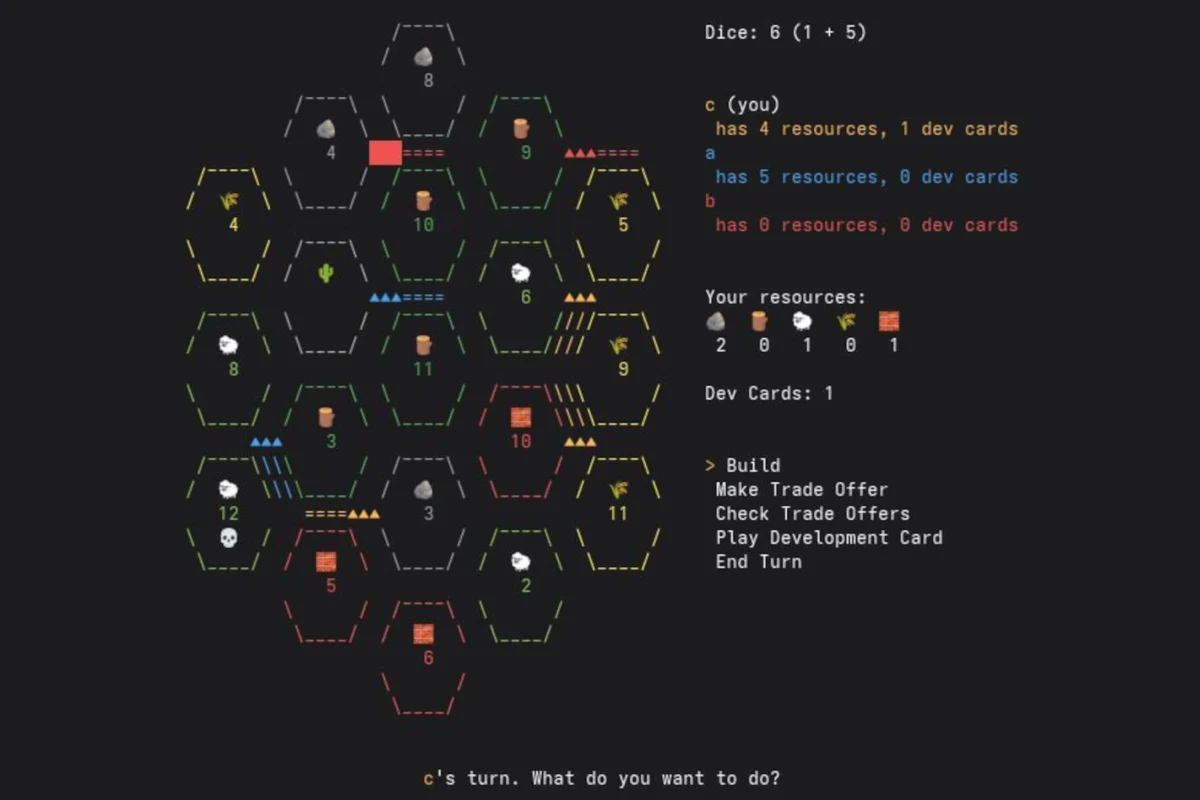
In the vast and ever-expanding ecosystem of open-source software, there exists a unique subculture of developers dedicated to a singular, almost philosophical goal: proving that absolutely any graphical interface can, and should, be replicated within the constraints of a text-based terminal. From terminal-based music visualizers to sophisticated text editors, the Linux command line has long served as a sandbox for those who prefer function over flash. The latest addition to this quirky collection is El Poblador, a fully functional, terminal-based clone of the iconic board game Settlers of Catan.
For fans of tabletop strategy, El Poblador offers a refreshing, stripped-back way to experience the mechanics of resource management and territorial expansion without the physical clutter of cardboard tiles or the social anxiety of intense board-game table politics.
The Genesis of El Poblador: Main Facts
El Poblador, which translates roughly to "The Settler," is the brainchild of developer "vicho." It is a Go-based project that brings the core mechanics of Catan—resource gathering, road building, and settlement placement—directly into the terminal window.
At its core, the game replicates the classic island-colonization loop. Players navigate a hex-based grid, exploiting different types of terrain to harvest brick, lumber, ore, grain, and wool. These resources are then used to build the infrastructure of a growing colony. While the game currently lacks a graphical user interface (GUI), it utilizes terminal text rendering to visualize the board, allowing players to manage their empire using simple command-line inputs.
The project is currently hosted on SourceHut, an open-source platform, and is maintained as a passion project by the developer. It is designed to be lightweight, fast, and accessible to anyone with a basic understanding of how to run Go applications.
A Chronology of Command-Line Gaming
The history of terminal-based gaming is nearly as old as computing itself. In the 1970s and 80s, the terminal was the primary way users interacted with computers, leading to the creation of classics like Adventure and Zork. These games relied entirely on user input and text-based output, forcing players to use their imagination to fill in the blanks.
As graphical interfaces became the industry standard in the 1990s, terminal gaming shifted into a niche hobby. However, it never truly disappeared. In recent years, there has been a resurgence of "retro-modern" terminal tools. This movement is largely driven by developers who value speed, efficiency, and the "hacker aesthetic."
- 2010s: The rise of sophisticated terminal multiplexers like tmux and screen allowed users to manage multiple terminal sessions, effectively creating a "windowed" experience within a single terminal window.
- 2020-2025: As modern terminal emulators (like Alacritty or Kitty) introduced hardware acceleration and better support for Unicode characters, the potential for "graphical" terminal apps exploded.
- June 2026: El Poblador makes its debut, marking a significant milestone in the complexity of board game ports to the terminal environment. It represents a shift from simple arcade-style games to complex, multi-player, resource-management strategy games being playable without a single pixel of traditional GUI.
Technical Foundations: How It Works
El Poblador is built using the Go programming language, a choice that makes sense given the language’s speed, concurrency support, and ease of deployment. Because the game is distributed as source code and pre-compiled binaries, it is platform-agnostic, provided the user has the Go environment installed.
Installation and Setup
For those looking to try their hand at virtual colonization, the process is straightforward for anyone familiar with the command line:
- Prerequisites: You must have the Go language compiler installed on your system.
- Acquisition: The project can be cloned from the official repository on SourceHut.
- Execution: Once the environment is prepared, users can initiate a new game session with a simple command:
go run main.go new <player1> <player2> <player3> [player4]
This command initializes the board, sets up the resources, and prepares the turn-based state machine that governs the game logic.
Data Handling and Board Representation
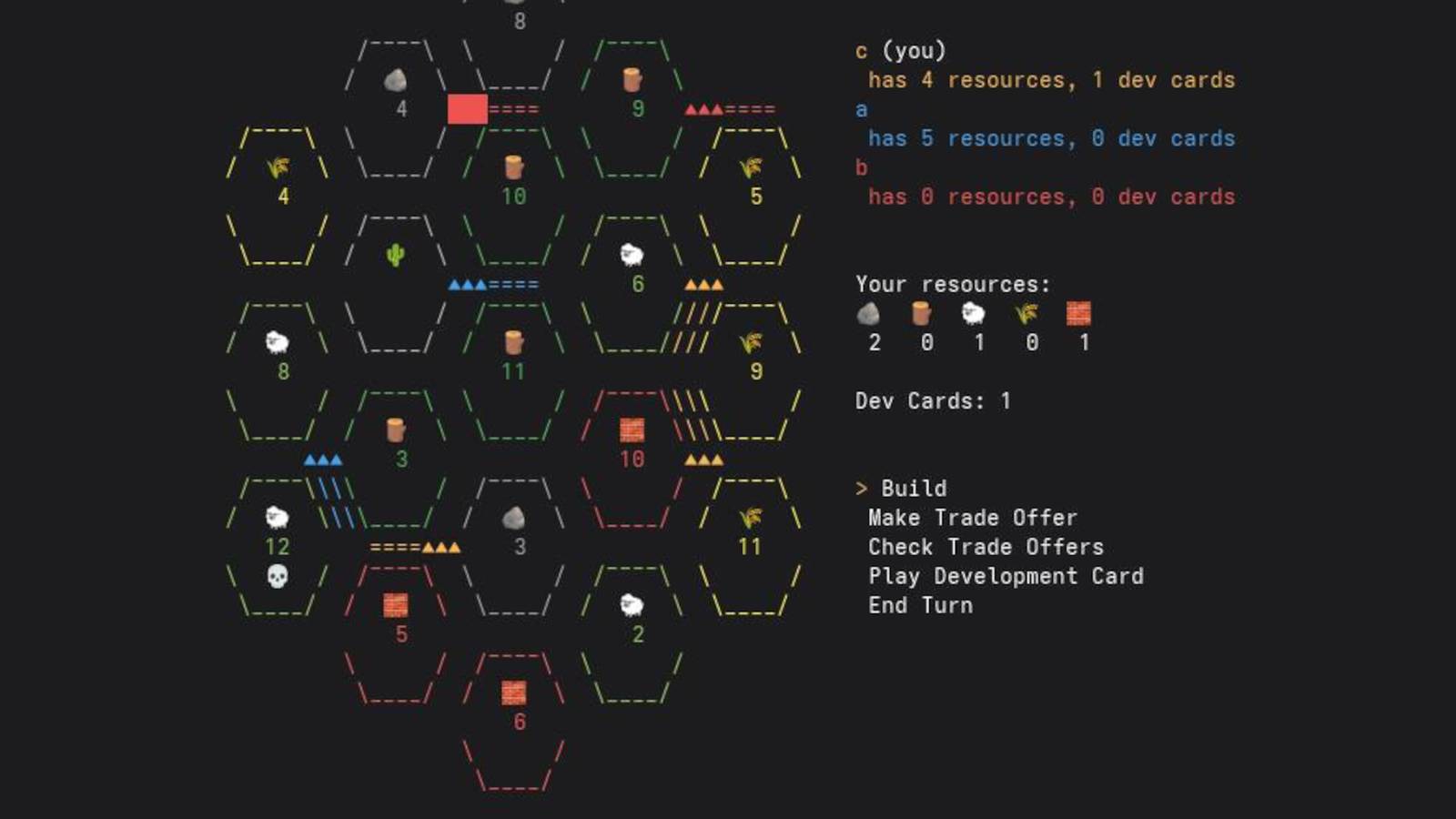
The "graphics" of El Poblador are a masterclass in using ASCII and Unicode characters to represent complex geometric shapes. The hex-grid, which is the signature visual of Catan, is rendered using specific character sets that align when viewed in a monospaced font. The game state is maintained in memory, tracking the current player’s resources, their building placements, and the overall state of the island.
Current Limitations and Future Roadmap
It is important to manage expectations: El Poblador is a work in progress. As of its initial release in June 2026, the game lacks several features that casual players might expect from digital versions of board games:

- Lack of AI Opponents: Currently, the game is strictly designed for local, hot-seat multiplayer. There are no automated bots to play against if you find yourself alone.
- No Online Connectivity: Unlike professional digital board game adaptations, there is currently no netcode to allow remote play. You must be at the same physical computer to play with others.
- The Developer’s Vision: The developer has acknowledged these limitations. The roadmap for El Poblador specifically mentions the implementation of network play as a primary goal. By utilizing Go’s powerful networking libraries, the developer aims to eventually allow users to host their own "servers" for terminal-based matches.
The Broader Implications of Terminal-First Design
The existence of El Poblador raises an interesting question: Why continue to move complex, visual-heavy games into the terminal? The answer lies in three key areas: accessibility, performance, and the preservation of computing philosophy.
Performance and Efficiency
Graphical interfaces are heavy. They require GPU resources, complex rendering pipelines, and significant memory overhead. El Poblador requires almost zero overhead. It can run on a Raspberry Pi, a legacy laptop, or even a remote server via SSH. This makes it an ideal candidate for "low-power" computing enthusiasts who want to maximize the utility of older hardware.
The "Hacker" Aesthetic
There is an undeniable allure to the terminal. For many software engineers and system administrators, the terminal is a "home" environment. Being able to pause a coding session to play a quick round of Catan without leaving the terminal window—and without launching a heavy browser or GUI-based game engine—is a significant productivity (and focus) benefit.
Preservation of Software Autonomy
When you play a board game on a commercial platform like Steam or a dedicated board game app, you are subject to the terms of service, the cloud connectivity requirements, and the inevitable "sunset" of that software. El Poblador is FOSS (Free and Open Source Software). As long as the code exists, the game can be compiled and played. It is an act of digital preservation that ensures the game remains accessible regardless of corporate decisions.
Community Reception
Initial response from the Linux community has been largely positive. Platforms like OMG! Ubuntu! have highlighted the project as a testament to the creativity of the FOSS community. The project has also sparked discussions on forums like Reddit and Hacker News regarding the feasibility of other tabletop games making the transition to the CLI (Command Line Interface).
While some users have requested features like mouse support or color-coded hex tiles, the consensus is that the developer has successfully captured the "soul" of the game. The challenge of managing resources in a terminal environment adds a layer of tactical satisfaction that feels right at home in a command-line setting.
Implications for the Future of Linux Gaming
As we look toward the latter half of the 2020s, El Poblador suggests a trend where the distinction between "work" and "play" on Linux continues to blur. If a complex board game can be managed via the CLI, what else is possible?
We are likely to see more "terminal-native" productivity and entertainment tools. We may see the emergence of a "CLI Gaming" ecosystem that prioritizes local play, low latency, and extreme portability. Projects like El Poblador are not just novelty items; they are prototypes for a future where the terminal is the primary hub for all computing tasks, including entertainment.
Conclusion: Is It Worth the Install?
For the average user, El Poblador is a fascinating experiment. If you are a Linux enthusiast who spends a significant portion of your day in the terminal, it is a must-have addition to your ~/bin folder. It offers a quick, challenging, and intellectually stimulating break from your terminal-based workflow.
However, if you are looking for the polished animations, sound effects, and matchmaking features of commercial digital board games, El Poblador is not yet there. But that is missing the point. The value of this project isn’t just in the game itself, but in the proof-of-concept. It is a reminder that the terminal is more than just a place to run sudo apt update; it is a canvas for human creativity and a sanctuary for those who value the elegance of text over the clutter of pixels.
As the developer continues to refine the code and work toward the promised online multiplayer functionality, El Poblador stands as a shining example of what the open-source community can achieve when it sets its mind to bringing the world into the command line. Whether you are a fan of Catan or simply a fan of clever code, this project is well worth monitoring as it continues to evolve.












No comments yet. Be the first to join the conversation!